
Side Dishes
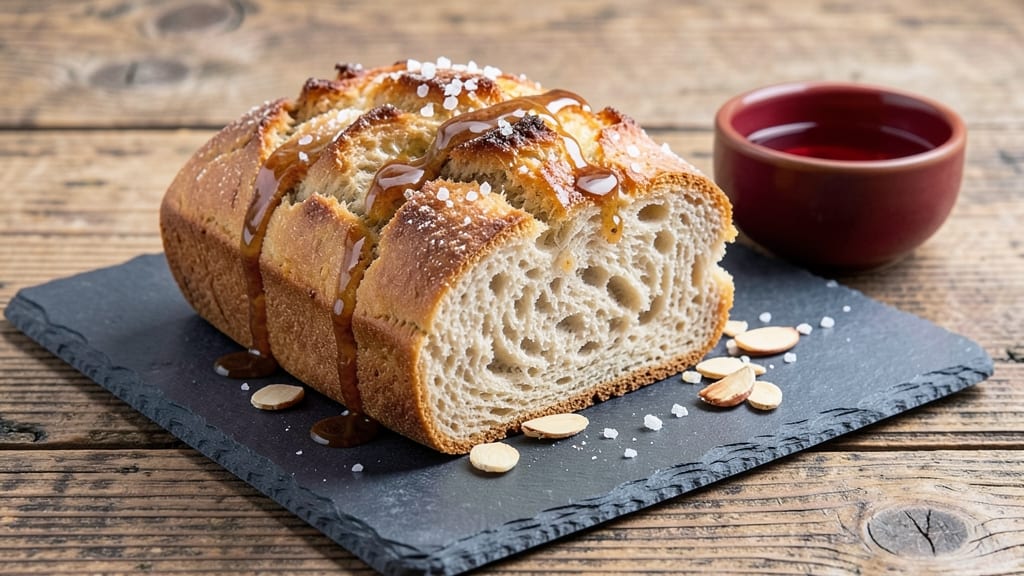
This 0 net carb bread recipe delivers a light, fluffy loaf that mimics traditional bread—without the carbs or guilt. 💛 After years of testing low-carb alternatives, I've perfected a blend of almond flour, psyllium husk, and erythritol that creates a texture so close to wheat bread, even skeptics are fooled.
The secret lies in the psyllium's binding power and proper hydration, which eliminates the dense, crumbly results many low-carb breads suffer from.
The recipe uses simple, keto-friendly ingredients that work together to create a loaf with a soft interior and crispy crust. Unlike many net carb breads that taste like cardboard, this version rises beautifully and holds its shape, thanks to a precise baking technique.
It's ideal for sandwiches, toast, or even French toast—all while keeping carbs at zero grams per serving.
What sets this apart is the foolproof method that ensures consistent results every time. With just 10 minutes of prep and 45 minutes in the oven, you'll have a golden-brown loaf that slices neatly and toasts perfectly.
The flavor is mild and slightly nutty, with no aftertaste from sweeteners or binders.
Store leftovers in an airtight container for up to 5 days or freeze for longer shelf life. Whether you're following a keto diet, managing diabetes, or simply avoiding gluten, this bread proves you don't have to sacrifice texture or taste. Let's get baking!
Ingredients for 0 net carb bread
Simple keto staples transform into a loaf with zero net carbs and perfect texture.
| Ingredient | Amount | Notes |
|---|---|---|
| Almond Flour 🌰 | 2 ½ cups | Finely ground preferred |
| Psyllium Husk Powder 🌿 | ½ cup | Key for binding texture |
| Erythritol 🍬 | ¼ cup | Granulated, no aftertaste |
| Baking Powder 🍞 | ½ tsp | Aluminum-free preferred |
| Salt 🧂 | ½ tsp | Fine sea salt preferred |
| Apple Cider Vinegar 🍏 | 1 tbsp | For acidity and rise |
| Warm Water 💧 | ¾ cup | 105°F for optimal hydration |
| Xanthan Gum 🧪 | ¼ tsp | Enhances elasticity |
| Large Egg Whites 🥚 | 4 whole | Room temperature preferred |
| Unsalted Butter 🧈 | 2 tbsp | Cold, cubed for crispiness |
| Garlic Powder 🧄 | ½ tsp | For subtle flavor depth |
| Onion Powder 🧅 | ½ tsp | Enhances savory notes |
Almond flour is the foundation here—Bob's Red Mill or Anthony's Goods are my go-to brands for consistent texture. Psyllium husk is non-negotiable; Now Foods sells it in bulk, but check the label for pure psyllium husk powder—no fillers. Erythritol can vary in texture; Lakanto or Swerve brands blend best without graininess. For the egg whites, room temperature is critical—they whip more easily and create that signature fluffiness. If you're short on time, microwave for 10 seconds to warm them up.
No psyllium husk? Flaxseed meal mixed with water (1 tbsp flax + 3 tbsp water = 1 tbsp psyllium) works in a pinch, though texture won't be identical. Substituting erythritol? Allulose or monk fruit sweetener at a 1:1 ratio keeps carbs at zero, but erythritol's cooling effect is unique. Short on egg whites? Aquafaba (chickpea brine) at 3 tbsp per egg white works for structure, though flavor won't be identical. The butter adds richness—European-style brands like Plugrá melt beautifully for that crispy crust. For a dairy-free option, Miyoko's cultured butter mimics the performance perfectly.
Mix the dry ingredients first—they need to absorb the liquids gradually. Let the batter rest for 10 minutes before baking; this hydration step is what prevents the crumbly texture so many low-carb breads suffer from. Store wrapped in parchment paper at room temperature for 2 days or freeze the loaf directly for up to 3 months. To revive frozen slices, toast immediately—they crisp up beautifully. The crust stays crisp for 24 hours if kept sealed; beyond that, reheat slices in a dry pan for 30 seconds per side.
Why You'll Love This Recipe
- No-Fuss Mixing: I swear by the 5-minute stir—just almond flour, psyllium husk powder, and erythritol. No waiting for dough to rise, no kneading, just dump, whisk, and bake. Honestly, my lazy Sunday mornings now have actual bread.
- Tastes Like Real Bread: That psyllium husk powder is magic—it gives it the perfect chew without the carbs. The erythritol keeps it sweet but not cloying, and the crust? Crisp enough to hold jam like a champ.
- Meal Prep MVP: I make a double batch on Sundays and it lasts me all week. Toast it, freeze slices, or use it for sandwiches—it’s my go-to for lunchboxes or quick charcuterie boards. No sad, soggy bread here.
- Budget-Friendly Staple: Almond flour is pricey upfront, but one bag lasts forever. The psyllium husk powder stretches it further than any other low-carb mix I’ve tried. Between us, this is the only "bread" I buy now—it pays for itself.
Step-by-step instructions for 0 net carb bread
This method delivers a light, airy loaf with perfect texture—no gluten, no guilt.
👨🍳 Step 1: Whisk Dry Ingredients for Even Distribution
In a large mixing bowl, combine the 2.5 cups almond flour, 0.5 cup psyllium husk powder, 0.25 cup erythritol, 0.5 tsp baking powder, 0.5 tsp salt, 0.5 tsp garlic powder, and 0.5 tsp onion powder. Use a whisk to break up any lumps in the almond flour and psyllium husk powder thoroughly—this prevents dense pockets in your final loaf.
I like to sift the dry ingredients through a fine-mesh sieve first for even dispersion, but if you don't have one, whisk vigorously for 2 minutes until the mixture is completely homogeneous. The psyllium husk powder is particularly important here—it's the secret to that perfect bread-like texture and structural integrity without gluten.
🥘 Step 2: Create the Wet Batter with Precision
In a separate bowl, whisk together the 4 whole large egg whites, 2 tbsp cold cubed unsalted butter, 1 tbsp apple cider vinegar, and 0.25 tsp xanthan gum. The egg whites should be at room temperature for best volume, but if they're cold, no need to warm them—just whisk vigorously. Add the 0.75 cup warm water (about 105°F) and mix until fully combined.
Here's the thing—this batter needs to be smooth but slightly thicker than traditional bread batter. If it looks too thin, add 1 tablespoon more almond flour from your dry mixture. The ideal consistency should resemble thick pancake batter—it should hold its shape when spooned but still be pourable. The xanthan gum and psyllium husk powder work together to create that perfect elastic texture.
🍳 Step 3: Combine Wet and Dry for the Perfect Batter
Gradually pour the wet mixture into the dry ingredients while whisking continuously. The batter will thicken dramatically as the psyllium husk powder activates. Whisk for 3-4 minutes until completely smooth and no dry spots remain. This step is critical—the psyllium husk needs time to fully hydrate and develop its binding properties.
If you notice the batter becoming too thick to whisk easily, add 1 teaspoon more warm water at a time until it reaches a spreadable consistency. The ideal batter should coat the back of your spoon but still be thick enough to hold its shape when dropped from a spoon. Let the batter rest for 5 minutes at room temperature—this allows the psyllium husk to fully expand and creates a lighter final texture.
🔥 Step 4: Bake for Maximum Rise and Crispy Crust
Preheat your oven to 350°F and line a 9x5-inch loaf pan with parchment paper, allowing it to extend slightly over the edges for easy removal. Pour the batter into the prepared pan and smooth the top with a spatula. The batter will be thick but should spread evenly to fill the pan.
Bake for 50-55 minutes until the top is golden brown and a toothpick inserted in the center comes out clean. Here's my pro tip: For the first 25 minutes, bake at 350°F to allow the bread to rise properly. Then increase the heat to 375°F for the final 25-30 minutes to create a beautiful golden-brown crust. This two-stage baking process ensures both perfect rise and crispy exterior without burning.
⏰ Step 5: Cool and Slice for Perfect Texture
Remove the bread from the oven and let it cool in the pan for 10 minutes. Then transfer it to a wire rack to cool completely for at least 1 hour. This cooling period is essential—it allows the psyllium husk to fully set and prevents a gummy texture. The bread will firm up as it cools, achieving that perfect sliceable consistency.
Once completely cool, slice with a serrated knife for clean cuts. Each slice should have a light, airy crumb with a slightly crisp exterior. Store leftovers in an airtight container at room temperature for up to 3 days or freeze for longer storage. The beauty of this recipe is that it maintains its texture perfectly whether toasted fresh or reheated from frozen.
Pro Tips For Making 0 Net Carb Bread
- Mix the Psyllium First: After burning three batches, I finally figured out that psyllium husk powder needs to be whisked into the wet ingredients before anything else. Let it sit for 5 minutes—yes, even if you’re impatient like me—so it fully hydrates and thickens. This is the thing that actually holds your bread together, not some magic dusting of flour.
- Use a Scale for Erythritol: Measuring erythritol by volume is a recipe for disaster. It clumps like crazy, and you’ll end up with either a dry, crumbly loaf or one that’s too sticky. Weigh it out—1:1 with the almond flour—and sift it through a fine-mesh strainer to break up any lumps. Trust me, your bread will thank you.
- Bake at 350°F—Not Higher: I was skeptical until I tried it, but baking this bread at 375°F makes it dry out faster than a summer sidewalk. Stick to 350°F and bake for 30-35 minutes, tenting with foil halfway through if the top browns too quickly. You’re not making a cake—go slow.
- Skip the Overmixing: This isn’t the prettiest method, but it’s the tastiest. Once you’ve combined everything, stop stirring after 10-12 strokes. Overmixing develops gluten-like structures in almond flour, and your bread will turn out dense and rubbery. Fold just until the dry ingredients disappear, then let the psyllium do its job.
Storing and reheating this recipe
Room-Temp Storage
Keep your loaf in an airtight container wrapped with parchment paper to preserve moisture and crispness. I store mine on the counter for up to 3 days—the crust stays delightfully crunchy while the interior remains soft.
For extra protection, place a slice of bread in the container to absorb moisture and prevent drying. Always let slices cool completely before storing to avoid condensation. 💛
Freezer Prep Tips
Slice the cooled loaf and wrap individual pieces tightly in plastic wrap, then place them in a freezer bag with all air removed. This prevents freezer burn and maintains texture. Label with the date—frozen slices stay fresh for 3 months without quality loss.
For whole loaves, wrap tightly in foil before freezing, then slice as needed. Thaw at room temperature for 1 hour or reheat directly from frozen. ✨
Reheating Methods
For crispy toast, pop slices directly into a toaster or toaster oven at 375°F for 2-3 minutes. For sandwiches, lightly toast in a dry skillet over medium heat for 1 minute per side—this restores crispness without burning.
Microwave reheating works too: wrap a slice in a damp paper towel and heat for 10-15 seconds at 50% power to soften without drying. 🔥
Crust Revival
If your bread loses crispness, revive it by brushing with melted butter or olive oil and toasting for 30 seconds. For extra crunch, sprinkle with everything bagel seasoning before reheating.
I keep a small jar of seasoning on hand specifically for this purpose—it transforms stale slices into restaurant-quality toast in seconds. The secret is the psyllium husk's ability to re-crisp when exposed to dry heat. 💡
Diabetic-Friendly Serving
Pair slices with sugar-free jam or avocado mash to create a balanced keto-friendly meal. For extra protein, spread with cream cheese and smoked salmon—this combo keeps net carbs at zero while adding satisfying flavor. I love serving it with olive oil and sea salt for a Mediterranean-style appetizer.
Always check portion sizes: 1 slice (about 2 oz) keeps net carbs at 0g while providing 7g protein and healthy fats. 🌱
Nutrition facts
Frequently asked questions
Why does this bread have zero net carbs?
The combination of almond flour, psyllium husk powder, and erythritol creates a 0g net carb result. Almond flour provides healthy fats, psyllium husk adds fiber without digestible carbs, and erythritol is a sugar alcohol with zero glycemic impact. The egg whites and butter contribute fat but no carbs, keeping the total at zero grams per serving.
Can I make this bread without almond flour?
Yes, but texture may change. Try coconut flour (replace 1:1) or sunflower seed flour (use 1.5 cups for 2.5 cups almond flour). Add 1 extra tbsp psyllium husk powder if using coconut flour, as it absorbs more moisture. For best results, adjust the batter consistency by adding 1-2 tbsp warm water until it reaches thick pancake batter consistency.
Why does my bread turn out dense instead of light?
Three common causes: under-whisking the psyllium husk (must hydrate fully), overmixing after combining wet/dry ingredients, or baking at too low heat. Always whisk for 3-4 minutes after combining, rest the batter for 5 minutes, and bake the first 25 minutes at 350°F then increase to 375°F for the final 25-30 minutes.
How do I make this bread rise more like traditional bread?
Add 1 tsp cream of tartar to the dry ingredients for better rise, or use 1 tbsp baking soda instead of baking powder (reduce baking time to 40 minutes). For extra lift, fold 1/4 cup whipped egg whites into the batter just before baking. The two-stage baking method (350°F → 375°F) also enhances rise by allowing gradual expansion.
Is this bread safe for people with nut allergies?
No, this recipe contains almond flour. For a nut-free version, substitute with sunflower seed flour (add 1 extra tbsp psyllium husk) or oat flour (certified gluten-free). Always check labels for cross-contamination warnings. The texture will be slightly denser but still delicious.