
Side Dishes
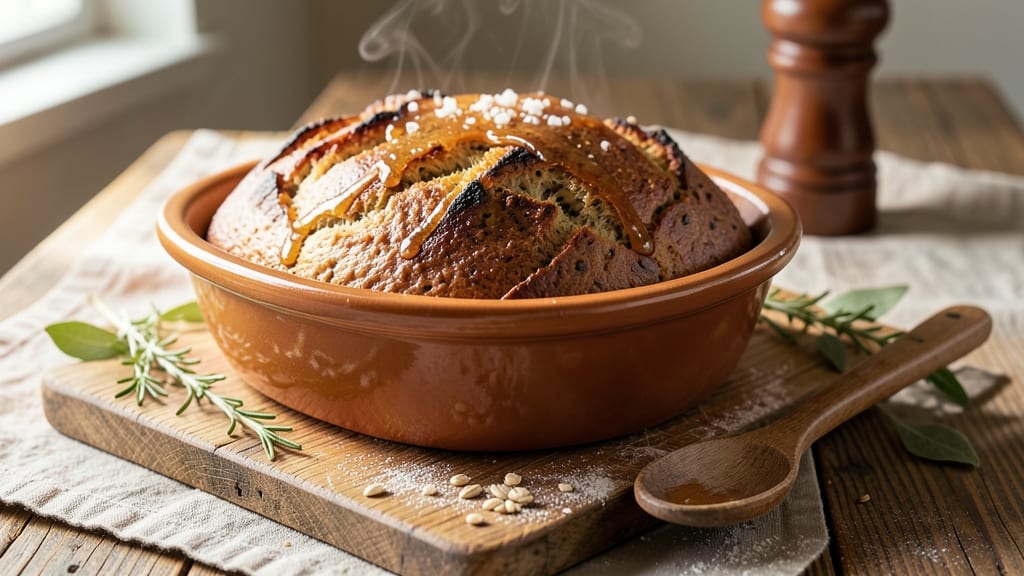
This 50/50 bread machine recipe delivers the perfect balance of texture and nutrition—equal parts white and whole wheat flour create a hearty loaf with just the right chew.
The beauty of using a bread machine lies in its hands-off simplicity: no kneading, no guesswork, just set it and let the machine do the work while you focus on other tasks.
I’ve refined this recipe over years of baking, ensuring every slice turns out with a crisp crust and tender crumb that’s ideal for sandwiches or toast.
The secret to success lies in the 50/50 flour blend, which adds fiber and nutrients without sacrificing the familiar taste of classic white bread. A bread machine handles the whole wheat flour’s density better than hand-kneading, producing a loaf that’s evenly textured and free of heavy density.
With just five simple ingredients—flour, water, yeast, salt, and a touch of honey—you’ll achieve restaurant-quality results in under three hours, including baking time.
What makes this recipe stand out is its foolproof technique: measure once, dump everything into the pan, and let the machine work its magic. The honey adds subtle sweetness and helps the yeast activate, while the salt enhances flavor without overpowering.
By the time the bread finishes, you’ll have a loaf with a golden crust and a soft, airy interior—perfect for slicing and serving warm with butter or jam.
This recipe scales beautifully for feeding a crowd or meal prepping for the week. The bread freezes well, too, so you can bake fresh batches and store them for quick meals later. Whether you’re a beginner or an experienced baker, this zero-fuss method ensures consistent, delicious results every time.
Ingredients for 50/50 bread machine
Five simple ingredients transform into the perfect 50/50 bread machine loaf—crisp crust and tender crumb guaranteed.
| Ingredient | Amount | Notes |
|---|---|---|
| All-Purpose Flour 🌾 | 2 cups | Standard white flour, not self-rising |
| Whole Wheat Flour 🌾 | 2 cups | Unbleached for best texture |
| Active Dry Yeast 🍞 | 0.03 oz | Or 2 1/4 tsp (1 packet) |
| Warm Water 💧 | 1 ¼ cups | 110°F (43°C) for yeast activation |
| Granulated Honey 🍯 | 1 tbsp | Or light maple syrup |
| Kosher Salt 🧂 | 1 tsp | Diamond Crystal preferred |
| Vegetable Oil 🫒 | 1 tbsp | For greasing the pan |
The 50/50 flour blend is where the magic happens. King Arthur or Bob's Red Mill flours work best—they're finely milled and consistent. Whole wheat flour can vary in texture, so stick with unbleached varieties. If your bread machine requires a specific flour type (like bread flour), adjust the white flour to maintain the 50/50 balance. Yeast is the unsung hero here—use fresh yeast (test by dropping a pinch in warm water; it should foam within 10 minutes). For the honey, Manuka or clover varieties add subtle floral notes, but any liquid honey works. The salt enhances flavor without overpowering—Diamond Crystal dissolves more evenly than table salt.
No honey? Light maple syrup or agave nectar work perfectly. Short on whole wheat flour? Substitute with spelt flour or oat flour at the same ratio. The yeast packet is non-negotiable—freshness matters. If your yeast is older than a few months, use 1/4 tsp extra to ensure proper rise. For the water, room temperature is fine if you're in a hurry, but warm water (110°F) activates the yeast faster. The vegetable oil is just for greasing—any neutral oil works, but avoid flavored oils like olive.
This dough keeps in the fridge for 3 days if you want to prep ahead, but it's best fresh. For longer storage, freeze the loaf wrapped in plastic—it'll keep for 3 months. To reheat, wrap in foil and warm in a 300°F oven for 10 minutes. The bread machine pan should be lightly greased before adding the dough. If your machine has a crust setting, use medium for a crisp exterior. For a softer crust, choose light or skip the setting entirely.
Why You'll Love This Recipe
- No-Knead Magic: I dump in the flour mix—half all-purpose, half whole wheat—and let the machine do the work. The yeast and honey wake up the dough while I’m still scrolling through my phone. Honestly, I’ve never measured out ingredients faster.
- Sweet & Nutty Crunch: That honey isn’t just for sweetness—it keeps the crust golden and adds a subtle depth. The whole wheat gives it a satisfying chew, while the all-purpose keeps it light. Between us, it’s the kind of bread that disappears in one sitting.
- Weeknight & Picnic Star: Toss a loaf in my bag for lunch or pull it fresh from the machine for dinner. It’s great toasted with butter, sliced for sandwiches, or even as a side with soup. I’ll be real: my kids beg for it more than any store-bought loaf.
- Budget Loaf, Long Life: A single batch costs pennies and lasts days—if it lasts that long. The whole wheat stays fresh longer, and I can freeze slices for toast later. Plus, using pantry staples means no last-minute grocery runs. My wallet and I both win.
Step-by-step instructions for 50/50 bread machine magic
This recipe transforms your bread machine into a workhorse for nutritious, flavorful loaves.
Mix Ingredients in the Bread Machine Pan
In the bread machine pan, combine the 2 cups All-Purpose Flour and 2 cups Whole Wheat Flour. The whole wheat adds hearty texture while keeping the dough manageable. Sprinkle the 0.03 oz Active Dry Yeast (or 2 ¼ teaspoons) directly over the flours—don't worry about dissolving it yet. Add the 1 tbsp Granulated Honey and 1 tsp Kosher Salt, mixing lightly with a wooden spoon to distribute evenly.
Next, pour in the 1.25 cups Warm Water (110°F) and 1 tbsp Vegetable Oil. The oil helps create a tender crumb, while the warm water activates the yeast. Use a spoon to stir until everything forms a shaggy dough—it doesn't need to be perfect at this stage. The bread machine will handle the rest.
Select the Basic White Bread Setting
Place the lid on the bread machine and select the "Basic White Bread" setting. This cycle typically runs for 3 to 3 ½ hours, with the dough going through kneading, rising, and baking phases automatically. The machine will handle all temperature adjustments, so no need to preheat anything.
During the kneading phase, you'll hear the machine working—this is normal. The dough will rise dramatically in the rising phase, which may cause it to overflow slightly. If this happens, simply press the dough down gently with a wet finger during the kneading phase to contain it better.
Monitor the Baking Process
Once the machine begins the baking cycle, resist the urge to open the lid—each time you do, you release steam and can disrupt the baking process. The bread is done when the machine beeps and the internal temperature reaches 190-210°F. You'll know it's ready when the crust has a deep golden-brown hue and sounds hollow when tapped on the bottom.
Let the bread cool in the pan for 10 minutes before removing it to a wire rack. This resting period allows the steam to escape gradually, preventing a gummy texture. The aroma at this point will be irresistible—it's worth the wait.
Slice and Serve for Maximum Freshness
Use a serrated bread knife to slice the loaf while it's still slightly warm. The 50/50 flour blend yields a beautiful open crumb with pockets of air and a satisfying chew. Serve immediately for the best texture, or store wrapped at room temperature for up to 3 days or frozen for 3 months. For reheating, wrap slices in foil and warm in a 350°F oven for 5-8 minutes to restore freshness.
This bread's versatility makes it perfect for sandwiches, toast, or dipping in olive oil. The whole wheat content adds fiber and nutrients without sacrificing flavor—proof that healthy baking can be effortless.
Pro Tips For Making 50/50 Bread Machine
- WEIGH YOUR FLOUR: Mixing half all-purpose and half whole wheat by volume leads to uneven texture—whole wheat is denser. Grab a kitchen scale and use 250g each for consistent results every time.
- HONEY FIRST: Whole wheat flour soaks up moisture like a sponge. Dissolve the honey in the warm water first, then mix it into the dry ingredients—this keeps the dough from turning into a sticky mess.
- STOP BEFORE IT LOOKS DONE: Bread machines often overproof whole wheat dough. Pull it out when it’s just below the peak of the cycle—whole wheat keeps rising even after the machine stops. A quick poke test works best.
- SWAP YEAST FOR INSTANT: Active dry yeast needs blooming time, but whole wheat dough can be finicky. Use instant yeast instead—just sprinkle it on top of the dry ingredients and skip the proofing step. Saves 10 minutes and cuts down on guesswork.
Pro cooking tips for 50/50 bread machine
Flour Blend Secrets
The 50/50 flour blend is the heart of this recipe, and getting it right makes all the difference. I always use King Arthur Unbleached All-Purpose Flour for the white portion because it’s finely milled and reliable, while Bob’s Red Mill Whole Wheat Flour gives that nutty depth without heaviness.
If your bread machine has a whole wheat setting, use it—it adjusts the kneading time to handle the denser flour. For extra tenderness, replace 1/4 cup of the whole wheat flour with spelt flour—it’s lighter and has a milder taste. 🌾
Yeast Activation Tricks
Yeast is the unsung hero, and freshness is key. I test mine by dropping a pinch into warm water (110°F)—if it foams within 10 minutes, it’s good to go. For extra insurance, especially in cooler kitchens, sprinkle the yeast over the honey first in the pan.
The honey’s natural sugars feed the yeast immediately, kickstarting fermentation faster. If your kitchen is below 70°F, warm the water to 115°F to speed up activation without killing the yeast. 🍯
Honey vs. Syrup
Honey isn’t just for sweetness—it’s a yeast activator and adds subtle moisture to the dough. Manuka honey gives a floral note, but any liquid honey works. Swap it for light maple syrup if you prefer, but avoid dark maple syrup—it can overpower the bread’s flavor.
For a neutral sweetener, use agave nectar at the same ratio. Pro tip: If your honey is thick, warm it slightly in the microwave (just 10 seconds) to make it easier to measure. 💧
Salt Placement Matters
Salt isn’t just for flavor—it controls yeast activity and strengthens the gluten. I always dissolve the 1 tsp kosher salt (Diamond Crystal preferred) in the water first, then mix it into the dough. This ensures even distribution and prevents pockets of saltiness.
If you’re using table salt, reduce it to ½ tsp—it’s twice as salty. For a herbal twist, add ½ tsp dried rosemary with the salt, but reduce the yeast by ¼ tsp to balance fermentation. 🧂
Dough Overflow Fix
Whole wheat dough can get sticky and overflow during rising. To prevent this, wet your finger and gently press down on the dough during the kneading phase (after the first 10 minutes). If it still overflows, use a silicone spatula to scrape excess dough back into the pan.
For stubborn overflow, chill the dough for 10 minutes mid-cycle—this firms it up. If your machine has a delay start, set it for 30 minutes to let the dough rise slower and stay contained. ⏰
Crust Control Settings
Your bread machine’s crust setting makes a huge difference. For a crisp, golden crust, use the medium setting. For a softer crust, skip the setting entirely or choose light.
If your machine lacks crust options, brush the baked loaf with melted butter while warm for extra shine. For a rustic look, bake the loaf on a parchment-lined tray in the oven’s broil setting for 2-3 minutes at the end. 🔥
Nutrition facts
Frequently asked questions
Can I use this 50/50 recipe in any bread machine?
Yes, this recipe works in most standard bread machines, but check your manual first. Some machines have a whole wheat setting—use that for better results. If your machine only has a basic white bread setting, the dough will still work, though the texture may be slightly denser. Always grease the pan well to prevent sticking with whole wheat dough.
What if my bread turns out too dense?
A dense loaf usually means the dough didn’t rise enough. First, ensure your yeast is fresh—test it by dropping a pinch in warm water (it should foam in 10 minutes). If your kitchen is cold (below 70°F), warm the water to 115°F) and let the dough rise longer. For extra lift, add 1/4 tsp baking powder to the flour blend.
How do I store or reheat this bread?
Wrap the cooled loaf in plastic and store at room temperature for up to 3 days. For longer storage, freeze it for 3 months. To reheat, wrap slices in foil and warm in a 350°F oven for 5-8 minutes or toast in a toaster until golden. Avoid the microwave—it makes bread gummy.
Can I add seeds or nuts to this recipe?
Add 1/4 cup seeds (sunflower, pumpkin) or nuts (walnuts, pecans) with the dry ingredients. For best results, toast them first to enhance flavor. Whole wheat dough can get heavy with additions, so reduce the whole wheat flour by 1/4 cup to keep the texture light. Mix them in during the kneading phase for even distribution.
Why did my bread stick to the pan?
Sticking happens when the pan isn’t properly greased or the dough is too wet. Always coat the pan with vegetable oil or nonstick spray before adding ingredients. If using whole wheat flour, add 1 extra tablespoon of oil to the recipe. For stubborn sticking, run warm water over the pan for 10 seconds before removing the bread.