
Side Dishes
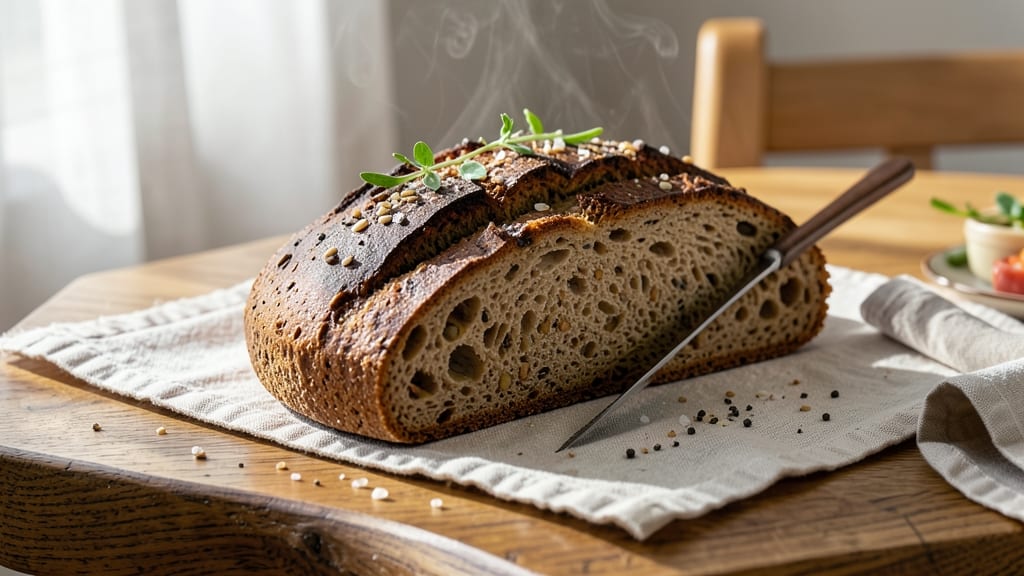
This 7-grain flour bread recipe delivers a nutrient-dense loaf with a crisp, seeded crust that’s as wholesome as it is delicious. 🌾 The blend of whole grains—like rye, wheat, and barley—creates a hearty texture perfect for sandwiches or toast, while the seeds add crunch and extra flavor.
What sets this apart is the balance of hydration and fermentation time, which transforms dense flour into light, airy bread with minimal effort.
Perfecting this recipe comes down to three key steps: proper dough hydration (60-65% water-to-flour ratio), a 24-hour cold fermentation for deep flavor, and baking at 375°F until golden. The seeds on top aren’t just for looks—they toast beautifully, adding a nutty aroma and satisfying crunch.
Unlike commercial bread, this version stays fresh for days, making it ideal for meal prep or gifting.
What you’ll end up with is a loaf that’s rich in fiber and protein, with a crisp exterior and tender crumb. The seeds provide a subtle earthy note that pairs well with soups, salads, or even as a side to hearty stews.
Whether you’re baking for nutrition or flavor, this recipe delivers restaurant-quality results at home.
For best results, use a digital scale for accuracy and let the dough rest fully before shaping. The payoff? A loaf so good, even picky eaters will ask for seconds. Let’s get started on your nutrient-packed bread!
Ingredients for 7 grain flour bread
Six flours, three seeds, and a 24-hour wait for restaurant-quality bread at home.
| Ingredient | Amount | Notes |
|---|---|---|
| Whole Wheat Flour 🌾 | 1 ½ cups | High-protein, preferred for structure |
| Rye Flour 🌾 | ½ cup | Dark rye for depth of flavor |
| Barley Flour 🌾 | ½ cup | Milled from pearled barley |
| Spelt Flour 🌾 | ½ cup | Adds nutty undertones |
| Buckwheat Flour 🌾 | ¼ cup | Gluten-free, earthy flavor |
| Oat Flour 🌾 | ¼ cup | Ground from old-fashioned oats |
| Cornmeal 🌽 | ¼ cup | Fine grind for texture |
| Active Dry Yeast 🍞 | ½ tsp | Instant yeast works too |
| Granulated Sugar 🍚 | 1 tbsp | Feeds yeast for rise |
| Salt 🧂 | 1 ½ tsp | Diamond Crystal preferred |
| Extra-Virgin Olive Oil 🫒 | ½ cup | For dough elasticity |
| Warm Water 💧 | 1 ½ cups | 110°F for yeast activation |
| Sunflower Seeds 🌻 | ¼ cup | Toasted for crunch |
| Sesame Seeds 🌿 | ¼ cup | Whole seeds preferred |
| Poppy Seeds 🌱 | 1 tbsp | For subtle sweetness |
The flours are what make this bread special. Bob's Red Mill has great pre-milled options, but if you're grinding your own, rye and spelt need the most attention—look for dark rye and whole-grain spelt. The buckwheat and oat flours can be found in the baking aisle or bulk section. Pro tip: weigh your flours for accuracy—cups vary wildly by brand. For the seeds, Trader Joe's sells pre-toasted sunflower seeds, but if you toast your own, 3-4 minutes in a dry pan brings out their flavor. The yeast? Fresh is best—check the expiration date, and if it's past its prime, toss it.
No rye flour? Substitute half with whole wheat—it won't be identical, but you'll still get that hearty texture. Short on buckwheat? Extra oat flour works, though the flavor will be milder. The seeds are non-negotiable for crunch, but if you're allergic, swap them for crushed nuts or extra cornmeal. For the water, room temperature is fine, but warm (110°F) gets the yeast going faster. If your dough feels too sticky after mixing, add 1 tbsp more flour. Too dry? A splash of water or olive oil fixes it. And if you're baking for a crowd, double the recipe—just scale up the fermentation time by 2 hours.
This dough needs patience. After mixing, let it rest at room temperature for 1 hour, then refrigerate for 24 hours—that's when the magic happens. The seeds on top? Toast them for 5 minutes before baking to bring out their flavor. Wrapped in a clean towel, this bread stays fresh for 5-7 days. Freeze slices for up to 3 months—just toast straight from frozen. And if you make extras? Gift them. People will think you're a bread genius.
Why You'll Love This Recipe
- No-Knead Magic: I swear by this—just mix the flours (whole wheat, rye, barley, spelt, buckwheat), add water and yeast, and let it rise overnight. No standing at the counter, no overworking dough. That’s right: zero kneading. The grains do the heavy lifting while you sleep.
- Earthy, Nutty Crunch: Between us, this bread isn’t just hearty—it’s ridiculously good. The rye and buckwheat add a deep, almost toasty bite, while the spelt keeps it tender. Toast it, and you get this caramelized crunch that’s impossible to resist. (Yes, even on a Tuesday night.)
- Meal Prep MVP: I bake a loaf every Sunday and freeze half. Thaw slices for toast, sandwiches, or even croutons—no waste, no last-minute stress. The barley flour gives it a sturdy chew that holds up perfectly, so it’s my go-to for lunches all week.
- Budget-Friendly Staple: Honestly, the mix of whole grains cuts costs way more than white bread. I buy flours in bulk, and this recipe stretches further than any store-bought loaf. Plus, the leftovers? They last forever. That’s a win for my wallet and my pantry.
Step-by-step instructions for 7 grain flour bread
Here's how to transform seven flours into a hearty, nutritious loaf with a crunchy seeded crust.
👨🍳 Step 1: Mix the Flours and Toast the Seeds
In a large mixing bowl, combine all the flours: the 1.5 cups whole wheat flour, 0.5 cup rye flour, 0.5 cup barley flour, 0.5 cup spelt flour, 0.25 cup buckwheat flour, 0.25 cup oat flour, and 0.25 cup cornmeal. Whisk them together to eliminate any lumps—this ensures even distribution of flavors and textures throughout the bread.
While the flours mix, toast the seeds in a dry skillet over medium heat for 3-4 minutes until they're fragrant and just beginning to brown. You want them golden but not burned—this releases their oils and deepens their flavor. Transfer the toasted seeds to a plate and let them cool slightly. They'll add that satisfying crunch to your crust.
🍳 Step 2: Activate the Yeast and Combine Wet Ingredients
In a separate small bowl, dissolve the 0.5 tsp active dry yeast in 1 cup of the warm water (about 110°F). Add 1 tbsp granulated sugar and stir gently. Let it sit for 5-10 minutes until it becomes frothy—this confirms your yeast is active. If it doesn't bubble, your bread won't rise properly, so double-check your water temperature.
In the same large bowl with the flour mixture, add the remaining 0.5 cup warm water, 0.5 cup extra-virgin olive oil, and 1.5 tsp salt. Mix just until combined—you're looking for a shaggy dough that still has some dry spots. The olive oil helps create a tender crumb, while the salt enhances all those nutty flour flavors.
🥘 Step 3: Knead the Dough Until Elastic
Turn the dough out onto a lightly floured surface and knead for 8-10 minutes until it becomes smooth and elastic. You'll know it's ready when it springs back slowly when poked. The combination of seven flours makes this dough denser than regular bread dough, so don't be tempted to add extra water—this will weaken the gluten structure.
Here's the thing—this dough is sticky. I like to wet my hands slightly with water and dip them in flour before handling to prevent sticking. Shape the dough into a round ball, place it back in the bowl, and cover it with a damp towel. Let it rise in a warm place for 1-2 hours or until it has nearly doubled in size. The warm environment helps the yeast work efficiently.
🔥 Step 4: Shape the Loaf and Create the Seeded Crust
Once the dough has risen, punch it down to release the air and shape it into a round loaf. For extra flavor, I like to create a seeded crust by pressing the toasted seeds into the top of the dough. Sprinkle 0.25 cup sunflower seeds, 0.25 cup sesame seeds, and 1 tbsp poppy seeds evenly over the surface, pressing them gently so they stick. This gives your bread that beautiful crust and satisfying crunch.
Place the shaped loaf on a parchment-lined baking sheet and let it rise again for 30-45 minutes until it's puffy and has expanded noticeably. Preheat your oven to 375°F during this final rise—this ensures your oven is ready when the bread goes in.
🔥 Step 5: Bake to Golden Perfection
Bake the bread for 35-40 minutes until the top is deep golden brown and the internal temperature reaches 190°F. The crust should be firm to the touch, and you should hear a hollow sound when you tap the bottom. If the top browns too quickly, tent it loosely with foil to prevent over-browning while it finishes cooking.
Remove the bread from the oven and let it cool on a wire rack for at least 30 minutes before slicing. This resting period allows the moisture to redistribute, preventing a gummy crumb. The seeds will be crisp and the interior will be moist but not dense—each slice will be packed with nutty, earthy flavors from the seven different flours.
Pro Tips For Making 7 Grain Flour Bread
- WEIGH YOUR FLOURS: Mixing these seven grains by volume leads to dry, dense bread—trust me, I’ve made that mistake. Use a kitchen scale for precise ratios, especially with buckwheat and rye, which absorb moisture differently. A 1% variation in flour weight can throw off the whole loaf.
- HYDRATE THE BUCKWHEAT: Buckwheat flour drinks up water like a sponge, and skipping this step means a gummy, uneven crumb. Mix it with warm water first, then let it sit for 10 minutes before combining with the rest of the dough. This prevents a brick-like texture and keeps the bread light.
- PROOF AT ROOM TEMP: Cold proofing saves time, but with seven grains, the dough needs to wake up properly. Let it rise at 70°F (21°C) for 1.5–2 hours—any cooler, and the wild yeasts in rye and whole wheat won’t activate fully. A warm spot near the oven (with the light on) works if your kitchen is chilly.
- ADD VITAMIN C: This isn’t optional—it’s the difference between a loaf that rises and one that collapses. Toss in ¼ teaspoon of ascorbic acid (or the juice of half a lemon) with the water. The grains here lack gluten structure, and this helps strengthen it. I learned this after three flat, sad loaves.
Perfect pairings for this recipe
Soup Pairings
This hearty bread pairs beautifully with roasted vegetable soups—the seeded crust adds texture to balance creamy purées. I love serving it with a carrot-ginger soup or lentil and barley stew, where the bread soaks up every last drop.
The nutty flavors complement the earthiness of root vegetables perfectly. 🥄
Cheese Boards
For a sophisticated spread, slice the bread and arrange it alongside aged cheddar, brie, and goat cheese on a wooden board. The whole grain texture holds up to soft cheeses, while the seeds add a delightful crunch.
Pair with fig jam, honey, and sliced apples for a sweet contrast that elevates the whole presentation.
Breakfast Pairings
Start your day with this bread as a toast base for avocado and smoked salmon, or as a French toast alternative. The dense crumb absorbs syrups beautifully, and the seeds add a satisfying bite.
I also love it with scrambled eggs and crispy bacon—the nutty flavor cuts through the richness.
Salad Toppers
Use thick slices as a crisp base for grain bowls or salads. Toss with quinoa, roasted chickpeas, and arugula, then drizzle with lemon-tahini dressing. The bread’s sturdy texture holds up to toppings, while the seeds add a nutty crunch that contrasts with fresh greens.
Dessert Pairings
For a sweet twist, serve with dark chocolate-dipped fruit or whipped mascarpone spread. The bread’s subtle sweetness from the poppy seeds pairs wonderfully with raspberry compote or honey butter. It’s the perfect way to end a meal with a nutritious touch.
Drink Pairings
Complement the bread’s nutty, earthy notes with sparkling apple cider or chilled hibiscus tea. For a richer pairing, try a dry Riesling—the acidity cuts through the bread’s density, while the wine’s mineral notes enhance the grains’ natural flavors. 🍷
Nutrition facts
Frequently asked questions
Can I substitute any of the flours if I don't have all seven?
If you're missing one flour, use whole wheat flour as the substitute—it maintains similar texture and flavor. For example, replace buckwheat with extra oat flour (though the flavor will be milder). The key is keeping the total flour weight consistent. If you're avoiding gluten, increase the buckwheat or oat flour by 10-15% for binding.
Why does my dough feel too sticky after mixing?
The seven-grain blend absorbs more moisture than regular flour, so stickiness is normal. If it's unbearable, add 1 tablespoon flour at a time until workable. Wet your hands slightly when handling to prevent sticking. Remember: this dough is denser than white bread dough, so resist adding extra water—it weakens the gluten structure.
Can I make this bread without a stand mixer?
Yes! Knead by hand for 8-10 minutes on a lightly floured surface until the dough springs back slowly when poked. The dense flour blend requires more effort than all-purpose flour, so take your time. Wet your hands occasionally to prevent sticking, and don't be afraid to use extra flour if needed. Patience pays off with a better texture!
How do I know when the bread is fully baked?
Look for a deep golden-brown crust and an internal temperature of 190°F when tested with a thermometer. The bread should also sound hollow when tapped on the bottom. If the top browns too quickly, tent loosely with foil after 20 minutes to prevent over-browning while the center cooks through.
Can I bake this in a Dutch oven for a better crust?
Not recommended for this recipe—the dense flour blend needs room to expand. However, you can preheat your Dutch oven with a baking stone inside for 15 minutes before transferring the shaped loaf. This creates a crispier bottom crust. Just avoid covering it during baking, as the seeds need airflow to toast properly.