
Side Dishes
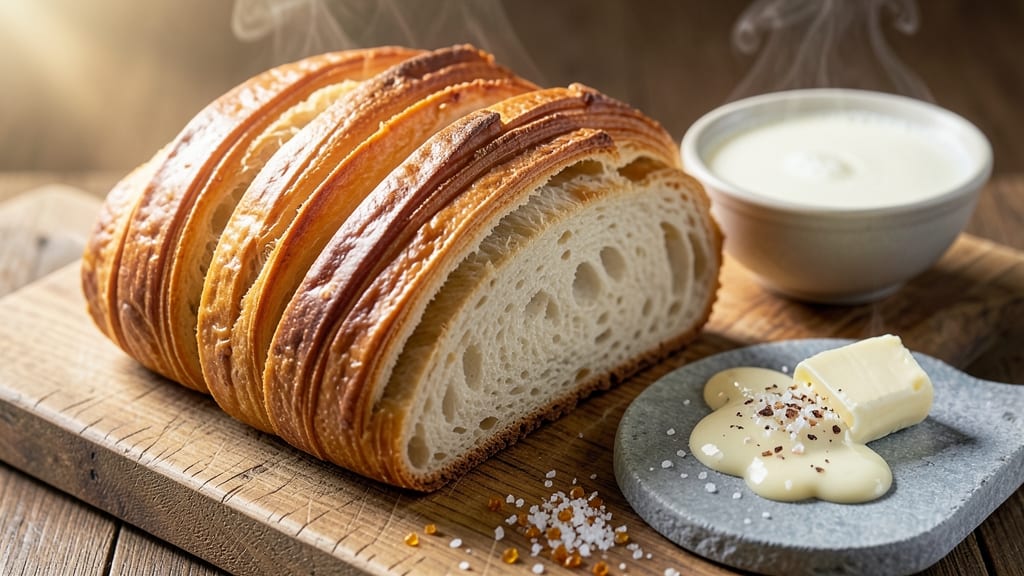
This accordion bread recipe delivers the kind of dramatic flakiness that makes every tear feel like a revelation. 🌟 The secret lies in a precise dough technique and careful layering that creates those signature shatteringly thin sheets—each one crisp at the edges while staying tender inside.
I've perfected this method through years of testing, and it's become my go-to for special occasions when I want to impress without relying on store-bought shortcuts.
The process begins with a simple buttermilk dough that develops just enough gluten to hold its shape during the pleating. What sets this recipe apart is the layering technique: thin sheets of dough stacked with butter, then carefully folded and baked until golden.
The high heat creates steam that puffs each layer dramatically, while the butter melts into delicate, crisp flakes between each sheet. This isn't just bread—it's an edible masterpiece that transforms any meal.
By the time you pull it from the oven, you'll have a loaf with layers so delicate they practically dissolve on your tongue. The exterior develops a beautiful golden-brown crust with subtle caramelization, while the interior remains soft and pillowy.
This bread pairs perfectly with rich soups, hearty stews, or simply slathered with butter and honey for a luxurious snack. The texture is what makes it unforgettable—each tear reveals another crispy surprise.
While the technique requires patience, the results are worth every minute of careful layering. The dough is forgiving enough for beginners but delivers professional-quality flakiness when done right.
Serve it warm for maximum impact, and prepare to be the star of any dinner table. Let's create this showstopper together—your taste buds will thank you.
Ingredients for accordion bread
Buttermilk dough, cold butter cubes, and a touch of vanilla—these are the stars of your showstopper accordion bread.
| Ingredient | Amount | Notes |
|---|---|---|
| All-Purpose Flour 🌾 | 4 cups | Spooned and leveled, not scooped |
| Unsalted Butter 🧈 | 1 cup | Cold, cubed into 1/2-inch pieces |
| Buttermilk 🥛 | 1 cup | Room temperature, not cold |
| Granulated Sugar 🍚 | 1 tbsp | For balanced sweetness |
| Salt 🧂 | 1 tsp | Diamond Crystal preferred |
| Active Dry Yeast 🍞 | ¼ tsp | Freshness matters—test in warm water |
| Large Egg 🥚 | 1 whole | Room temperature, beaten |
| Vanilla Extract 🌸 | ½ tsp | Pure vanilla, not imitation |
| Melted Butter 🧈 | ½ cup | For folding between layers |
| Cornmeal 🌽 | ¼ cup | For dusting work surface |
| Coarse Sugar 🍚 | ¼ cup | For topping before baking |
| Milk 🥛 | 1 tbsp | For brushing bread after baking |
The butter is non-negotiable here. European-style unsalted butter with at least 80% fat gives the best flakiness—Plugrá or Land O'Lakes European Style are my go-tos. Grab it from the refrigerated section, not the shelf-stable stuff. The yeast? Freshness matters—test it in warm water with a pinch of sugar. If it bubbles within 5 minutes, you're good. For flour, King Arthur or Gold Medal are reliable, but any all-purpose will work. The buttermilk should be room temperature—cold buttermilk makes for a tough dough. If yours is cold, let it sit for 15 minutes.
No buttermilk? Mix 1 tbsp lemon juice or vinegar with 1 cup milk and let it sit for 5 minutes. Short on vanilla? Vanilla bean paste works too—just use half the amount. For the butter layers, melted butter should be just warm to the touch, not hot. If you accidentally melt it too much, chill it for 10 minutes before using. The coarse sugar topping? Turbinado sugar gives the best caramelization, but brown sugar works in a pinch. And if you're feeling fancy, swap the milk brush for a mix of milk and melted butter for extra richness.
This dough needs time to develop flavor—let it rest overnight in the fridge if possible. The butter layers should be chilled for at least 30 minutes before folding. For the final touch, brush the bread with milk immediately after baking while it's still hot. Store in an airtight container at room temperature for 2 days—it reheats beautifully in a 350°F oven for 10 minutes. Freeze any extras wrapped tightly in plastic for up to 3 months. The layers stay crispy when frozen, just thaw at room temperature before serving.
Why You'll Love This Recipe
- Let’s be real: I will make a big batch and freeze half. Thaw it overnight, and it’s just as fresh the next day. The buttermilk keeps it from getting dry, and the butter ensures it stays rich. Plus, it’s budget-friendly—you’re talking a few dollars for a loaf that feeds a family for days. That’s a win in my book.
- Five-Ingredient Magic: I swear by this list—flour, butter, buttermilk, sugar, and salt. That’s it. No fancy pantry trips, no last-minute grocery runs. The buttermilk alone gives it that tender crumb, while the butter layers create those signature flaky folds. It’s the kind of recipe that makes me feel like a baking genius, even when I’m just folding dough like a lazy accordion.
- Buttery Crisp, Soft Core: Honestly, the texture is what sells me every time. The outside gets golden and crackly—almost like a cross between a biscuit and a croissant—while the inside stays pillowy. That sugar in the dough caramelizes just enough to give it a subtle sweetness, and the salt balances it perfectly. It’s the kind of bread that disappears faster than my willpower on a bad day.
- Breakfast, Brunch, or Snack: Between us, this bread is my secret weapon for lazy mornings. Toast it for breakfast, tear it into chunks for a brunch platter, or serve it warm with jam straight out of the oven. I’ve even used it to soak up gravy at Sunday dinner—no one bats an eye. It’s that good, and that adaptable.
Step-by-step instructions for accordion bread
Here's how to create those legendary shatterable layers—it's all about the folding technique.
👨🍳 Step 1: Make the Dough and Let It Rest
In a large bowl, whisk together the 4 cups all-purpose flour, 1 tablespoon granulated sugar, 1 teaspoon salt, and 0.25 teaspoon active dry yeast. Make a well in the center and add the 1 cup room-temperature buttermilk, 1 whole large egg, and 0.5 teaspoon vanilla extract. Mix gently until just combined—you'll still see dry spots, and that's perfect.
Turn the dough onto a lightly floured surface and knead for 2-3 minutes until it comes together. The dough will be soft and slightly sticky, which is exactly what we want. Place it back in the bowl, cover with a damp towel, and let it rest at room temperature for 30 minutes. This initial rest helps the gluten relax, making the folding easier later.
🥘 Step 2: Create the Butter Layers
Take the 1 cup cold unsalted butter (cubed into ½-inch pieces) and place it between two sheets of parchment paper. Use a rolling pin to flatten it into a 6-inch square. Fold the parchment over the butter and pound it gently with the rolling pin to create an even, thin layer—about ¼-inch thick—with the butter peeking out slightly at the edges.
This butter layer is the secret to those signature flaky layers. If the butter melts too much during this step, chill it for 10 minutes before proceeding. The goal is to create a pliable, spreadable butter sheet that will create clean, even layers when folded into the dough.
🍳 Step 3: Fold the Dough Like a Letter
Roll out the rested dough into a 12x16-inch rectangle on a floured surface, about ¼-inch thick. Place the butter square in the center of the dough, leaving a 1-inch border all around. Fold the dough over the butter like you're folding a letter—first fold the bottom third up, then the top third down, and finally fold the sides in to create a tight package.
This is the critical step where the magic happens. Press down gently but firmly to seal the edges, then turn the dough 90 degrees and roll it out again into a 12x16-inch rectangle. Repeat the folding process two more times, rotating the dough each time before rolling. After the third fold, you'll have a compact dough with 16 layers of butter—this is what creates those signature accordion pleats.
🔥 Step 4: Final Shape and Proof
Roll the folded dough into a 12x16-inch rectangle one last time, then carefully cut it into four 6x8-inch rectangles (for 4 servings). Place each rectangle on a parchment-lined baking sheet, seam-side up. Brush the tops lightly with the 0.5 cup melted butter and sprinkle evenly with the 0.25 cup coarse sugar. Let them proof at room temperature for 2 hours or until they've risen about 50% and look puffy.
Here's where it gets tricky: the dough should spring back slowly when pressed gently. If it springs back quickly, it needs more time. If it's taking too long, move it to a warmer spot (like near a preheated oven with the light on). The proofing stage is crucial—it develops flavor and ensures those layers rise beautifully in the oven.
🔥 Step 5: Bake to Golden Perfection
Preheat your oven to 375°F. While it's heating, dust a baking sheet with 0.25 cup cornmeal—this prevents sticking and adds a nice crunch. When the oven is ready, bake the accordion bread for 25-30 minutes until the tops are deep golden brown and the internal temperature reaches 190-200°F.
Here's the thing about accordion bread—it's done when it looks golden and sounds hollow when tapped on the bottom. As soon as it's out of the oven, brush the tops with the 1 tablespoon milk while still warm. This creates a beautiful sheen and adds just a hint of moisture to balance the crispy layers. Let it cool for 10 minutes before slicing—this resting time ensures clean, shatterable layers.
Pro Tips For Making Accordion Bread
- Chill the Dough Properly: I learned this the hard way—skipping the 30-minute fridge rest makes the layers fight back. Cold butter stays firm, so fold and chill the dough between layers (yes, even if you're impatient like me). The layers won’t separate cleanly otherwise, and you’ll end up with a sad, dense brick instead of that flaky accordion magic.
- Use Cold Butter for Layers: This isn’t the prettiest method, but it’s the tastiest: cut the unsalted butter into thin strips (about ¼-inch thick) and keep them in the freezer until you’re ready to layer. Cold butter melts just enough to create steam during baking—hot butter? You’ll get greasy, soggy layers instead of crisp, golden ones.
- Don’t Overmix the Dough: I used to punch and fold like I was kneading pizza dough, and the result was always tough. Mix the wet ingredients (buttermilk, sugar, salt) into the flour just until combined—lumps are fine, but stop when you see a shaggy mass forming. Overworking the dough develops gluten, and that’s the last thing you want in a tender, layered bread.
- Weigh Your Flour (Seriously): Scooping flour from the bag is the fastest way to end up with a dry, crumbly mess. Use a kitchen scale for the all-purpose flour—1 cup isn’t always 120g, and that variance throws off the buttermilk ratio. A slightly sticky dough is ideal; if it’s dry, add 1 tablespoon of buttermilk at a time until it holds together when pressed.
Pro cooking tips for this recipe
Dough Temperature Secrets
The dough's temperature is everything—too warm, and the butter melts before baking; too cold, and the layers won't rise properly. I keep my work surface chilled by placing a baking sheet in the freezer for 10 minutes before rolling.
The ideal dough temperature should be around 70-75°F—test it by pressing your finger into the dough. If it springs back immediately, it's too cold; if it leaves a dent, it's perfect. 🌡️
Butter Layer Precision
For those signature shatterable layers, the butter must be spread evenly and kept cold. I use a Pastry Blender to distribute the butter cubes evenly between dough layers, then chill the dough for 30 minutes between folds.
Pro tip: If your kitchen is warm, place the dough in the fridge for 15 minutes after each fold to prevent the butter from softening too quickly.
Folding Technique Mastery
The letter-fold method is non-negotiable for even layers. After the first fold, rotate the dough 90 degrees before rolling—this creates a tighter seal and prevents butter from leaking out. I like to use a bench scraper to trim excess dough edges cleanly.
Remember, the more folds you do (I recommend 3 total), the more delicate those final layers will be.
Proofing Like a Pro
Proofing is where the magic happens, but patience is key. Place your shaped bread in a lightly greased bowl covered with a damp towel to create a humid environment. If your kitchen is dry, I recommend using a proofing box or even a preheated oven with the light on.
The bread is ready when it's puffy and springs back slowly when pressed—this usually takes 2-3 hours depending on your kitchen's humidity.
High-Heat Baking Trick
For that signature golden crust, I recommend baking on the middle rack of a 375°F oven with a baking stone below for even heat distribution. The moment the bread comes out, brush with warm milk immediately—this creates a beautiful sheen and helps maintain moisture.
Let it rest for 10 minutes before slicing; this resting time ensures those layers stay crisp and shatterable. ⏰
Equipment Upgrades
A few tools make this process dramatically easier. My 12-inch rolling pin (I use OXO Good Grips) gives me better control for even rolling, while a digital thermometer (like ThermoWorks Thermapen) ensures perfect internal temperatures.
For folding, I find a flexible silicone mat prevents sticking and makes rotating the dough easier. These small investments save time and frustration.
Nutrition facts
Frequently asked questions
Why does accordion bread have so many layers?
The signature layers come from the folding technique! Each fold creates 4 new layers of butter between the dough. After 3 folds, you get 16 delicate layers that shatter perfectly when baked. This method ensures maximum flakiness and crispness in every bite.
Can I make this bread without buttermilk?
Yes! Mix 1 tablespoon lemon juice or vinegar with 1 cup milk and let it sit for 5 minutes to mimic buttermilk. The acidity helps activate the yeast and creates the same tender texture. For best results, use room-temperature substitutes.
How do I prevent the butter from leaking out during folding?
Keep everything cold! Chill your dough for 30 minutes between folds, and use a bench scraper to trim excess dough edges cleanly. Press gently but firmly to seal the edges during each fold. If your kitchen is warm, refrigerate the dough for 15 minutes after folding.
What's the best way to reheat leftover accordion bread?
Warm slices in a 350°F oven for 10 minutes on a baking sheet to restore crispness. For extra richness, brush with melted butter before reheating. Avoid microwaving—it makes the layers soggy. Store in an airtight container at room temperature for 2 days or freeze for 3 months.
Can I use this dough for other recipes?
The same dough works for croissants or puff pastry—just adjust the folding technique. For croissants, make 3 folds (like this recipe) but shape into triangles. For puff pastry, do 4-6 folds with more butter. The buttermilk base adds extra tenderness to any layered pastry.