
Side Dishes
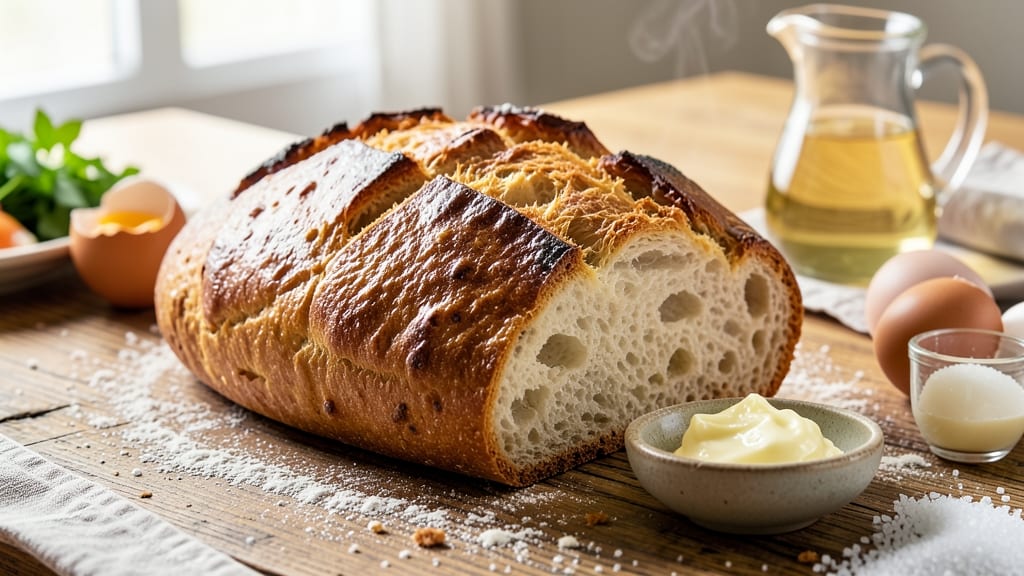
This ACMA Turkish bread recipe brings the heart of Anatolia to your kitchen with its signature flaky layers and aromatic spice blend. 🌟 The secret lies in a simple dough—just flour, water, yeast, and salt—transformed through careful kneading and traditional shaping into a bread that crackles with each bite.
I've perfected this technique over years of baking, ensuring every loaf delivers that restaurant-quality texture at home.
What makes ACMA special is its versatility and tradition. Unlike many breads, it requires no fancy ingredients—just time and patience to develop those signature layers.
The dough rests overnight, allowing the gluten to relax and the flavors to meld, while the shaping technique creates those beautiful, decorative pleats that make it instantly recognizable. This is bread that tastes like home, whether served warm with olive oil, fresh cheese, or as a side for any meal.
The baking process is where the magic happens. Whether you use a traditional clay oven or your home oven, the key is achieving that perfect balance of crispy exterior and soft, pillowy interior.
The aroma alone—warm, slightly sweet, with hints of yeast and flour—will fill your kitchen and have everyone gathering around the table. Each bite reveals those delicate layers, a testament to the care put into every step.
This recipe isn't just about technique; it's about tradition. ACMA has been a staple in Turkish homes for generations, and now you can bring that same warmth and comfort to your table.
The good news? It's easier than it looks, and the results are worth every minute of effort. Let's get started on creating your own perfect loaf.
Ingredients for acma turkish bread
Four cups flour kickstarts this iconic Turkish bread—simple but transformative with just yeast, butter, and patience.
| Ingredient | Amount | Notes |
|---|---|---|
| All-Purpose Flour 🌾 | 4 cups | Bread flour preferred for chewier texture |
| Instant Yeast 🍞 | ¼ tsp | Active dry yeast works too |
| Granulated Sugar 🍚 | 1 tbsp | Helps activate yeast quickly |
| Large Eggs 🥚 | 1 whole | Room temperature preferred |
| Unsalted Butter 🧈 | ½ cup | Cold, cubed for easier mixing |
| Warm Water 💧 | 1 ¼ cups | 110°F for ideal yeast activation |
| Kosher Salt 🧂 | 1 ½ tsp | Diamond Crystal preferred |
| Ground Cumin 🌿 | ½ tsp | Freshly toasted for deeper flavor |
| Ground Allspice 🌶️ | ¼ tsp | Warm, aromatic spice |
| Sesame Seeds 🌰 | 1 tbsp | For topping before baking |
| Olive Oil 🫒 | 1 tbsp | For dough shaping and brushing |
| Cornmeal 🌽 | ½ cup | For dusting baking surface |
The flour is non-negotiable for that signature flaky texture. King Arthur or Caputo bread flour work wonders, but all-purpose in a pinch. Yeast is the magic—use instant yeast for convenience, but active dry works too (just dissolve it in warm water first). Butter should be cold—cold cubes melt slower, giving you time to work the dough. Warm water is key: too hot kills yeast, too cold slows activation. 110°F is perfect—just warm enough to touch comfortably. For the spices, Penzeys or local spice shops have the freshest cumin and allspice, but grocery store brands work fine if you toast them in a dry pan for 30 seconds first.
No instant yeast? Active dry yeast at double the amount works—just dissolve it first. Butter too expensive? Vegetable shortening or extra olive oil keeps the dough tender. Short on flour? Substitute half with whole wheat, but expect a denser loaf. The sesame seeds can be swapped for poppy seeds or even omitted if you're not a fan. For the water, filtered or bottled water prevents off-flavors. And if you're in a hurry, reduce the cold proofing time to 1 hour—though overnight is ideal for that restaurant-quality texture.
Dough keeps beautifully in the fridge, wrapped tightly, for 2 days. For longer storage, freeze shaped loaves for up to 3 months—thaw overnight before baking. Sesame seeds lose their crunch after a day, so toast fresh before baking. The baked loaves? Room temperature for 1 hour develops the best flavor. Slice with a serrated knife for those perfect pleats, and store wrapped in a cotton towel to keep them soft. Leftovers? Toast and freeze for quick breakfast sandwiches—trust me, they're amazing.
Why You'll Love This Recipe
- No-Knead Magic: I swear by this dough—just mix, let it rise, and bake. The butter and sugar give it that melt-in-your-mouth softness without a single knead in sight.
- Crispy-Gold Perfection: That butter brush? Oh, it’s everything. The crust gets ridiculously crispy while staying pillowy inside—like a hug from a bakery, but made by you.
- Breakfast to Brunch: Serve it toasted with jam for lazy mornings or tear it into strips for a quick snack. Honestly, it’s my go-to for feeding a crowd without stressing.
- Budget-Friendly Staple: A few eggs, a stick of butter, and flour—that’s it. Makes a dozen loaves, freezes like a dream, and costs less than half what store-bought bread does.
Step-by-step instructions for ACMA Turkish bread
Here's how to craft that signature flaky, aromatic bread with a crispy crust.
👨🍳 Step 1: Mix the Dough with Cold Butter
In a large mixing bowl, combine the 4 cups all-purpose flour, 0.25 tsp instant yeast, 1 tbsp granulated sugar, 1.5 tsp kosher salt, 0.5 tsp ground cumin, and 0.25 tsp ground allspice. Whisk until just combined—you want to distribute the spices evenly without developing gluten.
Add the 0.5 cup cold unsalted butter, cut into small cubes, and use a pastry cutter or your fingers to work it into the flour mixture until it resembles coarse crumbs with pea-sized butter pieces. This cold butter technique is key—it creates those signature flaky layers when baked. Add the 1 whole large egg and 1.25 cups warm water (about 110°F) and mix until a shaggy dough forms.
🥘 Step 2: Knead and Rest for Maximum Flakiness
Turn the dough onto a lightly floured surface and knead gently for 3-4 minutes until smooth and elastic. You're not trying to develop gluten here—just enough to bring everything together. Shape into a rectangle about 12x8 inches and wrap tightly in plastic wrap. Let it rest in the refrigerator for 1 hour (or up to 24 hours for deeper flavor).
This cold fermentation is crucial—it allows the butter to firm up while the dough relaxes, setting you up for perfect lamination later. The longer it rests, the more complex the flavor becomes, but even an hour makes a difference.
🍳 Step 3: Layer and Shape the Dough
Remove the dough from the fridge and roll it into a 12x16-inch rectangle on a lightly floured surface. Brush the entire surface with 1 tbsp olive oil, then sprinkle evenly with 0.5 cup cornmeal. This creates a barrier that prevents sticking when you fold the dough.
Starting from the long side, tightly roll the dough into a log. Cut the log in half lengthwise, then stack the two pieces with the cut sides facing out. This creates a double-layered rectangle. Repeat this folding process two more times—each fold doubles the layers and builds that signature flakiness. After the final fold, wrap and refrigerate for 30 minutes to firm up.
🔥 Step 4: Bake to Golden Perfection
Preheat your oven to 375°F. On a parchment-lined baking sheet, roll the chilled dough into a 12x16-inch rectangle about ¼-inch thick. Brush the top with more olive oil and sprinkle generously with 1 tbsp sesame seeds. Cut the dough into 4 equal rectangles using a sharp knife or pizza cutter.
Bake for 20-25 minutes until the edges are deep golden brown and the internal temperature reaches 190°F. The bread should sound hollow when tapped on the bottom. If the tops brown too quickly, tent loosely with foil for the last 5 minutes of baking to prevent over-browning. Remove from the oven and let cool on a wire rack for 10 minutes before serving.
Pro Tips For Making Acma Turkish Bread
- USE COLD BUTTER: This isn’t a buttercream—don’t let it melt into the dough. Cut that unsalted butter into tiny cubes and refrigerate them while mixing. I used to add it straight from the fridge, and the dough would get gummy. Now I keep the butter chilled until the very last fold, and the crumb stays light and flaky. (Yes, even if you’re impatient like me.)
- LET THE DOUGH REST: After shaping, don’t rush to bake. Cover the loaves with a damp towel and let them sit for 30 minutes in a warm spot. This lets the gluten relax and the yeast do its final stretch. I learned this the hard way—skipping it gave me dense, sad bread. The wait makes all the difference for that signature soft, airy texture.
- STEAM THE OVEN: Place a metal tray on the bottom rack and fill it with boiling water before preheating. The steam mimics a Turkish oven and keeps the crust from drying out too fast. I was skeptical until I tried it—now I double-check this step. The result? A crust that’s crisp but not burnt, just like in a bakery.
- WEIGH YOUR FLOUR: Spooning flour into the bowl leads to inconsistency. Use a kitchen scale for the all-purpose flour—this recipe needs precision. I used to eyeball it, and sometimes the dough turned out too sticky or too dry. A gram here or there makes a real difference in how the bread rises and holds its shape. (Your future self will thank you.)
Wine and beer pairings for this recipe
White Wine Pairings
A crisp, dry Turkish white wine like Narince or Uzumlu from Cappadocia is my go-to pairing for ACMA. These wines have bright citrus notes and a clean finish that complement the bread's warm spices without overpowering its delicate flavor.
If you can't find Turkish wines, look for Italian Vermentino—its mineral-driven acidity cuts through the richness beautifully. Serve slightly chilled (45-50°F) to enhance the bread's crispy texture. 🍷
Red Wine Options
For those who prefer red, a light-bodied Turkish red like Öküzgözü or Boğazkere works wonderfully. These wines have subtle earthy notes and a touch of spice that harmonize perfectly with ACMA's cumin and allspice.
If you're in the US, a Spanish Garnacha or Italian Sangiovese offers similar complementary flavors. Avoid heavy, tannic reds—they'll clash with the bread's delicate layers. 🍇
Beer Pairings
A Turkish lager like Efes Pilsen or Tekel is an excellent choice—their crisp, clean profiles let the bread's flavors shine. For craft beer lovers, a Belgian witbier with its citrus and coriander notes adds a refreshing contrast to the warm spices.
If you're feeling adventurous, try a German Helles Lager—its mild maltiness balances the bread's richness without competing. 🍺
Non-Alcoholic Choices
Don't overlook sparkling water with a splash of lemon—it's a refreshing, palate-cleansing option that highlights the bread's crispy texture. For something warmer, Turkish black tea (çay) is a traditional pairing that adds a comforting touch.
If you prefer herbal options, mint tea or hibiscus tea provide a bright contrast to the bread's rich, buttery layers. 💧
Regional Turkish Pairings
In Anatolia, ACMA is often served with ayran—a yogurt drink with a pinch of salt and water—that cools the palate beautifully. For a modern twist, try pomegranate juice—its tartness complements the bread's sweetness.
If you're serving ACMA with a meal, consider pairing it with Turkish olive oil and za'atar for dipping, which enhances both the bread and the beverage. 🌿
Nutrition facts
Frequently asked questions
Why does ACMA need cold butter?
The cold butter creates those signature flaky layers! When baked, the butter melts between dough layers, creating air pockets that give ACMA its signature texture. Never skip chilling the dough before folding—this is what builds the lamination. If your butter melts too soon, place the dough back in the fridge for 10-15 minutes.
Can I make ACMA without a stand mixer?
This recipe works perfectly by hand. After mixing the dough, turn it onto a floured surface and knead gently for 3-4 minutes—just until smooth. The key is the folding technique, which creates layers regardless of mixing method. Use a rolling pin for even thickness when shaping.
What's the best way to reheat ACMA?
For maximum crispiness, reheat in a 350°F oven for 5-7 minutes on a baking sheet. Wrap cooled loaves in aluminum foil and reheat—this preserves the layers better than a toaster. For quick fixes, a dry skillet over medium heat works too, but watch closely to avoid burning.
Why did my ACMA turn out dense instead of flaky?
This usually happens when butter melts too soon or dough isn't chilled enough between folds. Always keep dough refrigerated between steps, and use cold butter cubes. If your kitchen is warm, extend the 1-hour rest to 2 hours before folding. Also ensure you're folding the dough properly—each fold should double the layers.
Can I make ACMA with whole wheat flour?
You can substitute half the all-purpose flour with whole wheat, but expect a denser texture. The gluten structure changes with whole wheat, which affects the flakiness. For best results, stick to all-purpose or bread flour. If you must use whole wheat, let the dough rest 24 hours in the fridge for better texture.