
Side Dishes
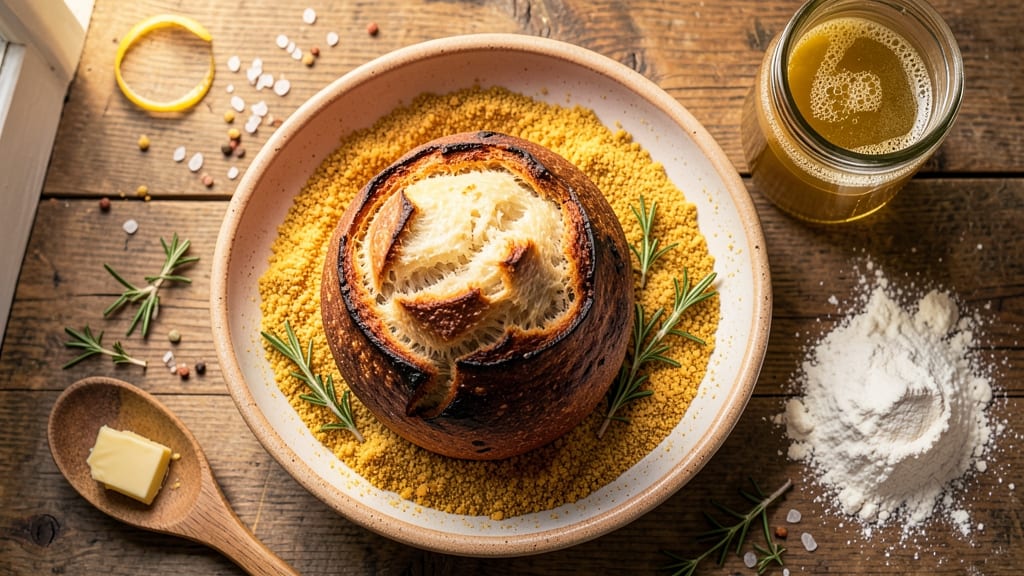
This adobe bread recipe brings the smoky, earthy essence of Southwestern clay ovens straight to your kitchen, transforming simple ingredients into a rustic masterpiece.
The secret lies in baking the dough directly on adobe bricks or cast iron, creating that signature crispy crust and tender interior that pairs perfectly with hearty stews or fresh salsas.
I perfected this version after years of experimenting with traditional techniques, ensuring every bite delivers that authentic adobe flavor without requiring specialized equipment.
What sets this recipe apart is its versatility—whether you use a mix of cornmeal and flour for a classic texture or stick to all-purpose flour for a softer loaf, the baking method remains the same.
The dough comes together in just 15 minutes, but the magic happens during the 30-minute baking process, where the heat from the bricks or skillet creates that coveted crust. No adobe bricks? No problem—cast iron or even a pizza stone works beautifully for the same effect.
The result is a loaf with a deeply caramelized crust that contrasts perfectly with a moist, slightly chewy interior. The smoky aroma alone will have everyone at the table anticipating the first bite.
This bread isn’t just a side—it’s the star, capable of standing up to rich chili, melting into soups, or being served warm with butter and honey. The best part? It’s foolproof, even for beginners, and the technique scales easily for gatherings.
For those who want to explore further, try adding a sprinkle of cumin or chili powder to the dough for extra depth, or brush the baked loaf with garlic butter for a restaurant-worthy finish.
The possibilities are endless, but the foundation—simple, traditional, and deeply satisfying—remains the same. Let’s get started on creating your own piece of Southwestern tradition.
Ingredients for adobe bread
Simple ingredients transform into rustic Southwestern bread with an authentic clay-oven crust.
| Ingredient | Amount | Notes |
|---|---|---|
| All-Purpose Flour 🌾 | 3 cups | Sifted for even texture |
| Yellow Cornmeal 🌽 | ½ cup | Fine grind preferred |
| Active Dry Yeast 🍞 | 1 package | 2.25 tsp (1 packet) |
| Warm Water 💧 | 1 ¼ cups | 110°F for activation |
| Granulated Sugar 🍚 | 1 tbsp | For yeast activation |
| Unsalted Butter 🧈 | ½ cup | Cold, cubed (1 stick) |
| Sea Salt 🧂 | 1 ½ tsp | Diamond Crystal preferred |
| Extra-Virgin Olive Oil 🫒 | 1 tbsp | For dough coating |
| Adobe Bricks or Cast Iron Skillet 🔥 | 2 whole | Preheated for baking |
| Coarse Sea Salt 🧂 | 2 tsp | For crust finishing |
| Cumin Seeds 🌿 | ½ tsp | Optional, toasted |
| Chili Powder 🌶️ | ½ tsp | Optional, smoky depth |
The cornmeal and flour blend creates that signature adobe texture—Bob's Red Mill cornmeal is ideal for its fine grind. For yeast, Saf-Instant works without proofing time, but traditional active dry yeast requires the warm water activation step. King Arthur Flour is my go-to for all-purpose, as it develops gluten beautifully without overworking. The unsalted butter must be cold to prevent dough overmixing; Land O'Lakes or Plugrá brands work perfectly. Preheat your bricks or skillet in the oven for 20 minutes before shaping the dough—this mimics the traditional clay-oven heat.
No cornmeal? Substitute with extra all-purpose flour, though texture will be slightly denser. Running short on yeast? 1 tsp baking powder can replace the package, but flavor will differ. For the optional spices, Penzeys carries high-quality cumin and chili powder—smoked paprika also works for depth. The coarse sea salt (like Maldon) creates that signature crust contrast; flaky sea salt is non-negotiable for finishing. If using cast iron, preheat until smoking hot—this is what generates that authentic caramelized crust. For extra smokiness, brush the baked loaf with olive oil and sprinkle with smoked paprika while still warm.
Store baked loaves in a canvas-lined basket for up to 3 days to maintain crust crispness. For longer storage, wrap tightly in foil and freeze—reheat in a 350°F oven for 10 minutes to restore texture. The dough can be prepared 8 hours ahead and refrigerated; let it sit at room temperature for 30 minutes before shaping. This bread reheats beautifully—5 minutes in a skillet over medium heat revives that fresh-from-the-oven appeal. Portion dough into 4 equal loaves for consistent baking results.
Why You'll Love This Recipe
- No Yeast Stress: I’ve ruined bread before—this recipe actually forgives me. The yeast mix is so simple (just warm water, sugar, and a pinch of patience), and even if I forget to proof it long enough, it still rises. That cornmeal crust? Gives it just enough structure to hold together without falling apart.
- Earthy Sweet Crust: Here’s what sold me—the moment that golden, slightly crispy cornmeal crust forms. It’s got this subtle sweetness from the sugar and a nutty depth from the cornmeal that pairs perfectly with savory soups or honey butter. (Yes, even on a Tuesday night.)
- Meal Prep Hero: I make a double batch on Sundays, let it cool, then slice and freeze. Toast straight from frozen? Still warm, still delicious. It’s my go-to for quick lunches or when I need to feed a crowd without stressing over last-minute baking.
- Pantry Staple Magic: Between us, this recipe uses things you already have. No weird ingredients, no special tools—just flour, cornmeal, and yeast. I’ve made it on $3 grocery budgets, and it’s still the star of my table. Plus, leftovers? Toast them, freeze them, or turn them into croutons. Waste not.
Step-by-step instructions for Southwestern clay-oven crust
Transform simple ingredients into rustic adobe bread with a crisp exterior and tender crumb.
Activate the Yeast and Mix the Dough
In a small bowl, combine the 1.25 cups warm water and 1 tbsp granulated sugar. Sprinkle the 1 package active dry yeast over the surface and let it sit for 5-10 minutes until foamy. This activation step ensures your dough rises properly—if it doesn't foam, your yeast is inactive and needs replacing.
In a large mixing bowl, whisk together the 3 cups all-purpose flour and 0.5 cup yellow cornmeal. Add the 1.5 tsp sea salt and optional 0.5 tsp cumin seeds and 0.5 tsp chili powder if using. Create a well in the center and pour in the yeast mixture along with the 0.5 cup cold, cubed unsalted butter. Mix with a wooden spoon until a shaggy dough forms.
Knead Until Elastic and Smooth
Turn the dough onto a lightly floured surface and knead for 8-10 minutes until smooth and elastic. You'll know it's ready when it springs back slowly when pressed. If the dough feels too sticky, add flour 1 tablespoon at a time; if too dry, add 1 teaspoon warm water. The proper texture ensures even baking and a good rise.
Shape the dough into a smooth ball, place it back in the bowl, and lightly coat the surface with 1 tbsp extra-virgin olive oil. Cover with a damp towel and let rise in a warm place for 1-2 hours, or until doubled in size. The dough should feel light and airy when pressed gently—this indicates proper fermentation.
Preheat and Prepare the Adobe Bricks
Preheat your oven to 450°F and place the 2 whole adobe bricks or cast iron skillets directly on the oven racks. Let them heat for 30 minutes until scorching hot. This step is critical—properly heated bricks create that signature crisp crust. While they heat, divide the risen dough into 4 equal portions and shape each into a round loaf.
Use a sharp knife to score each loaf with a crosshatch pattern. This not only looks decorative but also helps control expansion during baking. Brush the tops lightly with additional olive oil for extra crispiness. The scored pattern will give your bread that authentic adobe bread appearance while preventing over-expansion.
Bake on Hot Adobe Bricks
Using oven mitts, carefully remove one hot brick from the oven and place a dough round directly on top. Return to the oven and bake for 15-20 minutes until the bottom is golden brown and crisp. Rotate the brick halfway through for even baking. The bottom should develop a deep golden color while the interior remains soft—this is the hallmark of perfect adobe bread.
Repeat with the remaining dough rounds, working in batches if needed. The bricks will lose heat with each batch, so you may need to extend baking time slightly. Listen for a hollow sound when tapping the bottom—this indicates the bread is fully baked. Remove from the bricks immediately to prevent overcooking.
Finish with Coarse Salt and Rest
While still hot, sprinkle each loaf generously with 2 tsp coarse sea salt on both sides. This final step enhances flavor and adds that signature crunch. Let the bread cool on a wire rack for 10 minutes before serving. The exterior should be crisp with a slightly charred appearance, while the interior remains tender and slightly chewy.
Serve warm with olive oil for dipping or alongside soups and stews. The combination of cornmeal and adobe baking creates a unique texture that's both rustic and satisfying. Each bite should offer a contrast of crisp exterior and soft interior, with subtle smoky notes from the optional spices.
Pro Tips For Making Adobe Bread
- Bloom the Yeast First: Mix the yeast with warm water and sugar five minutes before adding it to the flour—this guarantees it’s active and saves you from waiting for a second rise if it flops. I’ve had doughs fail because I skipped this, and it’s the easiest way to avoid a dense, flat loaf.
- Sift the Cornmeal: Lightly sift the yellow cornmeal into the flour mix—this prevents clumps that make the dough uneven and the crust grainy. My first few batches had weird texture spots until I realized how much a difference this makes.
- Don’t Overwork the Dough: Handle the dough just until it comes together; kneading more than 2-3 minutes develops gluten and turns your rustic bread into a chewy brick. Adobe bread relies on its tender, slightly crumbly texture—stop when it’s sticky but cohesive.
- Preheat the Dutch Oven: Get that Dutch oven scorchingly hot (500°F or higher) for 30 minutes before baking—this creates steam and that signature crispy crust. I used to skip this, and my bread always came out soft instead of chewy and golden. Trust the heat.
Dietary considerations for this dish
Gluten-Free Adaptation
For a gluten-free version, replace the 3 cups all-purpose flour with a 1:1 gluten-free flour blend like King Arthur Measure for Measure or Bob's Red Mill 1-to-1. Add 1 extra teaspoon of xanthan gum to improve elasticity—this is crucial for the dough's structure.
Use ½ cup almond flour instead of cornmeal for a nutty depth. The dough will be slightly stickier, so knead on a well-floured surface and reduce water by 1 tablespoon if needed. Bake as directed, but check for doneness at 12 minutes—gluten-free bread browns faster. 🌾
Dairy-Free Option
Skip the butter entirely and substitute with ½ cup coconut oil (solid) or Miyoko's vegan butter for richness. The dough will still form but may be slightly denser. For extra moisture, add 1 tablespoon olive oil to the dough during mixing.
Brush the baked loaves with melted Earth Balance vegan butter instead of regular butter for serving. The flavor remains authentic while accommodating dairy restrictions.
Low-Carb Version
Transform this into a keto-friendly loaf by replacing 2 cups of the all-purpose flour with 2 cups almond flour and omitting the cornmeal. Add 1 tablespoon psyllium husk powder to bind the dough—this is key for structure.
Reduce the warm water to 1 cup to prevent stickiness. The result will be a lower-carb loaf with a crisp crust, though the texture will be denser. Serve with sugar-free butter or olive oil for dipping. 💫
Nut-Free Considerations
If nut allergies are a concern, stick to the original recipe but ensure your cornmeal is nut-free (check labels—some brands process in facilities with nuts). For binding, add 1 extra tablespoon of ground flaxseed to the dough instead of almond flour.
The flaxseed adds a subtle earthiness that complements the adobe flavor. Always verify all ingredients for cross-contamination warnings, especially when using specialty flours.
Yeast-Free Alternative
Create a quick, yeast-free version by replacing the yeast with 1 teaspoon baking powder and ½ teaspoon baking soda. Skip the rise time and proceed directly to shaping. The dough will be denser but still develop that crisp crust from the adobe bricks.
For extra flavor, add 1 teaspoon apple cider vinegar to the dough—it reacts with the baking soda for lift. This version bakes in just 12-15 minutes and is perfect for last-minute gatherings.
Nutrition facts
Frequently asked questions
Can I make adobe bread without adobe bricks?
Use cast iron skillets or a pizza stone as excellent substitutes. Preheat them in the oven for 30 minutes until scorching hot—this mimics the adobe brick's heat retention. The key is achieving that high surface temperature to create the signature crisp crust. For even better results, try baking on a preheated steel baking sheet placed directly on the oven rack.
Why does my adobe bread turn out dense instead of crisp?
Density usually comes from overworking the dough or insufficient heat transfer. Make sure your baking surface (bricks/skillet) is scorching hot before placing dough on it. Also, check your yeast activation—if it didn't foam properly, your bread won't rise well. For extra crispness, brush the baked loaves with melted butter immediately after baking while still hot.
How long can I store homemade adobe bread?
Wrap cooled loaves tightly in foil or store in a canvas-lined basket at room temperature for up to 3 days. For longer storage, freeze for up to 3 months. To revive, reheat in a 350°F oven for 10 minutes or warm in a skillet over medium heat for 5 minutes until crisp again. The crust stays best when protected from moisture.
Can I add other flavors to the dough?
Yes! Try adding 1 tsp rosemary or 1 tbsp garlic powder for herbal notes, or ½ tsp smoked paprika for extra depth. For sweet versions, replace 1 tbsp flour with 1 tbsp cinnamon and add 1 tbsp honey to the dough. The key is keeping the dough balanced—don't exceed 1 tbsp total of additional flavorings to maintain the bread's structure.
What's the best way to serve adobe bread?
Serve warm with olive oil for dipping, alongside soups, or with Southwestern stews. For a special touch, brush baked loaves with garlic butter or sprinkle with crumbled feta. The crisp crust pairs perfectly with creamy dips like guacamole or sour cream, while the tender interior soaks up flavors beautifully.