
Side Dishes
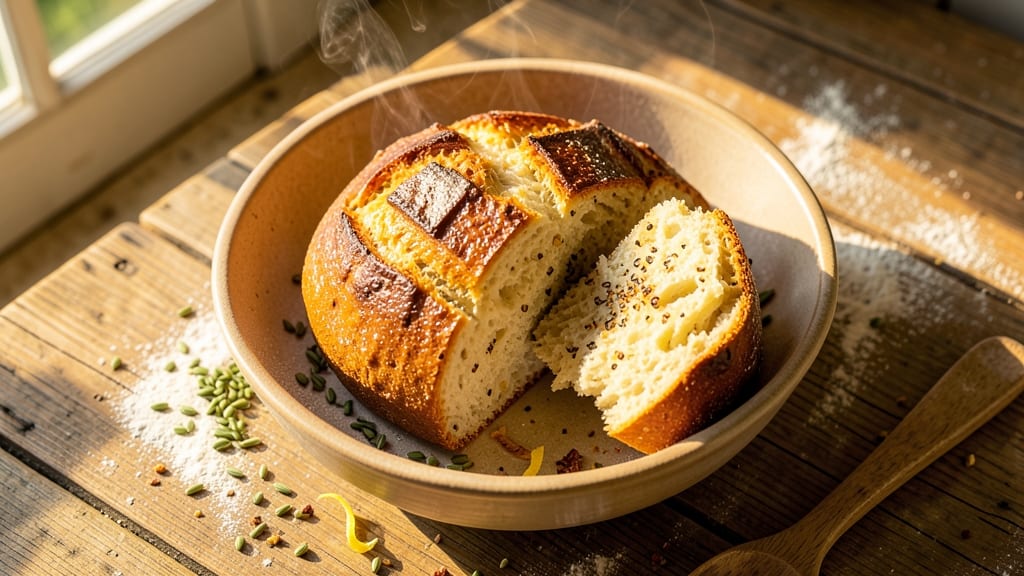
This African yeast bread recipe transforms simple flour into a fragrant, tangy loaf with a crisp crust and airy interior—just like the breads you'd find in West African markets.
The secret lies in a long fermentation process that develops deep flavor and a light texture, while traditional spices like coriander and cardamom add warmth. I've perfected this method over years of baking, ensuring every loaf rises beautifully and stays fresh for days.
The dough begins with a natural yeast starter, which creates that signature tangy flavor and improves digestibility. Unlike quick breads, this recipe requires patience—allowing the dough to ferment overnight develops complex flavors and a tender crumb.
The shaping technique, where dough is rolled into a tight spiral before baking, creates those iconic golden ridges that make this bread so visually appealing.
What you'll end up with is a loaf that's crisp on the outside yet soft and fluffy inside, with a subtle spiced aroma that fills your kitchen. The crust develops a beautiful golden-brown color while maintaining a satisfying crunch, perfect for dipping in soups or serving alongside stews.
This bread is versatile enough for everyday meals but special enough for gatherings.
Pair it with grilled meats, fresh vegetables, or enjoy it plain with butter and honey. The long fermentation also makes this bread ideal for meal prep—it keeps well for up to five days when stored properly. Let's get started on creating this traditional African staple in your own kitchen.
Ingredients for african yeast bread
Simple flour, warm spices, and a touch of honey create this fragrant West African loaf.
| Ingredient | Amount | Notes |
|---|---|---|
| All-Purpose Flour 🌾 | 4 cups | Unbleached preferred for better flavor |
| Active Dry Yeast 🍞 | ¼ oz | Or 2 packets (1/4 oz each) |
| Granulated Sugar 🍚 | 1 tbsp | Feeds yeast for activation |
| Warm Water 💧 | 1 cup | 110°F (43°C) ideal temperature |
| Salt 🧂 | 1 ½ tsp | Kosher or sea salt preferred |
| Ground Coriander 🌿 | 1 tsp | For authentic African flavor |
| Ground Cardamom 🌿 | ½ tsp | Warm, aromatic spice |
| Olive Oil 🫒 | 2 tbsp | Extra-virgin for richness |
| Honey 🍯 | 1 tbsp | Enhances fermentation |
| Milk 🥛 | ½ cup | Whole milk for tenderness |
| Large Egg 🥚 | 1 whole | For structure and shine |
| Sesame Seeds 🌰 | 1 tbsp | For decorative crust |
The flour is the foundation—King Arthur or Bob's Red Mill work best for that tender crumb. Yeast can be tricky, so check expiration dates (it should smell fresh, not stale). For the spices, Penzeys Spices has great ground coriander and cardamom, but any quality brand works. The honey? Local raw honey adds subtle floral notes, but regular store-bought is fine. Milk adds tenderness, but unsweetened almond milk works too if you're avoiding dairy. I always use whole milk because it gives the best texture, but whatever you've got is fine (even powdered milk in a pinch).
No coriander? Cumin at half the amount gives a similar earthy warmth. Cardamom hard to find? Allspice works in a bind, though it's not the same. Running low on honey? Maple syrup or agave will do, but expect slightly different flavors. The sesame seeds are just for looks, but poppy seeds or everything bagel seasoning would add fun texture variations. For the yeast activation, make sure your water is 110°F (43°C)—too hot and it kills the yeast, too cold and it won't activate properly. If your kitchen isn't warm enough, pop the bowl in the oven with the light on.
This dough needs time—at least 8 hours overnight for best flavor. Store it in a lightly oiled bowl covered with a damp towel. The longer it ferments (up to 12 hours), the more complex the flavor becomes. Shape it when it's jiggly but not sticky. For storage, wrap the cooled loaf in parchment paper and a clean kitchen towel—keeps it fresh for 3-4 days. Freeze slices for up to 3 months by wrapping them individually. Toasting revives stale bread beautifully—just pop slices in a 350°F (175°C) oven for 5-7 minutes.
Why You'll Love This Recipe
- No-Knead Magic: I swear by this trick—just mix the flour, yeast, sugar, and warm water, let it rise overnight, and bake. That’s it. No standing at the counter, no overworked arms, just soft, pillowy perfection with zero effort.
- Sweet-Savory Crust: The sugar in the dough caramelizes just enough to give the crust a subtle sweetness, while the salt keeps it balanced. It’s not too sweet, not too plain—just that perfect harmony that makes you reach for another slice.
- Budget Bread: Honestly, what’s cheaper than flour, yeast, sugar, and water? This recipe feeds a family of four for under $3, and you’ll have leftovers that last days. Freeze slices for quick toast later—genuinely the most economical bread I’ve ever made.
- Weeknight Hero: Between us, I’ve used this bread for breakfast (toasted with jam), dinner (as a side with stew), and even as a base for sandwiches. It’s the one loaf that does it all without making me feel like I’ve sacrificed flavor for convenience.
Step-by-step instructions for African yeast bread
Here's how to craft this fragrant, tangy bread with a crisp crust and tender crumb.
Activate the Yeast and Mix Wet Ingredients
In a small bowl, combine the 1 cup warm water (should feel like bathwater, around 110°F), 1 tbsp granulated sugar, and 0.25 oz active dry yeast. Let it sit for 5-10 minutes until foamy—this means your yeast is alive and ready to work. If it doesn't foam, your yeast might be dead, and you'll need to start over.
While waiting, whisk together the 2 tbsp olive oil, 1 tbsp honey, and 0.5 cup milk in a large bowl. The honey adds subtle sweetness while helping the yeast ferment more vigorously. I like to use a fork for this step—it's simple and effective. Add the foamy yeast mixture to the wet ingredients and stir until fully combined.
Combine Dry Ingredients and Form the Dough
In a separate bowl, sift together the 4 cups all-purpose flour, 1.5 tsp salt, 1 tsp ground coriander, and 0.5 tsp ground cardamom. The spices will infuse the dough with warm, aromatic notes that make this bread uniquely African. Gradually add the dry mixture to the wet ingredients, stirring with a wooden spoon until a shaggy dough forms.
Once combined, turn the dough out onto a lightly floured surface. Here's the thing—this dough will be sticky at first. Knead it for 8-10 minutes until smooth and elastic. You'll know it's ready when it springs back slowly when poked. If it feels too sticky, add flour 1 tablespoon at a time—just don't overdo it, or your bread will turn out dense.
First Rise for Flavor Development
Lightly oil a large bowl, place the dough inside, and cover it with a damp kitchen towel. Let it rise in a warm spot for 1-2 hours, or until it has nearly doubled in size. I always place my bowl on top of my oven with the light on—this creates a warm, consistent environment that encourages even rising.
During this time, the dough will develop gas bubbles and become lighter. You'll notice it puffs up and may even see small cracks forming on the surface. This is a good sign! Don't rush this step—proper fermentation is what gives this bread its signature tangy flavor and soft texture. If your kitchen is cold, you might need to extend this to 2.5 hours.
Shape and Second Rise
Punch down the risen dough to release air, then divide it into 4 equal portions (about 1 pound each). Shape each portion into a smooth, round loaf. Here's a pro tip: cup your hands and press gently from the bottom while rolling upward to create a tight, compact shape. Place the shaped loaves on a parchment-lined baking sheet, cover with the damp towel, and let them rise again for 30-45 minutes.
You're looking for the loaves to puff up noticeably and feel light when touched. If they don't rise much, they might need more time. The second rise is crucial for achieving that airy, open crumb structure we want. Once they've risen sufficiently, preheat your oven to 375°F while you prepare the egg wash.
Bake to Golden Perfection
Whisk together the 1 whole large egg and 1 tbsp sesame seeds in a small bowl. Brush this mixture over the risen loaves, then sprinkle with any remaining sesame seeds for that beautiful decorative crust. Bake for 25-30 minutes until the bread is deep golden brown and sounds hollow when tapped on the bottom.
Real talk: the first few minutes are critical. The bread will go from pale to golden quickly, so keep an eye on it. If the tops brown too fast, tent with foil to prevent over-browning. When done, transfer the bread to a wire rack to cool for at least 30 minutes before slicing. This resting period allows the crumb to set properly, preventing a gummy texture.
Pro Tips For Making African Yeast Bread
- TEST THE YEAST FIRST: Skip the guesswork—mix 1 teaspoon yeast with ¼ cup warm water (110°F) and 1 tsp sugar, then wait 5–10 minutes for bubbles. If nothing happens, your yeast is dead or the water’s too hot, and you’ll save yourself a sad, flat loaf.
- SALT THE WATER LAST: Add salt to your flour mix after dissolving the yeast and sugar in water. Salt kills yeast, so waiting until the end keeps your dough rising properly—no need for extra proofing time.
- KNOCK DOWN STIFF DOUGH: African yeast bread often uses less water, making the dough thick and stubborn. Punch it down hard on the counter for 30 seconds to relax the gluten—this prevents a dense, chewy loaf and makes shaping easier.
- USE A DAMP TOWEL FOR RISING: Cover your dough bowl with a damp kitchen towel instead of plastic wrap. The moisture mimics a humid environment, helping the dough rise faster and more evenly—no need to fight sticky dough or wait forever.
Regional styles of this dish
West African Spiced Loaf
This version is inspired by Ghanaian and Nigerian traditions, where coriander and cardamom are staples. The dough includes an extra ½ tsp ginger for warmth and 1 tbsp honey for natural sweetness that balances the spices.
Shape the loaves into tall, round boules and bake at 375°F for 30-35 minutes until the crust crackles when touched. Serve warm with peanut soup or shito (black pepper sauce). 🌶️
Ethiopian Injera-Inspired
For a tangier twist, replace ½ cup milk with ½ cup teff flour (available at specialty stores) and add 1 tbsp lemon juice to the dough. This creates a slightly sour flavor reminiscent of injera.
Shape into flat, round discs and bake on a preheated 400°F stone for 10-12 minutes, flipping once. Use as a wrap for doro wat (Ethiopian chicken stew) or as a base for sandwiches. 🍋
South African Maize Bread
Swap 1 cup all-purpose flour for 1 cup fine maize meal (like cornmeal) and reduce water by 2 tbsp. The dough will be denser, so knead for 10-12 minutes and let it rise 2 hours in a warm spot.
Shape into small, round loaves and bake at 350°F for 25 minutes. This version pairs perfectly with bobotie (South African spiced meat dish) or chakalaka (vegetable relish). 🌾
Moroccan-Spiced Twist
Replace coriander and cardamom with 1 tsp ground cumin and ½ tsp cinnamon, then add 1 tbsp orange blossom water to the wet ingredients. The dough will have a floral aroma, and the crust develops a deeper caramel color.
Bake at 375°F for 28 minutes and serve with Moroccan tagine or lamb stew. The orange blossom water adds a subtle, luxurious note. 🍊
East African Ugali Bread
For a denser, heartier loaf, replace 1 cup flour with ½ cup cassava flour and ½ cup sorghum flour. The dough will be stiff, so knead vigorously for 12 minutes and let it rise 1.5 hours.
Shape into a thick, flat round and bake at 350°F for 20 minutes. This bread is perfect for soaking up nyama choma (grilled meat) juices or serving with ugali as a side. 🌍
Nutrition facts
Frequently asked questions
Why does African yeast bread need such a long fermentation?
The extended fermentation (8+ hours) is key to developing the bread's signature tangy flavor and tender crumb. This slow process breaks down gluten and sugars, creating complex flavors while improving digestibility. Think of it as a natural tenderizer that makes the bread more approachable than traditional yeast breads.
Can I make this bread without coriander or cardamom?
For coriander, try cumin (½ tsp) or fennel seeds (¼ tsp) for warmth. Cardamom can be swapped with allspice (¼ tsp) or nutmeg (⅛ tsp). If you're avoiding spices entirely, simply omit them—the bread will still be delicious, just less aromatic. The spices are what give it that authentic African character, though!
What's the best way to store homemade African yeast bread?
Wrap cooled loaves in parchment paper followed by a clean kitchen towel to maintain freshness. Store at room temperature for 3-4 days or freeze individual slices for up to 3 months. For extra crispiness, reheat slices in a 350°F (175°C) oven for 5-7 minutes. The towel helps trap moisture while the parchment prevents sogginess.
Why did my bread turn out dense instead of light and fluffy? Dense bread usually results from under-kneading, insufficient fermentation, or overhandling the dough.
How can I use this bread beyond regular meals?
This versatile bread excels as a dipping bread for soups like peanut soup or tomato stew, as a sandwich base for grilled chicken wraps, or even as a dessert bread when toasted and topped with honey and cinnamon. The crisp crust makes it perfect for French toast too—just slice and soak in egg batter!