
Side Dishes
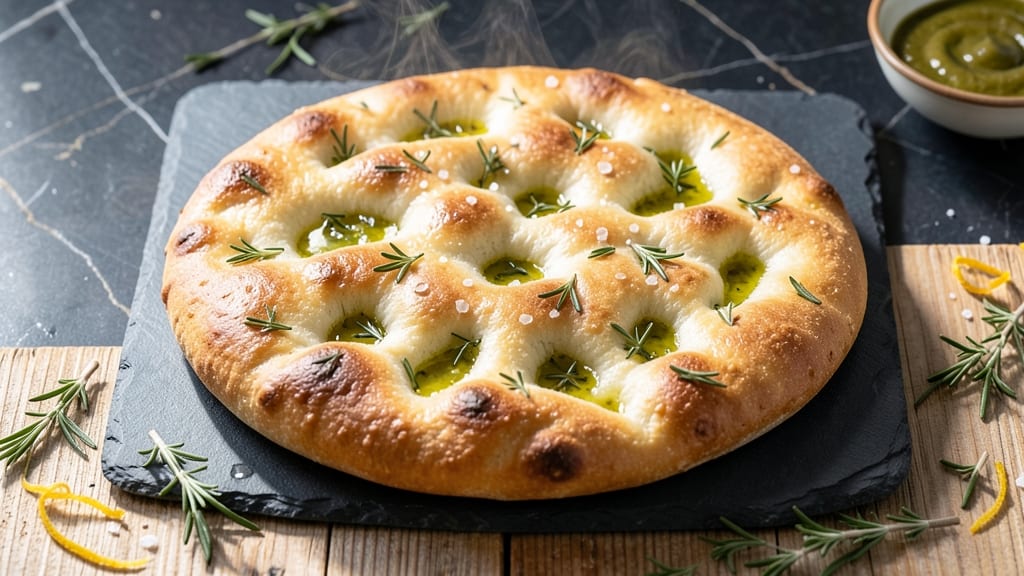
This airy focaccia bread recipe delivers restaurant-quality results with its signature olive oil-pooled crust and pillowy softness—no fancy equipment required. The secret lies in a slow rise and precise baking technique that transforms simple ingredients into a golden, aromatic loaf with crisp edges and tender crumb.
I've refined this method over years of baking, ensuring every batch turns out perfectly every time.
What sets this recipe apart is the balance of texture and flavor—rich from extra olive oil, tender from proper yeast activation, and aromatic from fresh herbs. The dough develops naturally without aggressive kneading, making it accessible for home bakers.
Baked at 425°F, the focaccia achieves that coveted crispy crust while maintaining a soft, airy interior that practically melts in your mouth.
By the time you pull it from the oven, you'll have a focaccia so inviting it'll disappear faster than you can slice it. The golden crust pools with fragrant olive oil, while the interior remains light and fluffy—ideal for serving with soups, dipping in olive oil, or pairing with charcuterie.
The aroma alone will have everyone gathering around your table.
Ready to master this Italian classic? The process is straightforward but requires patience for the best results. Let's create focaccia that rivals your favorite bakery—starting with just five essential ingredients and a little time. Here's everything you need to know to achieve perfect focaccia every time.
Ingredients for airy focaccia bread
Five simple ingredients transform into golden, aromatic focaccia with crisp edges and pillowy softness.
| Ingredient | Amount | Notes |
|---|---|---|
| Active Dry Yeast 🍞 | ¼ oz | Or 2.25 tsp (1 packet) |
| Extra-Virgin Olive Oil 🫒 | 1 ¼ cups | High-quality, fruity variety |
| All-Purpose Flour 🌾 | 4 cups | Plus 1 tbsp for dusting |
| Warm Water 💧 | 1 ¼ cups | 105-110°F for yeast activation |
| Fine Sea Salt 🧂 | 1 ½ tsp | Diamond Crystal preferred |
| Fresh Rosemary 🌿 | ¼ cup | Finely chopped, stems removed |
| Fresh Thyme 🌿 | ¼ cup | Leaves only, chopped |
| Flaky Sea Salt 🧂 | 2 tbsp | For topping (Maldon preferred) |
| Coarse Black Pepper 🌶️ | 1 tsp | Freshly cracked |
The yeast is the foundation—use fresh active dry yeast for best results, not instant yeast. Trader Joe's and Whole Foods sell it in small jars, perfect for testing before opening a full packet. The olive oil makes or breaks this recipe: extra-virgin with fruity notes gives the best flavor. I always grab a large bottle from Costco—cheaper per ounce and keeps for months. For the flour, King Arthur or Gold Medal brands yield the best texture. The herbs? Fresh is non-negotiable—dried works in a pinch but lacks that bright aroma. If you can't find fresh rosemary or thyme, substitute with 1 tbsp dried, but taste first.
No fresh herbs? Dried works at one-third the amount, but the flavor won't be as vibrant. Short on olive oil? Avocado oil works in a bind, but it lacks the fruity depth. The warm water should be lukewarm (105-110°F)—too hot kills the yeast, too cold slows activation. For the flaky salt, Maldon or Jacobsen are worth the splurge—regular sea salt works but won't give those dramatic crystals. The black pepper should be freshly cracked for maximum aroma; pre-ground loses potency fast. If you're in a hurry, use 1 tsp coarse pepper instead of cracking.
Store any unused yeast in the freezer for up to 3 months—it keeps better than the fridge. The flour? Air-tight container in a cool, dark place for up to 6 months. Fresh herbs wilt fast—wrap them in damp paper towels and store in a resealable bag in the fridge for up to 5 days. The focaccia dough can be prepped a day ahead—just cover and refrigerate until ready to shape. For extra flavor, let the dough rise overnight in the fridge—it develops deeper complexity. The baked focaccia keeps well at room temperature for 2 days or 3 days wrapped tightly.
Why You'll Love This Recipe
- No-Knead Magic: I swear by this—just mix, rest, and bake. The yeast does all the heavy lifting while you sip coffee or scroll through memes. That golden crust? Zero effort on my part, all thanks to the olive oil and warm water trick.
- Olive Oil Luxury: Between us, this bread tastes like a fancy bakery’s secret. The extra-virgin olive oil makes every bite buttery and crisp without a single tablespoon of butter. Salt it right, and you’ll understand why I bake this weekly.
- Weeknight Swiss Army: Toss it with tomatoes and basil for bruschetta, tear it over salads, or freeze slices for toast in a month. Honestly, I’ve used it for everything from sandwiches to a quick bread pudding—it’s my kitchen’s multitool.
- Budget-Friendly Staple: Four ingredients, zero waste. That jar of yeast? Lasts forever. The flour? Pantry basic. And leftovers? Toast them for breakfast or pack them for lunch. My wallet and I both love this.
Step-by-step instructions for olive oil-pooled focaccia
Here's how to craft that signature olive oil crust with a light, airy interior—no shortcuts, just perfect technique.
Activate the Yeast for Maximum Rise
In a small bowl, combine the 1.25 cups warm water (between 105-110°F) with the 0.25 oz active dry yeast. Let it sit for 5-7 minutes until frothy—you'll see bubbles forming and the mixture smell yeasty. If it doesn't bubble after 10 minutes, your yeast is dead and you'll need to start over.
This step ensures your dough will rise properly. I always test the water temperature with my finger—it should feel warm but not hot. Too hot water kills yeast, too cold water slows activation. Once you see those bubbles, your yeast is ready to work its magic.
Mix the Dough and Knead Until Elastic
In a large bowl, whisk together the 4 cups all-purpose flour and 1.5 tsp fine sea salt. Make a well in the center and pour in the yeast mixture along with 1 cup of the extra-virgin olive oil. Using a wooden spoon, gradually incorporate the flour until a shaggy dough forms.
Turn the dough onto a lightly floured surface and knead for 8-10 minutes until smooth and elastic. You're looking for dough that springs back slowly when poked. I like to press my finger into the dough—if it leaves a slight indent that slowly fills back in, it's ready. This kneading develops gluten, which gives focaccia its signature chew and structure.
Let the Dough Rise Until Doubled
Place the dough in a lightly oiled bowl, cover with a damp towel, and let rise in a warm place for 1-2 hours until doubled in size. The dough should feel light and airy when pressed gently with one finger—it should spring back immediately but with noticeable puffiness.
Here's where patience pays off. I always place my dough near the oven with the light on (not the heat) to create a warm, consistent environment. If your kitchen is cold, this can take longer. Don't rush this step—proper rising creates that signature airy texture we're after.
Shape and Second Rise in Olive Oil Pool
Punch down the risen dough and transfer it to a 9x13-inch baking pan. Gently stretch the dough to fit the pan, leaving the edges slightly thicker. Drizzle ½ cup of the remaining olive oil evenly over the dough, then sprinkle with the 0.25 cup fresh rosemary, 0.25 cup fresh thyme, 1 tsp coarse black pepper, and 2 tbsp flaky sea salt. Cover and let rise for another 30-45 minutes until puffy.
This second rise is crucial for that signature olive oil pool effect. I like to make dimples with my fingers before the final rise—press down gently in a grid pattern (about 1-inch apart) to create pockets that will soak up more oil during baking. The herbs and salt will sink into these dimples, creating flavor pockets in every bite.
Bake Until Golden and Crisp
Preheat your oven to 425°F with a baking stone inside (if you have one). Bake the focaccia for 20-25 minutes until the edges are deep golden brown and the top is crispy. In the last 5 minutes, drizzle the remaining ½ cup olive oil evenly over the top.
You'll know it's done when the crust is crisp and the internal temperature reaches 190-195°F. The bread should sound hollow when tapped on the bottom. Let it cool in the pan for 10 minutes before slicing—this prevents it from falling apart. The contrast between the crispy crust and pillowy interior is what makes this focaccia special.
Pro Tips For Making Airy Focaccia Bread
- STIR THE YEAST FIRST: Mix the yeast with just the warm water and a pinch of salt in your mixing bowl before adding flour—this lets you check if it’s active (frothy in 5 minutes) before committing to the whole batch. I learned this the hard way after once ruining a dough because my yeast was stale and I didn’t catch it until the flour was already in.
- USE ROOM-TEMP OIL: Cold olive oil from the fridge will make your focaccia dense—warm it slightly (just until it drizzles easily) so it emulsifies better with the flour. Sounds weird, but it works: your bread will rise higher and stay airier longer. (Yes, even if you’re impatient like me.)
- DON’T OVERWORK THE DOUGH: Once you’ve mixed in the flour, stop folding after 3-4 minutes—any more and you’ll develop too much gluten, turning your focaccia into a chewy loaf instead of a tender, airy cloud. I was skeptical until I tried it: less handling = more holes, more lightness.
- SALT THE WATER FIRST: Dissolve the fine sea salt in the warm water before mixing with yeast—it speeds up hydration and controls fermentation better than sprinkling it later. After burning three batches with uneven salt distribution, I finally figured out this non-negotiable step. (Your future self will thank you.)
Common mistakes when making this recipe
Over-Kneading the Dough
Focaccia dough is delicate—kneading for more than 10-12 minutes develops too much gluten, resulting in a tough, chewy texture instead of that signature pillowy softness. I’ve ruined batches by over-kneading, so I set a timer and stop when the dough springs back slowly when pressed.
Think of it like stretching taffy: just enough to create structure, not rubber bands. 💫
Skipping the Proofing Step
Rushing the 1-2 hour proof is a recipe for dense, flat focaccia. The yeast needs time to activate fully, creating those air pockets that make focaccia light. I’ve learned the hard way—when I skip proofing, my bread turns out like a brick.
Place your dough in a warm spot (like near your oven with the light on) to ensure consistent rising.
Using Cold Ingredients
Cold water or yeast straight from the fridge kills the rise. Always use warm water (105-110°F) to activate yeast, and let it sit until bubbly. I test water temp by dipping my finger—it should feel like a warm bath, not scalding.
Cold ingredients slow fermentation, leading to weak structure and poor flavor development.
Overloading the Toppings
Piling on too many toppings (like extra herbs or cheese) can weigh down the dough, preventing proper rising. Stick to the recipe’s rosemary, thyme, and salt for balanced flavor.
I’ve seen focaccia collapse under heavy toppings—less is more for that perfect olive oil pool effect. Distribute toppings evenly in a grid pattern for even baking.
Baking at Wrong Temperature
Baking below 425°F results in pale, gummy focaccia. Too hot? The crust burns before the interior cooks through. I use an oven thermometer to confirm accuracy—my home oven runs 25°F hotter than the dial shows. Preheat for 30 minutes with a baking stone (if using) for even heat distribution.
Cutting Too Soon
Slicing focaccia immediately after baking destroys its structure. The starches need 10-15 minutes to set. I’ve watched bread crumble when sliced too early—patience pays off! Let it cool in the pan, then transfer to a wire rack.
The crust will firm up enough to slice cleanly, revealing that perfect airy interior. 🔥
Nutrition facts
Frequently asked questions
Why does focaccia need such a long rise time?
The extended 1-2 hour proof creates those signature air pockets that make focaccia light and fluffy. Yeast needs time to ferment properly, developing flavor and structure. Skipping this step results in dense bread—think of it as letting the dough "breathe" before baking.
Can I substitute butter for olive oil?
Not recommended! Olive oil gives focaccia its signature flavor and helps create that crispy crust. If you must substitute, use melted butter—but expect a different texture and less authentic taste. The recipe relies on olive oil's richness to pool beautifully during baking.
How do I make focaccia without a baking stone?
No problem! Place a rimmed baking sheet on the middle rack while preheating. For extra crispness, try this trick: bake for 10 minutes on the sheet, then transfer to a wire rack for the remaining time. The air circulation helps create that perfect crust.
What's the best way to store focaccia?
Keep it at room temperature in an airtight container for 2 days or freeze for up to 3 months. To revive, warm slices in a 350°F oven for 5-7 minutes. For extra freshness, wrap tightly in plastic wrap—this preserves that signature softness.
Can I make focaccia without herbs?
The herbs add flavor but aren't essential. For a classic version, just use extra olive oil and salt. Try adding garlic powder or lemon zest for different variations. The key is maintaining the olive oil-to-flour ratio for that signature texture.