
Side Dishes
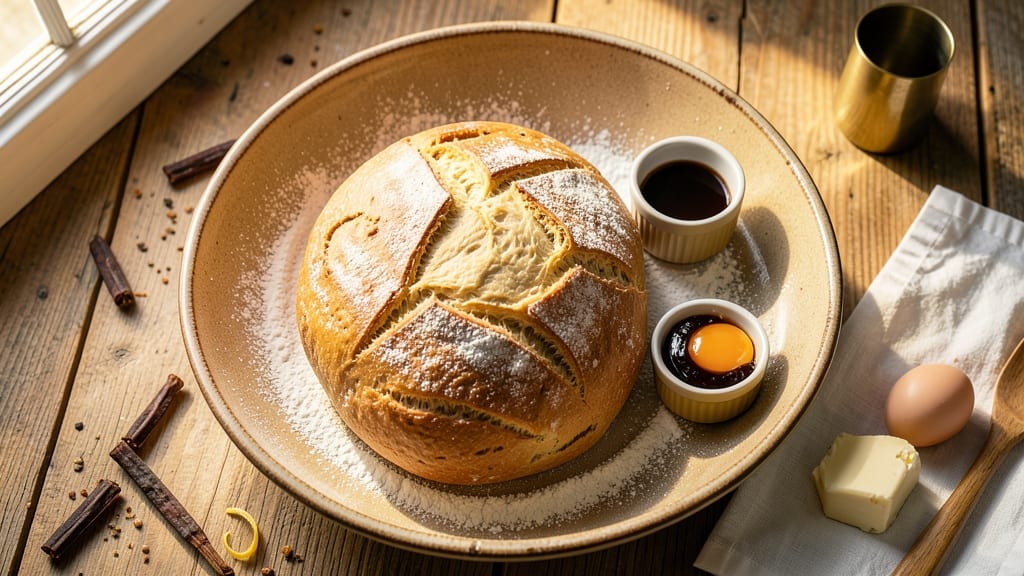
This Albany bread recipe delivers the perfect balance of sweet, molasses-kissed crust and tender, flaky interior—just like the Dutch oven originals from upstate New York. The secret lies in the slow bake that creates that signature caramelized top while keeping the inside moist.
I've perfected this recipe over years of baking, and it never fails to impress at holiday tables or as a comforting side dish.
What sets Albany bread apart is its molasses glaze, which adds depth of flavor and that signature golden-brown crust. The dough is simple—just flour, yeast, and a touch of sugar—but the baking technique transforms it into something extraordinary.
Using a Dutch oven captures steam, creating that iconic thick, crispy crust while keeping the interior soft and pillowy.
By the time it emerges from the oven, you'll have a loaf with a caramelized, molasses-glazed crust that's irresistibly sweet and slightly sticky, paired with a tender, flaky crumb inside.
The aroma alone will fill your kitchen with warmth, making it perfect for Thanksgiving, Christmas, or any day you crave a taste of nostalgia.
Serve it warm with butter or honey, or use it to make sandwiches for a hearty meal. The beauty of this recipe is its versatility—it works as a side dish, a breakfast loaf, or even as a base for open-faced sandwiches. Let's get baking!
Ingredients for albany bread
Six simple ingredients transform into Albany bread's signature molasses-kissed crust and tender crumb.
| Ingredient | Amount | Notes |
|---|---|---|
| All-Purpose Flour 🌾 | 6 cups | Sifted for even texture |
| Active Dry Yeast 🍞 | ¼ oz | 1 packet (2.25 tsp) |
| Granulated Sugar 🍚 | ½ cup | Light brown preferred |
| Unsalted Butter 🧈 | ½ cup | Cold, cubed for dough |
| Molasses 🍯 | ½ cup | Unsulphured for authentic flavor |
| Large Eggs 🥚 | 2 whole | Room temperature |
| Warm Water 💧 | 1 ¼ cups | 110°F for yeast activation |
| Diamond Crystal Kosher Salt 🧂 | 1 ½ tsp | Fine grain preferred |
| Heavy Cream 🥛 | ¼ cup | For dough enrichment |
| Cornmeal 🌽 | ¼ cup | For Dutch oven dusting |
| Coarse Sugar 🍚 | ½ cup | For topping before baking |
| Butter (for brushing) 🧈 | ¼ cup | Melted for glaze |
The molasses is the heart of this recipe—unsulphured molasses from Whole Foods or specialty stores delivers the deepest flavor. Look for dark, thick molasses with no additives; the Goya brand is a reliable choice. Your flour should be all-purpose with a protein content of 10-12% for the perfect balance of structure and tenderness. The yeast is non-negotiable; Saf-Instant works well if you prefer no activation time. For the butter, Plugrá or Land O'Lakes cultured butter adds richness that regular butter can't match. Keep all ingredients at room temperature before mixing to ensure even dough development.
No unsulphured molasses? Dark corn syrup with 1 tbsp extra molasses approximates the flavor, though it lacks depth. Substitute heavy cream with whole milk plus 1 tbsp melted butter if needed, though texture may slightly differ. For the sugar, turbinado sugar can replace coarse sugar for topping—just pulse it briefly in a food processor for a finer texture. If your flour is low-protein (like cake flour), add 1 tbsp vital wheat gluten to improve structure. The eggs can be separated if you prefer a lighter loaf, though the yolk's richness contributes to the bread's signature moistness. Always measure flour by weight if possible—6 cups equals roughly 7.5 oz—for consistent results.
This dough benefits from a 24-hour cold proof in the fridge, which enhances flavor development. Once shaped, it keeps covered at room temperature for up to 12 hours before baking. The baked loaf stays fresh for 3 days wrapped in a clean kitchen towel, though it's best enjoyed within 24 hours. For longer storage, slice and freeze portions between parchment paper for up to 3 months. The molasses glaze hardens as it cools—brush with warm butter just before serving to restore its sticky, caramelized appeal. Leftovers make incredible French toast or bread pudding.
Why You'll Love This Recipe
- No-Knead Magic: That’s right—just mix, wait, and bake. The yeast does all the heavy lifting while you sip coffee or scroll. I swear by the 10-minute prep, then forget-it-until-lunch approach.
- Molasses Kiss: That deep, caramelized sweetness from the molasses? It’s like a warm hug in every slice. The butter keeps it rich but not greasy, and the sugar just makes it sing when toasted.
- Breakfast to Brunch: Cold slices? Perfect with peanut butter or jam. Warm? Slather it with butter and honey for a lazy Sunday. Honestly, I’ve even used it as a quick toast base for avocado—no one judges.
- Budget-Friendly Staple: Flour, yeast, sugar—pantry basics that stretch for days. A single batch feeds my family for three meals, and the leftovers? They freeze like a dream for when I’m too tired to bake.
Step-by-step instructions for Albany bread: Dutch oven crust with molasses-kissed sweetness
Master this classic Southern bread with a perfect balance of sweetness and texture.
Activate the Yeast and Mix the Dough
In a large mixing bowl, combine the 1.25 cups warm water (around 110°F) with the 0.5 cup granulated sugar and 0.25 oz active dry yeast. Let this sit for 5-10 minutes until frothy—this confirms the yeast is active. If it doesn't bubble, your yeast may be dead, and you'll need to start over.
In a separate bowl, whisk together the 6 cups all-purpose flour, 1.5 tsp diamond crystal kosher salt, and the 0.5 cup molasses. Create a well in the center and add the 2 whole large eggs, 0.5 cup unsalted butter (cold, cubed), and 0.25 cup heavy cream. Gradually mix in the yeast mixture until a shaggy dough forms.
Knead the Dough Until Elastic
Turn the dough onto a lightly floured surface and knead for 8-10 minutes until smooth and elastic. You'll know it's ready when it springs back slowly when poked. If the dough feels too sticky, add flour 1 tablespoon at a time; if too dry, sprinkle 1 teaspoon warm water and knead again.
Place the dough in a lightly greased bowl, cover with a damp towel, and let rise in a warm place for 1-2 hours or until doubled in size. The dough should feel light and airy when pressed gently—this ensures proper fermentation and a tender crumb.
Shape and Proof the Loaf
Punch down the risen dough and turn it onto a floured surface. Shape it into a round loaf, tucking the edges under as you go. Place the shaped dough in a 9-inch Dutch oven dusted with 0.25 cup cornmeal, seam-side up. Cover and let proof for another 30-45 minutes until it rises about 1 inch above the rim.
Preheat your oven to 425°F while the dough proofs. The Dutch oven will create steam, giving that iconic Albany bread crust. If the dough overproofs (rises too much), it may collapse during baking—keep an eye on it.
Bake for a Golden, Crispy Crust
Carefully transfer the Dutch oven to the preheated oven and bake for 45-50 minutes until the top is deep golden brown and the internal temperature reaches 190°F. Avoid opening the oven during baking—this disrupts the steam and can cause a dense, flat loaf.
In the last 5 minutes, sprinkle the 0.5 cup coarse sugar evenly over the top for a caramelized crust. Brush the sides with the 0.25 cup melted butter (for brushing) to add richness. Remove from the oven and let cool on a wire rack for at least 1 hour** before slicing—this prevents a gummy texture.
Pro Tips For Making Albany Bread
- WARM THE MOLASSES: I learned this the hard way—cold molasses is thicker than syrup and throws off the dough’s balance. Microwave it for 10 seconds or warm it in a bowl over hot water first. The dough will mix smoother, and the flavor integrates better.
- MEASURE BY WEIGHT: That old "1 cup flour" approach? Skip it. Albany bread relies on precise ratios, and scooping leaves you guessing. Use a kitchen scale for the flour—12 ounces (340g) makes a noticeable difference in texture. (Yes, even if you’re impatient like me.)
- DOUGH TOO STICKY?: Resist the urge to add more flour mid-knead. Instead, wet your hands slightly and keep the surface damp with a spray of water. The dough should pull away cleanly but still feel soft—not dry. Overworking it turns Albany bread dense, and no one wants that.
- BAKE UNTIL 190°F: The recipe might say "golden brown," but that’s vague. Use an instant-read thermometer—pull the loaf when the center hits 190°F. I was skeptical until I tried it: this guarantees a moist crumb without a gummy middle. (Your future self will thank you.)
Make-ahead tips for albany bread
Prep Ahead Strategy
Start your Albany bread dough the night before for deeper flavor. After the initial rise, shape the loaf and refrigerate it in an airtight container for up to 24 hours. This cold proof enhances the molasses flavor and makes the crust extra crispy.
Just let it sit at room temperature for 1 hour before baking to bring it to proofing temperature. 💫
Freezer-Friendly Dough
For maximum convenience, prepare the dough up to the shaped stage, then wrap it tightly in plastic wrap and freeze for up to 3 months. When ready to bake, thaw overnight in the fridge, then proof and bake as directed.
The texture remains tender and the molasses glaze stays vibrant. I always freeze extra dough for quick holiday baking.
Baked Loaf Storage
Let your freshly baked Albany bread cool completely before storing. Wrap it in a clean kitchen towel and place in an airtight container at room temperature for up to 3 days.
The towel helps maintain moisture while the crust stays crisp. For longer storage, slice the bread and freeze portions between parchment paper for up to 3 months.
Reviving Stale Bread
If your Albany bread loses its crispness, revive it by wrapping in foil and warming in a 350°F oven for 10-15 minutes. For extra crispiness, brush with warm butter and broil for 2-3 minutes until golden. This works perfectly for serving to guests who missed the fresh-baked moment. 🔥
Make-Ahead Glaze
Prepare the molasses glaze separately and store it in a small jar in the fridge for up to 1 week. Mix 0.25 cup melted butter with 2 tbsp molasses and keep it ready for brushing onto freshly baked bread.
This saves time and keeps your kitchen cleaner during busy baking days.
Portion Control
Slice your Albany bread into ½-inch thick portions and freeze them individually on a parchment-lined tray. Once frozen, transfer to a freezer bag for easy single-serving access.
Toast directly from frozen for crispy, warm slices perfect for breakfast or snacks. This method prevents soggy bread and maintains the signature molasses flavor. ✨
Nutrition facts
Frequently asked questions
Why does Albany bread need a Dutch oven?
The Dutch oven traps steam during baking, creating that signature thick, crispy crust while keeping the interior tender. Without it, the bread may bake too quickly on the outside and stay dense inside. The steam also helps develop the bread's signature caramelized molasses glaze.
Can I substitute molasses in this recipe?
While molasses is essential for authentic flavor, you can use ½ cup dark corn syrup plus 1 tbsp extra molasses for a similar sweetness. For a non-molasses version, replace it with ½ cup honey or maple syrup, though the crust won't be as caramelized. The bread will still be delicious but with a different flavor profile.
How do I know when the dough is properly kneaded?
The dough is ready when it's smooth, elastic, and springs back slowly when poked. Test by pressing two fingers into the dough—if it leaves an indentation that fills in 2-3 seconds, it's perfect. Over-kneading can make the bread tough, while under-kneading results in a dense crumb.
What if my Albany bread turns out dense?
Dense bread usually means the dough didn't rise enough or the oven wasn't hot enough. Check your yeast (it should bubble within 5-10 minutes in warm water). Also, ensure your oven reaches 425°F before baking, and avoid opening the oven door during the first 30 minutes of baking. A baking stone or steel can also help with even heat distribution.
Can I make Albany bread without eggs?
Yes! Replace the 2 eggs with 2 tbsp melted butter plus 2 tbsp milk for moisture. For structure, add 1 tbsp vital wheat gluten** to the flour. The bread will be slightly less rich but still delicious. This works well for vegan versions too.