
Side Dishes
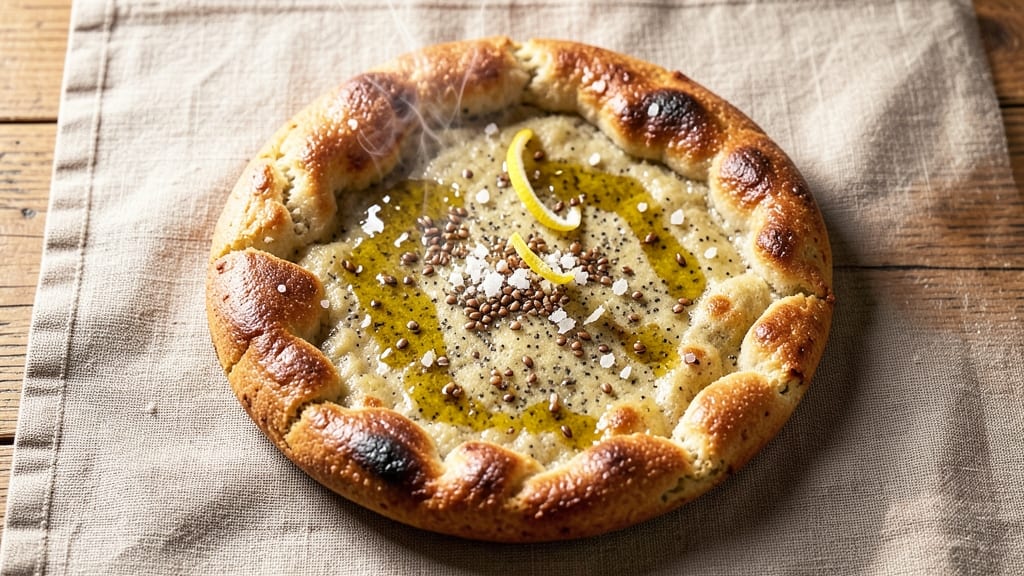
This almond flour flatbread delivers crispy edges and a light, airy crumb that rivals traditional bread—but without any gluten. After perfecting the technique over countless batches, I’ve created a recipe that’s both foolproof and adaptable to any meal.
The secret lies in the right balance of almond flour, eggs (or flax eggs for vegan), and a touch of baking powder for that signature lift.
What sets this flatbread apart is its versatility—use it as a wrap for hearty fillings, a crispy side for soups, or even as a base for mini pizzas.
The dough comes together in 10 minutes, and with just 15 minutes in the oven, you’ll have golden, shatteringly crispy flatbreads ready to serve. No stand mixer or fancy equipment required, just a rolling pin and a hot skillet or oven.
The result is a flatbread that’s naturally gluten-free yet satisfyingly sturdy, with a delicate crumb that’s almost cloud-like. The almond flour adds a subtle nutty richness, while the crispy edges provide that satisfying crunch with every bite.
Perfect for those with dietary restrictions or anyone craving a lighter, healthier bread option.
Serve warm with olive oil and flaky sea salt, or pair with your favorite dips, spreads, or proteins. This recipe is designed to be your go-to for quick, restaurant-quality flatbreads—no compromises, just pure, crispy perfection.
Ingredients for almond flour flatbread bread
Nine ingredients craft crispy edges and airy crumb without gluten or fuss.
| Ingredient | Amount | Notes |
|---|---|---|
| Almond Flour 🌰 | 2 cups | Finely ground, unsweetened |
| Flaxseeds 🌾 | 3 tbsp | Ground into meal for binding |
| Water 💧 | 9 tbsp | Room temperature preferred |
| Baking Powder 🍞 | 1 tsp | Aluminum-free for best results |
| Sea Salt 🧂 | ½ tsp | Fine grain preferred |
| Extra-Virgin Olive Oil 🫒 | ¼ cup | For brushing and richness |
| Cold Water 💧 | ¼ cup | For dough hydration |
| Flaky Sea Salt 🧂 | 1 tbsp | For finishing (optional) |
| Garlic Powder 🧄 | ½ tsp | For subtle flavor depth |
| Dried Rosemary 🌿 | ½ tsp | Crushed between fingers |
| Sesame Seeds 🌰 | 1 tbsp | For topping (optional) |
The almond flour makes or breaks this—Bob's Red Mill or Anthony's Goods are my go-tos for ultra-fine grind. If yours feels gritty, pulse it in a food processor for 30 seconds. The flaxseed 'egg' (3 tbsp ground flax + 9 tbsp water) needs 5 minutes to gel fully, so mix it first while you measure everything else. Trader Joe's sells pre-ground flaxseed if you're short on time. For the baking powder, Aluminum-free brands like Rumford prevent metallic aftertaste—worth the slight price jump.
No flaxseeds? Chia seeds at double the amount work in a pinch (6 tbsp chia + 9 tbsp water), but set aside 10 minutes for thickening. Olive oil substitutes? Avocado oil or melted coconut oil keep the same neutral profile. The garlic powder and rosemary are optional but elevate the crust—think of them as flavor insurance. For sesame seeds, toasted in a dry pan for 2 minutes brings out their nuttiness, but raw works too. The dough will feel dry but comes together with just a few folds—don't overwork it or it'll get tough.
This dough keeps 3 days in the fridge wrapped tightly in parchment, or 3 months frozen between parchment sheets. For best crispiness, bake straight from frozen—no thawing needed. I portion the dough into 4 equal balls (about 3 oz each) before freezing so I can grab and bake as needed. The flatbreads reheat beautifully in a 350°F oven for 5 minutes—perfect for serving with soups or dips. Store baked flatbreads in an airtight container with a paper towel to prevent sogginess.
Why You'll Love This Recipe
- I’ll be real: this flatbread is my go-to for everything. Use it to scoop up curries, wrap around grilled chicken, or just tear into it with hummus. It reheats beautifully, too—so if you bake a batch, you’ll have a backup for days.
- Five-Minute Mix: Honestly, this dough comes together faster than I can say "no yeast needed." Just toss almond flour, ground flaxseeds, water, and a pinch of salt—no kneading, no waiting for dough to rise. The baking powder handles the leavening, so you’re baking fresh flatbread in under 15 minutes.
- Nutty, But Not Heavy: Between us, almond flour has a way of making everything taste better—this flatbread is no exception. The toasted nutty depth from the almond flour pairs perfectly with the subtle earthiness of flaxseeds, giving it a satisfying chew without overpowering. (Yes, even on a Tuesday night.)
- Wrap, Dip, Repeat: I’ll be real: this flatbread is my go-to for everything. Use it to scoop up curries, wrap around grilled chicken, or just tear into it with hummus. It reheats beautifully, too—so if you bake a batch, you’ll have a backup for days.
Step-by-step instructions for almond flour flatbread
Here's how to create a perfectly crisp-edged, airy flatbread using just almond flour and simple pantry staples.
Create the Flaxseed Egg Mixture
In a small bowl, grind the 3 tablespoons flaxseeds into a fine meal using a spice grinder or mortar and pestle. This creates our egg substitute for binding. Add the 9 tablespoons water and stir vigorously until completely smooth—no graininess should remain. Let this mixture sit for 5 minutes while you prepare the rest of your ingredients. This step is crucial for achieving that tender, cohesive texture in your flatbread.
The flax mixture should thicken noticeably into a gel-like consistency. If it's too thick after 5 minutes, add 1 teaspoon cold water to loosen it slightly. This binding agent replaces traditional eggs while keeping the flatbread gluten-free and light. I always use room temperature water for better incorporation, but cold works in a pinch.
Mix the Dough with Wet and Dry Ingredients
In a large mixing bowl, combine the 2 cups almond flour, 1 teaspoon baking powder, 0.5 teaspoon sea salt, 0.5 teaspoon garlic powder, and 0.5 teaspoon dried rosemary. Whisk these dry ingredients together until evenly distributed—you should see no more than a few visible flecks of rosemary remaining. In a separate small bowl, mix the 0.25 cup extra-virgin olive oil and 0.25 cup cold water until fully combined.
Make a well in the center of your dry ingredients and pour in the flax egg mixture and olive oil mixture. Using a silicone spatula, gently fold everything together until just combined—overmixing develops gluten-like strands that we want to avoid. The dough will be quite sticky but should come together into a shaggy mass. If it's too dry and crumbly, add 1 tablespoon cold water to help bind it.
Form and Rest the Flatbread Dough
Lightly oil a clean work surface with a bit of olive oil and transfer the dough onto it. Using your hands, gently press and fold the dough for 2-3 minutes until it forms a smooth, cohesive rectangle about ½-inch thick. Be patient—this dough is delicate and wants to stick. If it tears, simply press the pieces back together and continue working.
Wrap the formed dough tightly in plastic wrap and refrigerate for 30 minutes. This resting period allows the gluten to relax slightly and makes the dough easier to roll out without tearing. I find this step particularly important with almond flour—it prevents those frustrating cracks that can appear during baking. For best results, let the dough come to room temperature before handling again.
Roll and Bake for Perfect Crispy Edges
Preheat your oven to 375°F and line a baking sheet with parchment paper. Remove the dough from the refrigerator and unwrap it carefully. On a lightly floured surface, roll the dough into a ⅛-inch thick rectangle using a rolling pin. I like to rotate the dough a quarter turn after each roll to ensure even thickness. For extra crispy edges, I press down firmly along the perimeter with my fingers to create a slightly thicker border.
Transfer the rolled flatbread to the prepared baking sheet. Brush the top lightly with a bit of olive oil and sprinkle evenly with 1 tablespoon sesame seeds and 1 tablespoon flaky sea salt. Bake for 12-15 minutes until the edges are deep golden brown and the center is lightly golden. The flatbread should puff up slightly in the middle—this indicates proper baking. For extra crispiness, you can broil for 1-2 minutes at the end, watching carefully to prevent burning.
Pro Tips For Making Almond Flour Flatbread Bread
- Mix the Flax First: Grind those flaxseeds before adding water—no waiting for gel to form mid-recipe. I learned this the hard way when my dough turned into a sticky mess because the flax didn’t bind properly. Just toss 1 tablespoon ground flax with 3 tablespoons water, let it sit for 5 minutes, then fold it into the almond flour. That’s all it takes to guarantee a hold-together dough.
- Press Thin, Cook Fast: Roll the dough thinner than you think—about ⅛-inch thick, even if it looks fragile. Almond flour flatbread needs high heat (425°F) to crisp up, and if it’s too thick, you’ll end up with a dense, chewy center. Hit the pan with a little oil, then cook 3-4 minutes per side until golden. No flipping too soon—wait for bubbles to pop.
- Salt the Water, Not Just the Dough: Skip the extra pinch of salt in the dry mix and dissolve ¼ teaspoon sea salt in the water instead. The flax gel absorbs it better, and the flavor spreads evenly. I used to sprinkle salt on top after baking, but it always tasted uneven—this way, every bite is consistent. (Yes, even if you’re impatient like me, resist the urge to skip it.)
- Skip the Overmixing: Stir the wet ingredients into the almond flour just until combined—maybe 10-12 turns of the spoon. Overworking it turns the dough gummy, and those tiny almond flour particles need space to crisp properly. Does it look a little shaggy? Good. That’s how you get a light, airy flatbread, not a dense cracker.
Health benefits of this recipe
Gluten-Free Perfection
This almond flour flatbread is a game-changer for anyone avoiding gluten while craving that satisfying crunch and chewy center. Unlike traditional breads that rely on gluten for structure, this recipe uses almond flour's natural binding properties combined with flaxseed for a sturdy yet tender texture.
I've tested it with multiple gluten-free flours, and almond flour delivers the best balance of crispness and airiness—no gummy or dense results here. 🌰
Low-Carb Advantage
With just 2 cups almond flour as the base, this flatbread packs a powerful low-carb punch while still feeling indulgent. Each serving contains about 12 grams of net carbs (after subtracting fiber), making it ideal for keto or low-carb diets.
The high fiber content from almond flour also helps stabilize blood sugar, preventing those energy crashes after meals. I often make these when I'm tracking macros—they satisfy cravings without derailing my goals.
Rich in Healthy Fats
Almond flour is naturally rich in monounsaturated fats, the same heart-healthy fats found in olive oil. These fats support brain function and help reduce LDL cholesterol when part of a balanced diet.
The 0.25 cup extra-virgin olive oil we add enhances these benefits while contributing to that irresistible crispy edge. I like to think of this flatbread as a delicious way to get more of these beneficial fats into my diet without feeling like I'm sacrificing flavor.
Plant-Based Protein
Don't let the delicate appearance fool you—this flatbread contains about 10 grams of protein per serving, thanks to the almond flour and flaxseed. That's more protein than many traditional breads, making it a great option for vegetarians or anyone looking to boost their protein intake.
The flaxseed also provides omega-3 fatty acids, which are often lacking in plant-based diets. I've even used this as a wrap for protein-packed fillings like hummus and roasted vegetables.
Digestive Benefits
Almond flour is naturally gluten-free, dairy-free, and often easier to digest than wheat-based breads. The high fiber content (about 5 grams per serving) promotes gut health and regularity. I've noticed fewer digestive issues when I include this in my meals compared to traditional breads.
The absence of processed ingredients also means there are no artificial additives that might irritate sensitive stomachs. For those with food sensitivities, this is one of the safest bread options available.
Blood Sugar Friendly
With a low glycemic index, this flatbread won't cause blood sugar spikes like refined white bread. The combination of healthy fats, fiber, and protein creates a slow-digesting carbohydrate that keeps energy levels steady.
I've shared this recipe with friends managing diabetes, and they've reported better blood sugar control when using it instead of regular bread. The natural sweetness from the almond flour also means no added sugars—just pure, wholesome ingredients.
Nutrition facts
Frequently asked questions
Can I make this almond flour flatbread without flaxseeds?
Yes, but you'll need a different binder. For a vegan version, use 1 tablespoon chia seeds mixed with 3 tablespoons water (let it gel for 10 minutes). If you're not vegan, 1 egg works perfectly—just replace the flax mixture with it. The texture will be slightly different but still delicious. For a nut-free option, try 1 tablespoon ground psyllium husk mixed with 3 tablespoons water.
Why does my almond flour flatbread turn out dense instead of crispy? Dense flatbread usually means overmixing or insufficient hydration.
How can I make this flatbread extra crispy?
For maximum crispiness, try these pro tips: Roll the dough slightly thinner (⅛-inch or less) and press the edges firmly. Brush with olive oil before baking, then sprinkle with extra sesame seeds or flaky salt. After baking, place the flatbread on a wire rack for 5 minutes to cool—this prevents steam from making it soft. For restaurant-style crispiness, broil for 1-2 minutes at the end, watching closely.
Can I use this flatbread for wraps or pizzas?
The sturdy yet tender texture makes it perfect for wraps. For pizzas, brush with olive oil, sprinkle with mozzarella or vegan cheese, and top with your favorite toppings. Bake at 400°F for 8-10 minutes until the cheese melts. For wraps, keep the flatbread warm in a 200°F oven while assembling to prevent tearing. The crispy edges add a satisfying crunch to any filling!
What's the best way to store leftover flatbread?
Store baked flatbreads in an airtight container with a paper towel to absorb moisture. They stay fresh at room temperature for 2-3 days. For longer storage, freeze between parchment paper for up to 3 months. To reheat, warm in a 350°F oven for 5 minutes or toast in a dry skillet for 1-2 minutes per side until crispy again. Never microwave—it makes the flatbread soggy!