
Side Dishes
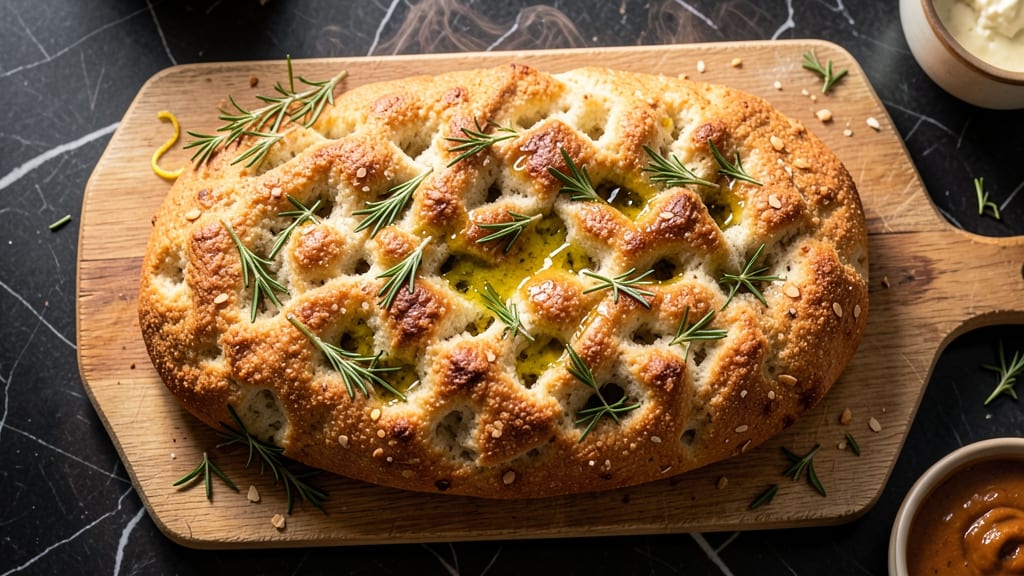
This almond flour focaccia bread recipe delivers the perfect balance of nutty crunch and airy texture without relying on traditional gluten grains. The secret lies in proper hydration and almond flour substitution—creating a bread that's both crisp on the outside and tender within, with that signature focaccia oiliness.
I developed this after years of perfecting gluten-free baking, ensuring every bite satisfies without compromising flavor.
The process begins with activating yeast in warm water, then blending almond flour with olive oil and eggs for that signature focaccia richness. Unlike traditional focaccia, this version uses xanthan gum to mimic gluten's structure while keeping the crumb light.
The dough proofs longer than standard focaccia—1.5 hours—to develop maximum flavor before baking at 375°F for 25-30 minutes until golden.
What sets this apart is the olive oil bath poured into the pan before baking, which creates those coveted pockets of crispy, golden crust while keeping the interior moist.
Top with flaky sea salt, rosemary, or sesame seeds for extra texture, or keep it simple with just olive oil and coarse salt. The result? A gluten-free focaccia that rivals traditional versions in both texture and taste.
Perfect for low-carb diets, grain-free lifestyles, or anyone craving focaccia without gluten. The recipe scales easily—ideal for meal prep or gifting. Let's bake this nutty, crispy loaf that proves gluten-free doesn't mean flavor-free.
Ingredients for almond flour focaccia bread
Pantry staples meet specialty ingredients for gluten-free focaccia that rivals traditional versions.
| Ingredient | Amount | Notes |
|---|---|---|
| Active Dry Yeast 🍞 | 2 ¼ tsp | Instant yeast preferred for faster activation |
| Warm Water 💧 | 1 cup | 110°F (43°C) for optimal yeast activation |
| Almond Flour 🌰 | 3 cups | Finely ground, blanched preferred |
| Extra-Virgin Olive Oil 🫒 | 1 cup | High-quality, fruity variety |
| Large Eggs 🥚 | 4 whole | Room temperature for even mixing |
| Xanthan Gum 🧪 | ½ tsp | Essential for gluten-free structure |
| Fine Sea Salt 🧂 | 1 ½ tsp | Diamond Crystal preferred |
| Fresh Rosemary 🌿 | ¼ cup | Finely chopped, stems removed |
| Sesame Seeds 🌻 | ¼ cup | Toasted for enhanced flavor |
| Coarse Sea Salt 🧂 | ½ cup | Maldon or Jacobsen preferred |
| Unsalted Butter 🧈 | ¼ cup | Melted, for brushing |
The almond flour is the foundation—opt for blanched almond flour from Bob's Red Mill or Anthony's Goods for superior texture. Freshly ground almond flour yields the best results, though pre-ground works in a pinch. For the olive oil, California Extra Virgin brands like Corto or Colavita deliver that signature fruity depth. The yeast requires precise temperature control: 110°F water activates it perfectly. If your kitchen runs hot, dissolve the yeast in cool water first, then gradually warm to the correct temperature. The xanthan gum is non-negotiable—Bob's Red Mill brand is widely available and reliable for gluten-free baking.
No almond flour? Ground walnuts or hazelnuts can substitute at a 1:1 ratio, though texture will differ slightly. Short on olive oil? Avocado oil maintains similar flavor neutrality. Fresh rosemary is ideal, but dried rosemary at one-third the amount works if you're in a hurry. For the sesame seeds, toasted until golden enhances flavor—use a dry skillet over medium heat for 2-3 minutes. The coarse sea salt should be flaky varieties like Maldon—they melt beautifully during baking. If you prefer a different herb, thyme or oregano pair beautifully with focaccia's earthy tones. For extra richness, replace 2 tablespoons of olive oil with melted vegan butter.
Store the focaccia in an airtight container at room temperature for up to 3 days to maintain crispness. For longer storage, wrap tightly in aluminum foil and freeze for up to 3 months. Reheat slices in a 350°F oven for 5-7 minutes to restore crispiness. The dough can be prepared 1 day ahead and refrigerated—bring to room temperature before shaping. For meal prep, slice and freeze individual portions, then toast directly from frozen. The butter brushing should be done just before baking to prevent sogginess. This recipe doubles easily—simply scale all ingredients proportionally for larger batches.
Why You'll Love This Recipe
- No-Knead Magic: I swear by this—just mix, let it rise, and bake. The yeast and warm water do all the heavy lifting while I sip coffee. No stand mixer, no stress.
- Rich Nutty Crunch: That almond flour gives it a texture you won’t find in regular focaccia—tender inside, crispy edges, and a nutty depth that pairs perfectly with olive oil. Honestly, it’s the kind of bread that disappears faster than I can say "second slice."
- Weeknight & Weekend Hero: Use it for brunch with scrambled eggs, tear it into hearty sandwiches, or serve it warm with soup. Between us, it’s my go-to for lazy Sundays or when I need to feed a crowd without slaving away.
- Budget-Friendly Luxury: Almond flour might sound fancy, but a little goes a long way, and the olive oil adds richness without breaking the bank. Plus, leftovers toast up like fresh bread the next day—no waste, all flavor.
Step-by-step instructions for almond flour focaccia bread
Mastering this gluten-free focaccia requires precision in mixing and baking techniques.
Activate the Yeast with Warm Water
In a small bowl, combine the 2.25 teaspoons active dry yeast with the 1 cup warm water (110°F). Let it sit for 5-7 minutes until the mixture becomes frothy and slightly bubbly. This indicates the yeast is active and ready to work. If it doesn't bubble, your yeast may be inactive—start fresh with new yeast.
I always use instant yeast for faster activation and more predictable results. The warm water temperature is crucial—too hot kills the yeast, while too cold slows activation. The frothy texture signals the yeast has transformed the sugars into carbon dioxide, which will create air pockets in your focaccia.
Mix the Wet and Dry Ingredients Separately
In a large mixing bowl, whisk together the 4 whole large eggs, 1 cup extra-virgin olive oil, 0.5 teaspoon xanthan gum, and 1.5 teaspoons fine sea salt. In a separate bowl, combine the 3 cups almond flour and 0.25 cup finely chopped fresh rosemary. This separation prevents overmixing the delicate almond flour, which can create a dense texture.
The xanthan gum is essential here—it mimics gluten's binding properties in gluten-free baking. The olive oil provides both moisture and that signature focaccia richness. I like to mix the rosemary into the dry ingredients last to preserve its fresh aroma. Let both mixtures sit for 2 minutes before combining.
Combine and Knead the Dough
Gradually pour the wet ingredients into the dry ingredients while mixing with a wooden spoon. Stir until just combined—you should have a thick, sticky batter that clings to the spoon. Avoid overmixing; the almond flour develops differently than wheat flour. Let the batter rest for 10 minutes at room temperature while you prepare your baking pan.
This resting period allows the xanthan gum to fully hydrate and the almond flour to absorb the moisture. The batter should still be quite thick—this is normal. For best results, use a nonstick baking pan or line your pan with parchment paper. The focaccia will be dense but will rise beautifully in the oven.
Shape and Bake the Focaccia
Preheat your oven to 375°F. Transfer the batter to your prepared baking pan and spread it evenly with a wet spatula, creating a ½-inch thick layer. Use your fingers to dimple the surface in a grid pattern, about 1 inch apart. Sprinkle evenly with the 0.25 cup sesame seeds and 0.5 cup coarse sea salt, pressing gently so they adhere.
Bake for 35-40 minutes until the top is golden brown and the internal temperature reaches 200°F. The edges should be crisp while the center remains slightly soft—this is perfect. If the top browns too quickly, tent with foil after 20 minutes to prevent burning.
Finish with Melted Butter
Remove the focaccia from the oven and immediately brush the top with the 0.25 cup melted unsalted butter using a pastry brush. This step adds moisture and enhances the nutty flavor. Let it cool in the pan for 5 minutes before transferring to a wire rack to cool completely.
The butter should melt into the warm focaccia, creating a glossy finish and deeper flavor. For best results, serve warm when the interior is still slightly soft. This focaccia holds up well for 2 days at room temperature, but it's best enjoyed fresh when the texture is at its peak.
Pro Tips For Making Almond Flour Focaccia Bread
- STIR THE YEAST FIRST: Mix the warm water and yeast before adding almond flour—this gives it 5 minutes to activate properly. I learned this the hard way when my first batch sat dormant because the yeast got buried under dry flour. If it doesn’t foam, start over with fresh yeast.
- SIFT THE ALMOND FLOUR: Lightly sift the almond flour into the bowl to break up clumps and aerate the dough. Almond flour packs tightly, and unsifted batches make focaccia dense. Use a fine-mesh sieve—it’s worth the extra 30 seconds.
- DON’T OVERMIX THE DOUGH: Stir just until combined after adding eggs and oil—overworking almond flour dough makes it gummy. I used to beat it like wheat dough, and the texture suffered. A few gentle folds are all it needs.
- PRESS THE OIL IN: Dimple the dough with your fingers, then press in olive oil before baking—this creates those classic pockets. Use about 2 tablespoons per dimple, and don’t skimp. The oil keeps the focaccia moist and adds flavor.
Essential equipment for great almond flour focaccia bread
Must-Have Mixing Tools
Start with a large mixing bowl (at least 8-quart capacity) to accommodate the sticky almond flour batter. I recommend a stainless steel bowl from OXO—it resists stains and provides a nonreactive surface for gluten-free baking.
For mixing, use a wooden spoon or silicone spatula to avoid damaging nonstick pans during scraping. A small whisk helps combine the wet ingredients smoothly before incorporating the dry almond flour. 🥄
Baking Essentials
A 9x13-inch baking pan is ideal for this focaccia—opt for nonstick or line with parchment paper to prevent sticking. I prefer Nordic Ware Natural Aluminum pans for even heat distribution.
For precise temperature control, invest in an oven thermometer (like Thermoworks Oven Thermometer) to ensure your oven maintains 375°F accurately. A wire cooling rack keeps the focaccia crispy after baking.
Specialty Gluten-Free Gear
The xanthan gum requires careful handling—use a small measuring spoon (like OXO Good Grips) for the 0.5 teaspoon amount. A fine-mesh strainer helps sift the almond flour for a lighter texture.
For shaping, a wet spatula (like Merax 12-inch) prevents sticking when spreading the batter. A pastry brush (such as West Bend) applies melted butter evenly for that signature focaccia finish.
Yeast Activation Tools
Precise yeast activation needs a small glass bowl (like Pyrex) and a digital kitchen scale (I use OXO Good Grips) to measure the 2.25 teaspoons of yeast accurately.
A thermometer (like Thermoworks Thermapen) ensures your water reaches 110°F—critical for yeast activation. A timer (set for 5-7 minutes) tracks the bubbly reaction perfectly.
Cooling and Storage
For crispy storage, use an airtight container (like Rubbermaid Brilliance) with a paper towel underneath to absorb moisture. A sharp serrated knife (such as Mercer Culinary) slices the focaccia cleanly.
For reheating, a baking sheet (placed in a 350°F oven for 5-7 minutes) restores crispiness. A cutting board (like John Boos Teak) provides stability when slicing.
Optional Upgrades
For professional results, consider a stand mixer (like KitchenAid Artisan) with the dough hook attachment—though hand-mixing works fine. A food scale (like Escali Primo) ensures precise almond flour measurements.
For extra texture, a sesame seed toaster (or dry skillet) enhances flavor. A digital meat thermometer (like Thermoworks Smoke) verifies the 200°F internal temperature for perfect doneness.
Nutrition facts
Frequently asked questions
Why does almond flour focaccia need xanthan gum?
Almond flour lacks gluten's elastic structure, so xanthan gum replaces that binding property. It creates the signature focaccia texture—crispy crust with a tender interior. Without it, your bread will crumble or stay dense. Think of it as the "glue" that holds the nutty almond flavor together while mimicking traditional bread structure.
Can I make this focaccia without eggs?
Yes! Replace the 4 eggs with 4 tablespoons ground flaxseed mixed with 12 tablespoons water (let sit for 5 minutes). The flax "eggs" provide moisture and binding. For extra richness, add 2 tablespoons melted coconut oil to the wet ingredients. The texture will be slightly denser but still delicious.
How do I prevent my focaccia from sticking to the pan?
Line your 9x13-inch pan with parchment paper or use a well-seasoned cast-iron skillet. Brush the pan with extra olive oil before adding batter, then sprinkle with semolina flour or almond flour. For extra insurance, chill the batter for 30 minutes before baking—this helps it hold shape better. The key is proper prep!
What's the best way to store leftovers?
Keep focaccia in an airtight container at room temperature for 2-3 days—it stays crispy best when not refrigerated. For longer storage, wrap slices in wax paper and freeze for up to 3 months. To revive, toast frozen slices in a 350°F oven for 5-7 minutes. The butter brushing should be done just before baking to prevent sogginess.
Can I add cheese to this recipe?
Sprinkle ½ cup shredded parmesan or feta crumbles over the batter before baking. For extra flavor, mix ¼ cup ricotta into the wet ingredients. The cheese adds richness that pairs perfectly with the nutty almond flour. Just reduce the olive oil by 2 tablespoons.