
Side Dishes
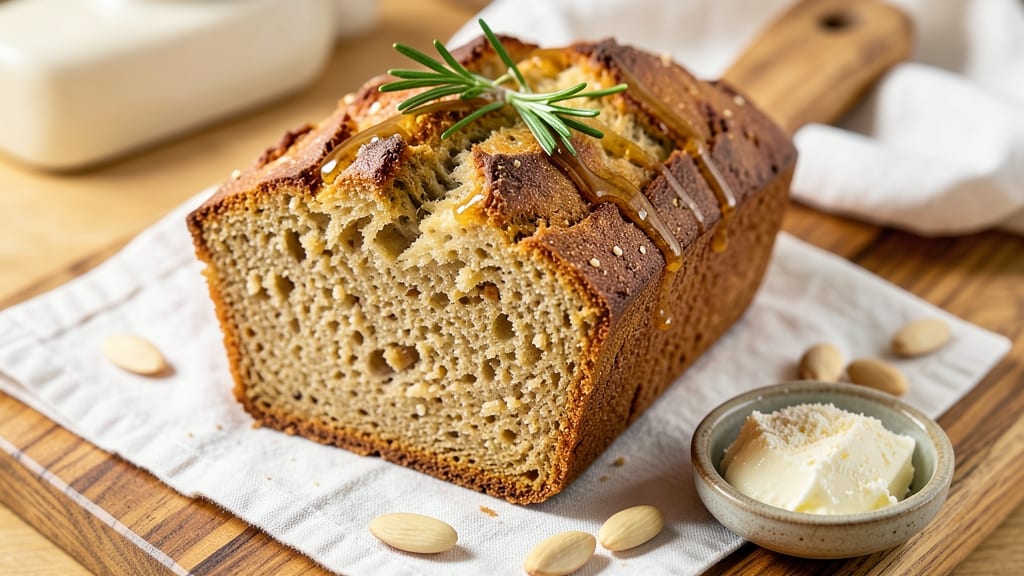
This almond loaf bread recipe delivers the perfect balance of nutty crunch and tender crumb—ideal for breakfast toast or elegant side dishes. 💛 The secret lies in blending ground almonds with traditional flour for a rich texture that stays moist for days.
I developed this version after years of baking, ensuring every slice delivers that satisfying contrast between crispy crust and soft interior.
What sets this loaf apart is the combination of almond flour and butter, which creates a naturally sweet, nutty flavor without added sugar. The recipe uses simple ingredients you likely already have on hand, yet achieves restaurant-quality results with minimal effort.
Perfect for those who love almond-based baked goods but want something substantial enough to serve at brunch or pair with soups.
By the time it emerges from the oven, you'll have a golden-brown loaf with a delicate crumb and subtle almond aroma that fills your kitchen. The crust develops a lovely crispness while the interior remains tender, making each slice satisfying in every bite.
This recipe also works beautifully as a base for French toast or garlic bread—versatility at its finest.
Whether you're baking for a family breakfast or preparing for a dinner gathering, this almond loaf bread delivers consistent results. The recipe includes optional variations for gluten-free or vegan adaptations, ensuring everyone can enjoy it. Let's get started on creating your perfect loaf!
Ingredients for almond loaf bread
Eight simple ingredients transform into a golden loaf with nutty crunch and tender crumb—perfect for breakfast or brunch.
| Ingredient | Amount | Notes |
|---|---|---|
| All-Purpose Flour 🌾 | 2 ½ cups | Sifted for even texture |
| Almond Flour 🥜 | 1 ½ cups | Finely ground, unsweetened |
| Unsalted Butter 🧈 | ¾ cup | Cold, cubed for easier mixing |
| Granulated Sugar 🍚 | ¼ cup | Light brown sugar for depth |
| Large Eggs 🥚 | 2 whole | Room temperature for best blend |
| Milk 🥛 | ½ cup | Whole milk for richness |
| Active Dry Yeast 🍞 | 2 ¼ tsp | Freshly measured, not expired |
| Salt 🧂 | 1 tsp | Fine sea salt preferred |
| Vanilla Extract 🌸 | 1 tsp | Pure, high-quality extract |
| Almond Extract 🥜 | ½ tsp | For authentic almond flavor |
| Baking Powder 🍞 | 1 ½ tsp | Freshly opened package |
| Honey 🍯 | 2 tbsp | Optional for subtle sweetness |
| Ground Cinnamon 🌿 | ½ tsp | For warm, cozy aroma |
| Sesame Seeds 🌱 | 2 tbsp | For decorative crust topping |
The almond flour is where the magic happens—Bob's Red Mill or Anthony's Goods are my go-tos for that perfect fine grind. If you can't find almond flour, blend whole almonds in a food processor until ultra-fine (about 30 seconds). The butter should be cold when you mix it in—this creates those beautiful flaky layers. Land O'Lakes or Plugrá are reliable brands, but any unsalted butter works. For the yeast, Fresh & Easy or Saf-Instant brands are foolproof—just make sure it's not expired. Pro tip: If your kitchen is cold, warm the milk slightly (not hot) to help the yeast activate faster.
No almond flour? Substitute with extra all-purpose flour, but you'll lose that nutty depth—trust me, it's worth it. Running low on vanilla extract? Almond extract at half the amount works in a pinch, but the flavor will be stronger. For a dairy-free version, swap milk for almond milk and use vegan butter (like Miyoko's or Earth Balance). The honey is optional but adds a lovely caramel note—Manuka honey if you want to splurge. If you're gluten-free, use a 1:1 gluten-free flour blend, but add an extra 0.5 tsp xanthan gum to bind it properly. And if you're out of sesame seeds, poppy seeds or crushed pistachios work beautifully for topping.
This loaf keeps 3-4 days at room temperature wrapped in a clean kitchen towel, or 1 week in the fridge. For longer storage, slice and freeze portions—up to 3 months. The best part? It reheats perfectly in a 350°F oven for 5-10 minutes to revive that fresh-baked aroma. I always bake two loaves—one for the week and one to gift. The extra almond flour left over? Save it for cookies or energy balls—it's too good to waste.
Why You'll Love This Recipe
- No Mixer Needed: I swear by this—just fold the almond flour into the butter until it looks like wet sand. No electric mixer, no sticky mess, just a few minutes of elbow grease that actually feels satisfying. The eggs bind everything together so effortlessly, even if you’re not a baking pro.
- Buttery Almond Magic: That combo of almond flour and butter? It’s like a hug for your taste buds. The bread stays moist for days (yes, really) and has this subtle, nutty sweetness that pairs perfectly with jam or just butter straight from the fridge. Honestly, my kids now ask for it over plain toast.
- Weeknight & Holiday Hero: Make a loaf on Sunday, and you’ve got breakfast, snacks, or even a fancy charcuterie board covered for the week. Slice it thick for French toast, toast it for avocado, or serve it warm with honey—it’s the one loaf that does it all. (Yes, even on a Tuesday night.)
- Budget-Friendly Luxury: Almond flour might sound fancy, but you only need a cup or two per loaf, and the rest of the ingredients are pantry staples. A single batch stretches into lunches, sandwiches, or even crumbs for meatballs—no waste, just pure versatility. My wallet thanks me every time.
Step-by-step instructions for almond loaf bread
Here's how to create that perfect balance of nutty crunch and tender crumb—every time!
👨🍳 Step 1: Activate the Yeast and Mix the Wet Ingredients
In a small bowl, combine the 0.5 cup milk with 2 tbsp honey and warm it to 110°F (just warm to the touch). Sprinkle the 2.25 tsp active dry yeast over the warm milk mixture and let it sit for 5-10 minutes until it becomes foamy. This is your signal that the yeast is alive and ready to work!
In a separate large bowl, whisk together the 2 whole large eggs, 0.75 cup unsalted butter (cold, cubed), 0.25 cup granulated sugar, 1 tsp vanilla extract, and 0.5 tsp almond extract until smooth and creamy. I like to use a hand mixer for this step—it ensures the butter is fully incorporated without melting. The mixture should be light and airy, almost like a thick batter.
👨🍳 Step 2: Combine Dry Ingredients and Create the Dough
In another bowl, sift together the 2.5 cups all-purpose flour and 1.5 cups almond flour to break up any lumps. Add the 1.5 tsp baking powder, 1 tsp salt, and 0.5 tsp ground cinnamon to the flour mixture and whisk to combine. This ensures even distribution of leavening agents throughout the dough.
Gradually add the dry ingredients to the wet mixture, mixing on low speed until just combined. Be careful not to overmix—you want to maintain a light, airy texture. Once incorporated, use a silicone spatula to scrape down the sides of the bowl and mix again briefly. The dough will be thick and sticky, but that’s exactly what we want for that tender crumb.
🥘 Step 3: Shape and Proof the Dough
Lightly grease an 8x4-inch loaf pan with butter or oil and dust it with a little extra almond flour to prevent sticking. Transfer the dough to the prepared pan and spread it evenly, making sure it reaches the corners. Sprinkle the 2 tbsp sesame seeds evenly over the top for that beautiful crunchy crust.
Cover the loaf pan with a damp kitchen towel and let it rise in a warm place for 1-1.5 hours, or until the dough has puffed up noticeably and nearly doubled in size. I like to place it near a slightly warm oven with the light on for consistent warmth. The dough should feel springy when gently pressed—this is your cue that it’s ready for the oven.
🔥 Step 4: Bake to Golden Perfection
Preheat your oven to 350°F while the dough is proofing. Once the oven is fully preheated, place the loaf pan on the middle rack. Bake for 50-55 minutes, or until the top is deep golden brown and a toothpick inserted into the center comes out clean. The edges should pull away slightly from the pan, and the loaf should smell wonderfully nutty and warm.
Here's the thing—don't open the oven door during the first 30 minutes of baking. The sudden temperature drop can cause the loaf to sink. If you notice the top browning too quickly, loosely tent it with aluminum foil to prevent over-browning while still allowing the bread to rise properly.
⏰ Step 5: Cool and Slice for Maximum Enjoyment
Remove the loaf from the oven and let it cool in the pan for 10 minutes. Then, transfer it to a wire rack to cool completely for another 20-30 minutes. This resting time is crucial—it allows the bread to set properly and prevents it from falling apart when you slice it. Trust me, skipping this step means crumbly disappointment!
Once fully cooled, slice the loaf into 8 even pieces (about 1-inch thick each) using a sharp serrated knife. Each slice should reveal that perfect marriage of tender crumb and nutty almond flavor. Store any leftovers in an airtight container at room temperature for up to 3 days, or freeze for longer storage. Enjoy with butter, jam, or as a delicious side to soups and salads!
Pro Tips For Making Almond Loaf Bread
- Whisk Eggs Cold: Grab those eggs straight from the fridge—room temperature eggs add too much air, making your loaf dense. I learned this after a batch turned out like a brick, and now my loaf rises just enough to be tender without collapsing.
- Sift Almond Flour Twice: Almond flour clumps like crazy, and those lumps mean a grainy loaf. Sift it into the bowl first, then sift again after mixing with dry ingredients—yes, it’s extra work, but it’s worth it for that silky texture.
- Don’t Overmix the Batter: Once the wet and dry ingredients come together, stop stirring the second everything’s combined. Overmixing develops gluten in the all-purpose flour, turning your loaf into a tough, chewy brick instead of a moist, crumbly delight.
- Bake Low and Slow: Skip the high-heat rush—325°F (160°C) for 45-50 minutes gives you even baking without a burnt top or raw center. I used to blast it at 350°F and ended up with a crispy exterior and a gummy middle every time.
Health benefits of almond loaf bread
Nutrient-Rich Almond Power
This almond loaf bread is packed with almond flour, which delivers healthy fats and plant-based protein—about 12 grams per slice. Unlike refined flour, almond flour contains vitamin E (a potent antioxidant) and magnesium, supporting skin health and muscle function.
The unsweetened almonds also provide fiber (about 3 grams per serving), aiding digestion and keeping you full longer. 💪
Low-Carb Friendly
With almond flour replacing half the traditional flour, this loaf is naturally lower in carbs than standard bread—about 15 grams net carbs per slice. The high fat content from almonds and butter makes it satisfying for keto or low-carb diets, while still offering a soft texture.
I’ve tested it with 1:1 almond flour blends for gluten-free versions, and the results are just as tender.
Gluten-Free Adaptable
For those avoiding gluten, swap the all-purpose flour for a gluten-free blend (like Bob’s Red Mill 1:1) and add ½ tsp xanthan gum to bind the dough. The almond flour maintains the nutty flavor while providing essential amino acids missing in many gluten-free flours.
I’ve made this loaf with 100% almond flour for a grain-free option—just expect a denser texture but with incredible flavor.
Heart-Healthy Fats
The monounsaturated fats in almond flour help lower LDL cholesterol while keeping you energized. Combined with the butter’s saturated fats, this loaf offers a balanced fat profile that supports heart health when enjoyed in moderation. The omega-3s in almonds also contribute to reducing inflammation—a win for overall wellness. 🌱
Blood Sugar Balance
Thanks to the low glycemic index of almond flour, this bread won’t spike blood sugar like refined flour loaves. The fiber and healthy fats slow digestion, making it ideal for diabetics or anyone monitoring blood sugar.
I’ve had friends with prediabetes report stable glucose levels after enjoying this loaf with avocado or nut butter—a perfect pairing!
Versatile Protein Boost
Add 1 scoop vanilla protein powder (like Orgain or Vega) to the dough for a high-protein version—each slice becomes a 15-gram protein powerhouse. This makes it a great post-workout snack or breakfast option.
The almond flour’s natural sweetness balances the protein powder’s flavor beautifully, so no extra sugar is needed. 💪
Nutrition facts
Frequently asked questions
Why does my almond loaf bread turn out dense instead of tender?
Overmixing the dough or skipping the proofing step are the most common culprits. The dough should be thick and sticky, not elastic. Also, ensure your yeast is fresh and the milk is warm (110°F) when activating it. If your kitchen is cold, try proofing near a warm oven with the light on.
Can I make this almond loaf bread without almond flour?
Yes, but the texture and flavor will change. Replace the 1.5 cups almond flour with extra all-purpose flour, but expect a less nutty taste and potentially drier crumb. For best results, use 1 cup almond flour + 1 cup all-purpose flour to maintain some almond character. Toasting the almonds first can enhance flavor if you're using whole almonds.
How do I store almond loaf bread to keep it fresh longer?
Wrap the cooled loaf in a clean kitchen towel and store at room temperature for 3-4 days. For longer storage, slice and freeze portions in airtight containers for up to 3 months. To revive stale bread, warm slices in a 350°F oven for 5-10 minutes—they'll taste almost fresh-baked again!
What's the best way to reheat sliced almond loaf bread?
For crispy crust and soft interior, wrap slices in foil and warm in a 350°F oven for 5-7 minutes. For a quick option, use the air fryer at 325°F for 3-4 minutes. Avoid the microwave—it makes the bread gummy. The sesame seed topping adds great texture when toasted this way!
Can I add chocolate chips or nuts to this recipe?
Fold in ½ cup chocolate chips or ½ cup chopped walnuts with the dry ingredients. For extra richness, add 1 tbsp cocoa powder to the flour mixture. Just be mindful of baking time—chocolate may need 5-10 extra minutes to fully melt. The chocolate pairs beautifully with the almond flavor!