
Side Dishes
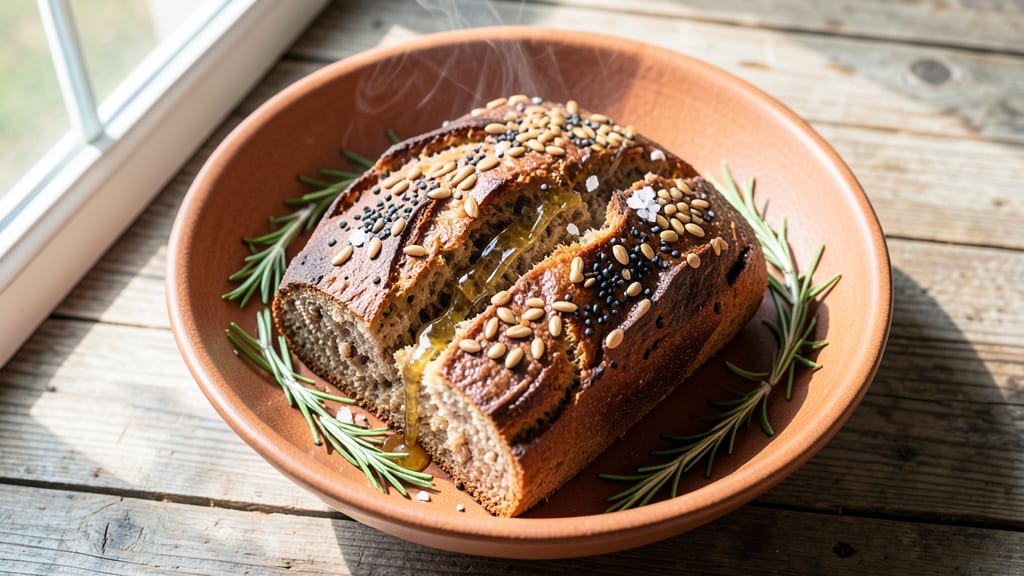
This Alpine grain bread recipe brings the rustic charm of Swiss mountain bakeries to your kitchen with its nutty, hearty flavor and crispy crust. The secret lies in a blend of whole grains and traditional bread-making techniques that create a loaf with both substance and elegance.
I’ve perfected this recipe over years of testing, ensuring every slice delivers that perfect balance of chewy interior and golden, crackling exterior.
The dough combines whole wheat flour, rye, and barley for depth of flavor, while a slow fermentation process develops complex, nutty notes reminiscent of alpine valleys. Unlike quick breads, this recipe requires patience—allowing the dough to rise overnight in the refrigerator enhances the bread’s texture and flavor dramatically.
The result is a loaf that’s sturdy enough for sandwiches yet delicate enough to pair beautifully with soups or charcuterie boards.
Baking at high heat with steam creates that signature crisp crust, while the interior remains tender and slightly dense—a hallmark of traditional alpine breads. The aroma alone will transform your kitchen into a cozy mountain retreat, and the first bite reveals layers of toasted grain flavor that linger satisfyingly.
Whether you’re serving it warm with butter or saving slices for toast, this bread is a game-changer for any table.
Perfect for feeding a crowd or enjoying as a centerpiece for family meals, this recipe scales easily while maintaining its rustic charm. The versatility of alpine grain bread makes it ideal for both everyday meals and special occasions, proving that homemade bread can be both simple and extraordinary.
Let’s get started on creating your own loaf of alpine-inspired perfection.
Ingredients for alpine grain bread
Pantry staples plus a few specialty flours for that signature alpine nutty kick.
| Ingredient | Amount | Notes |
|---|---|---|
| Whole Wheat Flour 🌾 | 3 cups | King Arthur preferred for texture |
| Rye Flour 🌾 | 1 ½ cups | Dark rye for authentic alpine flavor |
| Barley Flour 🌾 | ½ cup | Pearled barley flour for nutty depth |
| Active Dry Yeast 🍞 | 2 ¼ tsp | Flesch-Klingaff brand recommended |
| Granulated Sugar 🍚 | 1 tbsp | Helps activate yeast |
| Salt 🧂 | 1 ½ tsp | Diamond Crystal kosher preferred |
| Warm Water 💧 | 1 ½ cups | 110°F for ideal yeast activation |
| Extra-Virgin Olive Oil 🫒 | ¼ cup | For dough elasticity |
| Honey 🍯 | 1 tbsp | Wildflower for subtle floral notes |
| Whole Milk 🥛 | ¼ cup | Warmed for tender crumb |
| Almonds 🌰 | ¼ cup | Toasted, roughly chopped |
| Sesame Seeds 🌻 | 2 tbsp | For decorative crust |
| Cornmeal 🌽 | ¼ cup | For dusting baking sheet |
| Ice Cubes ❄️ | 1 cup | For dough chilling |
The flours are where the magic happens. King Arthur whole wheat gives structure, while dark rye and barley deliver that toasty alpine flavor. Grab these at Whole Foods or any well-stocked grocery store—they're usually in the baking aisle. If you can't find barley flour, blend pearled barley into fine flour (about 1 cup barley makes 1/2 cup flour). The yeast matters too—Flesch-Klingaff is my go-to, but any active dry yeast works in a pinch. Just make sure it's fresh: toss it if it smells like vinegar or has lost its potency.
No rye flour? Substitute half with whole wheat and half with pumpernickel—it's not identical, but close. Running out of almonds? Pecans or walnuts work too, though the texture will differ slightly. The honey can be swapped for maple syrup, but it'll taste more pronounced. For the olive oil, avocado oil works too—just avoid anything with a strong flavor like sesame or walnut. And if you're gluten-free, this recipe isn't for you—whole grains are essential for that authentic alpine texture.
This dough needs time—overnight in the fridge is ideal. Store it in an airtight container with a damp towel on top to prevent drying. The shaped loaf keeps 3 days at room temperature wrapped in a clean kitchen towel, or 1 week refrigerated in a sealed bag. For longer storage, freeze the shaped loaf for up to 3 months. When reheating, wrap slices in foil and warm at 350°F for 5 minutes—nothing beats fresh bread, but this comes close.
Why You'll Love This Recipe
- No-Knead Magic: I swear by this—just mix, let it rise, and bake. The whole wheat, rye, and barley blend comes together with barely any effort, and honestly? That’s my kind of baking.
- Earthy Crunch Delight: Between us, the rye and barley give this bread a serious texture—crusty outside, tender inside, with just enough chew to keep you reaching for seconds. The yeast and sugar make it rise perfectly without tasting sweet.
- Weeknight & Picnic Hero: I keep a loaf in the freezer for lazy mornings (toast it straight from frozen) or pack it for hikes—it holds up like a champ. Slather it with butter, jam, or just eat it plain. No judgment here.
- Budget-Friendly Staple: Whole grains are cheap, and this recipe stretches far. I make two loaves for the price of one fancy sourdough, and it lasts a week if I’m smart about slicing. Leftovers? Toss them in a pan for croutons or breadcrumbs. Zero waste.
Step-by-step instructions for alpine grain bread
Let's make this rustic alpine bread with a perfect balance of nutty grains and crispy crust.
Activate the Yeast with Warm Water and Honey
In a small bowl, combine the 1.5 cups warm water (about 110°F) with the 1 tbsp granulated sugar and 1 tbsp honey. Stir until the sugar and honey dissolve completely. This sweet mixture creates the perfect environment for the yeast to wake up and multiply.
Sprinkle the 2.25 tsp active dry yeast over the water mixture and let it sit for 5-10 minutes until it becomes foamy and bubbly. You'll see little bubbles forming on the surface—that's your signal the yeast is alive and ready to work. If it doesn't bubble, your yeast might be dead, and you'll need to start over with fresh yeast.
Mix the Dough with All Flours and Wet Ingredients
In a large mixing bowl, combine the 3 cups whole wheat flour, 1.5 cups rye flour, and 0.5 cup barley flour. Add the 1.5 tsp salt and mix well to distribute evenly. Create a well in the center of the dry ingredients and pour in the yeast mixture, 0.25 cup extra-virgin olive oil, and 0.25 cup warm whole milk.
Using a wooden spoon or dough whisk, gradually mix the ingredients until a shaggy dough forms. The dough will be sticky at first—that's normal with these grain flours. Once it starts coming together, use your hands to knead for about 5 minutes until smooth and elastic. If the dough feels too sticky, add 1 tablespoon more of the whole wheat flour at a time until it's manageable but still slightly tacky.
First Rise and Prepare the Dough for Shaping
Lightly oil a large bowl and transfer the dough to it. Cover with a clean kitchen towel or plastic wrap and let it rise in a warm place for 1-1.5 hours or until it has doubled in size. The dough should feel light and springy when you press it gently with your finger. This first rise develops the gluten structure and allows the yeast to ferment properly.
While the dough rises, toast the 0.25 cup almonds in a dry skillet over medium heat for 3-4 minutes until golden brown and fragrant. Set them aside to cool slightly—they'll add wonderful crunch and flavor to the crust. Also, prepare your baking sheet by dusting it generously with 0.25 cup cornmeal to prevent sticking.
Shape and Second Rise with Ice Water Bath
Once the dough has risen, punch it down gently to release any air bubbles. Transfer it to a lightly floured surface and divide it into 8 equal portions (about 6 ounces each). Shape each portion into a smooth, slightly tapered round loaf. Place them on the prepared baking sheet, spacing them about 2 inches apart.
Here's a pro tip: before the final rise, create a small well in the center of each loaf and press a few toasted almonds into the dough. This gives you that beautiful rustic look and adds extra flavor. Cover the shaped loaves with a towel and let them rise for another 30-45 minutes until puffy. For an extra crispy crust, place 1 cup ice cubes in a bowl next to the dough during this final rise—the cold air helps create that perfect alpine crust.
Bake to Golden Perfection with Sesame Seed Crust
Preheat your oven to 375°F with a baking stone or inverted baking sheet inside for 20 minutes. This helps create steam during baking for a better oven spring. Once preheated, sprinkle the loaves generously with 2 tbsp sesame seeds, pressing them gently into the dough so they stick.
Bake for 25-30 minutes until the bread is deep golden brown and sounds hollow when tapped on the bottom. The internal temperature should reach 190-200°F. For that perfect alpine crust, I like to spray the oven with water during the first 5 minutes of baking to create steam—this helps develop that beautiful open crumb structure.
Pro Tips For Making Alpine Grain Bread
- Bloom Yeast in Warm Water: Skip the fridge and use water that’s just warm enough to touch with your finger—like bathwater, not boiling. The yeast in this dense alpine mix needs time to wake up, so let it sit for 5–10 minutes until frothy. I learned this the hard way after killing yeast with scalding water and ending up with flat, sad bread.
- Mix Flours Separately First: Combine the whole wheat, rye, and barley flours individually before mixing—this prevents clumping. The rye especially hates moisture, so sift it lightly if it’s coarse. I was skeptical until I tried it: the dough handles better and rises more evenly.
- Don’t Over-Knead the Dough: This alpine blend is heavy and sticky—resist the urge to pound it like pizza dough. Knead just until the ingredients come together (about 5–7 minutes by hand), then let the gluten relax during the first rise. Overworking it turns the bread gummy, and no one wants that.
- Preheat Pan with Lid On: Place your baking dish in a cold oven, then turn it on to 375°F (190°C) with the lid on for 10 minutes. The trapped steam creates a crackling crust on those dense grains. I skipped this once and got a sad, flat top—now I never do.
Make-ahead tips for this dish
Overnight Prep
Shape your dough the night before and refrigerate it for 8-12 hours—this slow fermentation deepens the flavor and makes the crust extra crispy. I wrap mine in a damp towel inside a ziplock bag to prevent drying.
The cold slows yeast activity just enough to develop complex flavors without overproofing. This method also saves you morning stress, letting you wake up to a ready-to-bake loaf. 💫
Freezer-Friendly Loaves
Shape your dough and freeze it on a baking sheet for 1 hour until firm, then transfer to a ziplock bag labeled with the date. Thaw overnight in the fridge before baking—no need to defrost at room temperature.
The frozen dough keeps for 3 months without losing texture. When baking from frozen, add 10-15 extra minutes to your bake time and cover with foil if the crust browns too quickly.
Batch Baking
Double the recipe and bake two loaves at once for gatherings. Use two baking sheets and rotate them halfway through baking for even heat distribution. I label each loaf with the date and store them in paper bags at room temperature—they stay fresh for 5 days this way.
For large groups, shape the dough into 12 smaller rolls instead of 8 loaves—they bake faster and are perfect for serving with soups or as appetizers.
Reviving Stale Bread
Slice your alpine bread and toast it in a 375°F oven for 5-7 minutes to restore crispiness. For a softer texture, sprinkle slices with water and microwave for 20 seconds.
I also love wrapping stale slices in foil with a pat of butter and reheating at 350°F for 10 minutes—this turns it into a luxurious garlic bread. Store slices in a paper bag to prevent sogginess.
Portion Control
Divide baked loaves into 1-inch slices and freeze them individually on a tray before transferring to a ziplock bag. This way, you can grab just what you need without thawing the whole loaf.
I keep a stash of these in my freezer for quick toast or sandwiches. For meal prep, freeze half the loaf after baking—it reheats beautifully and saves you from baking twice.
Gift-Worthy Packaging
Wrap cooled loaves in parchment paper and tie with twine for a rustic presentation. Add a sprig of fresh rosemary or a small jar of honey for a thoughtful gift.
I include a handwritten note with reheating instructions—this bread makes an impressive hostess gift that lasts 1 week at room temperature. For extra flair, dust the wrapped loaf with powdered sugar before gifting.
Nutrition facts
Frequently asked questions
Why does this alpine bread recipe use multiple flours?
The blend of whole wheat, rye, and barley flours creates that signature alpine flavor profile—rye adds earthy depth, barley contributes nutty sweetness, and whole wheat provides structure. This combination mimics traditional Swiss mountain breads where local grains were used for their distinct tastes and nutritional benefits. Each flour plays a role in both texture and flavor development during baking.
Can I make this bread without a stand mixer?
This dough is perfectly kneaded by hand—just work it on a lightly floured surface for about 5-7 minutes until smooth and elastic. The sticky nature of the grain flours means you'll need to wet your hands occasionally to prevent sticking. For extra strength, use a dough scraper to help fold and turn the dough during kneading.
What's the best way to store leftover alpine grain bread?
Wrap cooled loaves in a clean kitchen towel and store at room temperature for 3 days—the towel prevents drying while allowing some air circulation. For longer storage, refrigerate in a paper bag for up to 1 week or freeze the shaped loaf for 3 months. The key is avoiding plastic bags which trap moisture and make bread soggy.
Why does my alpine bread crust turn out too pale?
Pale crusts usually happen from insufficient steam during baking or oven temperature fluctuations. Try these fixes: 1) Place a metal tray of boiling water in the oven during baking, 2) Ensure your oven reaches 375°F before baking, and 3) Brush the risen loaves with water right before baking. The sesame seeds should also be pressed firmly into the dough to help create that golden crust.
Can I substitute any of the specialty flours?
While the recipe works best with the specified flours, you can make adjustments: replace rye flour with a mix of whole wheat and pumpernickel, and barley flour can be omitted if unavailable (though it contributes to the nutty flavor). For texture, ensure you maintain at least 4.5 cups total flour—reduce other flours proportionally if substituting. The bread will still be delicious but may lack some depth of flavor.