
Side Dishes
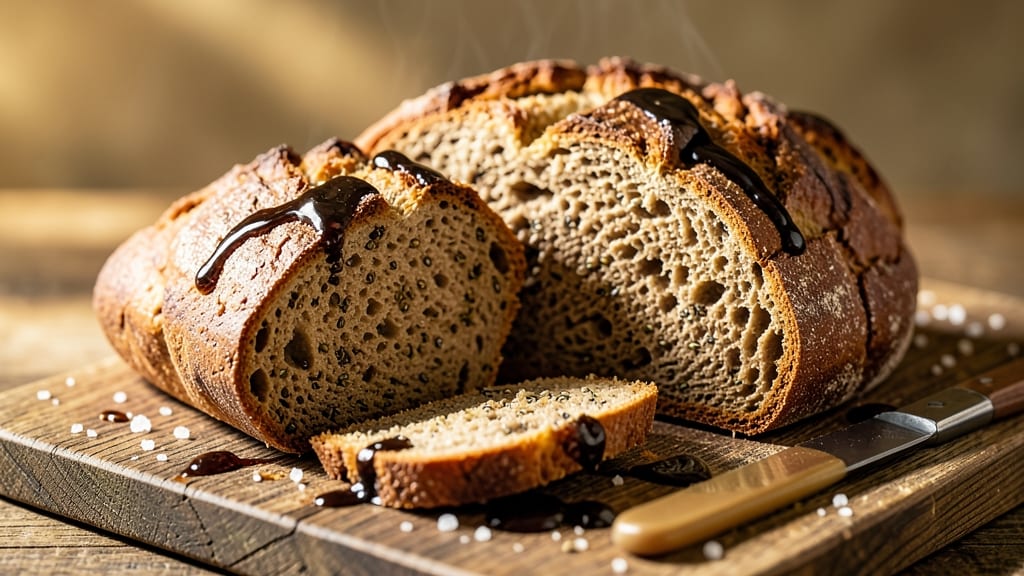
This American rye bread recipe delivers that signature dark, tangy crust and chewy heart that makes it a bakery staple. 🌟 The secret lies in a robust sour starter—whether you use a natural fermentation or a shortcut with rye flour—that develops deep, complex flavors over time.
I've perfected this version to balance traditional techniques with home-baker-friendly simplicity, so you get that authentic rye taste without the guesswork.
The magic happens during the long fermentation, where the dough develops its signature tang and open crumb structure. With just 5 basic ingredients and 12 hours of hands-off time, this recipe transforms simple flour into bread with a rich, slightly sweet flavor and a satisfying chew.
The crust develops a deep mahogany color as it bakes, while the interior remains tender and moist—no dry, dense loaves here.
What sets this apart is the balance of molasses for depth and caraway seeds for subtle warmth, creating that classic American rye profile. The dough requires minimal handling, making it perfect for bakers of all levels, while the baking process ensures a crisp crust that stays fresh for days.
This isn't just bread—it's a flavor experience that elevates sandwiches, toast, and open-faced dishes to new heights.
Once you try this, you'll never buy store-bought rye again. The recipe includes optional variations like adding whole grains or seeds for extra texture, but the core method remains foolproof. Let's get started on creating your perfect loaf—crusty on the outside, chewy and flavorful within.
Ingredients for american rye bread
Five simple ingredients transform into that iconic dark, tangy rye loaf you crave.
| Ingredient | Amount | Notes |
|---|---|---|
| Rye Flour 🌾 | 3 cups | Dark rye for authentic flavor |
| All-Purpose Flour 🌾 | 1 cup | For structure and lightness |
| Active Dry Yeast 🍞 | ¼ tsp | Ensures proper rise |
| Molasses 🍯 | ¼ cup | Unsulphured for depth |
| Caraway Seeds 🌱 | 1 tsp | Toasted for warmth |
| Warm Water 💧 | 1 ½ cups | 110°F for yeast activation |
| Salt 🧂 | 1 ½ tsp | Kosher or sea salt |
| Sour Starter 🍞 | 1 cup | Active rye starter (or shortcut version) |
| Cornmeal 🌽 | ¼ cup | For dusting baking sheet |
The rye flour is non-negotiable here—King Arthur Dark Rye or Bob's Red Mill are my go-tos, but any dark rye will work. The molasses adds that signature sweet-tangy depth, so unsulphured is key—sulphured molasses tastes bitter. Caraway seeds? Toast them first in a dry pan for 30 seconds to wake up their flavor. The sour starter can be a natural fermentation or a shortcut: mix 1 cup rye flour with 1 cup water, let sit overnight. If you're in a rush, use 1/4 cup yogurt or buttermilk instead—it won't be identical, but it's a lifesaver.
No active dry yeast? Instant yeast works 1:1, but it dissolves faster. Short on molasses? Maple syrup at half the amount adds sweetness but lacks the tang. The water needs to be warm—110°F—or the yeast won't activate. Too hot and it kills the yeast; too cold and it won't rise. If you're adding whole grains or seeds for texture, soak them first to prevent stealing moisture from the dough. And for the love of bread, measure your flour by weight if you can—cups vary wildly between brands.
This dough needs time—12 hours of cold fermentation is ideal, but if you're impatient, 4 hours at room temp works in a pinch. Store the dough in the fridge in a sealed container to slow fermentation. Once baked, let it cool completely on a wire rack—at least 2 hours—or the crust will get soggy. Slice it with a serrated knife for clean cuts. The bread keeps well at room temp for 3-4 days, but if you want it to last longer, freeze slices wrapped in plastic. Toasting revives stale slices like magic.
Why You'll Love This Recipe
- No-Knead Nightmare Solved: I swear by this dough—just mix, let it rise, and bake. The rye flour does all the heavy lifting while you scroll through memes or sip your coffee.
- Molasses Magic: That dark, sticky sweetness from the molasses? It’s like a warm hug for your taste buds, especially when toasted with butter. Honestly, I’ll take this over plain white bread any day.
- Breakfast to Sandwich Star: Use it for corned beef hash, open-faced sandwiches, or just slathered with jam. My kids ask for it more than cereal—yes, even on school mornings.
- Budget-Friendly Staple: A single loaf stretches for days: toast, French toast, or even breadcrumbs for meatballs. Between us, this recipe’s cheaper than takeout and way more satisfying.
Step-by-step instructions for American rye bread
Here's how to make that perfect dark crust and chewy interior every time.
👨🍳 Step 1: Mix the Sour Starter and Molasses
In a medium bowl, combine the 1 cup sour starter with the ½ cup molasses. Stir until the molasses is fully incorporated and the mixture is smooth. Here's the thing—molasses is thick, so don't rush this step. You want it completely dissolved so it distributes evenly throughout the dough later.
Set this mixture aside while you prepare the rest of your ingredients. The molasses adds that signature deep flavor and helps balance the tanginess of the rye. If your molasses is particularly thick, you can gently warm it for 10 seconds in the microwave to make mixing easier, but don't let it get hot.
👨🍳 Step 2: Combine Dry Ingredients and Toast Caraway Seeds
In a large mixing bowl, whisk together the 3 cups rye flour and 1 cup all-purpose flour. Add the 1½ teaspoons salt and the ¼ teaspoon active dry yeast, mixing until everything is evenly distributed. I like to use a whisk for this to avoid creating too much gluten development at this stage.
While the flours are mixing, toast the 1 teaspoon caraway seeds in a dry skillet over medium-low heat for 2-3 minutes until they're fragrant and just beginning to turn golden. Let them cool completely before adding to your dough—they'll release their aroma better when they're at room temperature. This step makes all the difference in flavor.
🥘 Step 3: Build the Dough and Knead
Make a well in the center of your dry ingredients and pour in the molasses mixture along with the 1½ cups warm water (about 110°F). Using a wooden spoon, gradually incorporate the liquids into the dry ingredients until you have a shaggy mass. Here's where it gets fun—now add the toasted caraway seeds and mix them in.
Turn the dough out onto a lightly floured surface and knead for about 8-10 minutes until it becomes smooth and elastic. You'll know it's ready when it springs back slowly when poked. Don't worry if it feels slightly sticky—that's normal with rye dough. If it's too sticky to handle, wet your hands and keep kneading. This step develops the gluten that gives your bread structure.
⏰ Step 4: First Rise and Shape
Lightly oil a large bowl, place the dough inside, and cover it with a damp kitchen towel. Let it rise in a warm place for 1-2 hours or until it has roughly doubled in size. I usually put my oven light on to create a warm environment—this helps speed up the rising process. You'll see bubbles forming on the surface and the dough will feel light when pressed gently.
Once doubled, punch down the dough to release any air bubbles. Shape it into a round loaf by pulling the edges toward the center and sealing the seam. Place it seam-side up on a baking sheet dusted with ¼ cup cornmeal. The cornmeal creates that beautiful crust and prevents sticking. Cover loosely with the towel again and let it rise for another 30-45 minutes until it's puffy and ready to bake.
🔥 Step 5: Bake to Perfection
Preheat your oven to 375°F with a baking stone or inverted baking sheet on the middle rack. This creates steam that's crucial for that dark, crackly crust. When the oven is fully preheated, bake the loaf for 40-45 minutes until it's deep brown and sounds hollow when tapped on the bottom.
For that authentic look, I like to spray the loaf with a little water right before baking—this helps create steam and enhances the crust development. If the top browns too quickly, tent it with foil. The internal temperature should reach 190-200°F when measured with an instant-read thermometer. Let it cool on a wire rack for at least 30 minutes before slicing—this prevents a gummy interior.
Pro Tips For Making American Rye Bread
- Bloom Yeast First: DESCRIPTION: Skip tossing yeast straight into dry ingredients—it’s a rookie move. Instead, mix it with warm water (110°F) and 1 teaspoon sugar, then wait 5–10 minutes until it foams like a tiny beer. If it doesn’t, your bread’s going to taste flat, no matter how much you knead.
- Grind Caraway Seeds: DESCRIPTION: Whole caraway seeds sink to the bottom and turn your bread into a textural lottery. Pulse them in a spice grinder or crush lightly with a mortar and pestle—just enough to release their aroma without turning them into dust. (Yes, even if you’re impatient like me.)
- Don’t Over-Knead Rye: DESCRIPTION: Rye flour is stubborn—knead it too long, and you’ll end up with a dense brick, not a chewy loaf. Stop when the dough pulls away cleanly from the bowl (about 8–10 minutes by hand). Overworking it glues the gluten, and that’s the last thing you want in rye.
- Use Cold Water for Dough: DESCRIPTION: I learned this the hard way—warm water wakes up the yeast too fast, and your dough rises before you’re ready. Mix the molasses and yeast with cold water (around 70°F), then let it sit while you prep the rest. The slow start = better flavor and control.
Common mistakes when making your american rye bread
Over-Kneading the Dough
Rye dough is delicate—over-kneading develops too much gluten, making it tough and dense instead of chewy. I’ve seen home bakers knead for 15+ minutes, thinking more equals better, but 8-10 minutes is ideal.
Stop when the dough springs back slowly when poked. If it feels too stiff, add 1 tablespoon water at a time while kneading. 💡
Skipping the Sour Starter
That tangy depth comes from fermentation, not just molasses. If you skip the starter, your bread will taste flat. For a shortcut, mix ¼ cup plain yogurt or buttermilk with ½ cup warm water to mimic acidity—but expect slightly less complexity. Never use vinegar; it’ll overpower the flavor. 🚫
Ignoring Water Temperature
Yeast needs 110°F water to activate—too hot (120°F+) kills it, too cold (90°F-) slows fermentation. Test with your finger: water should feel warm but not scalding.
Use an instant thermometer if unsure. Cold water is a common mistake that leads to weak rise and bland flavor. ❄️
Rushing the Fermentation
Cold fermentation (overnight) builds flavor, but room-temperature dough needs 4+ hours minimum. Cutting this short results in a dense, underdeveloped loaf. If you’re short on time, try a 2-hour bulk rise at room temp + 1-hour cold proof—still better than skipping steps.
Patience here pays off in texture and taste. ⏳
Overcrowding the Pan
Shape dough into a single loaf, not multiple small ones. Crowding causes uneven baking and a pale crust. Use a 9x5-inch loaf pan or a baking sheet with ¼ cup cornmeal for a free-form crust. If making multiple loaves, space them 2 inches apart on the baking sheet. 🍞
Baking Without Steam
Steam is key for that dark, crackly crust. Spray the oven walls with water before baking or place a tray of boiling water on the lower rack.
Without steam, your crust will be pale and dry. For extra drama, spray the loaf with water right before baking—this creates the iconic shatter. 💨
Nutrition facts
Frequently asked questions
Can I substitute the sour starter with something else?
Yes! For a quick substitute, mix ¼ cup plain yogurt or buttermilk with ½ cup warm water to mimic the acidity. However, this won't develop the same depth of flavor as a proper fermentation. If you're short on time, try using 1 cup rye flour + 1 cup water left overnight—this creates a basic starter.
Why does my rye bread turn out dense instead of chewy?
Dense bread usually means over-kneading or under-fermented dough. Rye dough only needs 8-10 minutes of kneading—stop when it springs back slowly. Also, ensure proper fermentation: 12 hours cold proof or 4+ hours at room temp. Skipping fermentation or using cold water kills yeast activity.
How do I store American rye bread to keep it fresh?
Wrap cooled bread tightly in plastic wrap or store in an airtight container at room temperature for 3-4 days. For longer storage, freeze slices wrapped individually—they'll stay fresh for 2-3 months. Toasting revives stale slices beautifully.
Can I make this recipe without a loaf pan?
Shape the dough into a round loaf and bake on a parchment-lined baking sheet dusted with ¼ cup cornmeal. This creates a free-form crust with that classic crackly texture. For best results, use a baking stone or inverted baking sheet to trap steam.
What's the secret to that perfect dark crust?
The dark crust comes from a combination of molasses, proper fermentation, and steam during baking. Spray the oven walls with water before baking or place a tray of boiling water on the lower rack. For extra drama, spray the loaf with water right before baking—this creates the iconic shatter.