
Side Dishes
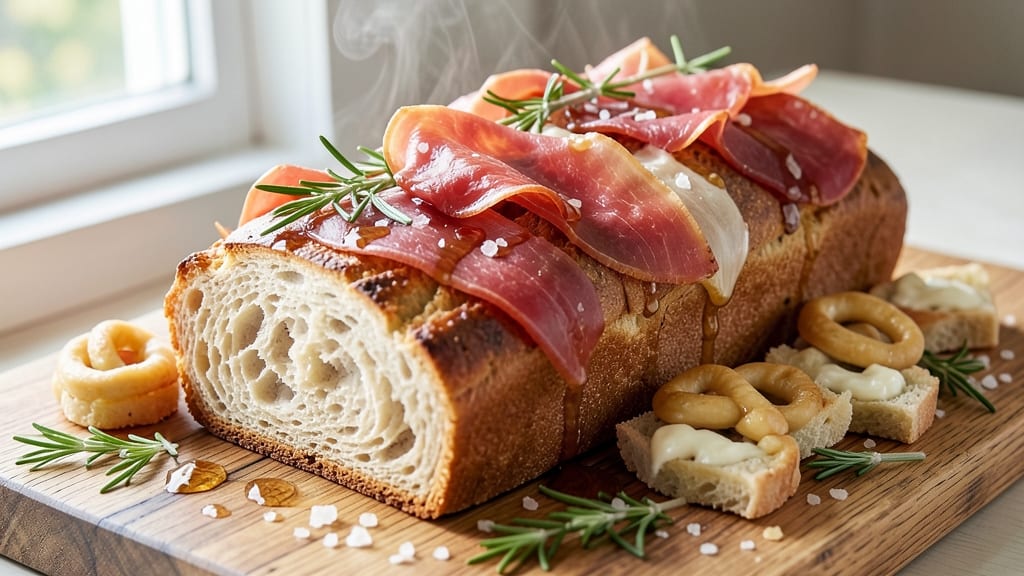
America’s Test Kitchen’s prosciutto bread delivers salty-sweet swirls that transform any meal into a showstopper. 🌟 The secret lies in a foolproof dough layered with thinly sliced prosciutto and a touch of honey—creating a balance of crispy edges, tender crumb, and irresistible flavor in every bite.
This recipe has been perfected to ensure golden-brown perfection with just 22–25 minutes in the oven at 375°F (190°C), making it ideal for holidays, brunches, or as a standout appetizer.
The dough starts with a simple yet highly reliable formula—flour, yeast, sugar, and butter—kneaded just enough to develop gluten without overworking it. The prosciutto is layered in a diagonal swirl, ensuring each slice reveals those melty, salty pockets of cured meat.
A drizzle of honey before baking adds a subtle caramelized sweetness that complements the prosciutto’s savory depth, while a sprinkle of flaky sea salt on top enhances the contrast.
What makes this recipe truly special is its versatility—serve it warm with a pat of butter, alongside a charcuterie board, or even as a garnish for soups and salads.
The crust turns crisp and golden, while the interior remains soft and airy, making it satisfying on its own or as a side. With minimal effort, you’ll achieve restaurant-quality results that impress every time.
For an extra touch of elegance, brush the baked bread with a little garlic-infused olive oil before serving. The aroma alone will draw everyone to the table, and the first bite delivers that perfect harmony of salty, sweet, and crispy—just like America’s Test Kitchen intended. Let’s get baking!
Ingredients for america's test kitchen prosciutto bread
Four cups flour, one egg, and prosciutto's salty-sweet magic come together for golden perfection.
| Ingredient | Amount | Notes |
|---|---|---|
| All-Purpose Flour 🌾 | 4 cups | Sifted for even texture |
| Active Dry Yeast 🍞 | ¼ tsp | Ensure freshness with expiration date |
| Granulated Sugar 🍬 | 1 tbsp | For yeast activation |
| Unsalted Butter 🧈 | ½ cup | Cold, cubed for easier mixing |
| Large Eggs 🥚 | 1 whole | Room temperature for best incorporation |
| Whole Milk 🥛 | ¼ cup | Warmed to room temperature |
| Flaky Sea Salt 🧂 | 1 tsp | For topping and flavor balance |
| Honey 🍯 | 1 tbsp | Light variety preferred |
| Prosciutto 🥓 | 6 oz | Thinly sliced, high-quality |
| Garlic-Infused Olive Oil 🫒 | 1 tbsp | For finishing brush |
| Diamond Crystal Kosher Salt 🧂 | ½ tsp | For dough seasoning |
The prosciutto is non-negotiable—Oscar Mayer Selects or Della Valle deliver consistent quality. Look for slices that are uniformly thin, but not brittle. Trader Joe's often carries pre-sliced prosciutto at a great price, though you can also ask your deli counter to slice it thinly for you. The butter matters too: use Plugrá or Land O'Lakes for reliable texture. For the flour, King Arthur or Gold Medal are ideal—they develop gluten beautifully without overworking. Keep your yeast in the fridge until use; once opened, store it in the freezer for maximum freshness.
No prosciutto? Thinly sliced salami or coppa can stand in, though the flavor profile shifts slightly. Running short on honey? Maple syrup at half the amount works, though it adds a deeper caramel note. The olive oil should be garlic-infused—if you can't find it, infuse your own by steeping olive oil with minced garlic for 30 minutes. For the dough, if your kitchen is cold, warm the milk slightly to help activate the yeast faster. The kosher salt is crucial; Diamond Crystal is lighter than Morton's, so use it as directed.
This dough keeps beautifully for 24 hours in the fridge, wrapped tightly in plastic. For longer storage, shape the dough into a log, wrap in plastic, and freeze for up to 3 months. Thaw overnight in the fridge before shaping. The baked bread reheats best at 350°F (175°C) for 5-7 minutes, wrapped in foil to retain moisture. Brush with extra garlic-infused olive oil before serving for that restaurant-quality finish. Portion into individual slices for easy serving—each one reveals those melty, salty pockets of prosciutto.
Why You'll Love This Recipe
- No-Knead Magic: I swear by this dough—just mix, let it rise, and shape. The yeast does all the work while I sip coffee, and that buttery prosciutto fold? Zero effort, maximum payoff.
- Salty-Sweet Crunch: That crispy prosciutto edge with the tender, slightly sweet crumb? It’s the kind of bite that makes you reach for seconds without thinking. The sugar in the dough caramelizes just enough to balance the salt.
- Lunchbox Hero: Between us, this bread is my go-to for picnics, charcuterie boards, or even packed lunches. The prosciutto stays crispy for hours, and the dough’s sturdy enough to handle travel—no soggy sandwiches here.
- Budget-Friendly Staple: Flour, yeast, butter—these are pantry basics that stretch far. One batch feeds four, and leftovers toast up perfectly for days. Honestly, it’s the kind of recipe that makes grocery shopping feel less stressful.
Step-by-step instructions for america's test kitchen prosciutto bread
Master the perfect balance of sweet, salty, and savory with this foolproof method.
👨🍳 Step 1: Activate the Yeast and Mix the Dough
In a small bowl, whisk together the 0.25 cup warm whole milk (about 110°F) with the 1 tbsp granulated sugar and 0.25 tsp active dry yeast. Let it sit for 5-10 minutes until frothy—this confirms your yeast is active. If it doesn't bubble, start over with fresh yeast.
In a large bowl, combine the 4 cups all-purpose flour and 0.5 tsp diamond crystal kosher salt. Make a well in the center and pour in the yeast mixture, 1 whole large egg, and 0.5 cup cold cubed unsalted butter. Mix with a wooden spoon until a shaggy dough forms, then turn it out onto a lightly floured surface and knead for 8-10 minutes until smooth and elastic.
🥘 Step 2: Incorporate the Honey and Prosciutto
Return the dough to the bowl, cover with a damp towel, and let it rest for 10 minutes. This brief rest relaxes the gluten, making it easier to handle. After resting, press the dough into a rectangle about 12x8 inches on a floured surface.
Spread the 1 tbsp honey evenly over the dough, then layer 6 oz thinly sliced prosciutto in a single layer, leaving a ½-inch border around the edges. Roll the dough tightly into a log, sealing the seam well. Twist the log gently to create swirls—this is where the magic happens for that signature visual appeal.
🔥 Step 3: First Rise and Shape for Baking
Place the dough seam-side down in a greased 9x5-inch loaf pan. Cover loosely with plastic wrap and let it rise in a warm place for 1-1.5 hours until it reaches the top of the pan. The dough should feel springy when pressed gently—this confirms proper proofing.
Preheat your oven to 375°F. Brush the risen dough with 1 tbsp garlic-infused olive oil and sprinkle evenly with 1 tsp flaky sea salt. Bake for 35-40 minutes until the bread is deep golden brown and sounds hollow when tapped on the bottom.
⏰ Step 4: Cool and Serve for Maximum Flavor
Remove the bread from the pan and transfer it to a wire rack to cool for at least 30 minutes—this is critical for proper texture. The internal temperature should drop to 140°F before slicing, or you risk a gummy crumb.
Slice the bread into ½-inch thick pieces and serve warm. The prosciutto should be visible in every slice, offering bursts of salty sweetness with each bite. Store leftovers wrapped in plastic at room temperature for up to 2 days, or freeze for up to 3 months for freshness.
Pro Tips For Making America'S Test Kitchen Prosciutto Bread
- Proof at 75°F: That yeast packet says room temp, but your kitchen’s 68°F? Nope. Warm the milk to 105°F (just until it steams) before mixing with yeast—it’ll activate faster and give you a head start. I learned this the hard way when my dough took three hours to rise in a chilly kitchen.
- Butter, Not Shortening: The recipe calls for butter, and for once, don’t swap it for shortening. The fat content matters here—softened butter (not melted) creates layers that crisp up beautifully. If your butter’s too soft, chill it 10 minutes before handling; if too firm, let it sit out just until it yields to gentle press.
- Shape Tight, Not Loose: Rolling the dough too thin or leaving gaps when folding in the prosciutto means chewy, uneven pockets. Press the dough firmly into a rectangle, then fold it like a letter—tightly, so the prosciutto stays sealed in. Think "lasagna layers," not "flaky pastry."
- Bake Until Golden: That 375°F oven? It’s not doing the job if your bread’s pale. Rotate the pan halfway through baking, and check the bottom—it should be deep golden, not just lightly browned. If it’s browning too fast, tent with foil early, then uncover to finish crisping. (Yes, even if you’re impatient like me.)
Best sauces and condiments for these flavors
Garlic-Herb Butter
Elevate your prosciutto bread by brushing warm slices with garlic-herb butter—melt 2 tbsp unsalted butter with 1 tsp minced garlic, ½ tsp dried rosemary, and a pinch of flaky sea salt.
Spread generously before serving for a rich, aromatic finish. This works especially well with the bread’s salty-sweet balance. 🌿
Honey-Mustard Glaze
Create a quick glaze by mixing 2 tbsp honey with 1 tbsp Dijon mustard and a splash of lemon juice. Drizzle over slices just before serving to add a tangy contrast to the prosciutto’s richness.
The mustard’s sharpness cuts through the fat, while the honey enhances the bread’s natural sweetness.
Spicy Honey Drizzle
For a kick, combine 2 tbsp honey with ½ tsp cayenne pepper and a pinch of smoked paprika. Warm the mixture slightly and drizzle over the bread. The heat balances the prosciutto’s saltiness, making each bite exciting. Store-bought Penzeys hot honey works perfectly if you’re short on time.
Whole-Grain Mustard
Swap the honey for 1 tbsp whole-grain mustard mixed with 1 tsp olive oil. Spread this on warm slices for a nutty, slightly grainy texture that pairs beautifully with the prosciutto. The mustard’s depth adds complexity without overpowering the bread’s delicate flavors.
Balsamic Reduction
Simmer ¼ cup balsamic vinegar until reduced by half, then drizzle over sliced bread. The tangy, slightly sweet reduction enhances the prosciutto’s umami and creates a sophisticated contrast. Finish with a sprinkle of coarse black pepper for a restaurant-worthy touch.
Olive Oil and Rosemary
Brush slices with 1 tbsp extra-virgin olive oil infused with fresh rosemary (simmer sprigs in oil for 10 minutes). The earthy rosemary complements the prosciutto’s saltiness, while the oil keeps the bread moist. This is my go-to for a simple yet elegant finish. ✨
Nutrition facts
Frequently asked questions
Can I make this prosciutto bread without a loaf pan?
Yes! For a free-form shape, roll the dough into a log and place it on a parchment-lined baking sheet. Use a sharp knife to score a diagonal pattern on top before baking. Brush with garlic-infused olive oil and bake at 375°F (190°C) for 25-30 minutes until golden. The texture will be slightly denser but still delicious.
What if my dough doesn't rise properly?
Check your yeast first—it must be fresh and active (test by mixing with warm milk and sugar; it should bubble in 5-10 minutes). If the dough isn't rising, your kitchen may be too cold. Place the bowl near a warm oven (100°F) with a tray of boiling water underneath to create a proofing chamber. Also ensure your milk is 110°F—too hot kills yeast, too cold slows activation.
Can I substitute salami for prosciutto?
Use 6 oz thinly sliced salami instead, but expect a slightly stronger, spicier flavor. For a milder version, choose sweet salami (like Italian sweet salami). The texture will be similar, though salami may be slightly firmer when baked. If using pepperoni, reduce to 4 oz to avoid overpowering the bread.
How do I store leftovers to keep them fresh?
Wrap cooled slices tightly in plastic wrap or aluminum foil to prevent drying. Store at room temperature for up to 2 days or freeze for 3 months. To reheat, wrap slices in foil and warm at 350°F (175°C) for 5-7 minutes. For extra crispiness, broil for 1-2 minutes after reheating.
Why did my prosciutto turn rubbery instead of melty?
Overbaking or using pre-cooked prosciutto (like some deli slices) can cause rubberiness. Use high-quality, thinly sliced prosciutto (like Oscar Mayer Selects) and bake until the internal temperature reaches 190°F. For extra meltiness, bake at 350°F (175°C) for 30 minutes instead of 375°F—lower heat prevents the fat from rendering too quickly.