
Side Dishes
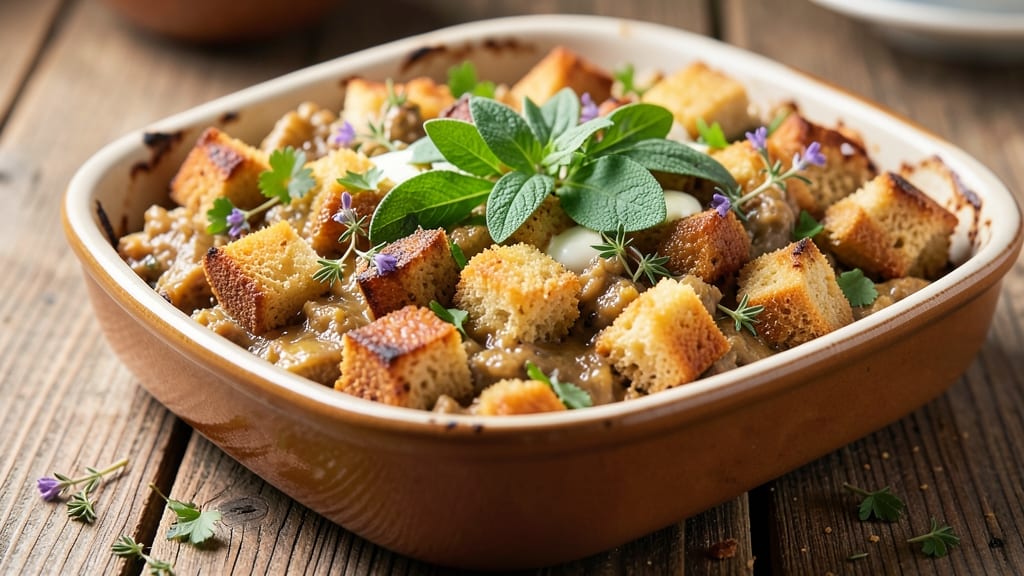
This Amish bread stuffing recipe delivers the perfect balance of crispy edges and juicy cornbread bits, infused with fragrant herbs and sage. 🌾 The secret lies in using day-old bread and a slow-baking method that ensures every bite stays moist while developing a golden, aromatic crust.
I've perfected this version over years of holiday gatherings, where it becomes the star of the table alongside roasted turkey or ham.
The foundation of great Amish-style stuffing is simple, wholesome ingredients—no fancy shortcuts needed. You'll use a mix of homemade cornbread and slightly stale bread, both toasted lightly to absorb flavors without becoming soggy.
The herbs and sage add depth, while chicken broth keeps everything tender. This isn't just a side dish; it's a flavorful centerpiece that transforms a simple meal into something memorable.
What makes this recipe truly special is the texture—juicy cornbread pieces hold their shape while the bread creates a satisfying crisp at the edges. The slow baking process allows the flavors to meld perfectly, resulting in stuffing that's rich, aromatic, and full of hearty goodness.
It's the kind of dish that disappears quickly, leaving guests asking for seconds.
Perfect for Thanksgiving, Christmas, or any special gathering, this stuffing pairs beautifully with roasted meats or even as a standalone dish. The simplicity of the ingredients and the depth of flavor make it a staple in traditional Amish cooking. Let's get started on creating this timeless classic!
Ingredients for amish bread stuffing
Wholesome ingredients for a stuffing that balances crispy edges with juicy cornbread—no shortcuts needed.
| Ingredient | Amount | Notes |
|---|---|---|
| Day-Old Bread Cubes 🍞 | 8 cups | Crusts removed, 1-inch cubes |
| Cornbread Cubes 🌽 | 4 cups | Homemade or store-bought, 1-inch cubes |
| Unsalted Butter 🧈 | ½ cup | Cold, cubed for even distribution |
| Fresh Sage Leaves 🌿 | ½ cup | Chopped, stems removed |
| Fresh Parsley Leaves 🌿 | ¼ cup | Chopped, finely for brightness |
| Fresh Thyme Leaves 🌿 | 1 tbsp | Chopped, stems removed |
| Garlic Cloves 🧄 | 4 cloves | Minced, for aromatic depth |
| Chicken Broth 💧 | 2 cups | Homemade or quality store-bought |
| Heavy Cream 🥛 | ¼ cup | Full-fat for richness |
| Salt 🧂 | 1 ½ tsp | Diamond Crystal preferred |
| Ground Black Pepper 🌶️ | ½ tsp | Freshly ground for heat |
| Nutmeg 🌶️ | ¼ tsp | Freshly grated for warmth |
| Onion Powder 🧅 | 1 tsp | For subtle sweetness |
The bread is the foundation, so choose a crusty loaf with character. Sourdough or a rustic whole wheat adds depth, while day-old bread ensures perfect texture—no soggy bits. For cornbread, homemade is ideal (I use a basic mix with cornmeal and buttermilk), but a high-quality boxed version works in a pinch. Toast both breads lightly in a 350°F oven for 10-12 minutes—just until golden. This step is non-negotiable; it prevents a gummy final product. Sage should be fresh and vibrant, not wilted or yellowing, and always chop it finely for even distribution throughout the stuffing. The herbs are what elevate this from ordinary to extraordinary, so don’t skimp.
No fresh sage? Dried sage at half the amount works, though the flavor won’t be as bright. Substitute parsley with cilantro for a different but still fresh note. Out of chicken broth? Vegetable broth with an extra pinch of poultry seasoning keeps the dish flavorful. For a richer texture, swap heavy cream with whole milk or half-and-half, though the stuffing will be slightly lighter. The garlic can be roasted ahead of time for a sweeter, mellow flavor—simply toss peeled cloves with olive oil and roast at 400°F for 10 minutes before mincing. Onion powder is optional but recommended for that subtle sweetness that rounds out the herbs.
Prep ahead for convenience: Toast the bread and chop all herbs the day before, storing them in airtight containers. The stuffing can be assembled up to 24 hours ahead and refrigerated, covered. When ready to bake, let it sit at room temperature for 30 minutes before transferring to the oven. Leftovers? Store in an airtight container for up to 5 days, though it’s rarely that long-lived. For reheating, cover with foil and warm at 350°F for 10-15 minutes—add a splash of broth if it dries out. This stuffing freezes beautifully too; bake it, cool completely, then portion into freezer bags for up to 3 months. Thaw overnight in the fridge before reheating.
Why You'll Love This Recipe
- No Waste, All Flavor: I swear by using day-old bread—it’s the secret to that perfect crispy texture without the soggy mess. And cornbread cubes? That sweet, crumbly contrast makes every bite feel like a hug.
- Herb-Packed Magic: Fresh sage and parsley aren’t just garnishes here—they’re the stars. The butter melts into the bread, carrying those bright, earthy notes straight to your plate. (Yes, even on a Tuesday night.)
- Crowd-Pleaser Every Time: This stuffing works for Thanksgiving and a weeknight dinner with minimal fuss. Double the batch—it reheats beautifully and disappears faster than my willpower around leftovers.
- Budget-Friendly Luxury: Butter and herbs sound fancy, but they stretch far when you’re mixing bread and cornbread. Honestly, it’s the kind of recipe that makes you feel fancy without breaking the bank.
Step-by-step instructions for Amish bread stuffing
Here's how to create a perfectly juicy, crisp-edged stuffing with layers of savory herbs and tender cornbread.
👨🍳 Step 1: Toast the Bread and Cornbread Cubes
Preheat your oven to 350°F and spread the 8 cups day-old bread cubes and 4 cups cornbread cubes evenly on two rimmed baking sheets. Toast for 10-12 minutes until the edges are light golden brown and the cubes are completely dry. This step removes excess moisture that would make your stuffing soggy.
Real talk: Don't skip this. The toasting creates a crisp exterior while keeping the centers tender. You want cubes that hold their shape but still feel slightly warm when you handle them. Stir the cubes halfway through for even browning. If any pieces brown too quickly, remove them and set aside—they'll crisp up further in the oven later.
🍳 Step 2: Sauté the Herb and Aromatic Base
In a large skillet over medium heat, melt 0.5 cup cold cubed unsalted butter until it foams but doesn't brown. Add the 4 minced garlic cloves, 0.5 cup chopped fresh sage leaves, 0.25 cup chopped fresh parsley leaves, 1 tbsp chopped fresh thyme leaves, 1.5 tsp salt, 0.5 tsp ground black pepper, 0.25 tsp nutmeg, and 1 tsp onion powder.
Cook for 3-4 minutes until the herbs are fragrant and the garlic is golden—not browned. This aromatic base is the flavor foundation of your stuffing. Watch the butter carefully—if it starts to brown, reduce the heat slightly. The goal is to develop flavor without burning the delicate herbs. Here's where it gets fun—toss in the toasted bread and cornbread cubes and stir to coat them completely in the butter and herbs.
🥘 Step 3: Build the Stuffing Mixture
Transfer the herb-coated cubes to a large mixing bowl. Pour in 2 cups chicken broth and 0.25 cup heavy cream, then gently fold everything together with a wooden spoon. You're looking for an even distribution where every cube is moistened but the mixture still holds its shape when pressed lightly.
Don't overmix—just until the liquid is absorbed and the cubes are evenly coated. The stuffing should look like a rustic, herby bread salad. If it seems too dry, add 1-2 tablespoons more broth at a time until it reaches a crumbly yet moist consistency. This is the moment that matters: the texture should be like damp sand that holds together when squeezed but still releases easily.
🔥 Step 4: Bake to Golden Perfection
Transfer the stuffing to a greased 9x13-inch baking dish and spread it evenly. Bake at 375°F for 25-30 minutes until the top is golden brown and the edges are crispy. Halfway through baking, tent loosely with foil if the top browns too quickly—you want even cooking without burning.
You'll know it's done when the stuffing pulls away slightly from the edges of the dish and has developed a beautiful, crispy crust. The internal temperature should reach 165°F when checked with a meat thermometer. Here's the thing—if the top isn't brown enough, broil for 1-2 minutes at the end, watching closely to avoid burning.
⏰ Step 5: Rest and Serve
Remove from the oven and let the stuffing rest for 5-10 minutes before serving. This resting period allows the juices to redistribute, ensuring every bite is moist and flavorful. The stuffing will be hot, so handle with oven mitts.
Serve immediately with the crispy edges intact. Each forkful should deliver a perfect balance of tender bread, juicy cornbread, and aromatic herbs. If you're serving at room temperature, cover loosely with foil to keep it warm. This stuffing holds up beautifully for 2 hours in a 200°F oven if you need to reheat later.
Pro Tips For Making Amish Bread Stuffing
- STIR THE BUTTER FIRST: Mix the melted butter into the bread cubes before adding any broth—this coats every crumb evenly and prevents dry pockets. I learned this the hard way when my stuffing turned out like a sad, crumbly brick.
- CHOP HERBS FINE: Sage and parsley should be tiny—almost like confetti—so they distribute flavor without overwhelming. Use the tip of a sharp knife to mince them; anything bigger just sits there looking pretty while your stuffing tastes bland.
- DON’T SKIP THE REST: Let the bread mixture sit for 10 minutes after mixing—this lets the butter soak in fully. I used to rush this, and my stuffing always ended up greasy or dry. Trust me, it’s worth the wait.
- USE CORNBREAD WISELY: Toss the cornbread cubes last and mix gently—too much handling turns them into mush. They add texture, but overmixing kills that crumbly magic. Think of them as the special guest who needs a light touch.
Common mistakes when making great amish bread stuffing
Skipping the Toast
This is the #1 mistake I see—skipping the bread toasting step. The bread needs to be completely dry before baking, or you'll end up with a soggy, gummy mess. I've seen stuffing so wet it was basically bread soup.
Toast your cubes at 350°F for 10-12 minutes until they're golden and crisp. The cornbread should be toasted too—it needs that same dry texture to hold up during baking. 🌾
Overmixing the Mixture
Once you add the broth and cream, stop mixing as soon as everything is combined. Overmixing develops gluten and makes the stuffing dense and rubbery. I've ruined stuffing this way more times than I'd admit.
Just fold gently until the liquid is absorbed—it should look like a rustic bread salad, not a smooth batter. The cubes should still be identifiable when you press lightly.
Using Fresh Bread
Fresh bread contains too much moisture and will turn your stuffing into a mushy disaster. Always use day-old bread—it's the secret to perfect texture. If you're in a pinch, dry fresh bread cubes in a 200°F oven for 1-2 hours until completely dry, but toasting is still better.
I've had guests bring fresh bread to stuffing prep, and we always end up with sad, soggy results. 🚫
Incorrect Baking Temperature
Baking at too high a temperature (over 375°F) burns the top before the center cooks through. Too low (350°F) leaves it undercooked and pale. The sweet spot is 375°F—this gives you that perfect golden crust while keeping the inside juicy.
Watch for the edges pulling away from the pan and use a meat thermometer to confirm 165°F internal temperature. I've had stuffing come out raw in the middle because I trusted the color too much.
Not Resting Before Serving
Skipping the 5-10 minute rest means all the juices run out when you cut into it. The stuffing will look dry and disappointing. This resting time lets the juices redistribute so every bite is moist and flavorful.
I've served stuffing immediately after baking and had guests complain it was dry—now I always insist on the rest time. Patience pays off here! ⏰
Adding Too Much Liquid
This turns your stuffing into bread pudding. The 2 cups broth + 0.25 cup cream is perfect—add more only if absolutely necessary. I've seen recipes where people double the liquid, and the result is a sad, watery mess.
The stuffing should hold its shape when pressed lightly but still be moist. If it's too dry, add broth 1 tablespoon at a time until it reaches that perfect damp-sand consistency.
Nutrition facts
Frequently asked questions
Why does Amish bread stuffing use day-old bread?
Day-old bread is essential because it's completely dry, preventing a soggy final texture. Fresh bread contains too much moisture, which turns stuffing into a mushy mess. Toasting the cubes at 350°F for 10-12 minutes removes excess moisture while creating crisp edges—this is the secret to that perfect balance of textures.
Can I make this stuffing ahead of time?
Assemble the stuffing up to 24 hours ahead and refrigerate it covered. When ready to bake, let it sit at room temperature for 30 minutes before baking. For even better results, toast the bread cubes and chop herbs the day before. The flavors develop beautifully overnight, making prep day easier.
What's the best way to reheat leftovers?
Cover leftovers with foil and warm in a 350°F oven for 10-15 minutes. If they dry out, add 1-2 tablespoons of broth when reheating. For microwave reheating, cover with a damp paper towel and heat in 30-second intervals until warmed through. The stuffing freezes well too—bake it, cool completely, then freeze in portions for up to 3 months.
Can I substitute cornbread with regular bread?
You can, but you'll lose that traditional Amish texture and sweetness. Cornbread adds a delightful contrast to the regular bread. If substituting, use an equal amount of sweet bread or brioche for richness. For best results, stick with the cornbread—it's what gives this stuffing its signature hearty flavor and satisfying bite.
How do I know when the stuffing is fully baked?
The stuffing is done when it reaches an internal temperature of 165°F and the edges pull away slightly from the pan. Look for a golden brown top with crisp edges. If the top browns too quickly, tent loosely with foil halfway through baking. A meat thermometer is your best friend here—color alone can be misleading.