
Side Dishes
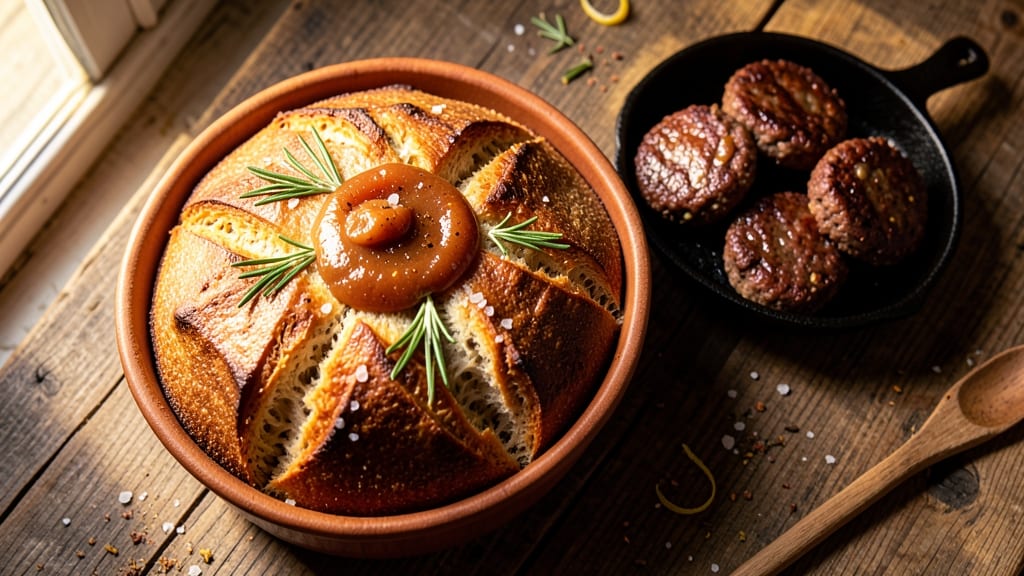
This Amish sausage bread recipe delivers the perfect harmony of smoky sausage and golden crust in every bite—just like the loaves you'd find at a Pennsylvania farmhouse table.
The secret lies in a simple yeast dough that wraps tender, flavorful sausage into a rustic loaf with a crisp exterior and tender crumb. I've perfected this recipe over years of baking, ensuring the sausage stays juicy while the bread develops that classic Amish texture—no shortcuts, just authentic flavor.
The process begins with a basic yeast dough that comes together in under 10 minutes, then rests while you prepare the sausage filling. Using uncured sausage (like kielbasa or fresh pork sausage) ensures the best flavor and texture, and the dough's elasticity keeps everything contained during baking.
The shaping technique is simple but crucial—rolling the dough tightly around the sausage creates those signature swirls that make this bread irresistible.
Baked to a golden brown, this loaf emerges from the oven with a crisp crust that gives way to tender, fluffy bread infused with smoky sausage. The aroma alone will have everyone gathering around the table, and the first bite delivers that perfect balance of savory and sweet.
It's the kind of bread that disappears quickly, leaving only crumbs—and maybe a few extra slices.
Serve warm with butter, as a side for breakfast, or sliced for sandwiches. The versatility makes it a staple for any meal, while the homemade touch elevates it beyond store-bought options. Let's get started on a loaf that tastes like home.
Ingredients for amish sausage bread
These rustic ingredients create the perfect Amish sausage bread with crispy crust and tender sausage swirls.
| Ingredient | Amount | Notes |
|---|---|---|
| All-Purpose Flour 🌾 | 4 ½ cups | Spooning into measuring cup |
| Active Dry Yeast 🍞 | ¼ oz | Or 2 packets (1/4 oz each) |
| Granulated Sugar 🍚 | 1 tbsp | For yeast activation |
| Warm Water 💧 | 1 ¼ cups | 110°F for yeast activation |
| Unsalted Butter 🧈 | ½ cup | Softened, full-fat preferred |
| Large Egg 🥚 | 1 whole | Room temperature |
| Salt 🧂 | 1 ½ tsp | Diamond Crystal preferred |
| Uncured Sausage 🥓 | 1 ½ lb | Kielbasa or fresh pork sausage |
| Milk 🥛 | ¼ cup | Warm, for dough tenderness |
| Egg Wash 🥚 | 1 whole | Beaten with 1 tsp water |
| Sesame Seeds 🌿 | 2 tbsp | Optional for topping |
| Coarse Salt 🧂 | 2 tbsp | For sprinkling on top |
The sausage is the star—fresh pork sausage or kielbasa from the deli section at Wegmans or Whole Foods gives the best flavor. Look for uncured options with visible fat marbling for that authentic Amish taste. Costco also sells bulk packs that work perfectly for this recipe. If using pre-cooked sausage, slice it into 1/2-inch rounds before mixing. For homemade sausage, brown it first to render the fat. The yeast? Fresh is best—check the expiration date on the package, and if it's been sitting in your pantry for months, grab a new one. It's worth it for that perfect rise.
No uncured sausage? Italian sausage or smoked kielbasa will work in a pinch, but the flavor won't be quite the same. Short on sesame seeds? Everything bagel seasoning or even a sprinkle of poppy seeds adds a nice contrast. The milk can be swapped for warm water or plant-based milk if needed, but the butter must be full-fat for that rich, tender crumb. If your dough feels too sticky, add a tablespoon of flour at a time—this bread is forgiving, but not magic. And trust me, the egg wash makes all the difference for that golden crust.
This dough keeps beautifully—3 days in the fridge wrapped tightly in plastic or 3 months in the freezer for a quick weeknight loaf. Shape it ahead and refrigerate overnight for even better flavor development. The sausage filling can be prepped and refrigerated separately for up to 2 days. When baking, brush that egg wash on thick—it's the secret to that irresistible crust. Leftovers? Toast them for breakfast—they're even better the next day.
Why You'll Love This Recipe
- No Yeast Fuss: I swear by this dough—just mix, knead once, let it rise while I make coffee. No punchy timing, no waiting hours: the yeast wakes up fast with that warm water and sugar combo, and the butter keeps it tender without the struggle.
- Savory-Sweet Magic: That first bite? Crispy crust, soft pull-apart center, and sausage so well-browned it tastes like it’s been simmering all day. Honestly, the sugar in the dough caramelizes just enough to make every chew feel like dessert.
- Weeknight Hero: Freeze half the batch before the dough rises—thaw in the morning, shape, and bake for dinner. Or tear it apart for breakfast toast when you’re too tired to cook. My kids grab it straight from the oven for lunchboxes, no questions asked.
- Budget Baking Wins: Five ingredients, zero specialty items. The butter makes it feel indulgent, but you’re not breaking the bank—especially when you stretch one loaf into three days of snacks, sandwiches, or even a quick sausage bread soup. My wallet thanks me.
Step-by-step instructions for Amish sausage bread
Here's how to create a golden, smoky loaf with sausage swirls that'll make your kitchen smell incredible.
Activate the Yeast and Mix the Dough
In a large bowl, combine the 1.25 cups warm water (about 110°F) with the 1 tbsp granulated sugar and 0.25 oz active dry yeast. Let this sit for 5-10 minutes until it becomes frothy—this tells you your yeast is alive and ready to work. If it doesn't bubble, your yeast might be dead, and you'll need to start over.
Once frothy, add the 4.5 cups all-purpose flour, 1.5 tsp salt, and the 0.25 cup warm milk. Mix with a wooden spoon until a shaggy dough forms. Then, add the 0.5 cup softened unsalted butter and 1 whole large egg. Knead the dough by hand on a lightly floured surface for 8-10 minutes until smooth and elastic. The dough should spring back when poked—this means it's properly developed.
Incorporate the Sausage and Shape the Loaf
While the dough rests, slice the 1.5 lb uncured sausage into ½-inch thick rounds or small chunks, depending on how dramatic you want your swirls. Keep the dough covered with a damp towel while you prep the sausage to prevent it from drying out.
Roll the rested dough into a 12x18-inch rectangle on a floured surface. Starting from one long side, place the sausage slices in a single row, leaving about 1 inch of space between each piece. Roll the dough tightly into a log, pinching the seam to seal. This creates those beautiful sausage swirls you see in traditional Amish bread.
Let the Dough Rise and Shape the Loaf
Place the sausage log seam-side down in a greased 9x5-inch loaf pan. Cover with a damp towel and let it rise in a warm place for 1-1.5 hours, or until it has nearly doubled in size. The dough should feel light and airy when pressed gently—this is your signal that it's ready for the oven.
Preheat your oven to 375°F. Brush the risen dough with the 1 whole egg wash (beaten egg mixed with 1 tsp water) for a golden finish. Sprinkle the top with 2 tbsp coarse salt and, if using, 2 tbsp sesame seeds for extra crunch and flavor. The salt will create a beautiful crust while the sesame seeds add texture.
Bake to Golden Perfection
Bake the loaf for 45-50 minutes until it's deep golden brown and sounds hollow when tapped on the bottom. If the top browns too quickly, tent it loosely with foil to prevent over-browning while it finishes cooking inside. The internal temperature should reach 190°F—this ensures the bread is fully baked and the sausage is cooked through.
Remove the bread from the oven and let it cool in the pan for 10 minutes before transferring it to a wire rack. This resting period helps the bread set properly, preventing it from falling apart when sliced. Once cooled, slice into thick pieces to reveal those delicious sausage swirls hidden inside. Serve warm for the best experience!
Pro Tips For Making Amish Sausage Bread
- TEST YEAST FIRST: Skip the guesswork—mix 1 packet yeast, 1 tsp sugar, and ¼ cup warm water (110°F) in a small bowl. If it bubbles within 5 minutes, your dough’s ready to rise. No bubbles? Your yeast is dead, and this bread’s not happening—start over.
- CUT COLD BUTTER: I used to melt that butter straight into the dough, thinking it’d save time. Wrong. Dice the unsalted butter into tiny cubes, toss them in the flour first, then mix—it’ll create pockets of richness that melt into flaky layers while baking. (Yes, even if you’re impatient like me.)
- DON’T OVERKNEAD: The dough should pull away cleanly from the bowl but still feel slightly tacky. After 5–7 minutes of kneading, press a finger into it—if it springs back slowly, you’re golden. Overwork it, and you’ll end up with tough, chewy bread that’ll make you question your life choices.
- BAKE IN A COOL PAN: Let your loaf pan sit in the oven for 5 minutes after preheating—this evens out the heat and guarantees a perfect rise. I learned this the hard way when my first batch collapsed like a sad soufflé. (Pro move: Spray the pan with oil after the dough goes in for easier removal.)
Essential equipment for perfect results
Dough Tools
You’ll need a few basics to handle this dough like a pro. A wooden spoon is perfect for mixing the initial ingredients—it’s sturdy and helps scrape up any stubborn bits from the bowl.
For kneading, use floured hands or a dough scraper to keep the dough from sticking to your work surface. I swear by a 9x5-inch loaf pan (like the one from Pyrex)—it’s the right size for this recipe and ensures even baking. 🌾
Sausage Prep
Prepping the sausage is where the magic happens, so grab a sharp chef’s knife (I love Mercer Culinary’s Genius—it’s my go-to) to slice the sausage into even rounds.
A cutting board with raised edges prevents slips, and a bench scraper helps transfer the sausage to the dough without tearing it. If you’re using fresh sausage, a meat thermometer ensures it reaches 160°F before mixing—this keeps it juicy in the final loaf.
Baking Essentials
Your oven is the star here, and a digital thermometer (like the Thermoworks Oven Thermometer) ensures it’s at 375°F before baking. For the egg wash, a small bowl and whisk work best—this step is crucial for that golden crust.
A wire cooling rack is a must for resting the bread, and parchment paper makes transferring it from the pan to the rack effortless. Pro tip: Spritz the pan with nonstick spray before greasing for extra insurance against sticking.
Optional Extras
If you’re adding sesame seeds or everything bagel seasoning, a fine-mesh strainer helps distribute them evenly. A pastry brush is handy for applying the egg wash—just dip it in and brush in long strokes for an even coat.
For a rustic touch, I sometimes use a cast-iron skillet to bake the bread—it adds a crispier crust, but it requires closer attention to avoid burning. 🔥
Nutrition facts
Frequently asked questions
Can I use pre-cooked sausage for this recipe?
Yes, but with a few adjustments! Pre-cooked sausage like kielbasa works well—just slice it into ½-inch rounds before mixing into the dough. For fresh sausage, brown it first to render the fat (aim for 160°F internal temp) to keep the bread juicy. The key is ensuring the sausage is fully cooked before baking the loaf.
Why did my sausage bread turn out dense instead of light?
Density usually means the yeast didn't activate properly or the dough didn't rise enough. Double-check your water temperature (110°F) and yeast freshness—old yeast won't bubble. Also, ensure the dough rose in a warm spot for 1-1.5 hours until puffy. If your kitchen is cold, try placing the bowl near the oven with the light on for warmth.
How can I make this bread without a loaf pan?
Shape the sausage log into a free-form loaf on a parchment-lined baking sheet. For extra rustic texture, bake on a cast-iron skillet (preheated) for 10 minutes before transferring to the oven. Brush with egg wash and bake at 375°F for 35-40 minutes, rotating halfway for even browning. The crust will be crispier but still tender inside.
What's the best way to store leftovers?
Wrap cooled slices tightly in plastic wrap or store in an airtight container to keep them fresh for 3-4 days at room temperature. For longer storage, freeze slices (up to 3 months)—thaw at room temperature before reheating. To revive stale bread, wrap in foil and bake at 350°F for 5-8 minutes until warm and crispy again.
Can I add cheese or other fillings to this bread?
Try adding shredded cheddar or swiss cheese along with the sausage for extra flavor. For a sweet twist, swap sausage for dried fruit (like raisins or cranberries) and sprinkle with cinnamon. Just reduce the sausage to 1 lb to keep the dough manageable—too many fillings can make the bread dense.