
Side Dishes
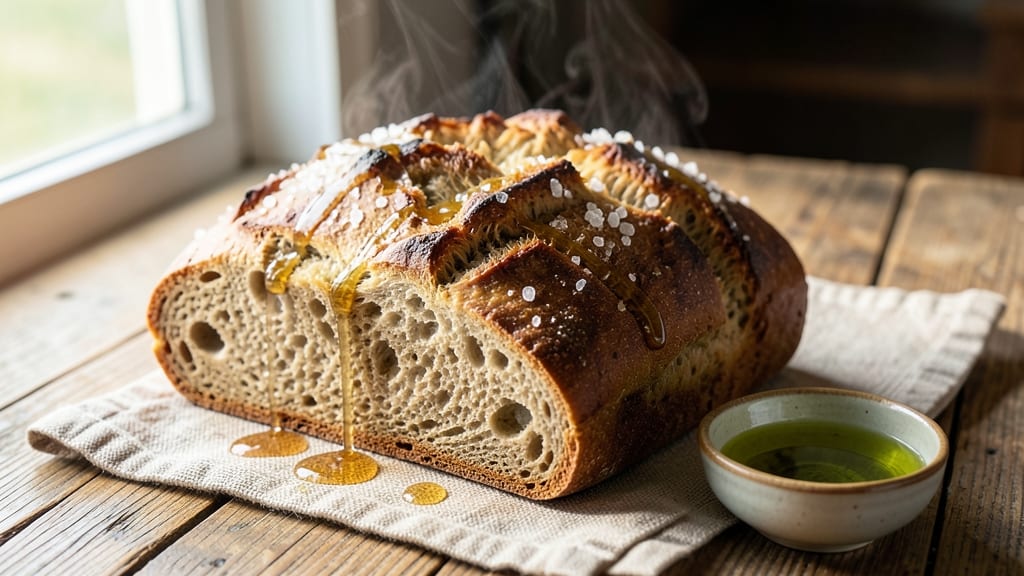
This einkorn bread recipe brings the rustic charm of ancient grains to your kitchen table with its nutty depth and satisfying chew. 🌾 Unlike modern wheat bread, einkorn offers a complex flavor profile and a texture that's both hearty and delicate—perfect for sandwiches or dipping in olive oil.
The secret lies in its slow fermentation, which enhances digestibility and flavor while creating that signature rustic crust.
What sets this recipe apart is its simplicity combined with tradition. You'll work with just five key ingredients—einkorn flour, water, yeast, salt, and olive oil—yet the process requires patience and attention to detail.
The dough ferments overnight for maximum flavor development, and baking with steam ensures a crispy, golden crust that contrasts beautifully with the tender interior.
The result is a loaf with a nutty, slightly sweet flavor and a rustic texture that's both satisfying and versatile. The crust is crisp enough to hold up to dipping, while the crumb remains soft and open, perfect for soaking up soups or pairing with aged cheeses.
This bread isn't just a side—it's a centerpiece that elevates any meal.
Whether you're a bread enthusiast or a beginner, this recipe delivers restaurant-quality results with minimal effort. The long fermentation does the heavy lifting, so you only need to shape and bake. Let's get started on crafting your own ancient grain masterpiece.
Ingredients for ancient grains einkorn bread
Five simple ingredients transform into rustic einkorn bread with nutty depth and satisfying texture.
| Ingredient | Amount | Notes |
|---|---|---|
| Einkorn Flour 🌾 | 3 ½ cups | Organic preferred for best flavor |
| Active Dry Yeast 🍞 | ¼ oz | Or 2.5 g, ensure fresh |
| Extra-Virgin Olive Oil 🫒 | ¼ cup | High quality, fruity variety |
| Warm Water 💧 | 1 ½ cups | 105-110°F for yeast activation |
| Fine Sea Salt 🧂 | 1 ½ tsp | Diamond Crystal preferred |
| Honey or Maple Syrup 🍯 | 1 tbsp | Optional for slight sweetness |
| Cornmeal or Semolina 🌽 | ¼ cup | For dusting baking sheet |
| Ice Cubes ❄️ | ½ cup | For chilling dough before shaping |
Einkorn flour is the star here—look for organic or stone-ground at health food stores or online. Bob's Red Mill or King Arthur carry good quality, but check expiration dates since it goes rancid faster than regular flour. The yeast should be fresh (test it in warm water with a pinch of sugar—it should foam in 5-10 minutes). For the olive oil, grab the fruity, extra-virgin kind—none of that cheap cooking oil stuff. I always double-check the honey's authenticity too—real honey has a thick, slow-pouring consistency, not that runny store brand.
No einkorn flour? Spelt flour works in a pinch, but the flavor won't be identical. Short on yeast? Instant yeast at half the amount works too. The honey can be swapped for maple syrup or agave—just reduce other liquids slightly since it's thicker. For a sweeter loaf, add an extra teaspoon of honey. The cornmeal/semolina is just for dusting—use whatever you've got, but don't skip it (trust me on this). If your kitchen's warm, chill the dough longer—up to 24 hours in the fridge if needed.
This dough is a patient's game—ferment it 8-12 hours at room temp for best flavor. Shape it gently (don't overwork) and let it rise another hour before baking. The ice cubes trick? Toss them in a bowl first—they'll melt slightly and help chill the dough without making it soggy. Baked loaves keep 3-4 days wrapped at room temp, or 1 week frozen. I always slice mine fresh—it's the only way to appreciate that rustic texture.
Why You'll Love This Recipe
- Five-Ingredient Magic: I swear by this list—just flour, yeast, olive oil, water, and salt. No fancy mixers or last-minute grocery runs. The dough comes together faster than I can boil water, and honestly? That’s all it takes.
- Nutty, Toasty Crust: The einkorn flour gives this bread a deep, almost buttery richness with a crackly crust that shatters like a perfect toast. Drizzle it with olive oil right out of the oven, and you’ll forget it’s not from a bakery.
- Weeknight Workhorse: I bake a loaf on Sundays and freeze half for lazy mornings or quick sandwiches. Toast it straight from frozen—no thawing, no fuss. It’s my secret weapon for when I’d rather nap than cook.
- Budget-Friendly Staple: Einkorn flour costs more upfront, but one batch stretches into breakfast toast, dinner rolls, or charcuterie boards for days. That $8 jar lasts me weeks, and the flavor makes it worth every penny.
Step-by-step instructions for ancient grains einkorn bread
Here's how to transform simple ingredients into rustic, nutty bread with perfect texture.
👨🍳 Step 1: Activate the Yeast with Warm Water
In a large mixing bowl, combine the 1.5 cups warm water (between 105-110°F) with the 1 tbsp honey or maple syrup. Stir until the sweetener dissolves completely. Sprinkle the 0.25 oz active dry yeast over the surface and let it sit for 5-10 minutes until it becomes frothy.
This step is crucial—if the water's too hot, you'll kill the yeast; too cold, and it won't activate. You'll know it's ready when you see bubbles forming and the mixture smells slightly sweet and yeasty. If nothing happens after 10 minutes, your yeast might be old, and you'll need to start over.
👨🍳 Step 2: Mix the Dough with Einkorn Flour
Add the 3.5 cups einkorn flour and 1.5 tsp fine sea salt to the yeast mixture. Stir with a wooden spoon until a shaggy dough forms, then add the 0.25 cup extra-virgin olive oil. Mix until the dough comes together and pulls away from the sides of the bowl.
Einkorn flour has a higher protein content than modern wheat, so it needs more hydration. Use your hands to knead the dough on a lightly floured surface for 8-10 minutes until smooth and elastic. The dough should be slightly sticky but not wet—if it's too dry, add 1 tablespoon warm water at a time until it reaches the right consistency.
⏰ Step 3: First Rise and Chill the Dough
Place the dough in a lightly oiled bowl, cover with a damp towel, and let it rise in a warm place for 1-2 hours or until it has doubled in size. Einkorn dough rises slower than modern wheat, so be patient—don't rush this step.
Once doubled, transfer the dough to a clean surface and gently press in the 0.5 cup ice cubes to chill it. This is a trick I learned to prevent overproofing and create a better structure. Wrap the dough tightly in plastic wrap and refrigerate for 12-24 hours. The cold slows fermentation, intensifies flavor, and makes shaping easier.
🥘 Step 4: Shape and Second Rise
Remove the dough from the fridge and let it sit at room temperature for 15-20 minutes to soften slightly. Dust a baking sheet with 0.25 cup cornmeal or semolina and shape the dough into a round loaf or freeform rustic shape. Place it on the prepared baking sheet and cover loosely with a towel.
Let the dough rise again for 1-2 hours until it has puffed up noticeably. The surface should look slightly domed and feel springy when pressed gently. Preheat your oven to 375°F during the final 30 minutes of rising to ensure it's fully heated when you bake.
🔥 Step 5: Bake to Golden Perfection
Bake the bread for 40-45 minutes until it's deep golden brown and sounds hollow when tapped on the bottom. The internal temperature should reach 190-200°F. For extra crust color, brush the top with water after 20 minutes in the oven.
Remove the bread from the oven and let it cool on a wire rack for at least 30 minutes before slicing. The crust should be crisp and golden, while the interior should have an open crumb with a slight chew. Einkorn bread stays fresh for 3-4 days at room temperature, but it's best enjoyed fresh from the oven with a pat of butter or olive oil.
Pro Tips For Making Ancient Grains Einkorn Bread
- STIR THE DOUGH LONG ENOUGH: Einkorn’s protein structure is stubborn—skip the 10-minute hand-stretch and you’ll end up with dense, gummy bread. Work the dough until it springs back slowly (not instantly) when poked, even if it feels like overkill. I learned this after three batches where the crumb looked like wet sand.
- USE OLIVE OIL SPARINGLY: That extra-virgin olive oil is tempting, but too much makes the dough sticky and weak. Stick to 1-2 tablespoons total—just enough to coat the flour, not drown it. Trust me, your bread’s structure will thank you more than your taste buds.
- AVOID OVERPROOFING THE DOUGH: Einkorn ferments faster than modern wheat—watch for that telltale rise of 50-75% in the bowl, not the full double. Overproofed dough collapses in the oven, leaving you with a sad, flat loaf. Set a timer if you’re distracted; this grain doesn’t wait.
- SALT THE WATER FIRST: Dissolve the sea salt in the warm water before mixing—this ensures even distribution, not clumpy pockets of saltiness. I used to toss it in later, and half the time, I’d get a salty bite followed by a bland one. Sounds simple, but it makes a real difference in texture and flavor.
Serving suggestions for leftovers
Classic Pairings
Serve your einkorn bread warm with extra-virgin olive oil and flaky sea salt for a simple yet elegant presentation. The nutty flavor of the bread pairs beautifully with aged cheeses like Pecorino Romano or sharp cheddar, creating a perfect balance of textures.
I always keep a small bowl of olive oil on the table—it's the easiest way to enhance every bite. 🌿
Soup Companions
Einkorn bread soaks up rich soups beautifully. Try it with roasted tomato soup or creamy wild mushroom soup—the rustic texture contrasts perfectly with silky broths. For a heartier option, pair it with lentil stew or minestrone, where the bread's chewiness complements the chunky vegetables.
The open crumb structure makes it ideal for dipping.
Sandwich Potential
This bread shines in sandwiches thanks to its sturdy yet tender crumb. Try a Prosciutto and melon combo with a drizzle of balsamic glaze, or go classic with turkey, brie, and honey.
For a vegetarian option, layer roasted red peppers, hummus, and arugula. The nutty flavor holds up well to bold toppings without overpowering them.
Breakfast Appeal
Einkorn bread makes a fantastic breakfast bread. Toast slices and top with whipped ricotta, honey, and walnuts for a protein-rich start. Or try it with scrambled eggs and crispy bacon—the rustic texture adds depth to the meal.
For something lighter, spread with almond butter and sliced banana. The slight sweetness of the bread balances savory toppings perfectly.
Wine and Beer Pairings
A crisp Italian white wine like Vermentino complements the bread's nutty notes beautifully. For beer lovers, a Belgian witbier with its citrusy undertones enhances the einkorn's complexity. If you prefer reds, try a Pinot Noir—its light tannins won't overpower the bread's delicate flavor.
The key is to match the wine's acidity with the bread's rustic charm. 🍷
Modern Twists
Get creative with toppings! Brush warm bread with garlic-infused olive oil and sprinkle with fresh rosemary before serving. For a sweet option, drizzle with honey and sprinkle with crushed pistachios. The bread's versatility makes it perfect for both traditional and modern pairings—don't be afraid to experiment! 💡
Nutrition facts
Frequently asked questions
Why does einkorn bread need such a long fermentation time?
The extended fermentation (overnight) is key to developing einkorn's signature nutty flavor and improving digestibility. Unlike modern wheat, einkorn's lower gluten content means it benefits from slow fermentation to build structure. This process also breaks down phytic acid, making the nutrients more bioavailable. Think of it as a flavor and texture upgrade—patience pays off with a more complex taste!
Can I substitute einkorn flour with regular wheat flour?
You can try, but the results won't be the same. Einkorn's higher protein content and unique flavor profile give this bread its distinctive character. If you must substitute, use a mix of 50% whole wheat and 50% bread flour, but expect a denser texture and milder taste. For best results, stick with einkorn—it's worth seeking out at specialty stores or online.
How do I know when the dough has risen enough?
Look for visual and tactile cues: the dough should double in size and feel springy when gently pressed. Poke it lightly—if it springs back slowly (not immediately), it's ready. For einkorn, this typically takes 1-2 hours at room temperature. Overproofing is a common mistake—don't let it rise beyond this point, or your bread will be dense and flat.
What's the best way to store einkorn bread?
Keep it wrapped in a clean kitchen towel inside a paper bag at room temperature for 3-4 days to maintain freshness. For longer storage, freeze slices wrapped in plastic wrap—they'll stay fresh for up to 3 months. Avoid plastic containers, which trap moisture and make the crust soggy. The best way to enjoy it? Fresh from the oven with olive oil!
Can I make this bread without yeast?
Yes, but the texture will be different. For a yeast-free version, replace the yeast with 1 tbsp baking soda and 1 tbsp vinegar (or lemon juice). This creates a quick-bread style with a denser crumb. The flavor will still be nutty, but you'll lose the open crumb and long fermentation benefits. If you want to experiment, try adding 1 tbsp psyllium husk to improve texture.