
Side Dishes
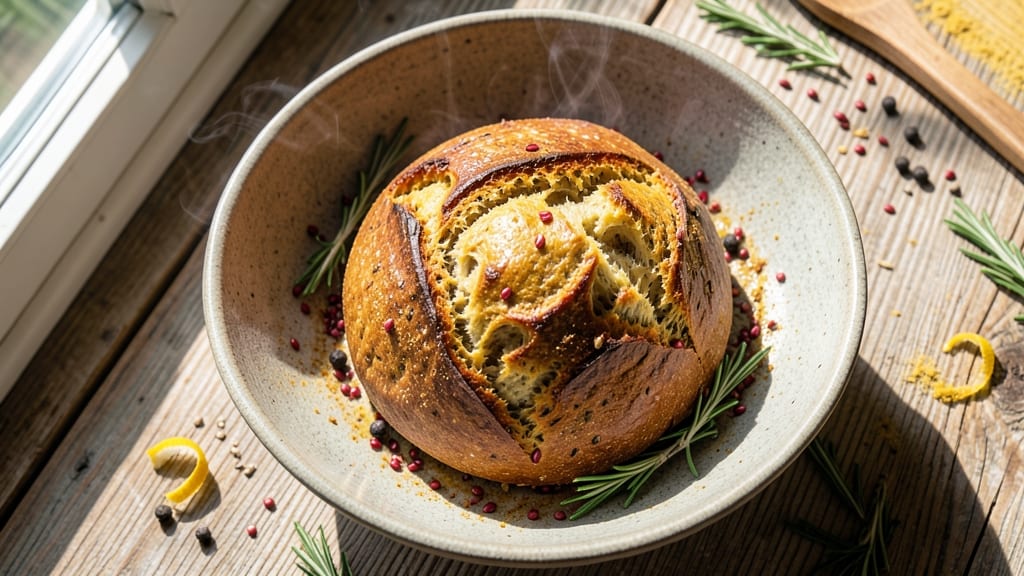
This anti-inflammatory sourdough bread recipe transforms your kitchen into a wellness hub with every golden-brown slice. Turmeric and ginger infuse the dough with powerful compounds that calm digestion and reduce inflammation—no fancy equipment required. The secret lies in a slow fermentation process that enhances digestibility while developing that signature tangy flavor.
Unlike conventional sourdough, this version incorporates whole grains and seeds for extra fiber and nutrients, while turmeric and ginger deliver their anti-inflammatory benefits directly into each bite.
The dough requires patience—24 hours of fermentation—but the results are worth it: a crust with a satisfying crunch and a crumb that's perfectly airy yet substantial enough to hold toasted toppings.
Perfect for breakfast with avocado and smoked salmon or as a gut-friendly side to any meal, this bread stays fresh for days when stored properly.
The golden crust gives way to a tender interior with subtle warmth from the spices, making every slice feel like a nourishing treat rather than just another loaf.
Whether you're managing inflammation or simply seeking a more wholesome way to enjoy bread, this recipe delivers restaurant-quality results with a focus on health. Let's get started on creating your own nourishing loaf.
Ingredients for anti inflammatory sourdough bread
Gut-friendly whole grains, anti-inflammatory spices, and a slow fermentation process make this nourishing loaf.
| Ingredient | Amount | Notes |
|---|---|---|
| Active Sourdough Starter 🍞 | ½ cup | 100% hydration, bubbly and active |
| Whole Wheat Flour 🌾 | 2 cups | Organic preferred for nutrients |
| All-Purpose Flour 🌾 | 2 cups | For structure and elasticity |
| Ground Flaxseed 🌰 | ¼ cup | For omega-3s and binding |
| Ground Turmeric 🌿 | 1 tbsp | Freshly ground for potency |
| Ground Ginger 🌿 | 1 tbsp | Freshly ground preferred |
| Honey 🍯 | ¼ cup | Raw, unprocessed for enzymes |
| Extra-Virgin Olive Oil 🫒 | ¼ cup | High quality for flavor |
| Sea Salt 🧂 | 1 ½ tsp | Diamond Crystal preferred |
| Chia Seeds 🌱 | ¼ cup | For extra fiber and crunch |
| Sesame Seeds 🌰 | ⅛ cup | Toasted for nutty flavor |
| Sunflower Seeds 🌰 | ⅛ cup | For extra texture |
| Water 💧 | 1 ½ cups | Filtered preferred |
The sourdough starter is the heart of this recipe—it's what creates that signature tang and boosts digestibility. Bob's Red Mill or King Arthur organic whole wheat flour adds extra nutrients, but any quality brand works. For the turmeric and ginger, Penzeys Spices or bulk bins at natural food stores ensure freshness. The seeds (chia, sesame, sunflower) can be found in the baking aisle or bulk section—just make sure they're raw and unroasted unless you're toasting them yourself. Honey should be raw and unfiltered for maximum enzyme content, and Whole Foods or local farmers markets often carry good options.
No whole wheat flour? White whole wheat flour is a great substitute—it's lighter but still packed with nutrients. Swap out the sesame seeds for pumpkin seeds if you prefer, though the flavor will differ slightly. If you're sensitive to gluten, you can replace up to half the all-purpose flour with a high-quality gluten-free blend, though texture may vary. The chia seeds can be omitted if you're avoiding them, but they add great fiber. For the honey, agave nectar works in a pinch, though it lacks the same enzymes. The olive oil is non-negotiable—use only extra-virgin for that fruity richness that carries the spices.
This dough needs time to develop its flavor and texture—24 hours of cold fermentation is ideal. Store it in an airtight container in the fridge, and it'll keep for up to 5 days if wrapped tightly in a clean kitchen towel. For longer storage, freeze the shaped loaf (unbaked) for up to 3 months3-4 days at room temperature if wrapped properly. The seeds on top add crunch, so don't skip them—just sprinkle them on before baking for maximum texture.
Why You'll Love This Recipe
- No-Fuss Starter: I keep my sourdough starter alive in a jar on the counter—no fancy equipment, just a splash of water and flour. This recipe actually uses that starter without the usual fuss of feeding it daily, so it’s perfect for those of us who forget to babysit our starters.
- Golden Earthy Rich: The turmeric gives it that gorgeous golden hue, but honestly? It’s the flaxseed and whole wheat that make it ridiculously flavorful—nuttiness with a subtle warmth, like a hug for your taste buds. (Yes, even if you’re not into "health food" vibes.)
- Meal Prep MVP: I bake a loaf on Sundays, and it lasts me all week—great for toast, sandwiches, or even croutons. The flaxseed keeps it from drying out too fast, so you’re not stuck with stale bread by Wednesday. (Between us, that’s a win.)
- Budget Bread Magic: Whole wheat and all-purpose flour stretch further here, and the starter replaces yeast—no extra cost. Plus, a little turmeric goes a long way, so you’re not buying specialty spices by the jar. My wallet and my body thank me.
Step-by-step instructions for anti-inflammatory sourdough bread
This method balances gut-friendly ingredients with traditional sourdough technique for perfect results.
Mix the Anti-Inflammatory Dough Base
In a large mixing bowl, combine the 0.5 cup active sourdough starter, 2 cups whole wheat flour, 2 cups all-purpose flour, 0.25 cup ground flaxseed, 1 tbsp ground turmeric, 1 tbsp ground ginger, 1.5 tsp sea salt, and 1.5 cups water. Using a wooden spoon or dough whisk, stir vigorously for 5 minutes until the mixture becomes thick and sticky—it should pull away from the sides of the bowl.
The turmeric and ginger will give the dough a vibrant golden hue while providing potent anti-inflammatory benefits. You'll notice the mixture will be denser than traditional sourdough due to the whole grains and seeds, but this adds wonderful texture and nutrition. Let the dough rest at room temperature for 30 minutes while you prepare the next components.
Incorporate Wet Ingredients and Seeds
In a separate bowl, whisk together the 0.25 cup honey, 0.25 cup extra-virgin olive oil, 0.25 cup chia seeds, 0.125 cup sesame seeds, and 0.125 cup sunflower seeds. The honey adds natural sweetness and helps bind the dense ingredients, while the seeds contribute crunch and essential fatty acids. Pour this mixture into the rested dough and fold gently with a spatula until fully incorporated.
Here's the thing—this dough will be noticeably thicker than standard sourdough. Don't panic; the seeds and whole grains require more hydration. After mixing, cover the bowl with a damp towel and let it ferment at room temperature for 8-12 hours, or until it has nearly doubled in size and shows active bubbles throughout. The warm environment helps activate the anti-inflammatory compounds in the turmeric and ginger while developing the sourdough's natural tang.
Shape and Proof the Dough
Lightly flour a clean work surface and transfer the fermented dough. Gently fold the dough onto itself 3-4 times to develop gluten without overworking it. Shape into a round loaf or divide into smaller portions if making individual rolls. Place the shaped dough in a lightly oiled loaf pan or on a parchment-lined baking sheet, seam-side up.
Cover loosely with plastic wrap and let proof at room temperature for 1-2 hours, or until the dough has risen by about 50%. You'll notice the golden turmeric-infused color intensify as it proofs. For best results, proof in a slightly warm environment—this helps activate the beneficial properties of the ginger and turmeric while ensuring proper rise. The dough should spring back slowly when gently pressed.
Bake for Maximum Nutrient Retention
Preheat your oven to 375°F and place a baking stone or inverted baking sheet on the middle rack. This creates steam that helps develop the bread's crust while preserving the moisture and nutrients in the dense dough. Bake the bread for 40-45 minutes, until the internal temperature reaches 190-200°F and the crust has a deep golden-brown color.
Real talk: This bread will be denser than traditional sourdough due to the whole grains and seeds, but that's exactly what makes it nutritious. The turmeric and ginger will contribute a subtle warmth to each bite, while the seeds add satisfying texture. Let the bread cool on a wire rack for at least 1 hour before slicing—this allows the internal structure to set properly and prevents a gummy texture.
Pro Tips For Making Anti Inflammatory Sourdough Bread
- Mix the Flaxseed First: Mix the ground flaxseed with warm water before adding it to the dough—it thickens into a gel that binds better. I used to toss it in dry and wondered why my bread felt gummy; this step locks in moisture without making it dense.
- Weigh Your Whole Wheat: Whole wheat flour packs differently than all-purpose—use a kitchen scale for accuracy. I learned this the hard way when my first batch turned out heavier than expected; the scale guarantees consistency, especially with anti-inflammatory flours.
- Skip the Overproofing: This dough needs less time than regular sourdough—watch for volume doubling, not the tall, airy rise. After burning two batches waiting too long, I now set a timer for 4–5 hours max at room temp (70°F).
- Preheat Your Dutch Oven: A cold oven means a soggy bottom—crank it to 450°F and let it sit for 30 minutes with the lid on. My first attempt had a pale, doughy crust; this ensures a crisp exterior that seals in flavor while keeping the crumb tender.
Serving suggestions for leftovers
Toasted Toppings
Toast your bread to perfection in a 375°F oven for 3-5 minutes until golden and crisp. Top with avocado slices, smashed salmon, or whipped ricotta mixed with honey and lemon zest. The turmeric-infused crust pairs beautifully with creamy toppings, balancing its subtle warmth. 🥑
Breakfast Pairings
Serve warm slices with Greek yogurt and local honey for a protein-packed breakfast. I love adding chopped walnuts and blueberries for crunch and antioxidants. The ginger in the bread complements the yogurt's tang perfectly, creating a satisfying morning meal. The seeds add texture that keeps every bite interesting.
Soup Accompaniment
This bread shines with hearty soups like lentil or minestrone. The dense crumb holds up to brothy soups while the crust adds satisfying contrast. For extra flavor, brush slices with garlic-infused olive oil before serving. The anti-inflammatory properties make it a gut-friendly choice alongside warming soups during colder months.
Cheese Board Essential
Cut into thick slices for a cheese board featuring aged cheddar, brie, and sharp gouda. The seeds add texture that complements creamy cheeses beautifully.
Pair with dried apricots and dark chocolate squares for a balanced, nourishing spread. The turmeric's earthy notes enhance the cheese flavors without overpowering them.
Meal Prep Tips
Slice cooled bread and store in an airtight container with a paper towel to maintain freshness for 3-4 days. Toast before serving to restore crispness. For quick breakfasts, assemble overnight oats with chia seeds and yogurt in a jar, then top with bread slices the next morning.
The ginger and turmeric flavors hold up well in meal prep, keeping your meals flavorful all week.
Dessert Twist
Drizzle warm slices with melted dark chocolate and raspberry compote for a dessert version. The seeds add delightful crunch against the smooth chocolate. This unexpected sweet treat highlights the bread's versatility while keeping the anti-inflammatory benefits intact.
It's a great way to repurpose any leftover slices at the end of the week.
Nutrition facts
Frequently asked questions
Why does this sourdough have turmeric and ginger?
These spices aren't just for flavor—they're packed with anti-inflammatory compounds! Turmeric contains curcumin, which helps reduce inflammation, while ginger's gingerol supports digestion. The slow fermentation process enhances their bioavailability, so your body absorbs more of these beneficial compounds with each bite.
Can I make this bread without a sourdough starter?
Yes, but the flavor and digestibility will differ. Use 1 packet (2¼ tsp) active dry yeast instead of the starter, and reduce fermentation time to 2-3 hours at room temperature. The anti-inflammatory benefits will still come from the turmeric, ginger, and seeds, but you'll miss the probiotic benefits of natural fermentation. For best results, cultivate a starter first—it's easier than you think!
How do I know when the dough is properly fermented?
Look for 50-100% rise and active bubbles throughout the dough. Press your finger gently—if it springs back slowly (not too fast), it's ready. The dough should also smell slightly sweet and tangy, with hints of ginger and turmeric. If it smells harsh or alcoholic, it's overproofed. The 24-hour cold fermentation helps develop flavor while preventing overproofing.
Will this bread be too dense to slice?
The whole grains and seeds make it heartier than traditional sourdough, but it should still slice well if properly baked. Let it cool completely on a wire rack before slicing—this prevents a gummy texture. For easier slicing, use a sharp serrated knife and score the loaf before baking. The dense crumb actually makes it more satisfying for toast or sandwiches!
Can I substitute any of the anti-inflammatory ingredients?
You can swap chia seeds for hemp seeds (similar omega-3s) or sunflower seeds for pumpkin seeds. For the spices, cinnamon adds warmth but lacks ginger's digestive benefits. If avoiding gluten, replace up to half the all-purpose flour with a 1:1 gluten-free blend, though texture may change. The turmeric and ginger are key for the anti-inflammatory effects, so keep those unless you have sensitivities.