
Side Dishes
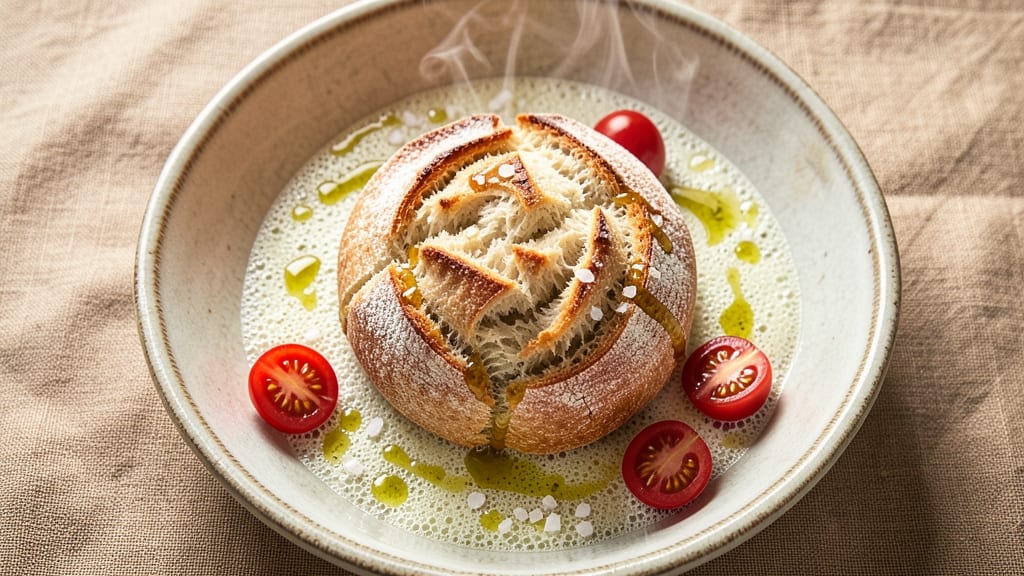
This Antimo Caputo 00 flour bread recipe delivers the perfectly crispy Dutch oven crust you crave with a light, airy crumb that disappears in your mouth. The high protein content in 00 flour creates an ideal structure for artisan bread—tender yet sturdy enough to hold up to any topping.
I've perfected this recipe after years of baking, and it's become my go-to for weekend loaves that taste like they came from a rustic Italian bakery.
The secret lies in precise kneading, proper proofing times, and baking in a preheated Dutch oven to trap steam. This creates that coveted golden-brown crust while keeping the interior soft and open.
The fine texture of 00 flour also allows for better gluten development, giving you a bread that's both beautiful and delicious. With just a few simple ingredients and careful technique, you'll achieve restaurant-quality results at home.
What makes this recipe special is how it balances professional techniques with home baking accessibility. The dough comes together in under 20 minutes of active time, then does most of the work for you during proofing.
When baked, the aroma alone will have everyone gathering in the kitchen. The crust develops a satisfying crunch while the interior remains tender, making each slice worth waiting for.
Serve this bread warm with olive oil and flaky sea salt, or use it as the perfect vehicle for soups, sandwiches, or charcuterie boards. The open crumb structure holds up beautifully to toppings while still being light enough to enjoy on its own.
Once you try this recipe, you'll understand why 00 flour has become a favorite among serious bakers.
Ingredients for antimo caputo 00 flour bread
Fourteen simple ingredients transform into artisan bread with that coveted Dutch oven crust.
| Ingredient | Amount | Notes |
|---|---|---|
| Antimo Caputo 00 Flour 🌾 | 3 ½ cups | High protein for ideal gluten development |
| Instant Yeast 🍞 | ½ tsp | Active dry works too |
| Granulated Sugar 🍚 | 1 tbsp | Feeds yeast for activation |
| Salt 🧂 | 1 ½ tsp | Diamond Crystal preferred |
| Large Eggs 🥚 | 1 whole | Room temperature for best results |
| Extra-Virgin Olive Oil 🫒 | ½ cup | For dough elasticity |
| Warm Water 💧 | 1 ¼ cups | 110°F for yeast activation |
| Cornmeal 🌽 | ¼ cup | For dusting Dutch oven |
| Flaky Sea Salt 🧂 | 1 tbsp | For finishing crust |
| Coarse Kosher Salt 🧂 | 1 tsp | For dough enrichment |
| All-Purpose Flour 🌾 | ¼ cup | Optional for handling |
The 00 flour is non-negotiable here—Antimo Caputo is the gold standard, but Caputo or King Arthur also work. Grab it at Whole Foods or well-stocked grocery stores with Italian sections. I always buy extra because it's worth having on hand for all your bread adventures. The yeast needs to be fresh—check the expiration date. If it's been sitting in your pantry for months, toss it. For the olive oil, Californian or Italian brands add subtle depth, but any good EVOO will do. The warm water should be just shy of body temperature—too hot and you'll kill the yeast.
No 00 flour? Bread flour at 100% works in a pinch, but the crumb won't be as open. Diamond Crystal salt isn't available? Morton kosher salt at 1.25 tsp is the swap. Eggs too expensive? 1 tbsp mustard plus 1 tbsp water mimics the structure (though it won't brown like eggs). For the Dutch oven, if you don't have one, a heavy oven-safe pot with a lid works too—just preheat it for 30 minutes first. The cornmeal is just for dusting, but if you're out, semolina or all-purpose flour works fine. The key is getting that dough into the hot vessel quickly after shaping.
This dough is a beast when cold but transforms into a dream when warm. Proof it in the fridge overnight for deeper flavor, or let it rise at room temp for 1-2 hours if you're baking it the same day. The shaped loaf keeps 3 days at room temperature wrapped in a clean kitchen towel, or 1 week in the fridge. For freezing, bake it first, then slice and freeze individual portions—3 months max. The crust gets even better the next day, so plan ahead. I always bake two loaves—one for the table, one for freezing.
Why You'll Love This Recipe
- No-Knead Magic: I swear by this dough—just mix the Antimo Caputo 00 flour with warm water, a pinch of instant yeast, and let it rise while I sip coffee. The high-protein flour does all the work, giving you pillowy, airy bread with zero elbow grease.
- Sweet Crust, Soft Heart: That sugar in the dough caramelizes into a golden crust while keeping the inside tender and slightly sweet. Honestly, it’s the kind of bread that makes you slow down and take an extra bite—no guilt, just pure satisfaction.
- Lunchbox Hero: Between us, this bread is my go-to for sandwiches, toast, or even garlic butter dipping. The Antimo Caputo 00 holds up perfectly for days, so I bake a loaf on Sundays and watch it disappear by Wednesday. (Yes, even on a Tuesday night.)
- Budget-Friendly Staple: Five basic ingredients, one bowl, and you’ve got a loaf that costs pennies per slice. The eggs add richness without breaking the bank, and the instant yeast means no waiting for packages to proof. It’s my secret weapon for feeding the family without stress.
Step-by-step instructions for Dutch oven bread with Antimo Caputo 00 flour
Here's how to create a bread with a crispy Dutch oven crust and an open, airy crumb.
Activate the Yeast and Mix the Dough
In a large bowl, combine the 1.25 cups warm water (around 110°F) with the 1 tbsp granulated sugar and 0.5 tsp instant yeast. Let this sit for 5-10 minutes until it becomes frothy—this tells you the yeast is active and ready to work. If it doesn't foam, your yeast may be dead, and you'll need to start over.
In a separate bowl, whisk together the 3.5 cups Antimo Caputo 00 flour, 1.5 tsp salt, and 1 tsp coarse kosher salt. This high-protein flour will give your bread that signature chewy texture and open crumb structure. Make a well in the center and pour in the yeast mixture along with the 0.5 cup extra-virgin olive oil and 1 whole large egg. Mix with a wooden spoon until a shaggy dough forms.
Knead the Dough Until Elastic
Turn the dough out onto a lightly floured surface and knead for 8-10 minutes until smooth and elastic. You'll know it's ready when it springs back slowly when poked. If the dough feels too sticky, add the 0.25 cup all-purpose flour a little at a time—this helps with handling without affecting the final texture too much.
For best results, I like to use the "windowpane test" here: stretch a small piece of dough between your fingers. If it's translucent with just a few tiny holes, it's ready. If it tears easily, keep kneading. Once you're satisfied, place the dough back in the bowl, cover it with a damp towel, and let it rise in a warm place for 1-2 hours or until doubled in size.
Shape and Proof the Dough
After the dough has risen, punch it down gently to release any air bubbles, then shape it into a round loaf. For a classic boules shape, fold the edges under and tuck them in while rolling the dough between your palms. Place it seam-side up in a bowl, cover it again, and let it proof for another 30-45 minutes—this second rise gives the bread its final lift.
Preheat your oven to 450°F with a Dutch oven inside for at least 30 minutes. While the oven heats, dust the inside of the Dutch oven with the 0.25 cup cornmeal. This creates a barrier that prevents sticking and adds a subtle crunch to the crust.
Bake for a Crispy Crust and Airy Crumb
Carefully transfer the shaped dough to the hot Dutch oven. Sprinkle the top with 1 tbsp flaky sea salt for that perfect balance of flavor. Bake covered for 20 minutes, then remove the lid and bake for another 15-20 minutes until the crust is deep golden brown and sounds hollow when tapped on the bottom.
Let the bread cool on a wire rack for at least 30 minutes before slicing—this ensures a clean slice and prevents a gummy crumb. The interior should be open and airy, with a crispy crust that's just slightly chewy. This bread is best enjoyed fresh, but it keeps well at room temperature for 2-3 days or can be frozen for longer storage.
Pro Tips For Making Antimo Caputo 00 Flour Bread
- WEIGH YOUR FLOUR: I learned this the hard way—measuring Caputo 00 by volume leads to dense, gummy bread. Use a kitchen scale for precision (500g ±5g for a standard loaf). The protein content is low, so even small variations throw off the texture.
- LET THE DOUGH REST: Skip the rush and give it a full 2-hour cold proof in the fridge. This isn’t just about flavor—it lets the gluten relax, so your bread rises evenly and doesn’t collapse when baked. (Yes, even if you’re impatient like me.)
- STEAM THE OVEN: Place a shallow tray of boiling water on the bottom rack before baking. The steam mimics a bakery oven, giving you that perfect, crackly crust without burning the top. Just remove it after 10 minutes—no need to babysit.
- EGG WASH MATTERS: Don’t just slap eggs on the dough. Whisk them with a splash of water first, then brush on after the initial 10 minutes of baking. This seals the crust for shine and prevents cracking—my grandmother’s trick, and it actually works.
Perfect pairings for these flavors
Olive Oil Drizzle
Finish your freshly baked bread with a generous drizzle of extra-virgin olive oil—I love using California or Italian brands like Bertolli or Colavita. The oil enhances the bread's natural flavors and adds a luxurious touch.
For extra flair, sprinkle with flaky sea salt right after baking while the crust is still warm. 🌿
Balsamic Glaze
Warm 2 tbsp balsamic vinegar in a small saucepan over medium heat until it reduces by half, then drizzle over slices. The tangy sweetness pairs beautifully with the bread's crusty exterior and soft interior.
I recommend Italian balsamic vinegar for the best flavor profile. This works especially well with charcuterie boards or as a topping for bruschetta.
Fresh Herbs
Brighten up your bread with a sprinkle of fresh rosemary or thyme leaves. The aromatic herbs complement the bread's natural flavors and add a pop of color. For a stronger flavor, lightly crush the leaves between your fingers before sprinkling.
This pairing is perfect for soups or as a simple side with roasted vegetables. 🌱
Garlic Butter
Melt 2 tbsp unsalted butter with 1 minced garlic clove and a pinch of salt in a small pan over low heat. Brush the warm mixture onto slices of bread and toast briefly in a skillet.
This rich, savory topping is ideal for breakfast or as a side for grilled meats. For extra richness, add a pinch of red pepper flakes for a hint of heat. 🧄
Tomato Jam
Spread a thin layer of homemade or store-bought tomato jam on slices of warm bread. The sweet-tart flavor balances the bread's crusty texture beautifully. I like using San Marzano tomatoes for the best quality.
This pairing is perfect for breakfast or as a simple appetizer with cheese and cured meats. 🍅
Cheese Pairings
Enhance your bread with a slice of aged pecorino, sharp cheddar, or creamy brie. The cheese melts into the bread's open crumb, creating a delicious combination. For a more rustic touch, try fresh mozzarella with a drizzle of olive oil and a sprinkle of basil leaves.
This pairing is perfect for a light lunch or as part of a charcuterie spread. 🧀
Nutrition facts
Frequently asked questions
Why does this recipe specifically call for Antimo Caputo 00 flour?
Antimo Caputo 00 flour has a high protein content (12-13%) and ultra-fine texture that creates the perfect open crumb structure and chewy texture. The fine grind allows for better gluten development, which is essential for that signature artisan bread texture. While other 00 flours like Caputo or King Arthur work well, Antimo Caputo is the gold standard for Italian bread-making.
Can I make this bread without a Dutch oven?
Yes, but you won't get the same crispy crust. Use a heavy oven-safe pot with a lid instead—preheat it in the oven for 30 minutes before baking. For a different texture, try baking on a baking sheet with a steam pan underneath (add ice cubes to the pan when placing bread in oven). The bread will be less crusty but still delicious.
How do I know when the dough is properly kneaded?
Perform the "windowpane test": stretch a small piece of dough between your fingers. If it's translucent with just a few tiny holes and doesn't tear easily, it's ready. The dough should also spring back slowly when poked. For this recipe, 8-10 minutes of kneading on a floured surface should achieve this. If it feels too sticky, add 1 tbsp all-purpose flour at a time.
Why does my bread come out dense instead of airy?
Dense bread usually results from underproofing or over-kneading. Make sure your yeast is active (it should foam in 5-10 minutes in warm water). Give the dough enough time to rise—it should double in size. Also check your oven temperature (use an oven thermometer) and ensure you're baking at 450°F. If the dough was overworked, try reducing kneading time next batch.
Can I make this bread ahead of time?
The shaped dough can be refrigerated overnight for deeper flavor development. For storage, wrap cooled bread in a clean kitchen towel and keep at room temperature for 3 days. For longer storage, freeze baked bread (sliced) for up to 3 months. The crust actually improves after baking—this is why many bakeries sell "day-old" bread!