
Breakfast & Brunch
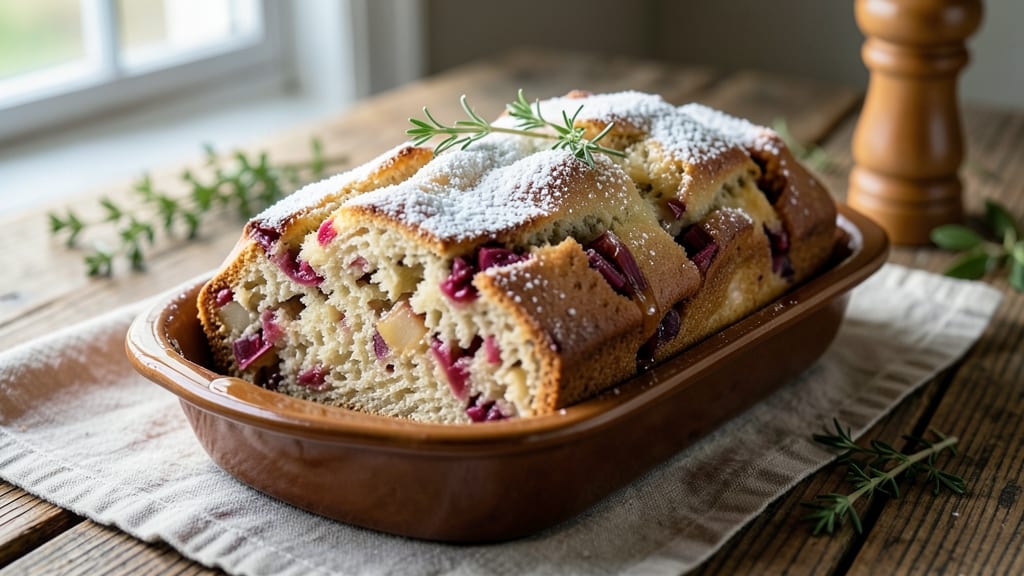
This apple rhubarb bread recipe transforms simple pantry staples into a loaf that’s perfect for spring mornings—tart rhubarb swirls balanced by sweet apple chunks, all wrapped in a golden, buttery crust. 🌟 The secret lies in the dough’s tender crumb and the way the fruit infuses every bite with bright, tangy-sweet flavor.
I developed this recipe after years of baking fruit breads, and it’s become a staple in my kitchen for brunch or coffee breaks.
The process is straightforward but requires patience—letting the dough rise twice ensures a light texture, while folding in the rhubarb and apple at the right moment keeps them juicy and embedded throughout. A simple streusel topping adds extra crunch, though you can skip it if you prefer a smoother finish.
The aroma alone will fill your home with the scent of fresh fruit and warm spices, making it impossible to resist.
What makes this recipe special is its versatility. Serve it warm with butter melting into the crust or toast slices for a quick breakfast. The bread also freezes beautifully, so you can bake a batch ahead and enjoy it all season long.
Whether you’re hosting brunch or treating yourself to a midday pick-me-up, this loaf delivers comfort and flavor in every slice.
Ready in about 2 hours (including rising time), this bread is ideal for weekend baking projects. The combination of tart rhubarb and sweet apple creates a balance that’s both nostalgic and refreshing—perfect for spring and summer when fresh fruit is at its peak. Let’s get baking!
Ingredients for apple rhubarb bread
Pantry staples meet seasonal fruit for a loaf that smells like spring mornings.
| Ingredient | Amount | Notes |
|---|---|---|
| All-Purpose Flour 🌾 | 4 cups | Spooned and leveled for accuracy |
| Granulated Sugar 🍚 | 1 cup | White or light brown preferred |
| Brown Sugar 🍚 | ½ cup | Packed firmly for sweetness |
| Active Dry Yeast 🍞 | 2 ¼ tsp | Ensure it's fresh (test in warm water) |
| Unsalted Butter 🧈 | ½ cup | Softened to room temperature |
| Large Eggs 🥚 | 1 whole | Room temperature for best mixing |
| Milk 🥛 | ¾ cup | Whole milk for richness (or dairy-free alternative) |
| Apples 🍎 | 1 ½ cups | Peeled, cored, diced small (Honeycrisp or Granny Smith) |
| Rhubarb 🍓 | 1 ½ cups | Trimmed, diced small (tart variety) |
| Cinnamon 🌿 | 1 ½ tsp | Ground, for warmth |
| Salt 🧂 | ½ tsp | Kosher or sea salt |
| Vanilla Extract 🌸 | 1 tsp | Pure extract preferred |
| Oats 🌾 | ½ cup | Old-fashioned, not instant |
| Old-Fashioned Rolled Oats 🌾 | ¼ cup | For streusel topping |
| Light Brown Sugar 🍚 | ¼ cup | Packed for streusel |
The fruit is non-negotiable—Honeycrisp apples for sweetness and tart rhubarb for that signature tang. Grab them fresh from the farmers market if you can, but store-bought works too (just check for firmness). The oats should be old-fashioned, not quick—Bob’s Red Mill or Quaker are reliable brands. For the yeast, check the expiration date—if it’s past its prime, toss it. The butter? Plugrá or Land O’Lakes are my go-tos, but any good-quality unsalted works. Pro tip: measure your flour by spooning it into the cup and leveling it off—don’t scoop directly from the bag or you’ll pack it too tightly.
No Honeycrisp apples? Gala or Fuji hold up well too. Rhubarb too fibrous? Cook it down with 1 tsp sugar first to soften. Short on oats? Crushed graham crackers make a decent streusel substitute (though it’ll be less rustic). The vanilla extract can be imitation, but pure extract makes a noticeable difference. For the milk, whole milk gives the best texture, but oat milk works in a pinch if you’re avoiding dairy. And if you’re feeling fancy, add a pinch of cardamom to the dough for an unexpected depth of flavor—trust me, it’s worth it.
This dough needs time—let it rise in a warm spot (like a turned-off oven with a bowl of hot water inside). The fruit will keep for 3 days in the fridge if prepped ahead, but the dough itself is best used fresh. The finished loaf? Wrap tightly in plastic wrap and it’ll stay fresh for 4 days on the counter or 3 months in the freezer. I always bake two—one for breakfast, one to freeze for lazy mornings. And if you’re worried about overbaking, use an instant-read thermometer—pull it out at 190°F for a perfectly moist crumb.
Why You'll Love This Recipe
- No-Fuss Dough: I swear, this bread comes together faster than my coffee. Just mix the flour, sugar, and yeast—no fancy kneading or waiting around. The butter gets folded right in, and boom, you’re shaping it before the yeast even gets too rowdy.
- Sweet-Tart Magic: That apple-rhubarb combo? It’s like autumn in a loaf. The brown sugar caramelizes just enough to balance the tart rhubarb, while the apples add a juicy bite. Honestly, I’ve never met a slice that didn’t disappear in two bites.
- Breakfast or Snack Hero: Warm it straight from the oven with a smear of butter, or pack it for lunch the next day—it’s that good. My kids grab it after school, and my husband sneaks it for breakfast. (Yes, even on a Tuesday night.)
- Budget-Friendly Staple: Flour, sugar, and butter? Basic pantry stuff that won’t break the bank. A single batch stretches for days, and the leftovers? Perfect for toast or French toast. Between us, this is the kind of bread that makes grocery day feel like a win.
Step-by-step instructions for apple rhubarb bread
Here's how to create a loaf with perfect swirls and a golden crust—every time.
👨🍳 Step 1: Activate the Yeast and Mix the Dough
In a small bowl, combine ½ cup warm milk (about 110°F) with the 2.25 tsp active dry yeast and let sit for 5-10 minutes until foamy. This tells you your yeast is alive and ready to work.
In the bowl of a stand mixer fitted with the dough hook, whisk together the 4 cups all-purpose flour, 1 cup granulated sugar, ½ cup brown sugar, 1.5 tsp cinnamon, and ½ tsp salt. Add the yeast mixture, 1 whole large egg, and 1 tsp vanilla extract. Mix on low speed until combined, then increase to medium and knead for 5 minutes until the dough pulls away from the bowl and is smooth.
🍳 Step 2: Prepare the Fruit Filling
While the dough kneads, finely dice the 1.5 cups apples and 1.5 cups rhubarb into a medium bowl. Toss with 1 tsp cinnamon and set aside. The fruit should be small enough to distribute evenly through the dough without clumping.
Real talk: if your rhubarb is particularly fibrous, give it a quick pulse in a food processor first. This prevents tough texture in your bread.
🥘 Step 3: Shape and Swirl the Dough
Turn the dough onto a lightly floured surface and gently flatten it into a 12x8-inch rectangle about ½-inch thick. Spread the fruit mixture evenly over the dough, leaving a ½-inch border around the edges. Roll the dough tightly into a log, pinching the seam to seal.
Place the log seam-side down in a greased 9x5-inch loaf pan and cover with a damp towel. Let rise in a warm place for 1-1.5 hours or until doubled in size. You'll know it's ready when it springs back slowly when pressed gently.
🔥 Step 4: Make the Streusel Topping
While the dough rises, prepare the streusel topping by mixing ½ cup oats, ¼ cup old-fashioned rolled oats, ¼ cup light brown sugar, and 2 tbsp all-purpose flour in a small bowl. Cut in the ½ cup softened unsalted butter with a pastry cutter or your fingers until crumbly.
Here's the thing—don't overwork the butter. You want pea-sized crumbles, not a paste. This ensures maximum crunch on top.
🔥 Step 5: Bake to Golden Perfection
Preheat your oven to 375°F. Sprinkle the streusel mixture evenly over the risen dough. Bake for 45-50 minutes until the bread is golden brown and sounds hollow when tapped on the bottom. If the top browns too quickly, tent loosely with foil.
Remove from the oven and let cool in the pan for 10 minutes before transferring to a wire rack. The internal temperature should read 190-200°F when done—this ensures a moist interior.
Pro Tips For Making Apple Rhubarb Bread
- Measure Butter Cold: Take that unsalted butter straight from the fridge—no softening needed. I used to melt it into the sugar mix, and the bread turned out dense. Cold butter creates pockets for the fruit and yeast to work their magic, giving you that perfect tender crumb.
- Soak Rhubarb First: Toss chopped rhubarb in 1 tablespoon of flour before folding it into the dough—this keeps the bread from turning into a sticky mess. I learned this after my first batch collapsed into a gooey disaster. (Yes, even if you’re impatient like me.)
- Proof Until Puffy: Don’t rush the yeast—let that dough rise until it’s nearly doubled and springs back when poked. I once skipped this step and ended up with a flat, sad loaf. A warm spot (like the oven with the light on) speeds it up without overproofing.
- Swirl the Fruit: Fold the apple-rhubarb mix into the dough in a spiral—not just dumped in. This creates those gorgeous streaks and ensures even distribution. My grandmother swore by this, and she was right: the texture is noticeably better when the fruit’s arranged, not scattered.
Common mistakes when making perfect results
Over-Kneading the Dough
The dough for this apple rhubarb bread is delicate—over-kneading develops too much gluten, resulting in a tough, dense loaf instead of that tender crumb we want. I’ve learned this the hard way!
Knead just until the dough pulls away from the bowl and is smooth, usually about 5 minutes in a stand mixer. If it feels stiff or springs back slowly, you’ve gone too far. 💡
Skipping the Yeast Test
Always check if your yeast is active before starting. Mix the 2.25 tsp yeast with ½ cup warm milk (110°F) and let it sit for 5-10 minutes.
If it doesn’t foam, your yeast is dead—replace it immediately. I’ve ruined doughs by skipping this step, so don’t make the same mistake! 🍞
Uneven Fruit Distribution
Fruit clumps or uneven spreading leads to pockets of dryness or overly moist spots. Dice the 1.5 cups apples and 1.5 cups rhubarb uniformly—aim for ¼-inch pieces. Toss them with 1 tsp cinnamon and spread them evenly over the dough before rolling.
If your rhubarb is fibrous, pulse it briefly in a food processor first. 🍎
Ignoring Rise Times
Rushing the dough’s rise is a common mistake. Let it double in size—this takes 1-1.5 hours in a warm spot. If you bake it too soon, the bread will be dense.
Press the dough gently: if it springs back slowly, it’s ready. Pro tip: Place the pan in a turned-off oven with a bowl of hot water for consistent warmth. ⏰
Overbaking the Bread
Baking until golden brown is key, but overdoing it dries out the bread. Use an instant-read thermometer—pull it out at 190-200°F internal temperature. If the top browns too quickly, tent loosely with foil.
I’ve seen loaves turn rock-hard from overbaking, so trust the thermometer, not just the color. 🔥
Using Cold Ingredients
Cold butter or milk can slow yeast activation and weaken the dough’s structure. Let your ½ cup butter soften to room temperature and use room-temperature milk (or warm it gently).
Cold ingredients lead to a denser crumb and longer rise times. Always check your butter’s texture before mixing—it should be pliable but not melted. 🧈
Nutrition facts
Frequently asked questions
Can I substitute other fruits for rhubarb or apples?
You can experiment with other tart fruits like pears or plums in place of rhubarb, but they won't have the same signature tang. For apples, Granny Smith or Pink Lady work best—their tartness balances the sweetness. Avoid overly soft fruits like bananas, as they'll make the bread gummy.
How do I store apple rhubarb bread?
Wrap the cooled loaf tightly in plastic wrap or place it in an airtight container to keep it fresh for 3-4 days at room temperature. For longer storage, freeze slices wrapped individually—they'll stay good for 3 months. To reheat, warm slices in a 350°F oven for 5-7 minutes for that fresh-baked taste.
Why did my bread turn out dense?
Dense bread usually means one of three things: over-kneading (which develops too much gluten), under-proofing (not letting the dough rise long enough), or cold ingredients (like butter or milk). Make sure your yeast is active, knead just until smooth, and let the dough rise until it doubles in size. A 190°F internal temperature at the end of baking also helps prevent dryness.
Can I make this bread without a stand mixer?
Mix the dough by hand in a large bowl, using a wooden spoon to combine ingredients first, then kneading for 8-10 minutes on a floured surface until smooth. The key is patience—keep pressing and folding until the dough is elastic. A dough scraper helps prevent sticking. The texture will be just as tender!
How can I tell when the bread is fully baked?
Look for three signs: the bread should be golden brown, sound hollow when tapped on the bottom, and register 190-200°F internally. If the top browns too quickly, tent loosely with foil. Avoid relying on time alone—every oven varies! A toothpick inserted should come out clean or with a few moist crumbs.