
Desserts
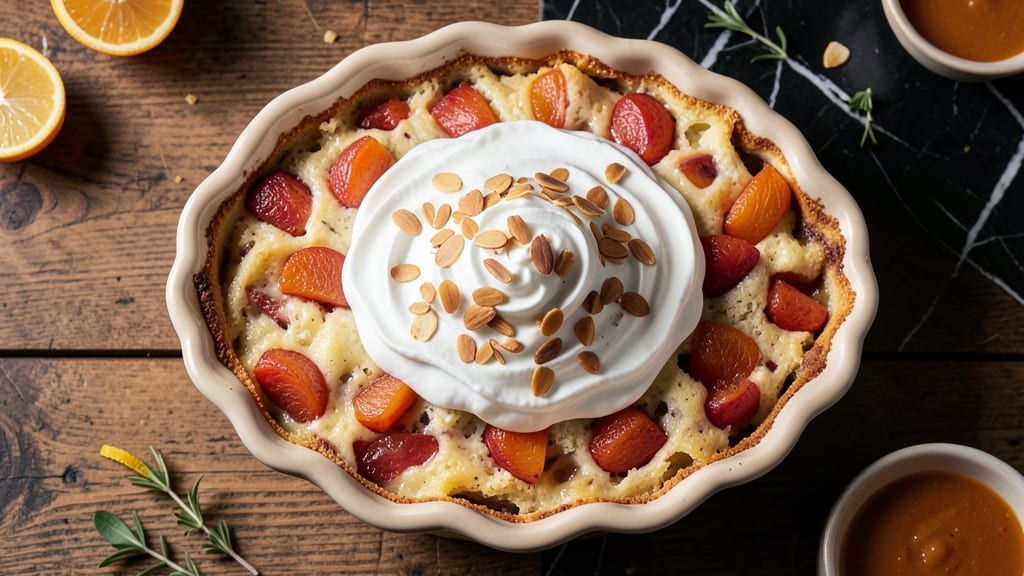
This apricot bread pudding recipe transforms stale bread into a decadent dessert with tender layers of vanilla custard and bursts of caramelized apricot.
The secret lies in soaking cubed bread in a rich egg custard infused with vanilla and cinnamon, then baking until golden—while the apricots caramelize into sweet, jammy pockets. I developed this version after years of testing, ensuring every bite delivers that perfect balance of creamy custard and tangy fruit.
The custard base is what makes this bread pudding truly special—it’s velvety yet firm enough to hold its shape, with just the right amount of vanilla extract to complement the apricots.
You’ll use a mix of fresh and dried apricots for texture contrast, while a sprinkle of toasted almonds on top adds a satisfying crunch. The recipe is designed to be foolproof, with no tricky techniques—just layering, baking, and letting the flavors meld together in the oven.
By the time it emerges from the oven, you’ll have a golden, caramelized masterpiece with a crisp top and a soft, custardy center. The apricots will be tender and slightly jammy, their natural sweetness enhanced by a touch of brown sugar and lemon zest.
This dessert is rich enough to feel indulgent but light enough to serve after a hearty meal—perfect for family gatherings, holiday desserts, or a special treat for two.
For an extra touch of sophistication, consider drizzling a light apricot glaze over the top or serving it with a scoop of vanilla ice cream. The recipe scales beautifully, so you can easily adjust the size for a crowd or meal prep for the week.
Let’s get started on creating this comforting, apricot-infused delight.
Ingredients for apricot bread pudding
Stale bread, eggs, and apricots transform into a golden, custardy dessert with a caramelized crunch.
| Ingredient | Amount | Notes |
|---|---|---|
| Stale Bread 🍞 | 8 cups | Day-old or slightly stale, cubed |
| Large Eggs 🥚 | 6 whole | Room temperature, beaten |
| Heavy Whipping Cream 🥛 | 1 ½ cups | Full-fat for richness |
| Granulated Sugar 🍚 | 1 ¼ cups | Or substitute brown sugar |
| Vanilla Extract 🌿 | 2 tsp | Pure vanilla preferred |
| Ground Cinnamon 🌶️ | 1 ½ tsp | For warm spice notes |
| Salt 🧂 | ½ tsp | Kosher or sea salt |
| Fresh Apricots 🍑 | 1 ½ cups | Pitted, sliced, or chopped |
| Dried Apricots 🍑 | ½ cup | Chopped, for texture contrast |
| Brown Sugar 🍚 | ¼ cup | Packed, for caramelization |
| Lemon Zest 🍋 | 1 tbsp | Brightens fruit flavors |
| Sliced Almonds 🥜 | ½ cup | Toasted for crunch |
| Unsalted Butter 🧈 | ½ cup | Melted, for greasing |
| Powdered Sugar 🍚 | ¼ cup | Optional, for dusting |
The bread is the star—stale or day-old works best, but fresh works in a pinch (toast it first). I grab a loaf of sourdough or brioche from the bakery section at Whole Foods or Trader Joe's—it adds a nice tang. Cubing it evenly is key, so use a serrated knife or ask the bakery to do it for you. For dried apricots, bulk bins at natural grocery stores usually have better quality than the pre-packaged stuff, and they’re cheaper too. Fresh apricots? Hit the farmers market in summer—they’re sweeter and juicier than store-bought.
No fresh apricots? Canned apricot halves in juice work great—just drain them well. Subbing brown sugar for granulated? Use the same amount, but pack it down. Vanilla extract is non-negotiable here—imitation vanilla won’t give you that rich depth. The almonds? Toast them in a dry pan until golden—3-4 minutes max, or they’ll burn. For extra richness, swap half the heavy cream for whole milk, but trust me on the full-fat version for that perfect texture. Lemon zest is optional, but it’s worth the extra minute if you’ve got lemons on hand.
This keeps beautifully—3-4 days in the fridge, covered tightly. Reheat at 350°F for 10-15 minutes until warmed through. For meal prep, I make a double batch and freeze individual portions—2 months max. The almonds stay crispy if you store them separately and sprinkle them on fresh before serving. Leftovers? Even better the next day—the custard sets up nicely and the apricots get even jammier. Serve with vanilla ice cream or a drizzle of apricot glaze for that restaurant touch.
Why You'll Love This Recipe
- No Waste Magic: I swear by this trick—stale bread gets a second life instead of the trash. Tear it up, mix it in, and suddenly you’ve saved money and made something that tastes like a bakery treat.
- Creamy Apricot Bliss: That balance of warm, jammy apricots with the custardy richness of eggs and cream? It’s like dessert hugs you. The sugar caramelizes just enough to make every bite feel special.
- Weeknight Crowd-Pleaser: Serve it warm for breakfast with a scoop of ice cream, or pack leftovers for school lunches. Honestly, it’s the one dessert I make when I don’t feel like baking—yet somehow it always impresses.
- Budget-Friendly Luxury: Eggs, bread, and sugar are pantry staples, but this tastes like a fancy brunch dish. Between us, it’s my go-to when I want to feel fancy without spending extra. (The vanilla extract? Worth every penny.)
Step-by-step instructions for apricot bread pudding
This method delivers a custardy, caramelized dessert with perfect texture every time.
Prepare the Apricot Filling
In a medium bowl, combine the 1.5 cups fresh apricots, 0.5 cup dried apricots, 0.25 cup brown sugar, 1 tbsp lemon zest, and 0.5 cup sliced almonds. Toss everything together until the dried apricots are evenly distributed and the almonds are coated with sugar. This step ensures every bite gets that perfect mix of juicy fruit, chewy texture, and nutty crunch.
Set the mixture aside while you prepare the bread cubes. The fresh apricots should be sliced or chopped into small, even pieces—this prevents large fruit chunks from staying undercooked in the center. The lemon zest brightens the flavors and balances the natural sweetness of the apricots.
Cube and Assemble the Bread
Tear the 8 cups stale bread into 1-inch cubes, discarding any crusty edges. You'll want about 6 cups of bread cubes—this ensures a good bread-to-filling ratio without making the pudding too dense. Place half of the bread cubes in a 9x13-inch baking dish and sprinkle evenly with half of the apricot mixture.
Repeat with the remaining bread cubes and apricot mixture, pressing down gently to create an even layer. This layering technique prevents a soggy bottom and ensures every bite has that perfect combination of bread and fruit. Don't overcrowd the dish—this allows the custard to permeate through the bread evenly.
Whisk the Custard Mixture
In a large bowl, whisk together the 6 whole large eggs, 1.5 cups heavy whipping cream, 1.25 cups granulated sugar, 2 tsp vanilla extract, 1.5 tsp ground cinnamon, and 0.5 tsp salt until fully combined and smooth. The mixture should be pale yellow and slightly thickened—this ensures a rich, creamy custard rather than a runny one.
Here's the thing—don't rush this step. Whisking thoroughly prevents lumps and ensures even distribution of flavors. I like to whisk for about 2-3 minutes until the sugar is fully dissolved and the mixture looks silky. The cinnamon and salt might seem like small amounts, but they balance the sweetness perfectly.
Combine and Bake to Golden Perfection
Pour the custard mixture evenly over the bread and apricot layers, pressing down gently to help it seep into the bread. Let it sit for 10 minutes at room temperature—this allows the bread to absorb some of the custard before baking, preventing a watery texture.
Preheat your oven to 350°F while the custard rests. Once preheated, bake the bread pudding for 45-50 minutes until the top is golden brown and the edges are set. The center should still be slightly jiggly—it'll continue cooking as it cools. If the top browns too quickly, tent loosely with foil to prevent over-browning.
Serve Warm with Dusting
Remove the bread pudding from the oven and let it cool for 10-15 minutes before serving. This resting period allows the custard to set slightly, making it easier to slice without falling apart. While it cools, melt the 0.5 cup unsalted butter in a small saucepan over low heat, then brush it over the top of the pudding for extra richness.
For that final touch, dust the warm pudding with 0.25 cup powdered sugar using a fine-mesh sieve. Serve immediately while still warm—each slice should be custardy in the center, caramelized on top, and bursting with apricot flavor in every bite. The toasted almonds add a delightful crunch that contrasts beautifully with the soft bread and creamy custard.
Pro Tips For Making Apricot Bread Pudding
- Cube Bread Evenly: Use a serrated knife and cut the bread into exactly 1-inch cubes—no smaller, no larger. I learned this the hard way: uneven cubes mean some parts cook too fast (dry as sawdust) while others stay doughy. Weigh them out if you’re feeling fancy, but at least eyeball consistency.
- Whip Cream First: Whip the heavy cream before mixing it into the egg custard—this lightens the whole dish. I used to add it raw, and the pudding turned out dense. A quick 30-second whip with a hand mixer does the trick, and you’ll notice the texture difference immediately.
- Skip the Overmixing: Stir the egg mixture just until the sugar dissolves—lumpy is fine. Overmixing makes the bread pudding gummy. Think of it like folding in cake batter: gentle swirls, not a full-on workout for your whisk.
- Bake Until Golden: Watch for a deep golden-brown crust, not just the edges. I used to pull mine out too soon, and it’d look done but taste undercooked inside. A toothpick test is good, but color is the real giveaway—wait for that caramelized top.
Troubleshooting perfect results
Soggy Bottom Fix
If your bread pudding turns out soggy at the bottom, it’s usually from too much liquid or uneven baking. First, make sure your bread cubes are 1-inch and evenly distributed—smaller cubes absorb custard faster.
Let the custard sit on the bread for 15 minutes before baking to absorb excess moisture. Also, preheat your oven to 350°F and bake on the middle rack for even heat distribution. 🌡️
Undercooked Center
An undercooked center happens when the pudding isn’t baked long enough or the oven isn’t hot enough. Use an instant-read thermometer to check the internal temperature—it should reach 200°F at the center.
If it’s still jiggly after 50 minutes, tent with foil and bake 10 minutes more. Avoid opening the oven door frequently, as temperature fluctuations slow cooking. 🔥
Custard Too Thin
A runny custard usually means the eggs weren’t beaten enough or the mixture was too cold. Whisk the eggs and cream until fully combined and slightly thickened—about 2-3 minutes.
If the custard still looks thin, add 1 tablespoon cornstarch mixed with 1 tablespoon water to stabilize it. Bake until the edges are set and the top is golden. ✨
Apricots Too Dry
If your apricots lose moisture and turn dry, they likely weren’t fresh enough or weren’t prepped correctly. Use a mix of fresh and dried apricots for juiciness—fresh ones release moisture during baking.
Toss them with 1 tablespoon lemon juice before layering to keep them plump. For extra richness, add 1 tablespoon apricot jam to the filling mixture. 🍑
Browning Too Fast
If the top browns too quickly, the oven is too hot or the custard isn’t thick enough. Lower the oven temperature to 325°F and tent the dish with foil after 20 minutes of baking.
For a smoother finish, brush the top with melted unsalted butter before baking. This creates a barrier against rapid browning while keeping the custard creamy. 🧈
Crust Too Thick
A thick, hard crust often means the custard wasn’t mixed well or the oven was too hot. Whisk the custard until smooth and pale yellow to ensure even cooking. For a softer crust, bake at 325°F instead of 350°F and cover loosely with foil for the first 30 minutes.
If the crust is already set, slice through it with a serrated knife before serving. 🔪
Nutrition facts
Frequently asked questions
Can I use fresh apricots only in this recipe?
You can substitute fresh apricots for dried, but the texture will differ slightly. Use 2 cups fresh apricots (pitted and chopped) instead of the mixed amounts, and add 1 tablespoon lemon juice to prevent drying. The fresh fruit will make the pudding juicier, but dried apricots add a chewy contrast that many love.
What type of bread works best for apricot bread pudding?
Stale or day-old bread is ideal—it absorbs custard perfectly without turning mushy. I recommend brioche, challah, or sourdough for extra richness, but French or Italian bread also works. Avoid very dense breads like whole wheat, as they can make the pudding too heavy.
How can I make this dessert ahead of time?
This bread pudding actually tastes better the next day! Bake it as directed, then refrigerate for 2-3 days in an airtight container. Reheat at 350°F for 15-20 minutes until warmed through. For longer storage, freeze individual portions for up to 2 months. Just thaw overnight in the fridge before reheating.
Can I add alcohol to this recipe?
A splash of bourbon, brandy, or rum (about 2 tablespoons) enhances the apricot flavors beautifully. Add it to the custard mixture while whisking. For a lighter touch, use 1 tablespoon apricot liqueur instead. The alcohol will cook off during baking, leaving behind rich, aromatic notes.
Why does my bread pudding have a watery custard?
Watery custard usually means the eggs weren't beaten enough or the mixture was too cold. Whisk the eggs and cream until fully combined and slightly thickened (2-3 minutes). If it's still too thin, add 1 tablespoon cornstarch mixed with 1 tablespoon water to stabilize it. Bake until the edges are set and the top is golden.