
Side Dishes
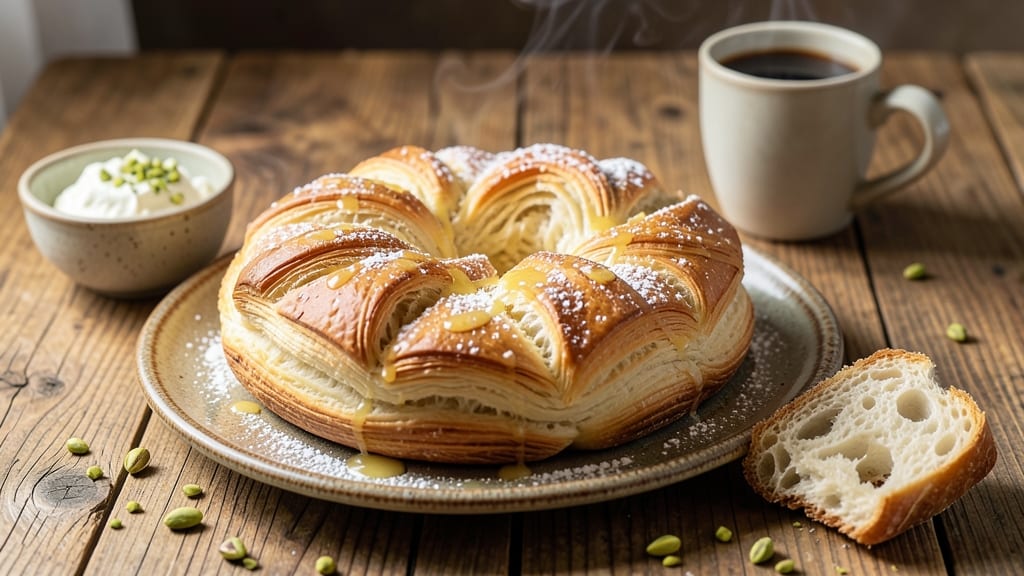
This Armenian gata bread recipe delivers flaky layers and a sweet spiced filling that makes every bite unforgettable. 💛 The traditional technique of folding dough around a fragrant cheese and spice mixture creates those signature crispy, golden layers that separate effortlessly.
I first tried this recipe during a visit to Armenia, where it's a staple for celebrations and family gatherings.
The secret to perfect gata bread lies in the dough—rich with milk, butter, and a touch of cheese for depth—paired with a filling of melted cheese, sugar, and warm spices like cinnamon and cardamom.
Unlike many breads, gata requires patience: the dough must rest, the filling must be just warm enough, and the baking must be precise to achieve that signature crispness without burning.
What you'll end up with is a loaf of bread that's crisp on the outside, tender inside, and infused with sweet, spiced flavors. The layers separate beautifully, revealing pockets of melted cheese that make it impossible to eat just one slice.
It's perfect served warm with jam, alongside tea, or even as a dessert with a dusting of powdered sugar.
Whether you're making it for a special occasion or just craving something comforting, this recipe brings a taste of Armenia to your kitchen. The process is straightforward but requires attention to detail—especially when it comes to folding the dough and timing the bake. Let's get started!
Ingredients for armenian gata bread
Six ingredients for dough, seven for filling—this Armenian classic delivers crisp layers and spiced sweetness.
| Ingredient | Amount | Notes |
|---|---|---|
| All-Purpose Flour 🌾 | 5 cups | High-protein for better elasticity |
| Unsalted Butter 🧈 | 1 ½ cups | Cold, cubed for flakiness |
| Milk 🥛 | ¾ cup | Room temperature for smooth dough |
| Granulated Sugar 🍚 | ¼ cup | For dough sweetness |
| Active Dry Yeast 🍞 | ¼ oz | 1 packet (2 1/4 tsp) |
| Salt 🧂 | 1 ½ tsp | Diamond Crystal preferred |
| Large Egg 🥚 | 1 whole | Room temperature |
| Shredded Mozzarella Cheese 🧀 | 2 cups | Part-skim for balance |
| Granulated Sugar 🍚 | ½ cup | For filling sweetness |
| Ground Cinnamon 🌿 | 1 tbsp | Freshly ground preferred |
| Ground Cardamom 🌿 | ½ tsp | Warm, aromatic spice |
| Vanilla Extract 🥛 | 1 tsp | Pure vanilla preferred |
| Powdered Sugar 🍚 | 2 tbsp | For dusting finished loaf |
The butter is non-negotiable—European-style or Plugrá gives the best flakiness. Grab it from the deli counter if your store sells it, or use the highest-fat butter you can find. The mozzarella should be freshly shredded (pre-shredded gets gummy)—buy a block and shred yourself. For the flour, King Arthur or Gold Medal brands work best for that tender crumb. Cardamom can be tricky to find—Penzeys or Whole Foods bulk bins are your best bet. If you can't find it, allspice at half the amount works in a pinch, though it won't be traditional.
No vanilla extract? Vanilla bean paste or even vanilla sugar (1 tsp) will work. The yeast needs to be fresh—if it's over a year old, toss it. For the dough, room temperature ingredients are critical—cold butter creates tough layers. The filling's sugar can be swapped for honey or maple syrup, but it'll taste slightly different. If you're making this ahead, prep the filling first and store it separately—it reheats beautifully. The cinnamon should be warm, not bitter—if it smells sharp, it's past its prime.
The dough keeps for 2 days wrapped in plastic in the fridge, but it's best used fresh. The filling can be made 3 days ahead and stored in an airtight container. If freezing, wrap the dough tightly in plastic and freeze for up to 2 months. Thaw overnight in the fridge before baking. The finished loaf stays crisp for 3 days at room temperature, but it's best enjoyed warm. For extra flakiness, brush with melted butter before dusting with powdered sugar—trust me on this.
Why You'll Love This Recipe
- Three-Ingredient Magic: I swear by this—just flour, butter, and milk. That’s it. No fancy substitutions, no hunting for obscure spices. The yeast does all the work while I sip coffee, and the result? A tender, buttery loaf that tastes like nostalgia in every bite.
- Sweet Butter Bliss: Honestly, the sugar isn’t just for sweetness—it caramelizes in the oven, giving those edges a golden crunch while keeping the inside pillowy. That rich butter flavor? It’s the star, and it’s everywhere in the best way.
- Breakfast or Snack Hero: I make a batch on Sundays and it lasts the week—toast it for breakfast, pack slices for lunch, or serve it warm with jam when friends drop by. No one ever says no, and I never run out.
- Budget-Friendly Staple: Flour, butter, milk—these are pantry basics that won’t break the bank. A single batch stretches across meals, and the leftovers? They’re even better the next day, reheated in 30 seconds. My wallet and my taste buds thank me.
Step-by-step instructions for Armenian gata bread
Master the art of layered dough and spiced filling for restaurant-quality gata every time.
👨🍳 Step 1: Prepare the Dough for Maximum Flakiness
In a large mixing bowl, combine the 5 cups all-purpose flour, 1.5 tsp salt, and 0.25 oz active dry yeast. Make a well in the center and add the 0.75 cup milk (room temperature), 0.25 cup granulated sugar, and 1 whole large egg. Mix with a wooden spoon until a shaggy dough forms.
Turn the dough onto a lightly floured surface and knead gently for 5-7 minutes until smooth and elastic. The dough should be soft but not sticky—add a little more flour if needed. Cover with a clean kitchen towel and let rise in a warm place for 1 hour or until doubled in size. This initial rise develops gluten for those signature flaky layers.
🍳 Step 2: Create the Sweet Spiced Filling
In a medium bowl, mix together the 2 cups shredded mozzarella cheese, 0.5 cup granulated sugar, 1 tbsp ground cinnamon, 0.5 tsp ground cardamom, and 1 tsp vanilla extract. The filling should be thick and crumbly—this ensures it stays put between the dough layers during baking. Set aside while you prepare the dough for rolling.
I like to press the mixture gently with my fingers to distribute the spices evenly. The cardamom adds a warm, floral note that pairs beautifully with the cinnamon's sweet warmth. This filling is what makes gata uniquely comforting—don't skip the spices!
🥘 Step 3: Roll and Layer the Dough
Divide the risen dough into 6 equal portions (about 1 cup each) and roll each into a 12-inch circle on a floured surface. Keep the circles thin—about ⅛-inch thick. Sprinkle ⅓ of the filling mixture evenly over each circle, leaving a 1-inch border around the edges.
Starting from one edge, carefully roll each circle tightly into a log, sealing the edge to trap the filling inside. Place the logs seam-side down on a parchment-lined baking sheet. The tight rolls ensure the filling stays contained while baking, creating those beautiful pockets of spiced goodness.
🔥 Step 4: Bake to Golden Perfection
Preheat your oven to 375°F. Brush the tops of the gata logs lightly with melted unsalted butter (use about 1 tbsp total) for extra browning. Bake for 25-30 minutes until the tops are deep golden brown and the dough feels firm to the touch.
Here's the thing—don't overbake. You want the centers to stay soft and pillowy while the exteriors develop that beautiful caramelized crust. The bread should register 190-200°F internally when done. Let cool on a wire rack for 10 minutes before dusting with powdered sugar—this keeps the bread from getting soggy while allowing the flavors to meld.
⏰ Step 5: Rest and Serve Warm
While the gata cools slightly, use a serrated knife to cut each log diagonally into 6 pieces. The layers should peel apart cleanly, revealing those flaky, buttery strata and pockets of spiced cheese filling. Serve warm with a dusting of powdered sugar and a cup of Armenian coffee for the full experience.
For best results, serve immediately after slicing. The residual heat from the bread will help distribute the melted cheese filling evenly. Store any leftovers in an airtight container for up to 3 days, but honestly? It won't last that long.
Pro Tips For Making Armenian Gata Bread
- Use Warm Milk: Armenian gata bread relies on that buttery milk for tenderness—don’t skimp on temperature. Heat the milk to about 105°F (40°C) before mixing with yeast and sugar, or your yeast might take forever to activate (or worse, die). I learned this the hard way after staring at a sluggish dough for 20 minutes.
- Knead Until Silky: This dough isn’t shy—it needs serious work. Aim for 10-12 minutes of kneading by hand (or 5-6 minutes with a stand mixer) until it’s smooth, elastic, and just slightly sticky. If it feels gummy, you’re not there yet. Over-kneading is hard to do, but under-kneading gives you a dense, chewy loaf.
- Skip the Overproofing: Gata bread rises fast, and watching it too long turns it into a sad, flat pancake. Once the dough doubles in size (about 1-1.5 hours at room temp), shape it immediately—no waiting for "just a little more." The gluten relaxes fast, and you’ll lose that signature light crumb.
- Brush Butter Generously: The final touch isn’t just decoration—it’s flavor insurance. Melted butter brushed on the baked loaf (hot out of the oven) seals in moisture and adds that signature richness. Use about 2 tablespoons per loaf, and don’t be shy—this isn’t the time to half it. Your future toast will thank you.
Wine and beer pairings for these flavors
Armenian Coffee Pairing
Gata bread shines with a cup of traditional Armenian coffee, brewed in a cezve (a small copper pot) with cardamom and cloves. The bold, slightly spiced coffee cuts through the bread's sweetness while complementing its cinnamon and cardamom notes.
For an authentic experience, use dark roast coffee beans and serve in tiny, tulip-shaped cups. The ritual of preparing cezve coffee adds a cultural touch that elevates the entire experience. ☕
Semi-Dry Red Wines
A dry or semi-dry red wine like Ararat Dry Red from Armenia balances gata's sweet filling beautifully. This wine, made from Ararat and Teishevani grapes, has a medium body with notes of cherry and spice that harmonize with the bread's cinnamon and cardamom.
If you can't find Armenian wine, try a Pinot Noir or Grenache from France—both have enough acidity to refresh your palate between bites. 🍷
Sweet White Wines
For a lighter option, a dry white wine like Voskehat (an Armenian white) or Sauvignon Blanc works wonderfully. The crisp acidity and citrus notes in these wines cleanse your palate and highlight the bread's buttery layers.
If you prefer something sweeter, a Moscato d'Asti adds a delicate sweetness that mirrors the gata's filling without overpowering it. The effervescence also helps cut through the richness. 🍾
Herbal Teas
Since gata is often enjoyed with tea in Armenia, try mint tea or black tea with rose petals. These herbal infusions add a refreshing contrast to the bread's sweetness and warmth.
For a caffeine-free option, hibiscus tea with a touch of honey offers a tart-sweet balance that pairs perfectly. Brewing these teas with fresh herbs or flowers enhances the experience. 🌿
Beer Considerations
While beer isn't traditional with gata, a light lager like Ararat Beer (Armenia's national beer) or a Pilsner can work if you prefer beer. The crisp, clean flavors won't compete with the bread's spices.
Avoid heavy stouts or IPAs—they'll overpower the delicate balance of sweet and spiced flavors. If you're feeling adventurous, try a Belgian witbier with its citrusy notes for a unique twist. 🍺
Nutrition facts
Frequently asked questions
Can I make Armenian gata bread without cardamom?
Yes, but the flavor will be different. Cardamom is key to the traditional taste, but if you can't find it, try ½ tsp allspice or ½ tsp nutmeg for warmth. The cinnamon will still give sweetness, but the floral depth from cardamom is hard to replace. For best results, track down ground cardamom at specialty stores or online.
Why did my gata bread turn out dense instead of flaky?
Dense gata usually means over-kneading or cold butter. The dough should be soft but not sticky—add just enough flour to handle it. Also, ensure your butter is cold when cutting it into the dough. If you've already mixed, don't worry: let the dough rest 30 minutes in the fridge before shaping to relax the gluten.
Can I use a different type of cheese for the filling?
Mozzarella is traditional, but you can experiment! Try feta (for tang) or Gouda (for caramel notes). Avoid soft cheeses like brie—they melt too quickly. If using feta, reduce the sugar to ¼ cup since it's already salty. For best texture, shred your own cheese instead of using pre-shredded.
How do I store leftover gata bread?
Keep it crispy by storing in an airtight container at room temperature for 2-3 days. For longer storage, freeze the whole loaf (uncut) for up to 1 month. Reheat slices in a 350°F oven for 5-7 minutes to restore crispness. Never microwave—it makes the layers soggy!
Is gata bread gluten-free?
Traditional gata contains wheat flour, so it's not gluten-free. For a GF version, substitute 1:1 gluten-free flour blend (like Bob's Red Mill) and add ½ tsp xanthan gum to the dough. Expect a slightly denser texture—GF baking is all about patience and proper hydration. The filling recipe remains the same.