
Side Dishes
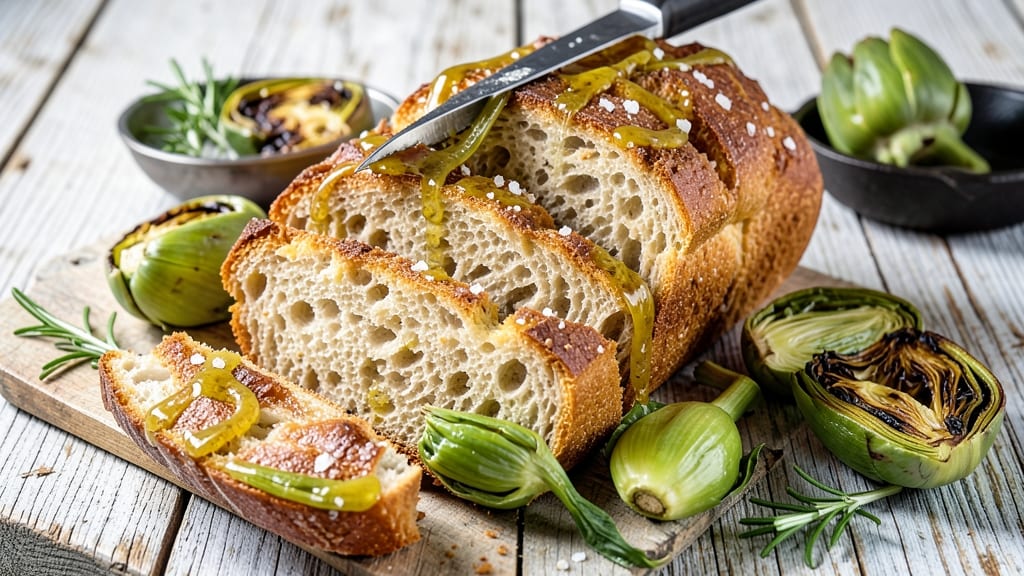
This Artichoke Bread Pescadero Recipe brings the coastal charm of California’s Pescadero to your table with its fragrant herbed olive oil crust and tangy artichoke swirls. 🌊 The secret lies in blending artichoke hearts into the dough, creating a rich, briny flavor that pairs perfectly with seafood mains like grilled salmon or shrimp.
Inspired by local coastal cuisine, this bread delivers hearty texture and Mediterranean flair in every bite.
The recipe starts with a simple dough enriched with olive oil and fresh herbs, then swirled with finely chopped artichokes for that signature Pescadero touch. A 30-minute rise ensures a light, airy texture, while baking at 375°F for 25 minutes yields a golden crust with crispy edges.
The artichokes caramelize slightly, adding depth that complements seafood dishes beautifully.
What sets this bread apart is its versatility—serve it warm alongside grilled fish, use it to soak up seafood stews, or enjoy it as a standalone appetizer with olive oil and flaky salt. The herbed crust infuses every slice with aromatic notes, making it a foolproof centerpiece for coastal-inspired meals.
Perfect for weekend brunches, seafood feasts, or as a showstopping side for any occasion, this recipe transforms humble ingredients into something extraordinary. Let’s bring the taste of Pescadero to your kitchen!
Ingredients for artichoke bread pescadero
Coastal-inspired dough meets Mediterranean artichoke richness in this signature Pescadero bread recipe.
| Ingredient | Amount | Notes |
|---|---|---|
| All-Purpose Flour 🌾 | 4 cups | Unbleached preferred for texture |
| Extra-Virgin Olive Oil 🫒 | ¾ cup | High-quality, fruity variety |
| Active Dry Yeast 🍞 | 2 ¼ tsp | Ensure freshness with expiration date |
| Warm Water 💧 | 1 ¼ cups | 110°F for optimal yeast activation |
| Granulated Sugar 🍚 | 1 tbsp | For yeast activation |
| Sea Salt 🧂 | 1 ½ tsp | Diamond Crystal preferred |
| Fresh Rosemary 🌿 | ½ cup | Finely chopped, stems removed |
| Fresh Thyme 🌿 | ½ cup | Leaves only, finely chopped |
| Marinated Artichoke Hearts 🍃 | 1 cup | Chopped, drained, and patted dry |
| Large Egg 🥚 | 1 whole | Room temperature for even mixing |
| Coarse Sea Salt 🧂 | 2 tbsp | For sprinkling on top |
| Flaky Maldon Salt 🧂 | 1 tbsp | For finishing |
| Toasted Sesame Seeds 🌾 | 1 tbsp | Optional for nutty contrast |
The heart of this recipe lies in the olive oil and herbs—California-grown extra-virgin olive oil delivers the most authentic flavor, while fresh rosemary and thyme from local farmers markets elevate the coastal charm. For artichokes, Whole Foods or Trader Joe's carry high-quality marinated hearts, but ensure they're drained and patted thoroughly to prevent a soggy dough. The yeast must be fresh; test by dropping a pinch in warm water with a pinch of sugar—if it bubbles within 5 minutes, it's active. For a professional touch, use Diamond Crystal sea salt, which dissolves more cleanly than table salt.
No fresh rosemary? Dried rosemary at one-third the amount works, though it lacks the vibrant aroma. Substitute artichokes with finely chopped sun-dried tomatoes for a similar tang, though the texture will differ slightly. Running short on thyme? Oregano or basil both pair well, though thyme's piney notes are ideal. The sesame seeds are optional but add a delightful crunch—toast them in a dry pan for 2 minutes to deepen their flavor. If your olive oil smells faint, it's past its prime; replace with a fresh bottle for the best crust.
This dough requires a 30-minute rise at room temperature for optimal texture—don't skip it. For storage, wrap the baked loaf in a clean kitchen towel and place in a paper bag at room temperature for up to 2 days. To revive, warm in a 350°F oven for 5-10 minutes. Freeze portions by slicing and wrapping individually; they'll keep for up to 3 months. The artichoke-infused dough also freezes beautifully before baking—thaw overnight in the fridge before proceeding.
Why You'll Love This Recipe
- No-Knead Magic: I swear by this dough—just mix, let it rise, and shape. The yeast does all the work while you sip coffee or scroll through your phone. Honestly, I’ve made it wrong three times, but the bread still turned out tender and golden.
- Olive Oil Luxury: That splash of extra-virgin olive oil in the dough? It’s the secret weapon. The bread has this subtle richness that makes it taste like a bakery treat, not something you tossed together. Plus, it pairs perfectly with the artichokes.
- Weeknight Workhorse: This bread is my go-to for everything—dipping in marinara, pairing with charcuterie, or just slathering it with butter. I’ve even used it to sop up pasta sauce when I forgot to make garlic bread. Versatile? You bet.
- Budget-Friendly Staple: Flour, yeast, olive oil—these are pantry basics that won’t break the bank. A single batch feeds my family for days, and the leftovers? Perfect for toast or sandwiches. It’s the kind of recipe that makes grocery shopping less stressful.
Step-by-step instructions for artichoke bread Pescadero
Transform simple dough into a restaurant-worthy loaf with fragrant herbs and tangy artichoke swirls.
👨🍳 Step 1: Activate the Yeast and Create the Base Dough
In a small bowl, combine the 1.25 cups warm water (tested at 110°F with a thermometer) with the 1 tbsp granulated sugar and 2.25 tsp active dry yeast. Let this sit for 5-10 minutes until frothy—you'll see bubbles forming on the surface. This confirms your yeast is active and ready to work.
In a large bowl, whisk together the 4 cups all-purpose flour and 1.5 tsp sea salt. Make a well in the center and pour in the yeast mixture along with the 0.75 cup extra-virgin olive oil and 1 whole large egg. Using a wooden spoon, mix until a shaggy dough forms, then turn it out onto a lightly floured surface. Knead for 8-10 minutes until smooth and elastic, adding more flour only if needed to prevent sticking.
🥘 Step 2: Incorporate Herbs and Artichokes for Flavor Layers
Return the dough to the bowl and let it rest for 10 minutes to relax. Meanwhile, finely chop the 0.5 cup fresh rosemary and 0.5 cup fresh thyme, removing stems completely. Drain and pat dry the 1 cup marinated artichoke hearts, then chop them into small, even pieces.
Press the dough into a rectangle about ½-inch thick on a floured surface. Using a rolling pin, roll it out to 12x16 inches. Spread the chopped herbs and artichokes evenly over the surface, leaving a ½-inch border around the edges. Roll the dough tightly into a log, pinching the seam to seal.
🔥 Step 3: Shape and Proof for Maximum Rise
Transfer the log to a parchment-lined baking sheet and shape it into a 9x5-inch loaf by gently pressing and smoothing the top. Cover loosely with plastic wrap and let it proof in a warm place for 1-1.5 hours until nearly doubled in size. The dough should spring back slowly when pressed gently with a finger—this indicates proper fermentation.
Preheat your oven to 375°F while the dough proofs. Once proofed, use a sharp knife to make a deep slash down the center of the loaf. Brush the top generously with additional extra-virgin olive oil, then sprinkle evenly with 2 tbsp coarse sea salt and 1 tbsp flaky Maldon salt. For extra texture, scatter the 1 tbsp toasted sesame seeds over the top.
🔥 Step 4: Bake Until Golden and Hollow-Sounding
Bake the loaf for 30-35 minutes until the crust is deep golden brown and the internal temperature reaches 190°F. Tap the bottom—it should sound hollow when done. For best results, place a baking sheet on the lower rack to catch any drips during baking.
Remove from the oven and let cool on a wire rack for at least 15 minutes before slicing. The bread will continue to crisp up as it cools. Serve warm with olive oil for dipping or alongside Mediterranean meals—each slice reveals those beautiful artichoke swirls and fragrant herb pockets.
Pro Tips For Making Artichoke Bread Pescadero
- Proof at Room Temp: Skip the fridge—let your yeasted dough rise in a warm spot (like a turned-off oven with the light on) for about 1.5 hours. I used to rush this and end up with dense bread; patience here guarantees that airy texture Pescadero’s known for.
- Chop Artichokes Small: Pulse those artichoke hearts in a food processor until they’re pea-sized—no bigger. Big chunks sink to the bottom of the dough and make uneven distribution. (Yes, it takes 30 seconds, but trust me on this.)
- Don’t Overmix the Dough: Mix just until the flour is hydrated and the yeast is dissolved—about 2 minutes by hand. Overworking it develops gluten, which turns your tender artichoke bread into a chewy brick. Stop when it’s shaggy, not smooth.
- Brush with Olive Oil: After shaping, brush the dough with a light coat of extra-virgin olive oil before baking. It’s not just for flavor—it helps the crust brown faster and keeps the bread moist longer. (Use the leftover oil from your jar; no need to measure.)
Serving suggestions for leftovers
Seafood Pairings
This artichoke bread pairs beautifully with grilled lemon-herb salmon—the briny artichokes complement the fish's natural oils perfectly. I like to serve it alongside seared scallops too, where the bread soaks up the pan juices.
For a heartier option, try it with garlic butter shrimp skewers and a squeeze of lemon. 🌊
Mediterranean Sides
Add a roasted Mediterranean vegetable platter with zucchini, bell peppers, and cherry tomatoes for a vibrant contrast. The bread's herby crust pairs wonderfully with creamy hummus or whipped feta dip—dip warm slices directly into the bowl. A simple arugula salad with lemon vinaigrette also balances the richness beautifully.
Cheese and Charcuterie
Turn your bread into a charcuterie centerpiece by pairing it with aged pecorino cheese, prosciutto di Parma, and marinated olives. The artichoke swirls cut through the saltiness of cured meats, while the crust provides a perfect textural contrast.
Add dried figs or honeycomb for natural sweetness that ties everything together.
Wine and Beverage
A crisp Italian Pinot Grigio or Sauvignon Blanc enhances the bread's herbal notes and artichoke tang. For something lighter, try a sparkling rosé—the bubbles cleanse your palate between bites.
If you prefer beer, a wheat beer like Blue Moon or a light lager complements the bread's Mediterranean flavors without overpowering them.
Breakfast or Brunch
Warm slices make a fantastic breakfast when topped with poached eggs, crumbled goat cheese, and a drizzle of honey. The artichoke adds a savory depth that pairs surprisingly well with sweet toppings.
For a brunch spread, serve with smoked salmon, creme fraîche, and cucumber ribbons for a coastal-inspired morning meal.
Make-Ahead Serving
Bake an extra loaf ahead of time and store it wrapped in a kitchen towel at room temperature for up to 3 days. Reheat slices in a 350°F oven for 5 minutes to restore crispness.
The artichoke bread also freezes beautifully—slice and wrap individual portions before freezing for up to 3 months. Thaw overnight in the fridge for the best texture. ✨
Nutrition facts
Frequently asked questions
Can I substitute fresh artichokes for marinated hearts?
Fresh artichokes work but require extra prep! Trim the tough outer leaves, then steam or boil the hearts for 10-15 minutes until tender. Chop finely and drain well to avoid a soggy dough. Use 1 cup chopped fresh hearts for every 1 cup marinated hearts—they're more watery. For best flavor, marinate the chopped fresh hearts in olive oil and lemon juice for 30 minutes before using.
How do I fix a dough that's too sticky?
Add flour 1 tablespoon at a time while kneading—don't overdo it, or the bread will taste dry. If the dough still sticks, wet your hands slightly with water and continue kneading. For extra insurance, chill the dough in the fridge for 15 minutes before shaping, which firms up the gluten. Avoid using too much olive oil in the dough (stick to the 0.75 cup measurement).
Can I make this bread without yeast?
Yes, but the texture will differ significantly. Use 1 tsp baking powder + 1 tsp baking soda instead of yeast, and skip the proofing step. Mix the dough ingredients, then bake immediately at 375°F for 25-30 minutes. The bread will be denser and less airy, but still delicious. For extra moisture, brush with olive oil during baking to compensate for the missing rise.
Why did my bread turn out dense?
Dense bread usually means one of three things: underproofed dough, too much flour, or overmixing. First, ensure your yeast is active (test with warm water and sugar). Second, measure flour by weight (450g) rather than volume to avoid packing it too tightly. Finally, knead just until smooth—overworking develops too much gluten. For a lighter texture, let the dough proof until it nearly doubles in size.
What's the best way to reheat slices?
For crispy crust and soft interior, wrap slices in foil and warm at 350°F for 5-7 minutes. For extra crunch, broil for 1-2 minutes on high after warming. Avoid microwaving—it makes the bread gummy. Store leftovers in an airtight container at room temperature for up to 3 days, or freeze slices for 3 months (thaw at room temperature).