
Desserts
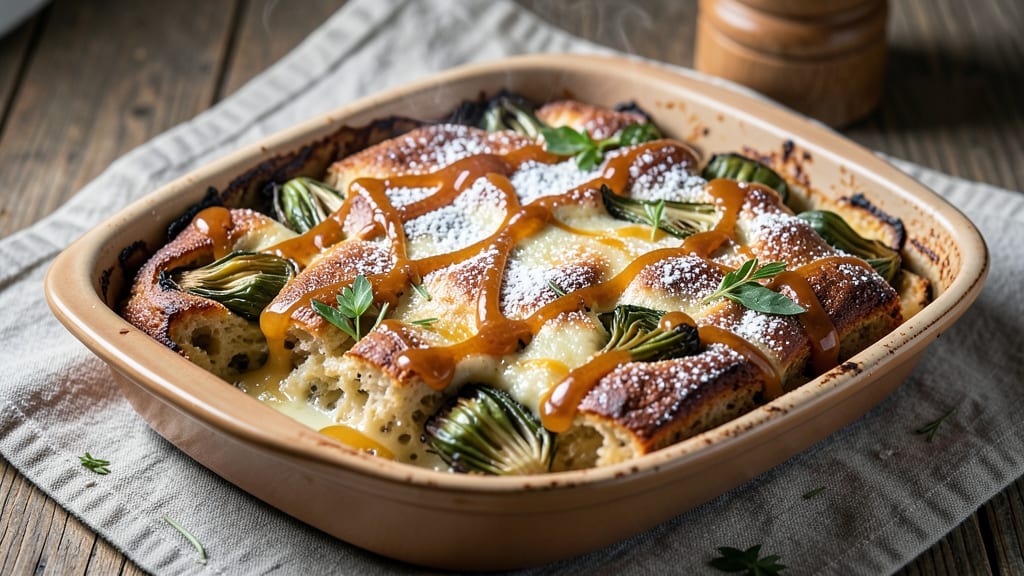
This artichoke bread pudding recipe transforms simple ingredients into savory-sweet bites with a crispy golden top that’s impossible to resist. The secret lies in cubing day-old bread and mixing it with creamy custard, tangy artichokes, and just enough sweetness to balance the briny depth.
I developed this version after years of experimenting with French toast-inspired desserts, and it’s become a showstopper at every holiday table.
The magic happens in the baking—350°F for 40–45 minutes—where the edges turn golden and caramelized while the center stays rich and custardy. A sprinkle of parmesan on top adds a salty contrast, while a drizzle of honey at the end ties everything together.
This isn’t your typical sweet bread pudding; it’s a sophisticated twist that pairs beautifully with roasted meats or as a standalone dessert.
What makes this recipe stand out is its versatility. Swap regular bread for gluten-free or sourdough, use vegan egg substitutes, or top with candied artichokes for extra texture.
The result is a dish that feels indulgent yet balanced—crispy on top, creamy inside, and packed with savory-sweet flavor in every bite. Perfect for impressing guests or treating yourself.
Once you try this artichoke bread pudding, you’ll never go back to the classic version. The artichokes add a unique, slightly bitter contrast that cuts through the richness, while the custard keeps it decadent. Ready to bake? Here’s everything you need to create this showstopping dessert.
Ingredients for artichoke bread pudding
Sixteen ingredients that transform humble bread into a crispy, savory-sweet masterpiece.
| Ingredient | Amount | Notes |
|---|---|---|
| Day-Old French Bread Loaf 🍞 | 1 ½ lb | Cubed into 1.5-inch pieces |
| Large Eggs 🥚 | 6 whole | Room temperature for best mixing |
| Whole Milk 🥛 | 2 cups | Full-fat for creaminess |
| Heavy Cream 🥛 | 1 cup | 35% fat for richness |
| Granulated Sugar 🍚 | ½ cup | Balances artichoke bitterness |
| Melted Unsalted Butter 🧈 | ½ cup | Cooling slightly before using |
| Marinated Artichoke Hearts 🌿 | 14 oz | Chopped into bite-sized pieces |
| Shallots 🧅 | 2 whole | Minced for subtle sweetness |
| Garlic Cloves 🧄 | 3 cloves | Minced for aromatic depth |
| Vanilla Extract 🌸 | 1 tsp | Pure vanilla preferred |
| Salt 🧂 | 1 ½ tsp | Diamond Crystal preferred |
| Ground Black Pepper 🌶️ | ½ tsp | Freshly cracked for warmth |
| Nutritional Yeast 🧀 | ¼ cup | For umami depth (optional) |
| Parmesan Cheese 🧀 | ½ cup | Freshly grated for topping |
| Honey 🍯 | 2 tbsp | For final drizzle |
The bread is non-negotiable—day-old French loaf with a crusty exterior creates that perfect crispy top. Whole Foods or local bakeries have the best options, but any crusty bread works. Chop the bread into 1.5-inch cubes—smaller pieces toast faster, but bigger ones give better texture contrast. Artichokes? Marinated hearts from Trader Joe's are my go-to—they're prepped and packed with flavor. If using canned artichokes, drain and rinse well to cut bitterness. The Parmesan should be real Parmigiano-Reggiano—none of that pre-grated stuff that tastes like sawdust.
No French bread? Sourdough or gluten-free bread works beautifully—just soak longer. Substituting milk? Full-fat coconut milk adds richness, though the texture will differ slightly. Short on artichokes? Sun-dried tomatoes or roasted red peppers bring similar depth. The vanilla extract can be swapped for 1 tsp vanilla bean paste if you're feeling fancy. For extra crispiness, toss the bread cubes with 1 tbsp cornstarch before baking. And if you're avoiding dairy, coconut cream replaces the heavy cream perfectly.
Prep ahead: Mix the custard and let it sit for 30 minutes before adding bread—this ensures even soaking. Assemble the pudding in a 9x13-inch baking dish for best browning. The key to that perfect crispy top? Broiling for 2 minutes at the end. Store leftovers covered at room temperature for 2 days or refrigerated for 4 days. Reheat in a 350°F oven for 10 minutes—the edges crisp right up. Freezes beautifully for 2 months if wrapped tightly in foil.
Why You'll Love This Recipe
- No Chopping Needed: I swear by this trick—just tear that stale French bread into chunks. No knife skills required, no crumbs everywhere. The crusty edges soak up the custard perfectly, and honestly? It’s the easiest way to use up day-old loaves without a second thought.
- Creamy Artichoke Magic: That jarred artichoke hearts (yes, the ones in water) bring a briny, tender bite that cuts through the richness of the custard. The heavy cream and milk make it silky, but the artichokes keep it from being too sweet—like a hug in dessert form.
- Weeknight Wonder: This is my go-to when I need something impressive but can’t be bothered. Bake it while you prep dinner, or serve it warm with ice cream for a lazy Sunday. The best part? It’s ready in under an hour, and the leftovers reheat like a dream.
- Budget-Friendly Luxury: Between us, artichoke bread pudding feels fancy but costs next to nothing. A loaf of French bread, a few eggs, and a can of artichokes stretch to feed four for less than takeout. Plus, the leftovers? Even better the next day—crispier edges, richer flavor. My wallet and taste buds thank me.
Step-by-step instructions for artichoke bread pudding
Here's how to transform simple ingredients into a golden, crisp-topped masterpiece.
Prepare the Artichoke-Shallot Mixture
Drain and thoroughly pat dry the 14 oz marinated artichoke hearts, then chop them into bite-sized pieces. In a small skillet, melt 2 tablespoons of the melted unsalted butter over medium heat. Add the 2 whole minced shallots and 3 cloves minced garlic, cooking for 3-4 minutes until softened and fragrant but not browned.
Transfer the shallot mixture to a bowl and stir in the chopped artichoke hearts. Add 1.5 teaspoons salt, 0.5 teaspoon ground black pepper, and 0.25 cup nutritional yeast. Let this mixture cool completely before using—this ensures the bread absorbs the flavors evenly without steaming.
Assemble the Bread Pudding
Preheat your oven to 350°F. In a large bowl, whisk together the 6 whole large eggs, 2 cups whole milk, 1 cup heavy cream, 0.5 cup granulated sugar, 1 teaspoon vanilla extract, and the remaining 0.3 tablespoons melted unsalted butter. The mixture should be smooth but slightly thick.
Gently fold in the 1.5 lb day-old French bread loaf (cubed into 1.5-inch pieces) and the artichoke-shallot mixture. Be careful not to overmix—just combine until the bread is evenly moistened. Transfer the mixture to a 9x13-inch baking dish, pressing down lightly to ensure even distribution. Let it rest at room temperature for 15 minutes to allow the bread to absorb the custard.
Bake Until Golden and Set
Bake the bread pudding for 50-55 minutes until the edges are golden brown and the center is just set—it should still have a slight wobble when gently shaken. If the top browns too quickly, loosely tent it with aluminum foil after 30 minutes to prevent over-browning while the center finishes cooking.
To test for doneness, insert a toothpick into the center. It should come out with a few moist crumbs, not wet batter. The pudding will continue setting as it cools, so don't overbake. Remove from the oven and let it rest for 10 minutes before serving—this resting period ensures a clean slice and prevents crumbling.
Finish with Parmesan and Honey Drizzle
While the pudding rests, sprinkle 0.5 cup freshly grated Parmesan cheese evenly over the top. Return it to the oven for 2-3 minutes on broil until the cheese is lightly golden and bubbly. Watch closely to avoid burning.
Drizzle the warm pudding with 2 tablespoons honey in a zigzag pattern just before serving. The honey adds a beautiful contrast to the savory artichoke and creates a stunning presentation. Serve immediately while the top is still crisp and the center remains custardy.
Pro Tips For Making Artichoke Bread Pudding
- SOAK THE BREAD JUST RIGHT: Cut the French loaf into 1-inch cubes—no smaller, or they’ll turn to mush—and toss them in a bowl with the milk and heavy cream. Let them sit for 10 minutes max, then drain most of the liquid (you’ll add eggs later). Over-soaking makes the pudding gummy; under-soaking means dry bites. I learned this the hard way when my first batch came out like a sad sponge.
- USE ROOM-TEMP EGGS: Cold eggs from the fridge won’t mix smoothly and can curdle the cream. Take them out 30 minutes before you start—yes, even if you’re impatient like me. Cold eggs also take longer to cook through, leaving you with a slightly raw center. Trust me, the extra wait makes the custard silkier.
- WATCH THE SUGAR BALANCE: Skip the urge to drown this in sugar. Start with ½ cup granulated and taste the custard before baking—artichokes are naturally sweet, and too much sugar masks their flavor. If you’re using jarred artichokes packed in water, drain them thoroughly first; the brine adds saltiness that’ll fight the sweetness.
- BAKE UNTIL GOLDEN, NOT JUST SET: The bread pudding looks done at 350°F for 30 minutes, but pull it out when the top is deep golden brown—that’s when the custard sets properly. If it’s pale, it’ll be wet in the middle. For extra insurance, let it rest 5 minutes before serving; the center firms up as it cools. (Your future self will thank you.)
Flavor customization for artichoke bread pudding
Sweet-Savory Balance
Adjust the sugar to artichoke ratio based on your taste. For a more savory profile, reduce sugar to ¼ cup and add ½ tsp smoked paprika to the custard. For sweeter bites, increase sugar to ⅔ cup and fold in 2 tbsp apricot jam with the artichokes.
I love balancing the briny artichokes with just enough sweetness to make every bite satisfying. 🌿
Cheese Variations
Swap the Parmesan for Pecorino Romano for a sharper bite or Asiago cheese for nutty depth. For a vegan option, use nutritional yeast (already in ingredients) plus ½ cup vegan Parmesan (like Follow Your Heart brand) on top. The melted cheese adds that irresistible crispy crust—don’t skip it! 🧀
Herb and Spice Twists
Infuse the custard with 1 tsp lemon zest for brightness or ½ tsp cinnamon for warmth. For extra depth, fold in 2 tbsp chopped fresh thyme with the artichokes. If you love spicy, add ¼ tsp cayenne to the custard—trust me, it cuts through the richness beautifully. 🌶️
Texture Enhancers
For a crunchy top, sprinkle ½ cup crushed pistachios or toasted breadcrumbs before baking. Add creamy layers by folding in ½ cup ricotta cheese with the custard. I also love a gooey finish—drizzle 2 tbsp balsamic glaze over the honey for tangy contrast. 💫
Seasonal Swaps
In spring, use asparagus instead of artichokes—roast them first for sweetness. For fall, add roasted butternut squash and sage to the custard. Winter calls for cranberries mixed into the artichokes for tartness. Each season brings a fresh twist to this classic dessert. ❄️
Dietary Adaptations
Make it gluten-free with gluten-free bread (like Canyon Bakehouse) and gluten-free flour in the custard. For vegan, replace eggs with 6 tbsp aquafaba (whisked stiff) and use coconut milk instead of dairy. Keto-friendly? Skip the bread and use cauliflower rice soaked in the custard.
Every adaptation keeps the magic alive! 💪
Nutrition facts
Frequently asked questions
Can I use canned artichoke hearts instead of marinated ones?
Yes, but you'll need to drain and rinse them thoroughly to remove excess sodium and bitterness. For best flavor, pat them completely dry before chopping. If they taste too salty, soak them in cold water for 10 minutes and drain well before using. Marinated artichokes already have the perfect balance of flavor and moisture.
How do I make this recipe gluten-free?
Swap the French bread for a gluten-free crusty bread like Canyon Bakehouse or Schär, and use gluten-free flour to thicken the custard if needed. For extra crispiness, toss the bread cubes with 1 tablespoon cornstarch before baking. The texture will be slightly different but still delicious!
Why did my bread pudding turn out gummy instead of creamy? Overmixing the custard or underbaking are the most common causes.
Can I make this ahead of time?
Assemble the pudding in the baking dish up to 24 hours ahead and refrigerate. When ready to bake, add 10 minutes to your baking time (cover loosely with foil if needed). For best results, bake it fresh for maximum crispiness, but reheating works well for gatherings. Store leftovers covered at room temperature for 2 days or refrigerated for 4 days.
What's the best way to reheat leftovers?
For a crispy top, cover the pudding with foil and warm at 350°F for 10-15 minutes. Remove foil for the last 2 minutes to crisp the edges. For individual portions, microwave for 30-45 seconds covered, then broil for 1-2 minutes to restore crispiness. Avoid microwaving uncovered—it dries out the bread.