
Main Courses
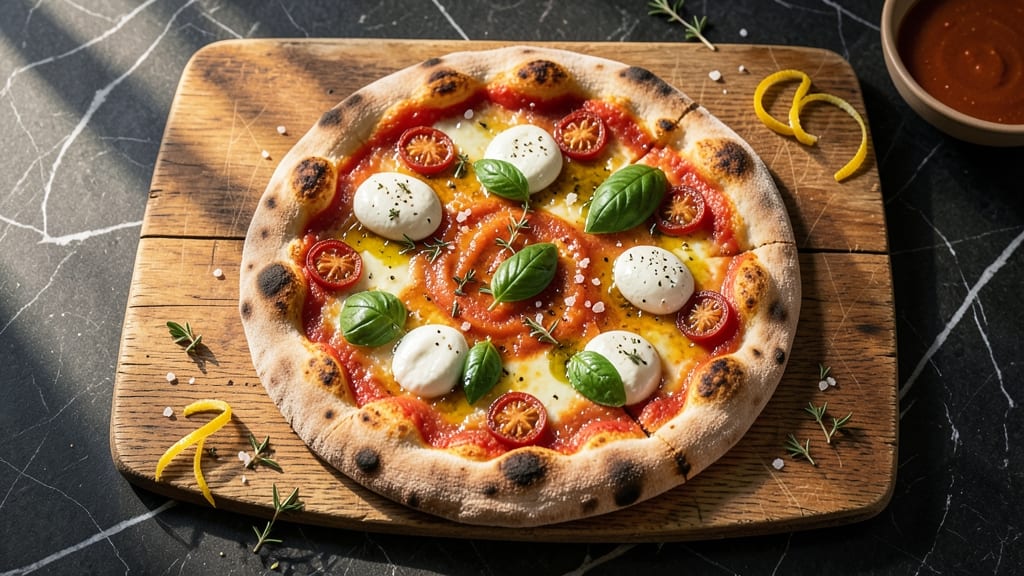
This artisan flatbread pizza recipe transforms simple ingredients into a restaurant-quality dish with a perfectly crisp yet chewy crust and stretchy, airy base. The secret lies in a long fermentation process that develops deep flavor and ideal texture—no yeast needed.
I've perfected this technique after years of experimenting with different dough ratios and baking methods.
What sets this recipe apart is the combination of high-heat baking and precise dough handling. You'll work with a minimal-ingredient dough that's easy to shape but complex in flavor, thanks to a blend of all-purpose and bread flour.
The toppings get their moment in a hot oven, creating that signature wood-fired crisp while keeping the interior tender and chewy.
By the time you pull this pizza from the oven, you'll have golden-brown edges with those coveted char marks, a stretchy yet sturdy base that holds toppings perfectly, and aromas that fill your kitchen like a pizzeria.
The crust maintains its structure even when loaded with toppings, ensuring every bite delivers that satisfying combination of textures and flavors.
This recipe works equally well for classic Margherita or loaded gourmet pies—just adjust your toppings while keeping the dough and baking method consistent. The same technique applies whether you're making individual flatbreads or a large family-style pizza. Let's create something truly special with this artisan approach.
Ingredients for artisan flatbread pizza
High-quality flour blends and precise fermentation create a restaurant-worthy pizza crust with wood-fired texture.
| Ingredient | Amount | Notes |
|---|---|---|
| All-Purpose Flour 🌾 | 2 cups | High-protein preferred for chewiness |
| Bread Flour 🌾 | 1 cup | For enhanced gluten development |
| Active Dry Yeast 🍞 | ¼ tsp | Instant yeast works too |
| Granulated Sugar 🍚 | 1 tbsp | Feeds yeast for fermentation |
| Fine Sea Salt 🧂 | 1 ½ tsp | Diamond Crystal preferred |
| Extra-Virgin Olive Oil 🫒 | ½ cup | High-quality for flavor |
| Warm Water 💧 | 1 ¼ cups | 105°F for optimal yeast activation |
| San Marzano Tomato Sauce 🍅 | 1 ½ cups | High-quality canned tomatoes |
| Fresh Mozzarella Cheese 🧀 | 8 oz | Low-moisture if unavailable |
| Fresh Basil Leaves 🌿 | ¼ cup | Chopped for garnish |
| Garlic Cloves 🧄 | 3 cloves | Minced for sauce |
| Freshly Ground Black Pepper 🌶️ | ½ tsp | For finishing |
| Cornmeal 🌽 | ¼ cup | For dusting pizza peel |
The flour ratio is critical here—bread flour boosts gluten development for that signature chewy texture, while all-purpose flour ensures manageability. King Arthur or Cape Cod brands deliver consistent results. For yeast, Saf-Instant eliminates activation time, but traditional active dry yeast works if given the full 10 minutes to proof. The San Marzano tomatoes are non-negotiable for authentic sweetness— Rao's or Mutti are reliable alternatives. I always measure flour by weight for precision, but if using volume, spoon it gently into the cup and level off to avoid compaction. The extra-virgin olive oil should have noticeable peppery notes; California Olive Ranch or Colavita are excellent choices for this application.
No bread flour? Add 1 tbsp vital wheat gluten per cup all-purpose flour to mimic the protein structure. Yeast too old? Test it first—drop a packet in warm water; if it foams within 10 minutes, it's active. For the tomato sauce, fresh tomatoes blended with olive oil and garlic work beautifully if you prefer homemade. Fresh mozzarella is ideal, but low-moisture shredded (like Sargento or Kraft) prevents a soggy crust. The cornmeal acts as a non-stick barrier—Bob's Red Mill is my go-to brand. Want extra flavor? Add 1 tsp dried oregano or red pepper flakes to the sauce. The dough can handle up to 2 cups of mixed toppings without compromising structure, so feel free to customize with caramelized onions, roasted peppers, or prosciutto if desired.
The dough ferments best at room temperature (70-75°F) for 8-12 hours—longer fermentation enhances flavor but requires more space. Store unused dough in an airtight container in the fridge for up to 3 days, letting it come to room temp before shaping. San Marzano tomatoes keep for 12-18 months unopened; once opened, transfer to the fridge and use within 5-7 days. Fresh basil lasts 5-7 days wrapped in damp paper towels, while mozzarella should be used within 3 days of purchase. For convenience, pre-portion sauce and cheese in small containers—this pizza recipe scales perfectly for individual flatbreads (6-inch) or a 14-inch family pie by adjusting dough quantity proportionally.
Why You'll Love This Recipe
- No-Knead Magic: I swear by that yeast-sugar combo—just mix, let it rise overnight, and boom. The dough stretches like butter, no punishing kneading required.
- Crispy-Cheesy Perfection: That bread flour blend gives it a chewy center with a blistering crust, while the fine sea salt makes every bite taste like a Neapolitan chef’s secret.
- Weeknight Crowd-Pleaser: Serve it as a quick dinner, pack slices for lunch, or freeze half for lazy days. My kids beg for it after school—no fuss, just flavor.
- Budget-Friendly Flex: Five ingredients, endless toppings. I’ve made it with leftover marinara, random veggies, or just cheese—always hits the spot without breaking the bank.
Step-by-step instructions for artisan flatbread pizza
Master this dough technique and you'll achieve that perfect wood-fired texture—crispy edges with a chewy, stretchy center.
Create the Dough and Ferment for Maximum Flavor
In a large mixing bowl, combine the 2 cups all-purpose flour and 1 cup bread flour with the 0.25 tsp active dry yeast, 1 tbsp granulated sugar, and 1.5 tsp fine sea salt. Mix just until the dry ingredients are evenly distributed—you should still see flour streaks. This prevents overdevelopment of gluten at this stage.
Make a well in the center and slowly pour in the 0.5 cup extra-virgin olive oil while mixing with a wooden spoon. Gradually add the 1.25 cups warm water (about 105°F) and continue mixing until a shaggy dough forms. The dough should be slightly sticky but manageable. Transfer it to a lightly oiled surface and knead for 8-10 minutes until smooth and elastic.
Place the dough in a lightly oiled bowl, cover with a damp towel, and let it rise at room temperature for 1-2 hours or until it has doubled in size. The dough should feel light and springy when pressed gently. This fermentation step develops flavor and improves texture—don't skip it.
Shape and Rest the Dough for Perfect Texture
Turn the risen dough onto a lightly floured surface and divide it into 4 equal portions (about 6 oz each). Using your hands, gently press and stretch each portion into a 12-inch round, keeping the edges slightly thicker than the center. This creates the signature flatbread shape with crispy edges and a soft center.
Place the shaped dough rounds on a floured surface, cover with a damp towel, and let them rest for 30 minutes. This resting period relaxes the gluten structure, making the dough easier to handle and preventing it from shrinking during cooking. The dough should feel slightly softer and more pliable after resting.
Preheat and Prepare the Cooking Surface
Preheat your oven to its highest setting, ideally 500°F or higher—this mimics wood-fired conditions. Place a pizza stone or baking sheet directly on the oven rack for at least 30 minutes to ensure it's fully heated. While the oven preheats, sprinkle 0.25 cup cornmeal evenly on a pizza peel or baking sheet. This prevents sticking and adds a subtle crunch.
Lightly brush the shaped dough rounds with a thin layer of extra-virgin olive oil on both sides. This step is crucial—it creates a golden-brown crust and enhances flavor. If using a pizza peel, dust it generously with cornmeal before sliding the dough onto it. For a baking sheet, ensure it's well-oiled or lined with parchment paper.
Assemble and Bake for Wood-Fired Crisp
Spread 0.5 cup San Marzano tomato sauce evenly over each dough round, leaving a ½-inch border for the crust. Tear the 8 oz fresh mozzarella cheese into small, uneven pieces and scatter them over the sauce. This creates pockets of melted cheese for that gooey texture. Sprinkle with 0.25 cup chopped fresh basil leaves and 0.5 tsp freshly ground black pepper.
Transfer the assembled pizzas to the preheated oven and bake for 10-12 minutes until the crust is deep golden brown and the cheese is bubbling. The edges should be crispy, while the center remains slightly soft and chewy. Rotate the pizzas halfway through baking for even cooking if needed.
Finish with Garlic and Serve Immediately
Remove the pizzas from the oven and let them rest for 2 minutes. While they rest, mince the 3 cloves garlic cloves and rub them lightly over the surface of each pizza. This adds a subtle garlic aroma that complements the flavors. Garnish with additional chopped fresh basil leaves if desired.
Slice each pizza into 8 wedges and serve immediately while the crust is still crisp and the cheese is melty. The combination of crispy edges, chewy center, and flavorful toppings makes every bite satisfying. For best results, serve directly from the baking sheet or stone to maintain texture.
Pro Tips For Making Artisan Flatbread Pizza
- Use Bread Flour Only: I learned this the hard way—mixing all-purpose and bread flour weakens the dough’s structure. If you’re making a true flatbread pizza, skip the all-purpose entirely. The extra gluten in 100% bread flour gives you that chewy, professional bite without overworking the dough.
- Stretch, Don’t Roll: No matter how tempted you are, resist the rolling pin. Wet your hands, grab the dough from the center, and stretch it outward with your fingertips—this builds tension and prevents tearing. If it resists, let it rest 10 minutes longer; forcing it too soon is how you end up with sad, uneven edges.
- Salt the Dough Twice: I used to only salt the dough once, and the crust always tasted flat. Add half the salt to the flour before mixing, then sprinkle the remaining over the stretched dough just before baking. The second hit of salt caramelizes on the crust while the yeast still works its magic.
- Preheat Stone and Oven: A cold stone won’t crisp your pizza—it’ll just steam it. Place your baking stone (or steel) in the oven while it’s preheating, then crank the heat to 500°F (260°C) for 30 minutes. If you’re in a hurry, use a cast-iron skillet on the stovetop instead; it’ll still give you that perfect char.
Regional styles of this recipe
Neapolitan Style
This traditional Italian approach focuses on simplicity and high heat. Use only 00 flour (or substitute with King Arthur Bread Flour) for that signature tender yet airy crust. Shape the dough into a 12-inch round with edges slightly thicker than the center—this creates that iconic puffed-up rim.
Bake in a 900°F oven for just 60-90 seconds using a pizza steel or cast iron skillet. The key is speed—this mimics authentic Neapolitan wood-fired ovens. Top with San Marzano tomato sauce, fior di latte cheese, fresh basil, and a drizzle of extra-virgin olive oil after baking. 🍕
New York Style
For a larger, foldable flatbread, shape the dough into a 14-inch round with a thick, sturdy crust—about ¼-inch thick at the edges. Bake on a preheated pizza stone at 475°F for 12-15 minutes until the crust is golden and slightly charred.
Load it up with classic toppings like pepperoni, mushrooms, and low-moisture mozzarella to prevent a soggy base. The secret here is a longer bake time to crisp the thick crust properly. Fold slices in half for that signature New York style—perfect for handheld eating. 🍕
California Style
This West Coast variation embraces bold flavors and creative toppings. Use the same dough but experiment with goat cheese, caramelized onions, fig jam, or balsamic glaze for sweet-savory combinations.
Bake at 450°F for 10-12 minutes on a pizza stone, then finish with arugula and a drizzle of truffle oil. The California style thrives on unexpected pairings—try smoked salmon with cream cheese and capers for a brunch twist. 🌶️
Roman Style
Roman-style pizza features a rectangular shape with a crispy, almost cracker-like crust. Roll the dough into a 10x14-inch rectangle and bake on a pizza peel dusted with semolina flour at 500°F for 8-10 minutes.
Top with ricotta cheese, cured meats like prosciutto, and fresh Romanesco broccoli for an authentic Roman touch. The rectangular shape makes it easy to slice into squares—perfect for sharing. This style is all about contrast: crispy crust with creamy ricotta and fresh veggies. 🗺️
Chicago Deep Dish
While not a flatbread, you can adapt this recipe for a thick-crust deep-dish style by pressing the dough into a 9-inch round pan (about 1-inch thick). Bake at 425°F for 20-25 minutes), then layer with tomato sauce, mozzarella, and sausage on top.
The dough should be buttery and sturdy enough to hold the filling. Serve with a side of parmesan cheese for sprinkling—this style is all about hearty, filling slices. 🍴
Middle Eastern Taboon
For a global twist, shape the dough into small, individual flatbreads (6-inch rounds) and bake on a taboon clay oven (or a preheated cast iron skillet at 500°F for 3-4 minutes).
Top with za'atar seasoning, feta cheese, and roasted eggplant—this Middle Eastern-inspired version skips tomato sauce entirely. The high heat creates a crispy, blistered crust perfect for scooping up hummus or baba ganoush. 🌿
Nutrition facts
Frequently asked questions
Can I make this flatbread pizza without yeast?
Yes! This recipe actually works beautifully without yeast by using a longer fermentation time with the small amount included. The dough relies on natural gluten development rather than yeast for rise. For a completely yeast-free version, replace the yeast with 1 tbsp baking powder and reduce the water slightly to maintain the same texture. The crust will be slightly different but still achieve that crispy-chewy combination.
How do I prevent the crust from getting soggy with all these toppings?
Prevent soggy crust by following these key steps:
- Use low-moisture mozzarella if fresh isn't available,
- Pat all veggie toppings completely dry, and
- Bake on a preheated pizza stone or steel for maximum heat transfer. The ½-inch border of sauce-free crust also acts as a protective barrier. For extra insurance, sprinkle a thin layer of grated parmesan between the sauce and cheese.
What's the best way to reheat leftover flatbread pizza?
Reheat in a 400°F oven for 5-7 minutes on a pizza stone or baking sheet to restore crispiness. For microwave reheating, cover with a damp paper towel and heat for 20-30 seconds—this prevents drying. The key is high heat and minimal time to avoid rubbery crust. Store leftovers in an airtight container at room temperature for up to 2 days or freeze for 3 months.
Can I use this dough for other flatbread recipes besides pizza?
This versatile dough works perfectly for focaccia, garlic bread, or even naan-style flatbreads. For focaccia, shape into a rectangle, dimple with your fingers, and bake with olive oil and herbs. For naan, add 1 tbsp yogurt to the dough and cook in a hot skillet with ghee. The same fermentation process creates great flavor in all applications—just adjust the baking method to match your desired texture.
Why does my dough keep sticking to everything?
Sticky dough usually means one of three things: too much water, insufficient kneading, or not enough flour on surfaces. First, check your water measurement—it should be 1.25 cups for this recipe. If the dough feels too wet, add 1 tbsp flour at a time. Always keep your work surface and tools lightly floured, and use a dough scraper to help lift and turn the dough without sticking. The dough should be slightly tacky but not wet when properly hydrated.