
Side Dishes
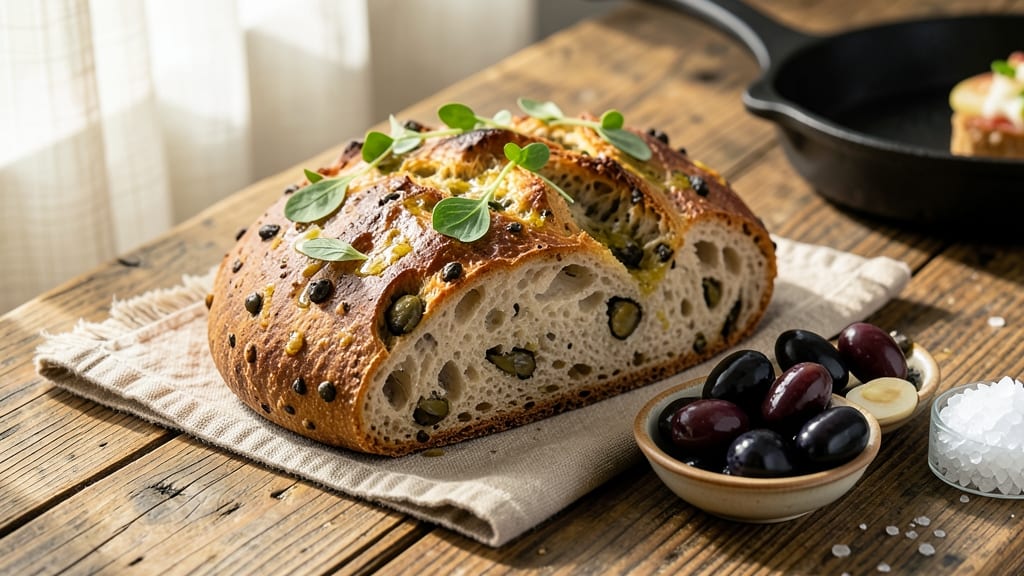
This artisan olive bread recipe transforms your kitchen into a Mediterranean bakery with its tangy depth and herb-infused crust. 💛 The secret lies in blending high-quality olives into the dough, creating a bread that's both rustic and refined—perfect for pairing with soups, charcuterie, or enjoying on its own.
Traditional wood-fired techniques are adapted for home ovens, ensuring that every slice delivers that signature crackly crust and briny, aromatic interior.
The process begins with a simple yet foolproof dough that incorporates finely chopped olives and fresh herbs, allowing their flavors to meld into the bread itself.
Kneading develops the gluten for a light, airy crumb, while proofing at room temperature (or overnight in the fridge for enhanced flavor) ensures optimal rise.
The shaping is where the magic happens—rolling the dough into a classic round loaf or free-form boule, then scoring with a sharp razor for that authentic bakery finish.
Baked to a golden brown, this bread emerges from the oven with a crisp exterior that gives way to tender, slightly chewy layers. The olives are distributed evenly, offering bursts of briny flavor in every bite, while the herbs add a fragrant complexity.
Whether served warm with olive oil or toasted the next day, it's a bread that commands attention and leaves a lasting impression.
This recipe scales beautifully for gatherings or meal prep, and the dough can be shaped into individual boules for a rustic presentation. The versatility of artisan olive bread makes it a staple for any kitchen—equally at home on a weekend brunch table or as a centerpiece for a Mediterranean feast.
Ingredients for artisan olive bread
These Mediterranean-inspired ingredients create a rustic bread with briny olives and aromatic herbs.
| Ingredient | Amount | Notes |
|---|---|---|
| All-Purpose Flour 🌾 | 4 cups | Unbleached preferred for flavor |
| Extra-Virgin Olive Oil 🫒 | ½ cup | High-quality, fruity variety |
| Warm Water 💧 | 1 ¼ cups | 110°F for optimal activation |
| Active Dry Yeast 🍞 | 2 tsp | Ensure yeast is fresh |
| Fine Sea Salt 🧂 | 1 ½ tsp | Diamond Crystal preferred |
| Green Olives 🫒 | ½ cup | Pitted, finely chopped |
| Kalata Olives 🫒 | ¼ cup | Pitted, finely chopped |
| Fresh Rosemary 🌿 | 1 tbsp | Finely chopped leaves |
| Fresh Thyme 🌿 | 1 tbsp | Finely chopped leaves |
| Garlic Cloves 🧄 | 2 cloves | Minced for infusion |
| Honey 🍯 | 1 tbsp | For subtle sweetness |
| Cornmeal 🌽 | ¼ cup | For dusting work surface |
| Sesame Seeds 🌱 | 1 tbsp | Optional for garnish |
The olives are the heart of this recipe—Kalata and green olives together deliver that signature Mediterranean brininess. For the best flavor, buy pitted olives from a specialty store like Whole Foods or Trader Joe's, where they're typically fresher than the jarred supermarket versions. Chop them finely so they're evenly distributed throughout the dough without overpowering. Fresh herbs like rosemary and thyme elevate the flavor profile, so pick them up from the grocery store's produce section—they should smell vibrant and fresh, not wilted. The extra-virgin olive oil matters too; look for a fruity, peppery variety like Colavita or Bertolli for that authentic taste.
No Kalata olives? Substitute with more green olives or even black olives—just adjust the amount to maintain balance. Running low on fresh herbs? Dried rosemary at one-third the amount works in a pinch, though fresh is ideal. The honey adds subtle sweetness that balances the saltiness; if you prefer a vegan option, agave syrup works perfectly. For the yeast, always check the expiration date—expired yeast won't activate, and you'll end up with flat bread. If your kitchen is cold, warm the water to 110°F to ensure the yeast wakes up properly. The cornmeal is key for dusting the work surface and preventing sticking during shaping.
This dough is best used within 24 hours for optimal flavor, but you can refrigerate it for up to 48 hours if needed. Once baked, store the bread in a paper bag at room temperature for up to 3 days—it reheats beautifully in a 350°F oven for 10 minutes. For longer storage, freeze slices wrapped in parchment paper for up to 3 months. The sesame seeds, if used, should be toasted lightly in a dry pan before sprinkling for extra crunch. This bread pairs wonderfully with soups, cheeses, or simply slathered with more olive oil.
Why You'll Love This Recipe
- Pantry Staples Only: I swear by this recipe because it uses what’s already in my cupboard—no fancy flour blends or specialty ingredients. Just flour, olive oil, water, yeast, and salt. That’s it. No last-minute grocery runs, no stress.
- Rich Olive Oil Magic: The moment that warm, fragrant olive oil hits the dough—it transforms everything. That deep, fruity flavor soaks into every bite, making even a simple slice taste like you slaved over it. Honestly, the crust alone is worth the effort.
- Weeknight Hero: This bread is my go-to when I’m too tired to think. Toss the dough together, let it rise while I’m doing dishes, and bake while I eat dinner. By the time it’s done, I’ve got warm, crusty bread with zero extra effort.
- Budget-Friendly Feast: A single batch stretches for days—perfect for toast, sandwiches, or dipping in olive oil and balsamic. Between us, I’ve fed a crowd for under $5 using this recipe. That’s a win in my book.
Step-by-step instructions for artisan olive bread
Here's how to craft a rustic loaf with Mediterranean character and perfect texture.
👨🍳 Step 1: Activate the Yeast and Mix the Dough
In a small bowl, combine the 1.25 cups warm water (about 110°F) with the 1 tbsp honey and 2 tsp active dry yeast. Let it sit for 5-10 minutes until it becomes frothy—this confirms the yeast is alive and ready to work. If it doesn't bubble, your yeast may be old, and you'll need to start over.
In a large bowl, whisk together the 4 cups all-purpose flour and 1.5 tsp fine sea salt. Make a well in the center and pour in the yeast mixture along with the 0.5 cup extra-virgin olive oil. Using a wooden spoon or your hands, mix until a shaggy dough forms. This initial mix should be sticky but manageable.
👨🍳 Step 2: Knead Until Elastic and Smooth
Turn the dough onto a lightly floured surface and knead for 8-10 minutes until it becomes smooth and elastic. You'll know it's ready when it springs back slowly when poked and leaves a clean surface. I press down gently on the dough during the first minute—this prevents it from curling and ensures even contact with the surface.
For best results, I use a bench scraper to divide the dough into quarters, then fold each quarter into the center. This technique develops gluten more efficiently than continuous stretching. If the dough feels too sticky, wet your hands slightly to prevent tearing.
🥘 Step 3: First Rise and Flavor Infusion
Lightly oil a large bowl, place the dough inside, and cover with a damp towel. Let it rise in a warm place for 1-2 hours or until doubled in size. The dough should feel spongy and have puffed noticeably—this indicates proper fermentation. If it rises too quickly, your kitchen is too warm, which can make the bread dense.
While the dough rises, prepare the olive and herb mixture. In a food processor, pulse the 0.5 cup green olives, 0.25 cup kalata olives, 2 cloves minced garlic, 1 tbsp chopped rosemary, and 1 tbsp chopped thyme until finely chopped but not pasty. This will become your flavorful topping.
🔥 Step 4: Shape and Second Rise
Punch down the risen dough to release air, then divide it into 4 equal portions (about 1 cup each). Roll each portion into a 12-inch log shape, tapering slightly at the ends. Place them on a parchment-lined baking sheet, cover, and let rise for 30-45 minutes until puffy. The dough should feel firm but still yield slightly when pressed.
Preheat your oven to 375°F with a baking stone or inverted baking sheet inside. While it heats, sprinkle the work surface with 0.25 cup cornmeal—this prevents sticking and adds a subtle crunch. Transfer the shaped dough to the cornmeal-dusted surface and gently press the olive-herb mixture onto the tops, pressing lightly to adhere.
🔥 Step 5: Bake to Golden Perfection
Carefully transfer the baking sheet to the preheated oven and bake for 25-30 minutes until the bread is deep golden brown and sounds hollow when tapped on the bottom. The interior temperature should reach 190-200°F—this ensures a fully baked crumb without drying out.
Remove from the oven and immediately sprinkle with 1 tbsp sesame seeds for added texture. Let the bread cool on a wire rack for at least 15 minutes before slicing—this allows the crumb to set properly. The crust should be crisp with a subtle char, while the interior remains soft and airy with pockets of olive-infused flavor.
Pro Tips For Making Artisan Olive Bread
- Dissolve Yeast First: Mix the active dry yeast with the warm water and a pinch of sugar (if your recipe calls for it) in a small bowl—before adding it to the flour. This guarantees it’s fully activated and saves you from wondering if it’s still alive when the dough won’t rise. I learned this the hard way after kneading a sluggish, underproofed loaf that tasted flat.
- Use Room-Temp Olive Oil: Cold extra-virgin olive oil straight from the fridge will slow yeast activity and make your dough tougher. Let that bottle sit out for at least 30 minutes before measuring—just enough to coat your fingers when you test the dough’s readiness. Trust me, your crust will thank you.
- Don’t Over-Knead: This dough is forgiving, but after 8-10 minutes of kneading by hand (or 5-6 minutes in a stand mixer with the dough hook), stop. Overworking it develops too much gluten, and your bread turns out dense instead of tender. Test readiness by poking the dough—it should spring back slowly, not bounce like a rubber ball.
- Steam the Pan: Before baking, place a metal tray on the oven rack below your Dutch oven and pour in ½ cup of boiling water. The steam mimics a bakery’s proof box, giving you that crackly crust and soft interior. Skip this, and you’ll end up with a bread that’s dry on the outside and gummy inside—no one wants that.
Creative variations of artisan olive bread
Herb-Infused Variations
Swap the rosemary and thyme for fresh oregano and basil to create a brighter, more floral flavor profile. I've found that 1 tbsp each of finely chopped oregano and basil works beautifully, especially when paired with Kalata olives for a Greek-inspired twist.
For a more robust flavor, add ½ tsp red pepper flakes to the olive mixture—this adds subtle heat that complements the briny olives perfectly. 🌿
Olive Blends
Experiment with different olive varieties to customize the flavor. Black olives add a deeper, richer taste, while Castelvetrano olives (a large, meaty variety) provide a milder, sweeter note.
For a Mediterranean fusion, blend ½ cup green olives with ¼ cup sun-dried tomatoes and 2 tbsp capers—this creates a tangy, umami-packed topping that pairs wonderfully with the dough. Always chop ingredients finely to ensure even distribution.
Cheese-Enhanced Loaves
Add ½ cup crumbled feta or shredded pecorino to the dough for a salty, creamy contrast. I recommend folding the cheese into the dough during the final kneading stage so it melts slightly during baking, creating pockets of gooey goodness.
For a lactose-free option, use nutritional yeast or vegan feta—both add a tangy depth without dairy. Sprinkle extra cheese on top before baking for a golden, bubbly crust. 🧀
Seasonal Twists
In summer, add 1 tbsp lemon zest to the dough and 2 tbsp chopped fresh parsley to the olive mixture for a bright, citrusy loaf. For winter, incorporate 1 tsp ground coriander and ½ tsp cinnamon into the dough—this adds warmth that pairs well with hearty stews.
During holiday seasons, mix in ½ cup dried cranberries or chopped dried apricots for a festive, sweet-savory balance.
Gluten-Free Adaptation
For a gluten-free version, replace the all-purpose flour with a 1:1 gluten-free flour blend (like King Arthur Measure for Measure). Add 1 tbsp xanthan gum to improve elasticity, and increase the olive oil to ⅔ cup to compensate for the reduced gluten structure.
Let the dough rest for an extra 15 minutes after mixing to hydrate fully. The texture will be denser but still delicious—perfect for those with gluten sensitivities. 💪
Free-Form Shapes
Skip the log shapes and create boules, batards, or even a rustic oval for a bakery-style presentation. Dust your work surface with extra cornmeal to prevent sticking, then gently shape the dough by pulling and folding.
For a braided loaf, divide the dough into 3 equal strands, braid them together, and tuck the ends under. Brush the finished loaf with extra-virgin olive oil before baking for a glossy, golden crust. This technique adds visual appeal while keeping the process simple. 🎨
Nutrition facts
Frequently asked questions
Why does my artisan olive bread turn out dense instead of light?
Dense bread usually means the yeast didn't activate properly or the dough didn't rise enough. Always use fresh yeast and warm water (110°F) to activate it. Let the dough rise in a warm spot until it doubles in size—if your kitchen is cold, try placing the bowl near a turned-off oven with the light on for consistent warmth. Over-kneading can also make bread dense, so stop when the dough springs back slowly when poked.
Can I make this olive bread without a food processor?
Simply chop the olives, garlic, and herbs finely by hand using a sharp knife. Pulse them in batches if needed, or use a mortar and pestle for extra texture. The key is to get them finely chopped so they distribute evenly in the dough. For best flavor, use a mix of green and Kalata olives—their different textures add depth.
How do I store leftover artisan olive bread?
Keep it fresh by storing in a paper bag at room temperature for up to 3 days. For longer storage, slice and freeze individual portions wrapped in parchment paper for up to 3 months. To revive, toast slices in a 350°F oven for 5-10 minutes until crispy. Avoid plastic bags—they trap moisture and make the crust soggy.
What's the best way to reheat sliced olive bread?
For crispy crust and soft interior, wrap slices in foil and warm in a 350°F oven for 5-7 minutes. Alternatively, use a toaster or toaster oven for 2-3 minutes at medium heat. For extra flavor, brush slices with olive oil before reheating. Microwaving works in a pinch but can make the crust rubbery.
Can I substitute the olives with something else for a different flavor?
Yes! Try sun-dried tomatoes for a sweet-tangy twist or capers for a briny punch. For a cheesy version, fold ½ cup feta or pecorino into the dough during kneading. If you prefer no olives at all, add 1 tbsp lemon zest or dried herbs to keep the Mediterranean vibe. Always adjust seasoning to taste.