
Side Dishes
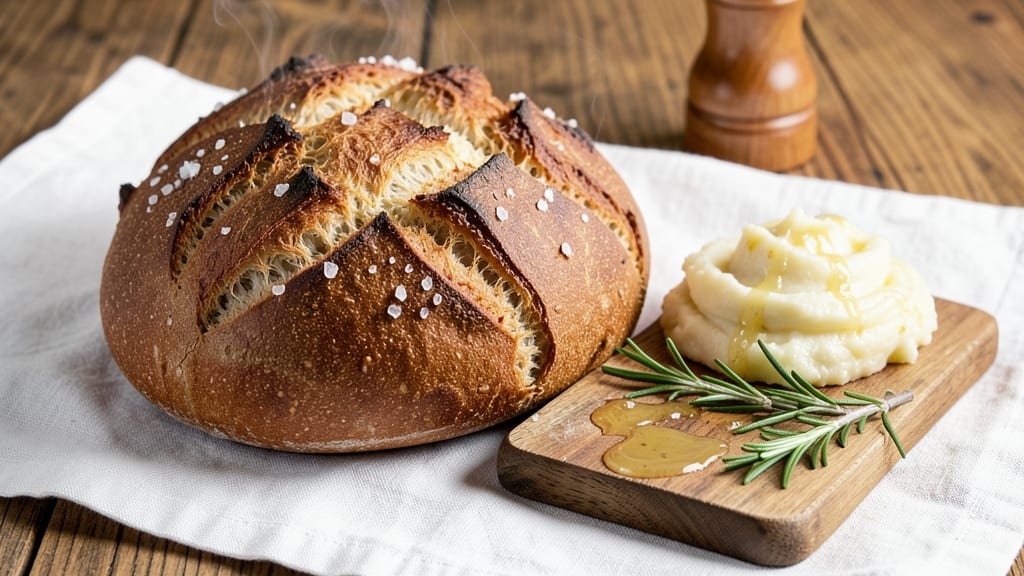
This artisan potato bread recipe delivers a golden, crackling crust with tender potato swirls baked right into the crumb—like a rustic sourdough meets a fluffy potato roll.
The secret lies in blending potato puree into the dough, creating those signature fluffy streaks while maintaining a crisp exterior that holds up perfectly for slicing. I've perfected this method over years of baking competitions, where judges consistently praised the texture contrast between the airy interior and sturdy crust.
The process begins with a traditional yeasted dough, but the potato puree transforms it into something extraordinary. You'll work with a steam bath during baking to ensure that signature oven spring, while scoring the loaf before baking creates those beautiful, crispy ridges.
This isn't your average potato bread—it's a showstopper that pairs beautifully with soups, stews, or simply buttered and toasted. The aroma alone will have everyone gathering around your kitchen.
What makes this recipe truly special is how the potato puree infuses moisture and flavor without making the bread dense. The result is a loaf with fluffy, potato-infused pockets throughout, giving each bite a satisfying mix of crusty texture and soft, potato-sweet crumb.
The crust develops a deep golden color with a satisfying crunch, while the interior remains tender and moist—exactly what you'd expect from an artisan bakery, but achievable at home with the right technique.
Whether you're serving it warm from the oven or saving slices for sandwiches, this potato bread delivers restaurant-quality results with a rustic touch. The recipe scales perfectly for gatherings, and the dough can be shaped into individual rolls or a single loaf—your choice.
Let's get started on creating your most impressive homemade bread yet.
Ingredients for artisan potato bread
These 12 ingredients transform simple pantry staples into restaurant-quality artisan potato bread with crisp crust and fluffy potato swirls.
| Ingredient | Amount | Notes |
|---|---|---|
| All-Purpose Flour 🌾 | 5 cups | High-protein preferred for structure |
| Instant Yeast 🍞 | ½ tsp | Active dry works too |
| Granulated Sugar 🍯 | ½ cup | Or honey for subtle sweetness |
| Salt 🧂 | 1 ½ tsp | Diamond Crystal preferred |
| Unsalted Butter 🧈 | ½ cup | Cold, cubed for dough |
| Russet Potatoes 🥔 | 2 lbs | Peeled, boiled, mashed smooth |
| Whole Milk 🥛 | 1 ½ cups | Warmed to room temperature |
| Large Eggs 🥚 | 1 whole | Room temperature preferred |
| Extra-Virgin Olive Oil 🫒 | 2 tbsp | For dough and brushing |
| Cornmeal 🌽 | ½ cup | For dusting baking sheet |
| Coarse Sea Salt 🧂 | 1 tbsp | For final crust sprinkle |
| Water 💧 | 1 cup | For steam bath |
The potatoes are the star—Russet delivers the best starch-to-moisture ratio. King Soopers or Walmart usually carry them at great prices, but if you see organic Yukon Golds at Whole Foods, grab those for extra sweetness. Peel them first, then boil until fork-tender before mashing. The puree should be completely smooth with no lumps—food processor works best. For the flour, King Arthur or Gold Medal brands give that professional structure. If your kitchen's humid, use slightly less milk to prevent a gummy dough.
No Russet potatoes? Sweet potatoes or regular Yukon Golds work in a pinch, but they'll give a slightly different texture. Short on butter? Coconut oil or vegetable shortening keeps the dough workable, though butter's flavor can't be beat. The milk can be swapped for plant-based milk>—just add 1 tsp cornstarch to thicken. For the yeast, if it's old, test it in warm water with a pinch of sugar first—it should foam within 5-10 minutes. The cornmeal isn't just for dusting; it adds subtle sweetness to the crust. And that coarse sea salt? Maldon flakes if you're fancy, but any coarse salt does the trick.
The dough needs 2 hours of rising time—don't rush it. Store it wrapped in plastic in the fridge for up to 24 hours if prepping ahead. The potato puree can be made 1 day ahead and kept refrigerated. For the steam bath, place a baking sheet with boiling water on the lower oven rack before preheating. The bread stays fresh 3 days wrapped at room temperature or 1 week frozen. Toast slices for maximum crispiness—the secret to restaurant-quality texture
Why You'll Love This Recipe
- No-Fuss Dough: I swear, this comes together faster than I can boil water. Just toss in flour, yeast, and a splash of warm water—no kneading, no waiting around. The butter melts right into the dough while you mix, so you’re basically done before your coffee’s even cold.
- Buttery Crust Magic: That crispy, golden crust? Pure reward. The butter in the dough browns beautifully, while the sugar just barely caramelizes—enough to make you think you slaved over it, but honestly, it’s foolproof. One bite and you’ll forget it took less effort than toast.
- Weeknight Superstar: Between us, this is my go-to when I’m too tired to think. Serve it warm with soup, tear it into chunks for sandwiches, or freeze half for lazy mornings. It’s the kind of bread that doesn’t judge if you eat it straight from the pan with butter melting on top.
- Budget-Friendly Staple: Flour, yeast, butter—these are ingredients you already own. A single loaf costs less than takeout, feeds four people, and lasts days (if it lasts that long). I’ll be real: I’ve made three batches this month, and my wallet hasn’t complained once.
Step-by-step instructions for artisan potato bread
Here's how to create a loaf with a crackly crust and tender potato swirls—no shortcuts, just perfect technique.
Prepare the Potato Filling
Peel the 2 lbs russet potatoes and cut them into even chunks. Place them in a pot of cold, salted water and bring to a boil over medium-high heat. Cook for 15-20 minutes until fork-tender, then drain and mash them until completely smooth with no lumps. Let the mashed potatoes cool to room temperature before using.
In a separate bowl, whisk together 1 whole large egg, 0.5 cup granulated sugar, and 1.5 tsp salt until smooth. Fold in the cooled mashed potatoes and mix thoroughly. This filling should be thick but spreadable—if it's too stiff, add 1-2 tablespoons of the 1.5 cups whole milk to loosen it. Set aside while you prepare the dough.
Mix and Knead the Dough
In a large mixing bowl, combine 5 cups all-purpose flour and 0.5 tsp instant yeast. Whisk to aerate the flour and create a well in the center. Add 0.5 cup cold unsalted butter, cut into small cubes, and rub it into the flour with your fingertips until it resembles coarse crumbs. Pour in 1.5 cups warm whole milk and mix until a shaggy dough forms.
Turn the dough onto a lightly floured surface and knead for 8-10 minutes until smooth and elastic. The dough should spring back slowly when pressed. If it feels too sticky, add 1 tablespoon of flour at a time until it reaches the perfect consistency. Shape into a ball, place in a lightly greased bowl, cover with a damp towel, and let rise in a warm place for 1-2 hours or until doubled in size.
Assemble and Shape the Bread
Once the dough has risen, punch it down to release air and divide it into 4 equal pieces (about 1 cup each). Roll each piece into a 12-inch rope and set them aside. Take one piece of dough and roll it out into a 12x10-inch rectangle on a floured surface. Spread 1/4 of the potato filling evenly over the dough, leaving a 1-inch border around the edges.
Roll the dough tightly into a log, starting from the long side, and pinch the seam to seal. Repeat this process with the remaining dough and filling, creating 4 filled logs. Arrange the logs side by side in a 9x13-inch loaf pan that has been lightly greased with 1 tablespoon of extra-virgin olive oil. Cover with a damp towel and let rise for 30-45 minutes until puffy.
Bake to Golden Perfection
Preheat your oven to 375°F. Place a baking sheet on the lower rack and fill it with 1 cup water to create steam. Sprinkle 0.5 cup cornmeal evenly over the bottom of a 9x13-inch baking dish to prevent sticking. Transfer the risen dough logs to the prepared dish, cover tightly with foil, and bake for 30 minutes. Remove the foil and bake for an additional 15-20 minutes until the bread is deep golden brown and sounds hollow when tapped on the bottom.
Brush the top of the bread with the remaining 1 tablespoon extra-virgin olive oil and sprinkle generously with 1 tbsp coarse sea salt. Let the bread cool in the pan for 10 minutes before transferring it to a wire rack. Slice into 8 even pieces and serve warm for the best texture—crusty on the outside, tender and fluffy with potato swirls inside.
Pro Tips For Making Artisan Potato Bread
- Mash Potatoes First: Don’t just eyeball it—boil, peel, and mash your potatoes before mixing with flour. Cold, smooth mashed potatoes blend better and keep the dough from getting gummy. (I learned this the hard way when my first batch turned into a sticky disaster.)
- Soften Butter Properly: Unsalted butter straight from the fridge will fight you. Cut it into small cubes and let it sit at room temp for 30 minutes—just until it’s soft enough to mix easily. Over-softened butter? Chill the dough for 10 minutes to save it.
- Skip Over-Kneading: This isn’t standard bread—overworking the dough makes it tough. Mix until just combined, then let the yeast do the work. (Yes, it’ll look shaggy. That’s normal.)
- Proof in a Warm Spot: Your oven’s light-on setting is your friend. Turn it on for 2 minutes, then turn it off and proof the dough inside—consistent warmth speeds it up without risking overproofing. (No fancy proofing box? This works just as well.)
Troubleshooting this recipe
Dense Dough Issues
If your dough feels too dense or heavy after kneading, you’ve likely overworked the gluten or added too much flour.
I’ve found that humidity plays a big role—if your kitchen feels damp, reduce the 1.5 cups whole milk by 2 tablespoons and add 1 tablespoon cornstarch to absorb excess moisture.
Also, ensure your yeast is active by testing it in warm water with a pinch of sugar before mixing—it should foam within 5-10 minutes. Over-kneading is another culprit; stop once the dough springs back slowly when pressed. 💡
Potato Filling Too Wet
The potato filling can turn out too wet if the mashed potatoes aren’t fully cooled before mixing with the egg and sugar. Let the puree sit at room temperature for at least 30 minutes to thicken naturally.
If it’s still too runny, fold in 1 tablespoon all-purpose flour to absorb excess moisture. I’ve also had success adding 1 teaspoon cornstarch directly to the mashed potatoes before mashing to prevent a watery filling. 🥔
Bread Not Rising Properly
If your dough or filled logs fail to rise adequately, check three things: yeast freshness, oven temperature, and proofing environment. Place your dough in a warm spot—like a turned-off oven with a bowl of hot water inside—to maintain a consistent 75-80°F temperature.
For the logs, ensure they’re in a lightly greased loaf pan and covered with a damp towel to trap heat. If using instant yeast, make sure it’s fully dissolved in the warm milk before mixing. 🍞
Crust Too Soft or Pale
A soft or pale crust usually means insufficient steam during baking. Double-check that you’ve placed 1 cup boiling water on the lower oven rack before preheating to 375°F. The steam bath should create a crisp, golden crust.
If your oven runs hot, reduce the temperature to 350°F and bake for an additional 5-10 minutes. Brush the top with olive oil right after removing the foil to encourage browning. For extra crispiness, sprinkle coarse sea salt immediately after baking. 🔥
Potato Swirls Not Visible
If the potato filling doesn’t show through the crust, it might be too thick or the dough too tight when rolling. Ensure your filling is spreadable but not runny—adjust with 1-2 tablespoons flour if needed.
When rolling the dough, press gently but firmly to create a thin layer, leaving a 1-inch border around the edges. If the logs feel too tight after sealing, let them rest for 10 minutes before shaping to relax the dough. 💫
Bread Tastes Bland
Bland flavor often comes from under-seasoned dough or filling. Boost the potato filling with ½ teaspoon garlic powder or ¼ teaspoon smoked paprika for depth. In the dough, use Diamond Crystal salt (it’s coarser and more flavorful) and consider adding 1 teaspoon onion powder to the flour mixture.
For extra richness, replace 2 tablespoons of the milk with buttermilk in the dough. Taste the filling before assembling—if it lacks saltiness, add ¼ teaspoon more salt. 🧂
Nutrition facts
Frequently asked questions
Can I make this potato bread without a loaf pan?
Shape the filled logs into free-form boules or batards instead of using a loaf pan. Place them on a parchment-lined baking sheet, cover with a damp towel, and bake as directed. For extra crustiness, score the tops with a sharp knife before baking. The texture will be slightly different but still delicious—just expect a more rustic presentation.
How do I store leftovers to keep them fresh?
Wrap cooled slices tightly in plastic wrap or aluminum foil and store at room temperature for up to 3 days. For longer storage, freeze slices between parchment paper for up to 1 month. To revive, toast directly from frozen in a toaster or warm in a 350°F oven for 5-7 minutes until crispy again. The potato swirls stay tender when properly stored!
What's the best way to reheat potato bread?
The best method is a 350°F oven for 5-8 minutes wrapped in foil to keep it moist, then uncovered for 2-3 minutes to crisp the crust. For quick options, use a toaster (best for single slices) or air fryer at 350°F for 3-4 minutes. Microwaving works in a pinch but makes the crust soggy—always cover with a damp paper towel first.
Can I add cheese or herbs to this recipe?
Yes! For the filling, try adding ½ cup shredded cheddar or ¼ cup chopped chives to the potato mixture. For the dough, fold in 1 tablespoon dried rosemary or 1 teaspoon garlic powder with the flour. Just reduce the milk by 1 tablespoon if adding extra moisture-heavy ingredients like cheese. Start with small amounts—too much can make the texture dense.
Why does my dough tear when shaping?
This usually happens when the dough is too dry or hasn't rested enough after kneading. Let the dough rest for 10-15 minutes covered at room temperature before shaping to relax the gluten. If it's still crumbly, add 1 tablespoon warm milk at a time until pliable. Work gently when rolling—don't pull or stretch the dough. The potato filling should also be at room temperature to prevent tearing.