
Side Dishes
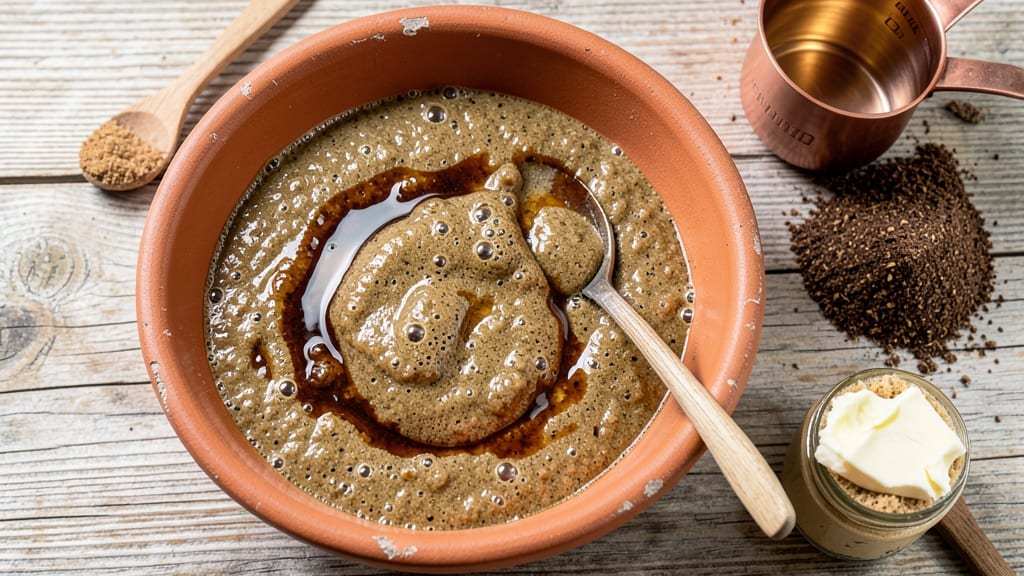
This artisan sourdough rye bread recipe transforms humble ingredients into a loaf with deep fermented crust and molasses-kissed richness that rivals bakery favorites. The secret lies in a wild yeast starter that develops complex flavors over days, while rye flour adds earthy depth and chewiness.
I've perfected this method through years of baking, ensuring even beginners can achieve that signature open crumb and caramelized crust.
The process begins with maintaining an active sourdough starter—this living culture is the heart of your bread, developing tangy notes that no commercial yeast can replicate. We'll use a high hydration dough (70%) that creates an airy yet dense crumb, perfect for rye's natural heaviness.
The molasses not only sweetens but also enhances the bread's keeping quality, while proper scoring before baking ensures an even rise and crispy exterior.
What you'll end up with is a loaf that's golden brown on the outside, with a tight, shatteringly crisp crust that gives way to a moist, slightly sticky interior.
The flavor profile balances rye's earthiness with molasses' caramel sweetness, creating a bread that's equally at home with butter, cheese, or as a vessel for hearty sandwiches. This recipe includes troubleshooting tips to prevent common pitfalls like overproofing or dense crumb.
For those wanting to customize, we'll explore variations like adding caraway seeds for classic European flavor or incorporating caramelized onions for extra depth. The same dough can be shaped into boules, batards, or even a rustic round—your choice determines the final presentation.
Let's begin with the foundation every great loaf needs: a thriving sourdough starter.
Ingredients for artisan sourdough rye bread
Four servings of crusty, molasses-kissed rye bread await with these precise ingredients—each playing a key role in its signature depth.
| Ingredient | Amount | Notes |
|---|---|---|
| Active Sourdough Starter 🍞 | ½ cup | 100% hydration, bubbly and active |
| Rye Flour 🌾 | 3 cups | Dark rye for authentic flavor |
| All-Purpose Flour 🌾 | 1 cup | For structure and lift |
| Unsalted Butter 🧈 | ¼ cup | Cold, cubed for fat content |
| Molasses 🍯 | ¼ cup | Dark molasses for depth |
| Water 💧 | 1 ¼ cups | Room temperature, 70°F |
| Salt 🧂 | 1 ½ tsp | Diamond Crystal preferred |
| Honey 🍯 | 1 tbsp | For starter feeding |
| Caraway Seeds 🌾 | 1 tsp | Optional for European flavor |
| Cornmeal 🌽 | ¼ cup | For dusting baking surface |
| Semolina Flour 🌾 | ¼ cup | For scoring and dusting |
| Ice Water ❄️ | ¼ cup | For final dough adjustment |
The rye flour is non-negotiable here—King Arthur or Bob's Red Mill dark rye deliver that signature earthy bite. I always grab mine from Whole Foods bulk bins for freshness, but any reputable grocery store carries it. For the sourdough starter, maintain a 100% hydration culture (equal parts flour and water) and feed it 12-24 hours before baking with equal parts starter, flour, and honey. Look for a starter that's doubled in size with bubbles—this is your signal it's ready to work magic. The molasses should be dark, not light—Gotham or Brer Rabbit brands are my go-to for that rich, almost bitter-sweet profile that caramelizes beautifully during baking.
No rye flour? Substitute with pumpernickel flour at half the amount—it's lighter but gets you close. Short on caraway seeds? Cumin seeds at one-third the quantity add warmth without the distinct European note. The butter must be cold—cut it into small cubes and keep it chilled until mixed into the dough. If you're gluten-sensitive, swap 1 cup all-purpose for gluten-free blend, but expect a denser crumb. For the water, room temperature is critical—too cold and the starter won't activate properly; too hot and you'll kill the yeast. The cornmeal and semolina? Bob's Red Mill brands are my top pick—they toast beautifully and add that signature crunch to the crust.
This dough needs patience—plan for 18-24 hours from start to finish. Store your starter in a glass jar with a loose lid in the fridge, feeding it weekly with equal parts starter, flour, and water. The molasses and honey can be kept indefinitely in a cool, dark pantry, while flours should be stored airtight for up to 6 months. Once baked, the loaf stays fresh for 5-7 days wrapped in a clean kitchen towel—the moisture keeps it soft. For longer storage, slice and freeze portions—they reheat beautifully in a toaster or oven for that bakery-fresh crunch.
Why You'll Love This Recipe
- Two Bowls, One Mix: I swear by this recipe because it’s just two bowls—no fancy equipment, no stress. The rye flour handles most of the heavy lifting while the sourdough starter does its magic, and honestly? That’s all you need. The butter and molasses come in at the end, but even that’s a breeze—just fold, shape, and bake.
- Molasses Magic: That dark, sticky molasses? It’s the secret weapon. It gives the bread this deep, caramelized richness that lingers on your tongue, but it’s not overpowering—just enough to make every slice taste like a little treat. Between us, I’ve tried skipping it, and I never do again.
- Weeknight & Weekend Ally: This bread is my go-to for everything. Toast it for breakfast, use it for sandwiches all week, or serve thick slices with butter and jam when friends drop by. It’s the kind of loaf that doesn’t just feed you—it feeds your whole routine without extra effort.
- Budget-Friendly Staple: Rye flour and sourdough starter are affordable, and a single batch stretches for days. I make this once a week, and it’s always there for open-faced sandwiches, charcuterie boards, or just plain snacking. No waste, no guilt—just reliable, satisfying bread that costs next to nothing.
Step-by-step instructions for artisan sourdough rye bread
Here's how to craft a deep-fermented rye loaf with a molasses-kissed crust and open crumb.
Feed and Prepare the Sourdough Starter
In a medium bowl, combine the 0.5 cup active sourdough starter with 1 tablespoon honey and 1.25 cups room temperature water. Stir until the honey dissolves completely, creating a smooth, bubbly mixture. Add 1 cup all-purpose flour and mix until just combined—you're aiming for a thick batter consistency, similar to pancake batter.
Cover the bowl loosely with plastic wrap or a damp kitchen towel and let it rest at room temperature for 4-6 hours until it doubles in volume and develops visible bubbles along the surface. This feeding step ensures your starter is at peak activity for optimal gluten development in the final dough. The honey not only feeds the starter but also adds subtle sweetness that balances the rye's earthy notes.
Mix the Dough with Molasses and Butter
In the stand mixer fitted with the dough hook attachment, combine the 3 cups rye flour, 1.5 teaspoons salt, and 1 teaspoon caraway seeds (if using). Mix on low speed for 30 seconds to distribute the seeds evenly. Add the fed starter mixture and mix on medium speed for 3 minutes until the dough begins to come together.
Remove the dough from the mixer and place it on a lightly floured surface. Using your hands, work in the 0.25 cup cold cubed unsalted butter and 0.25 cup molasses, kneading gently until fully incorporated. The molasses will make the dough sticky, but resist the urge to add extra flour—this is essential for that signature rich flavor. Return the dough to the mixer and knead on medium speed for an additional 5 minutes until smooth and elastic.
Bulk Ferment for Deep Flavor Development
Shape the dough into a loose ball and place it back in the bowl. Cover with plastic wrap or a damp towel and let it ferment at room temperature for 8-12 hours. Here's where the magic happens: the long fermentation time allows the rye's complex flavors to develop fully while creating that signature open crumb structure. You'll know it's ready when the dough has risen by about 50% and feels light and airy when pressed gently.
For best results, I recommend fermenting overnight in the refrigerator. The cooler temperature slows fermentation, allowing more time for flavor development without overproofing. This cold ferment also enhances the bread's keeping qualities. Give the dough a gentle stretch and fold every 2 hours during the first 4 hours of fermentation to strengthen the gluten structure.
Shape and Final Proof
Lightly dust your work surface with 0.25 cup cornmeal and turn out the fermented dough. Gently shape it into a round boule by pulling the edges toward the center and tucking them under. Place the shaped loaf seam-side up on a parchment-lined baking sheet, then cover loosely and refrigerate for 12-16 hours for the final proof. This cold proofing step is crucial for developing maximum flavor and achieving that dense, chewy crumb.
The dough should rise noticeably during this time, but it won't double in size. The cold temperature helps the gluten relax, making the dough easier to handle when you're ready to bake. Just before baking, brush the loaf with water and sprinkle generously with 0.25 cup semolina flour for that beautiful crust finish. The semolina adds texture and helps create that signature cracked crust.
Bake to Crust Perfection
Preheat your oven to 425°F with a Dutch oven inside for 45 minutes. Remove the Dutch oven from the oven and carefully transfer the shaped loaf to it, covering the lid. Bake for 30 minutes, then remove the lid and bake for an additional 15-20 minutes until the crust is deep golden brown and the internal temperature reaches 205-210°F. The bread should sound hollow when tapped on the bottom.
For that authentic artisan look, score the top of the loaf deeply with a razor blade just before the final baking period. This allows steam to escape and creates those beautiful, irregular cracks. Let the bread cool on a wire rack for at least 2 hours before slicing—this resting period allows the crumb to set properly and prevents a gummy interior. The wait is worth it for that perfect slice every time.
Pro Tips For Making Artisan Sourdough Rye Bread
- STRETCH AND FOLD: The rye flour in this dough is stubborn—it wants to stick and resist shaping. Wet your hands well with cold water before handling, and fold the dough over itself like you’re tucking in a blanket. I used to fight it with dry hands and ended up with a lumpy mess; this method keeps everything cohesive without overworking the gluten.
- WEIGH THE RYE: Rye flour is deceptive—it looks fluffy but packs tightly. Scoop it directly into your scale without packing it down, or you’ll overestimate by nearly 20%. I learned this after baking two loaves that were too dense; now I just eyeball the bowl from above and tap it lightly to settle.
- BUTTER IN LAYERS: Cold butter creates pockets of flavor, but if it melts too early, your bread turns greasy. Cut the butter into small cubes (about ½-inch each) and work it into the dough last—right before final shaping. This keeps it firm enough to hold its shape during the bulk ferment but soft enough to distribute evenly.
- MOLASSES FIRST: Add the molasses to the dry ingredients before mixing in liquids—this prevents clumping and ensures even distribution. I used to drizzle it in at the end, and half the time it pooled in one spot, making the crust bitter. A quick 30-second mix with the dry flour solves that. (Yes, even if you’re impatient like me.)
Regional styles of this dish
Scandinavian Dark Rye
In Sweden and Norway, rye bread often features a dense, hearty crumb with a deep molasses caramelization. The Scandinavians traditionally use 100% rye flour (no all-purpose) and add malt powder (about 1 tablespoon) to boost fermentation.
I’ve adapted this by increasing the molasses to ⅓ cup and adding 1 teaspoon ground coriander for warmth. Bake in a stoneware pot instead of a Dutch oven for a thicker crust—this method creates a bread so dense it doubles as a side dish for open-faced sandwiches. 🌍
German Pumpernickel Style
German pumpernickel is all about slow baking—this version takes 12-16 hours in a low-temperature oven (225°F). Replace 1 cup of the rye flour with pumpernickel flour and reduce molasses to ¼ cup (the pumpernickel already has a sweet, smoky depth).
Shape the dough into a long batard and bake uncovered on a lined tray. The result? A dark, almost black crust with a moist, slightly sweet interior. Perfect for pairing with smoked sausage or sharp cheddar.
Eastern European Caraway Rye
Poland and the Baltic states elevate rye with caraway seeds—this version doubles the seeds to 2 teaspoons and adds 1 teaspoon fennel seeds for complexity. Use light rye flour (like King Arthur’s light rye) and reduce molasses to ¼ cup to balance the herbal notes.
Shape into a round loaf and bake in a cast-iron skillet for a crispy, rustic crust. The caraway-fennel combo is a classic pairing with sour cream or herbed butter. 🌾
American Molasses Rye
This is the sweet, sticky rye you’d find in Southern bakeries—think molasses-forward with a softer crumb. Increase molasses to ½ cup and add ½ cup blackstrap molasses for extra depth. Swap caraway seeds for 1 teaspoon anise seeds (toasted) and shape into a small boule.
Bake in a Dutch oven for 45 minutes covered, then 10 minutes uncovered for a glossy, crackly crust. Serve warm with butter or honey for a dessert-like treat.
Italian Sourdough Rye
Northern Italy’s panettone-inspired rye blends rye with a touch of sweetness—this version uses ½ cup honey instead of molasses and adds zested orange peel (1 tsp) for brightness. Shape into a round boule and bake in a preheated pizza stone for a crispy, blistered crust.
The honey-orange combo makes this a breakfast star, especially with ricotta and jam. 🍊
Nutrition facts
Frequently asked questions
How long should I maintain my sourdough starter before making this rye bread?
Your starter should be at least 1-2 weeks old and consistently active, doubling in size within 4-6 hours after feeding. For this recipe, feed it 12-24 hours before baking with equal parts starter, flour, and honey to ensure peak activity. A healthy starter will have visible bubbles, a tangy aroma, and pass the "float test" (drop a spoonful in water—it should float).
Can I make this recipe without a stand mixer?
Mix the dough by hand in a large bowl, using a wooden spoon first to combine ingredients, then your hands to knead. The molasses will make the dough sticky, so wet your hands frequently. Knead for about 10-12 minutes until the dough becomes smooth and elastic. The high hydration (70%) means it won't be as firm as traditional bread dough, but that's normal for artisan sourdough rye.
Why does my dough smell so strong during fermentation?
The intense aroma comes from the rye flour's natural acids and the molasses' fermentation byproducts. This is normal and actually desirable—it indicates deep flavor development! For a milder scent, reduce molasses to ¼ cup or use light rye flour instead of dark. The smell will mellow as the bread bakes, leaving behind complex caramel and spice notes. Always ferment in a well-ventilated area to avoid overwhelming your kitchen.
What's the best way to store leftover sourdough rye?
Wrap the cooled loaf tightly in a clean kitchen towel or beeswax wrap, then place it in a paper bag at room temperature for 2-3 days. For longer storage, slice and freeze portions in airtight containers. To revive frozen slices, toast directly from frozen in a toaster or reheat in a 350°F oven for 5-7 minutes until crispy. The molasses helps preserve freshness longer than plain sourdough.
Can I substitute molasses with something else?
Yes! For a sweeter profile, use honey (⅓ cup) or maple syrup (¼ cup), but reduce water by 2 tablespoons since these are liquids. For a more subtle sweetness, try 1 tablespoon brown sugar mixed with 1 teaspoon cinnamon. Avoid white sugar—it lacks the depth molasses provides. The molasses' caramelization during baking creates the bread's signature richness, so substitutions may slightly alter the final texture.