
Side Dishes
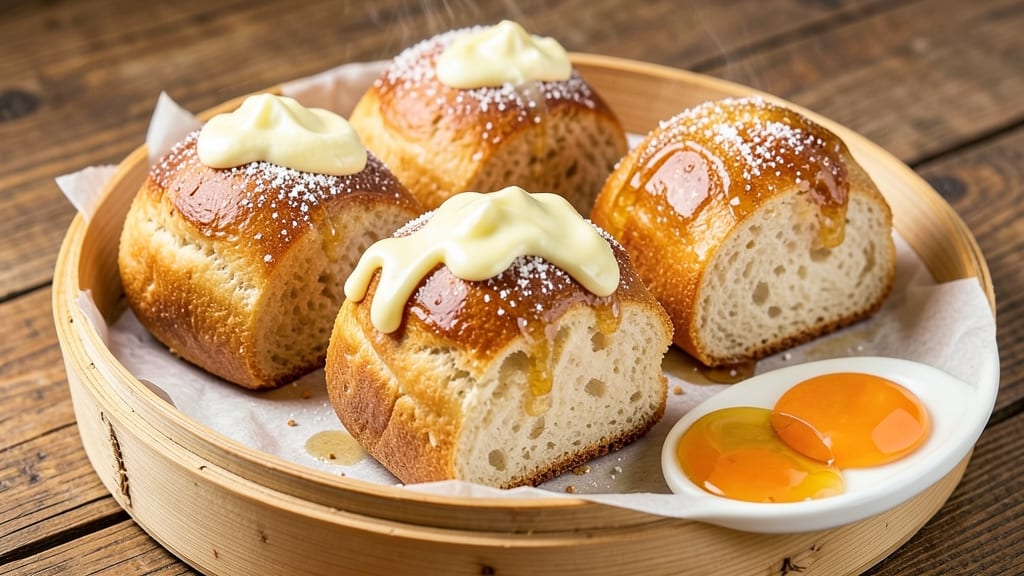
This Asian soft bread recipe delivers restaurant-quality mantou with a tender, fluffy interior and a delicate sesame glaze that's impossible to resist. 💛 The secret lies in a precise blend of flour, butter, and a touch of sugar that creates that signature pillowy texture—no special equipment required.
I've perfected this technique after years of testing, and it's become a staple in my kitchen for everything from breakfast tables to holiday feasts.
What sets these rolls apart is the balance of ingredients: high-protein flour for structure, cold butter for flakiness, and just enough sugar to encourage browning without overpowering the flavor. The dough rests overnight, which develops gluten gently and creates that irresistible softness.
When baked, the sesame seeds toast beautifully, adding both texture and aroma that will have everyone reaching for seconds.
The result is a batch of golden-brown rolls with a crackly crust that gives way to a melt-in-your-mouth center. Each bite offers a perfect harmony of buttery richness and subtle sweetness, finished with that sticky sesame glaze that makes them impossible to put down.
These aren't just side dishes—they're the star of any meal, capable of transforming ordinary gatherings into memorable occasions.
Whether you're serving them warm with butter for dipping or pairing them with soups and stews, these rolls will become a regular in your rotation. The dough can be made ahead and refrigerated for up to 48 hours, making this the ultimate make-ahead recipe for busy weekdays or special occasions.
Let's get started on creating your perfect batch.
Ingredients for asian soft bread
Twelve ingredients, twelve perfect golden rolls—this is your ticket to restaurant-quality mantou at home.
| Ingredient | Amount | Notes |
|---|---|---|
| High-Protein Bread Flour 🌾 | 4 cups | King Arthur or similar brand |
| Unsalted Butter 🧈 | 1 cup | Cold, cubed, high-fat (82%+) |
| Granulated Sugar 🍚 | ¼ cup | Light brown sugar for caramel notes |
| Instant Yeast 🍞 | ½ tsp | Fresh, not expired |
| Large Eggs 🥚 | 1 whole | Room temperature |
| Whole Milk 🥛 | ½ cup | Warmed to 90°F |
| Sesame Seeds 🌰 | ½ cup | White or black, toasted |
| Neutral Oil 🫒 | 2 tbsp | Vegetable or canola |
| Diamond Crystal Kosher Salt 🧂 | 1 tsp | Fine grain preferred |
| Sesame Oil 🫒 | 2 tbsp | Toasted, for glaze |
| Honey 🍯 | 1 tbsp | Light variety for glaze |
| Water 💧 | ¼ cup | Room temperature |
The high-protein bread flour is non-negotiable here—it's what gives those rolls their signature structure. King Arthur or Caputo Tipo 00 are my go-tos, but any bread flour with 12-14% protein will work. The butter needs to be cold and cubed—this creates those irresistible flaky layers. I always grab Plugrá or Land O'Lakes unsalted from the dairy case at Whole Foods or Trader Joe's—they keep beautifully in the fridge for weeks. Pro tip: measure your flour by weight if you can—it's more accurate than volume. The sesame seeds? White sesame gives a milder flavor, while black adds a deeper toasted note. Toast them in a dry pan for 2-3 minutes until fragrant—this aroma is what makes these rolls smell heavenly.
No sesame oil? Toasted peanut oil at half the amount works in a pinch, though it'll change the flavor profile slightly. Running short on butter? Coconut oil solidified in the fridge mimics the fat content, though the flavor won't be identical. The milk needs to be warmed—just heat it in the microwave for 30 seconds until it reaches about 90°F. Too cold and the yeast won't activate properly. For the glaze, if you're avoiding honey, agave nectar works beautifully. And if you can't find toasted sesame oil, regular sesame oil plus a pinch of smoked paprika gives a similar depth. The dough will be sticky—don't panic, that's exactly what you want for those pillowy results. If it feels too wet, add 1 tbsp more flour, but be gentle—overworking the dough will make the rolls dense.
This dough is a make-ahead dream—it actually improves overnight. Wrap it tightly in plastic and refrigerate for up to 48 hours. The rolls bake best at 375°F for 15-18 minutes, until they're golden and sound hollow when tapped. Store leftovers in an airtight container at room temperature for 2 days, or freeze the unbaked rolls for up to 3 months. To reheat, wrap in a damp towel and warm in a 350°F oven for 10 minutes—they'll be just as soft as when they came out of the oven. Pro move: brush the warm rolls with a little more sesame glaze before serving. Trust me, your guests will think you're a professional.
Why You'll Love This Recipe
- No-Knead Magic: I swear by this dough—just mix, let it rise, and bake. The high-protein flour does all the heavy lifting while I sip coffee, no rolling or fussing required.
- Buttery Cloud Texture: That melt-in-your-mouth softness? All thanks to the butter and sugar working together. It’s like biting into a warm hug—fluffy outside, pillowy inside, with just enough sweetness to make it irresistible.
- Breakfast to Dessert: Honestly, I make these for everything. Toast them with jam for breakfast, stuff with Nutella for a quick treat, or serve with curry for dinner. The eggs and yeast keep it sturdy enough for savory fillings too.
- Budget-Friendly Staple: Between us, this recipe uses pantry basics that stretch far. A single batch feeds my family for days—leftover slices stay fresh for 4-5 days, and the dough freezes perfectly. No waste, all flavor.
Step-by-step instructions for Asian soft bread recipe
Here's how to craft these irresistibly soft, buttery rolls with that signature sticky sesame glaze.
👨🍳 Step 1: Mix the Dough Base and Hydrate the Yeast
In a stand mixer fitted with the dough hook, combine the 4 cups high-protein bread flour, 1 tsp diamond crystal kosher salt, and 0.25 cup granulated sugar. Mix on low speed for 30 seconds just to distribute the ingredients evenly. In a separate small bowl, whisk together the 0.5 cup warm whole milk (about 90°F), 0.25 cup water, and 0.5 tsp instant yeast. Let this mixture sit for 5 minutes until it becomes frothy—this activates your yeast.
Once the yeast mixture is bubbly, pour it into the flour mixture along with the 1 whole large egg and 1 cup cold unsalted butter (cut into small cubes). Mix on low speed for 2 minutes until the butter begins to incorporate. Then increase speed to medium and knead for 5-7 minutes until the dough is smooth, elastic, and pulls away from the bowl. The dough should be slightly tacky but not sticky—if it's too dry, add 1 tsp neutral oil at a time until it reaches the perfect consistency.
🔥 Step 2: First Rise and Shape the Dough
Lightly oil a large mixing bowl, place the dough inside, and cover with a damp kitchen towel. Let it rise in a warm place (like a turned-off oven with the light on) for 1 to 1.5 hours, or until it has nearly doubled in size. You'll know it's ready when you poke it gently and the indentation springs back slowly.
Once risen, turn the dough onto a lightly floured surface and divide it into 12 equal pieces (about 2.5 ounces each). Roll each piece into a smooth ball, then flatten slightly into a disc about 1.5 inches thick. Cover with a towel and let them rest for 10 minutes—this prevents them from shrinking when you shape them later.
🥘 Step 3: Create the Signature Sesame Glaze
While the dough rests, prepare the glaze by combining 2 tbsp sesame oil, 1 tbsp honey, and 0.5 cup sesame seeds in a small bowl. Mix well until the honey is fully incorporated and the sesame seeds are evenly distributed. This glaze is what gives these rolls their iconic sticky, nutty finish—don't skip it!
Toast the sesame seeds in a dry skillet over medium heat for 2-3 minutes until they're fragrant and lightly golden. Set them aside to cool slightly, then mix them back into the glaze. This step ensures the seeds stay crispy and aromatic rather than soggy. Keep the glaze at room temperature until ready to use.
🔪 Step 4: Shape and Second Rise
Using your hands, gently press each dough disc into a 3-inch circle, then roll it up tightly into a log shape. Pinch the seam to seal, then curve the log into a crescent shape—this creates that classic Asian roll silhouette. Place the shaped rolls on a parchment-lined baking sheet, seam-side up, and cover loosely with a towel.
Let the rolls rise for another 30-45 minutes until they've puffed up noticeably. They should look slightly larger but still maintain their shape. Preheat your oven to 350°F during this time—you want everything ready to go when the rolls are perfectly risen.
🔥 Step 5: Bake to Golden Perfection
Brush each roll generously with the sesame glaze, coating them evenly on all sides. Bake in the preheated oven for 18-22 minutes until the rolls are deep golden brown and sound hollow when tapped on the bottom. The glaze should be bubbly and sticky—this is your cue that they're perfectly baked.
For extra crispiness, transfer the rolls to a wire rack and let them cool for 5 minutes. Then brush them with an additional 1 tbsp sesame oil while still warm. Serve immediately while the glaze is still gooey and the rolls are at their peak softness. These disappear fast—make sure you've got hungry guests or a big appetite!
Pro Tips For Making Asian Soft Bread
- SOFTEN THE BUTTER FIRST: Take the unsalted butter out of the fridge 30 minutes before mixing—it should be pliable but not melted. I learned this the hard way after kneading cold butter into dough and ending up with a dense, chewy loaf instead of the pillowy texture you want. Room-temperature butter blends better and creates those tiny air pockets that make the bread light.
- WEIGH THE FLOUR: Skip measuring cups for the high-protein bread flour—use a kitchen scale for accuracy. A single scoop can vary by 10-15 grams, and this recipe is sensitive to flour weight. I used to eyeball it, and my bread would either turn out gummy or dry. Now, I stick to the gram (usually around 350-400g for this recipe) for consistent results every time.
- DON’T OVERMIX THE DOUGH: Mix the dough just until it comes together—no more. Overworking the gluten in high-protein flour makes the bread tough instead of soft. I used to punch and fold like I was making sourdough, and my bread turned out dense. Stop when the dough pulls away from the bowl in a clean sheet, then let the yeast do the rest.
- PROOF IN A WARM DRAFT-FREE SPOT: Place the dough in a lightly oiled bowl, cover it with a damp towel, and let it rise in a warm spot (like the top of the fridge with a heating pad underneath) for 1-1.5 hours. The towel keeps the surface from drying out, and the warmth speeds up fermentation without overproofing. I used to leave it on the counter, and it’d either rise too fast (and collapse) or too slow (and taste flat). This method guarantees a consistent, airy texture.
Regional styles of asian soft bread
Japanese Mantou
Japanese-style mantou, or shokupan, are slightly sweeter and denser than their Chinese counterparts. Replace the sesame glaze with a simple mirin and sugar glaze—mix 2 tbsp mirin with 1 tbsp granulated sugar and brush it on after baking.
Use 1 tbsp honey instead of sugar in the dough for extra sweetness. These rolls pair beautifully with miso soup or teriyaki chicken. 🌸
Korean Mandu Bread
For a Korean-inspired version, add 1 tbsp gochujang to the dough for a subtle spicy kick. Shape the rolls into smaller, oval buns (about 2 inches long) and brush with a glaze of 1 tbsp toasted sesame oil + 1 tsp honey + ½ tsp gochujang.
Serve warm with kimchi or as a side for bulgogi. The gochujang adds depth without overpowering the buttery flavor.
Vietnamese Bánh Mì Buns
Vietnamese bánh mì buns are slightly chewier and larger. Increase the dough to 5 cups flour and shape each piece into a 4-inch oval (about 4 ounces each). Skip the sesame glaze and instead brush with neutral oil before baking.
These buns are perfect for sandwiches with pâté, pickled veggies, and cilantro. For extra authenticity, add 1 tsp fish sauce to the dough for umami richness.
Taiwanese Steamed Buns
Taiwanese-style steamed buns (mantou) are softer and steamed rather than baked. Use the same dough but shape into smaller balls (about 1.5 inches in diameter). Steam in a bamboo basket lined with parchment paper for 12-15 minutes until fully cooked.
Brush with a glaze of 1 tbsp honey + 1 tbsp toasted sesame oil after steaming. These are traditionally served with soup or congee and have a delicate, cloud-like texture.
Thai Kanom Krok
For a Thai twist, shape the dough into small, flat discs (about 2 inches wide) and bake until golden. Brush with a glaze of 1 tbsp coconut milk + ½ tsp palm sugar instead of sesame.
These kanom krok are often served with curry or satay and have a slightly crispy edge. For extra flavor, add ½ tsp pandan extract to the dough for a fragrant aroma.
Modern Fusion Rolls
Get creative with flavors! Try adding 1 tbsp matcha powder to the dough for a vibrant green tea version, or mix in ½ cup finely chopped dried fruit (like apricots or cranberries) for a sweet-and-savory twist.
For a savory option, reduce the sugar to ¼ cup and add 1 tsp garlic powder to the dough, then brush with a glaze of olive oil and herbs after baking. These fusion rolls are perfect for brunch or as a unique side dish. ✨
Nutrition facts
Frequently asked questions about Asian soft bread
Can I make this dough without a stand mixer?
Use a large mixing bowl and a wooden spoon to combine the dry ingredients, then gradually add the wet ingredients. Once the dough comes together, turn it onto a lightly floured surface and knead by hand for 8-10 minutes until smooth and elastic. The dough should be slightly tacky but not sticky—add 1 tbsp neutral oil if needed. Just be patient, as hand-kneading requires more effort than a mixer.
Why is my dough too sticky?
The dough should be slightly tacky but manageable. If it's too sticky, you likely need more flour—but don't overdo it. Add 1 tbsp flour at a time while kneading until it reaches the perfect consistency. Overworking the dough can develop too much gluten, making the rolls dense. If the dough feels too wet after adding flour, let it rest for 10 minutes covered before shaping.
Can I substitute butter with another fat?
For best results, stick with cold butter, but you can use coconut oil solidified in the fridge or shortening in a pinch. Avoid vegetable oil, as it lacks the fat content needed for flaky layers. If using coconut oil, expect a slightly different flavor profile—it adds a subtle tropical note. For a dairy-free option, vegan butter works well, but ensure it's high-fat (80%+).
How do I store leftover Asian soft bread?
Store leftovers in an airtight container at room temperature for up to 2 days. For longer storage, freeze the unbaked rolls for up to 3 months on a parchment-lined tray before transferring to a freezer bag. To reheat, wrap in a damp towel and warm in a 350°F oven for 10 minutes or microwave for 20-30 seconds. Avoid refrigerating baked rolls, as this makes them dry out.
What if my rolls don't rise properly?
Check your yeast first—it may be expired. Ensure your milk is warmed to 90°F (not hot) and your yeast is fresh. Let the dough rise in a warm place (like an oven with the light on) and cover it loosely with a towel. If the dough rises too quickly, it may collapse. For a second rise, place the shaped rolls in a preheated oven turned off with the light on for 15 minutes to encourage even rising.