
Side Dishes
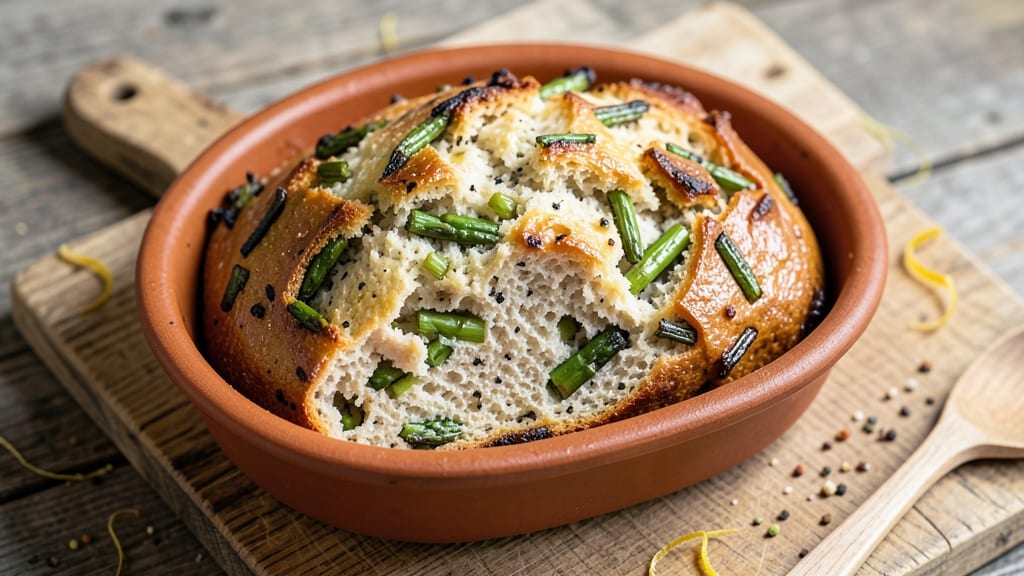
This asparagus bread recipe transforms spring’s brightest vegetable into a savory, herb-infused loaf that’s perfect for brunch or as a hearty side. The secret lies in blending tender asparagus into the dough, creating a subtle, earthy flavor that pairs beautifully with garlic and Parmesan.
Unlike traditional bread, this version delivers a satisfying meal with every slice—no sides needed. The process is straightforward: blend fresh asparagus into a simple dough enriched with olive oil and herbs, then bake until golden and fragrant.
The result is a loaf with a tender crumb and crispy crust, where the asparagus adds a delicate, fresh note. It’s the kind of bread that makes you forget it’s packed with vegetables.
Perfect for spring menus or as a showstopper for dinner guests, this recipe delivers restaurant-quality flavor with minimal effort. The asparagus-infused dough yields a loaf that’s rich, aromatic, and impossible to resist. Ready in under an hour, it’s ideal for busy weeknights or special occasions.
For extra depth, top with garlic butter or grated cheese before baking. Here’s how to make it!
Ingredients for asparagus bread
Spring asparagus meets savory herbs in this herb-infused loaf—packed with flavor and hidden greens.
| Ingredient | Amount | Notes |
|---|---|---|
| Fresh Asparagus 🌱 | 1 lb | Trimmed, tough ends removed |
| All-Purpose Flour 🌾 | 3 ½ cups | Unbleached preferred for flavor |
| Active Dry Yeast 🍞 | 2 ¼ tsp | One packet, room temperature |
| Granulated Sugar 🍚 | 2 tbsp | For yeast activation |
| Warm Water 💧 | 1 ¼ cups | 110°F for yeast activation |
| Extra-Virgin Olive Oil 🫒 | ½ cup | Plus 1 tbsp for dough |
| Salt 🧂 | 1 ½ tsp | Diamond Crystal preferred |
| Fresh Garlic 🧄 | 4 cloves | Minced for flavor depth |
| Fresh Rosemary 🌿 | 1 tbsp | Chopped, stems removed |
| Fresh Thyme 🌿 | 1 tbsp | Leaves only, chopped |
| Parmesan Cheese 🧀 | ½ cup | Freshly grated, aged |
| Egg 🥚 | 1 whole | Room temperature |
| Sesame Seeds 🌰 | 1 tbsp | For topping (optional) |
The asparagus is the star, so pick firm, bright green stalks—avoid woody ends. Whole Foods or local markets usually carry the freshest. Trim the tough bottoms and chop the rest into small pieces. Fresh herbs like rosemary and thyme should be bright green and fragrant—wilted herbs mean it's time to restock. For the Parmesan, grate it yourself—pre-grated cheese has anti-caking agents that ruin texture. The yeast should be freshly opened—check the expiration date, as old yeast won't activate properly.
No fresh rosemary? Dried works at one-third the amount, but fresh is ideal. Running low on asparagus? Substitute spinach or Swiss chard (use half the amount, as they're more watery). Short on Parmesan? Pecorino Romano or nutritional yeast add depth. The olive oil matters—use extra-virgin for richness, not the cheap cooking oil. For a gluten-free version, swap the flour for a 1:1 gluten-free blend. The egg binds the dough, but if you're avoiding it, flax egg (1 tbsp ground flax + 3 tbsp water) works in a pinch.
This dough is best used within 24 hours for maximum freshness, but you can refrigerate it overnight. For longer storage, freeze the shaped loaf (unbaked) for up to 3 months3 days or freeze sliced for 1 month. The crust stays crispy for days if kept airtight. Leftovers make fantastic toast—garlic butter is a must for second servings.
Why You'll Love This Recipe
- No Yeast Struggles: I’ve made bread where proofing feels like a science experiment—this? Just toss in the yeast, let it sit while you chop asparagus, and you’re golden. The warmth of the water activates it fast, so no waiting around for it to wake up.
- Earthy Sweet Crunch: That first bite—warm, slightly sweet from the sugar, with asparagus peeking through like little green surprises—is chef’s kiss. Honestly, I didn’t think asparagus could be this good in bread, but the crispy edges? Pure satisfaction.
- Picnic or Pantry: Between us, this bread is ridiculously good cold the next day—perfect for lunchboxes, charcuterie boards, or when you’re too tired to reheat. I’ve even used it to mop up soup leftovers. Versatile enough to handle anything.
- Budget-Friendly Staple: Flour, yeast, sugar, and a handful of asparagus—this recipe uses pantry basics and stretches far. I made a double batch once, froze half, and still had fresh bread for a week. No wasted ingredients, just pure, tasty results.
Step-by-step instructions for herb-infused asparagus bread
Transform fresh asparagus into a flavorful, aromatic loaf with this straightforward method.
Prepare the Asparagus Puree
Preheat your oven to 400°F and line a baking sheet with parchment paper. Trim the tough ends from the 1 lb fresh asparagus and chop the stalks into ½-inch pieces. Spread them on the prepared baking sheet in a single layer.
Roast for 15-20 minutes until the asparagus is tender and just beginning to brown at the edges. You'll know it's ready when a knife slides in easily and the color deepens to a vibrant green. Transfer the roasted asparagus to a food processor and pulse until you achieve a smooth puree—about 30-45 seconds of processing time.
Activate the Yeast and Mix Wet Ingredients
In a small bowl, combine the 2.25 tsp active dry yeast with the 2 tbsp granulated sugar and 1.25 cups warm water at 110°F. Let it sit for 5-10 minutes until the mixture becomes frothy and bubbly—this indicates the yeast is active. If it doesn't bubble, your yeast may be expired.
In a large mixing bowl, whisk together the asparagus puree, the yeast mixture, 0.5 cup extra-virgin olive oil, and the 1 whole egg. Add the 1.5 tsp salt, 4 cloves minced garlic, 1 tbsp chopped rosemary, and 1 tbsp chopped thyme. Mix until fully combined and smooth.
Combine Dry Ingredients and Knead
Gradually add the 3.5 cups all-purpose flour to the wet mixture, stirring with a wooden spoon until a shaggy dough forms. Once the flour is mostly incorporated, turn the dough out onto a lightly floured surface and knead for 8-10 minutes until smooth and elastic.
I like to test the dough's readiness by doing the "windowpane test"—stretch a small piece of dough until it's thin enough to see light through it without tearing. If it holds, your dough is ready. If it tears easily, knead for another 2-3 minutes. Once kneaded, form the dough into a ball and place it in a lightly oiled bowl.
First Rise and Shape the Loaf
Cover the bowl with a damp kitchen towel and let the dough rise in a warm place for 1-1.5 hours, or until it has doubled in size. The dough should feel light and airy when pressed gently with a finger—it should spring back slowly rather than quickly.
Punch down the dough to release any air bubbles, then transfer it to a lightly floured surface. Gently shape it into a 9x5-inch loaf pan, leaving about ½ inch of space at the top for rising. Brush the top with a little extra olive oil and sprinkle with the 0.5 cup freshly grated Parmesan cheese and 1 tbsp sesame seeds for added flavor and texture.
Second Rise and Bake to Golden Perfection
Cover the loaf pan with a damp towel and let it rise for another 30-45 minutes until it has expanded and feels firm to the touch. Preheat your oven to 375°F while the dough rises.
Bake the loaf for 35-40 minutes until it reaches an internal temperature of 190-200°F and the top is a deep golden brown. Tap the bottom of the loaf with your knuckle—it should sound hollow when done. Remove from the oven and let it cool on a wire rack for at least 15 minutes before slicing to allow the bread to set properly.
Pro Tips For Making Asparagus Bread
- STEAM THE ASPARAGUS FIRST: If you’re chopping raw asparagus into the dough, you’re fighting a losing battle—it’ll make your bread dense and watery. Blanch the spears in boiling water for 2 minutes, then shock in ice water before chopping. This keeps the flavor but prevents a gummy texture.
- USE THE WOODEN SPOON DRY: Mixing the dough with a wooden spoon? Don’t stop when it looks shaggy—keep going until it pulls away from the sides of the bowl and leaves a clean film. I used to quit too soon, and my bread always felt heavy. Push through the sticky phase.
- LET THE YEAST PROOF AT ROOM TEMP: That warm water for the yeast? Don’t just eyeball it—test it with your wrist. It should feel like bathwater, not a sauna. If it’s too hot, you’ll kill the yeast; too cool, and it’ll take forever. Patience here saves you from a flat loaf.
- CHOP ASPARAGUS SMALLER THAN YOU THINK: You’ll be tempted to leave chunks visible for presentation, but they’ll turn to mush in the oven. Aim for pea-sized pieces—no bigger than a dime. Trust me, you won’t miss the drama of big spears, but your bread will stay light and even.
Best sauces and condiments for this asparagus bread
Garlic Butter Glaze
This rich, aromatic glaze elevates every slice of asparagus bread. Start by melting 4 tbsp unsalted butter in a small saucepan over low heat. Add 3 minced garlic cloves and 1 tbsp fresh lemon juice, then simmer for 2-3 minutes until fragrant.
Brush this warm mixture over slices before serving—it adds a luxurious, savory depth that complements the herb notes. 🧄
Whipped Feta Cream
For a tangy, creamy contrast, whip ½ cup crumbled feta cheese with 2 tbsp extra-virgin olive oil and 1 tsp honey until smooth. Spread this on toasted bread slices or dollop alongside for dipping.
The salty feta balances the asparagus's earthiness, while honey adds subtle sweetness. Use within 2 hours for best texture.
Herb-Infused Olive Oil
Infuse ½ cup extra-virgin olive oil with 1 tbsp chopped fresh rosemary, 1 tbsp thyme leaves, and 2 minced garlic cloves by heating gently for 5 minutes.
Strain and drizzle over warm bread slices or use as a dip for extra herbaceous flavor. Store in an airtight container for up to 1 week.
Spicy Harissa Spread
Mix 2 tbsp harissa paste with 1 tbsp tahini and 1 tsp lemon juice. Spread on bread slices and broil for 1-2 minutes. The smoky heat from the harissa pairs perfectly with the bread’s savory herbs, adding a bold North African twist.
Serve with a sprinkle of toasted pine nuts.
Sweet Almond Butter
For a sweet-savory option, blend ¼ cup almond butter with 1 tbsp maple syrup. Drizzle over slices and toast briefly to caramelize. The nutty sweetness contrasts beautifully with the asparagus’s subtle bitterness, making it ideal for breakfast or dessert-style bread.
Store leftovers in the fridge for up to 5 days***.
Nutrition facts
Frequently asked questions
Can I use frozen asparagus instead of fresh?
Fresh asparagus gives the best flavor, but frozen works in a pinch! Thaw and drain it well, then pat dry completely before blending. Use 1.5 cups frozen asparagus (about 1 lb equivalent) and roast until tender. The texture will be slightly softer, but the herb flavors will still shine through.
How do I know when the dough is fully risen?
Press your finger gently into the dough—if it springs back slowly (like Jell-O) and leaves a slight indentation, it's ready. For visual confirmation, the dough should double in size. In warm kitchens, this takes 1-1.5 hours; in cooler ones, add 30-45 minutes. Never rush rising—it's what creates that light, airy texture!
Can I make this bread without a loaf pan?
Shape the dough into a free-form loaf on a baking sheet lined with parchment paper. For extra flavor, brush with olive oil and sprinkle with sesame seeds before baking. Expect 5-10 minutes longer at 375°F—rotate the pan halfway through for even browning. The crust will be thicker but equally delicious!
Why did my bread turn out dense?
Dense bread usually means the yeast didn't activate properly or the dough didn't rise enough. Double-check your water temperature (110°F is ideal), and ensure your yeast is fresh (test it in warm water with sugar—it should bubble in 5 minutes). Also, make sure your kitchen is warm enough (a turned-off oven with a bowl of hot water helps).
How can I add extra protein to this recipe?
Mix in ½ cup crumbled feta or ¼ cup chopped walnuts with the dough for added protein. For a meaty option, fold in ½ lb cooked ground turkey or ½ cup lentils (rinsed well) when combining wet ingredients. These additions keep the bread moist while boosting nutrition—just reduce flour by 2 tbsp to maintain texture.