
Side Dishes
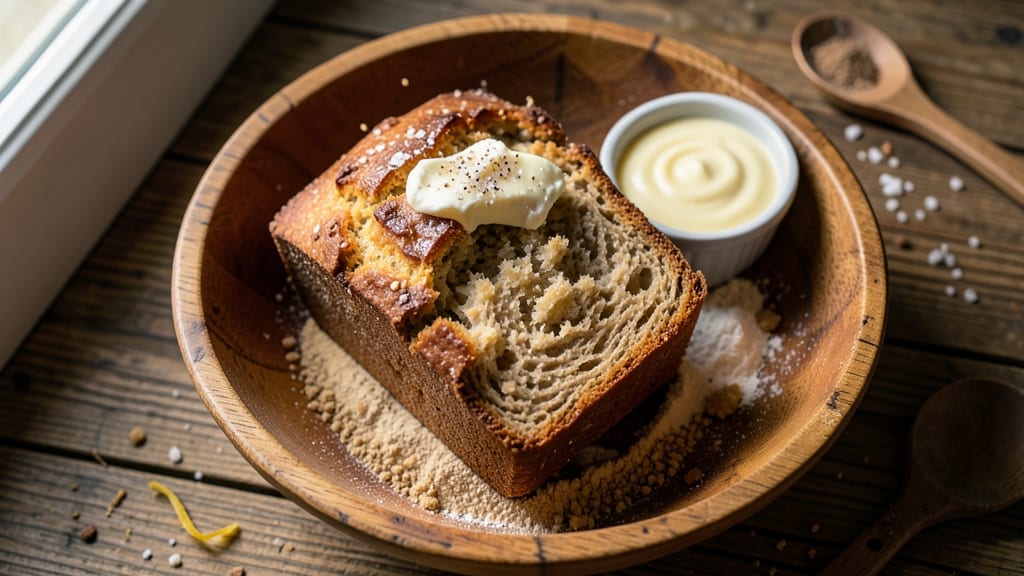
This ATK Irish soda bread recipe delivers the perfect balance of tender crumb and crisp buttermilk crust—no-knead required. After years of testing, America's Test Kitchen cracked the code for a foolproof loaf that rises beautifully and bakes up golden brown every time.
The secret lies in precise ingredient ratios and a gentle mixing technique that develops gluten just enough for structure without overworking the dough.
What sets this recipe apart is the buttermilk-infused crust, achieved by brushing the loaf with a simple mixture before baking. This creates that signature crackly exterior while keeping the interior moist and slightly dense—a hallmark of authentic Irish soda bread.
The dough comes together in minutes, rests briefly, then bakes to reveal a perfectly domed loaf with an irresistible aroma that fills your kitchen.
The result is a bread that's restaurant-quality yet simple enough for weeknight baking. Each slice offers a delightful contrast between the crisp crust and tender interior, with just the right amount of tang from the buttermilk.
Whether you're serving it with butter, jam, or alongside a hearty stew, this loaf brings authentic Irish flavor to your table without requiring advanced baking skills.
For those who love tradition with a modern twist, this recipe maintains all the classic elements—whole wheat flour, baking soda, and buttermilk—while incorporating ATK's precision testing for perfect results.
Ready to bake a loaf that rivals your favorite Irish pub? Let's get started with the foolproof method that's been tested to perfection.
Ingredients for atk irish soda bread
Eight simple ingredients for a loaf that tastes like Irish pubs but bakes in minutes.
| Ingredient | Amount | Notes |
|---|---|---|
| All-Purpose Flour 🌾 | 3 ½ cups | Spooned and leveled measurement |
| Whole Wheat Flour 🌾 | ½ cup | For authentic texture |
| Baking Soda 🧂 | 1 tsp | Diamond Crystal preferred |
| Salt 🧂 | ½ tsp | Fine sea salt preferred |
| Buttermilk 🥛 | 1 cup | Room temperature for best results |
| Unsalted Butter 🧈 | ½ cup | Cold and cubed |
| Granulated Sugar 🍚 | ¼ cup | Light brown sugar works too |
| Milk 🥛 | ¼ cup | For brushing crust |
| Cornmeal 🌽 | 1 tbsp | For dusting baking sheet |
The flours are the foundation—King Arthur all-purpose is my go-to for consistent results, but any good brand works. Whole wheat adds that classic Irish texture, but don't substitute more than half a cup or the dough gets dense. Baking soda must be fresh—if it smells like vinegar, toss it. For buttermilk, I always make my own (just mix milk with a splash of vinegar or lemon juice), but the carton stuff works in a pinch. The butter should be cold—cut it into small cubes before mixing to keep the dough from getting too soft.
No buttermilk? Mix 1 cup milk with 1 tbsp vinegar or lemon juice and let sit 5 minutes. Short on whole wheat? Substitute all-purpose, but the bread will be lighter. The sugar can be brown or white—light brown adds subtle caramel notes. For the crust, regular milk works, but buttermilk brushed on top gives that signature tang. Need to make this gluten-free? Swap flours for a 1:1 gluten-free blend, but expect a denser texture. The cornmeal is optional but helps prevent sticking—skip if you've got parchment.
Dough keeps for 2 days in the fridge, wrapped tightly. For longer storage, freeze shaped loaves (unbaked) for up to 3 monthsToast slices for crispy croutons or freeze for future French toast. The crust gets crunchier as it cools, so slice when still warm if you want that perfect texture.
Why You'll Love This Recipe
- No Mixer Needed: I swear by this recipe because it’s actually just flour, buttermilk, and a quick stir. No kneading, no standing over a dough hook—just dump, fold, and bake. That whole wheat flour gives it a subtle nutty bite, but the buttermilk keeps it light enough to eat straight from the oven.
- Tangy Crust, Soft Core: The baking soda and buttermilk combo creates that iconic crackly crust while keeping the inside pillowy. Honestly, the first time I sliced into one still warm, I nearly dropped the knife. It’s the kind of bread that makes you pause mid-bite just to appreciate how good it is.
- Breakfast to Picnic: This bread is my lazy Sunday morning staple—slathered with butter or jam—but it’s also the star of my lunchboxes. Between us, I’ve packed it for hikes, brought it to potlucks, and even used it to soak up soup. The whole wheat adds fiber, so it’s not just filling—it’s smart filling.
- Leftovers That Last: I make a big batch on weekends, and it stays fresh for days. The crust gets even better the next day, and I slice it for toast or sandwiches all week. Plus, with just five ingredients, it’s one of those recipes where you’re not wasting money on fancy stuff—just pure, reliable bread.
Step-by-step instructions for ATK Irish soda bread
Here's how to make this classic Irish soda bread with a crispy buttermilk crust—no yeast, no kneading, just pure flavor.
Mix Dry Ingredients for Perfect Texture
In a large bowl, whisk together the 3.5 cups all-purpose flour and 0.5 cup whole wheat flour until evenly combined. Sift in the 1 teaspoon baking soda and 0.5 teaspoon salt, then whisk again to distribute evenly. The whole wheat flour adds that authentic rustic texture, so don't skip it.
I like to use a whisk here because it breaks up any flour clumps and ensures the baking soda and salt are evenly dispersed. This prevents pockets of uneven rise in your bread. Give it a good 30-second whisk to make sure everything is fully incorporated.
Cut in Cold Butter for Flaky Layers
Add the 0.5 cup cold, cubed unsalted butter to the dry ingredients. Using a pastry cutter or your fingers, work the butter into the flour mixture until it resembles coarse crumbs with pea-sized butter pieces remaining. This is crucial—cold butter creates those beautiful flaky layers when baked.
Don't overwork the butter, or you'll end up with tough bread. Just mix until the largest pieces are about the size of peas. If you're using your fingers, pinch the mixture between your thumb and forefinger to check—you should feel small butter pieces, not a smooth dough yet.
Combine Wet Ingredients for Moist Crumb
In a separate bowl, whisk together the 1 cup buttermilk, 0.25 cup granulated sugar, and 0.25 cup milk. The buttermilk is key here—it adds moisture and that signature tangy flavor. Pour this liquid mixture into the dry ingredients and stir with a wooden spoon until just combined. The dough will be sticky but shouldn't require flour to handle.
At this point, you might think the dough is too wet, but trust me—this is exactly how it should be. The buttermilk and milk create a tender crumb while the baking soda will activate during baking to give that classic soda bread rise. Don't add extra flour unless absolutely necessary, or you'll lose that authentic texture.
Shape and Score for Classic Presentation
Turn the dough onto a lightly floured surface and gently shape it into a round loaf about 8 inches in diameter. I press down lightly with my hands to form a smooth top, but don't overwork it—this isn't kneading, just gentle shaping. Place the shaped loaf on a baking sheet dusted with 1 tablespoon cornmeal to prevent sticking.
Here's where the magic happens: use a sharp knife to score the top in a cross pattern, about ½ inch deep. This isn't just for looks—it helps control the expansion during baking and gives you that classic Irish soda bread crust. Press down gently on the dough to make sure it stays in place before baking.
Bake Until Golden and Hollow-Sounding
Preheat your oven to 375°F and bake the bread for 45-50 minutes until it's deep golden brown and sounds hollow when tapped on the bottom. I usually start checking at the 40-minute mark—your oven might run hot, so watch carefully for that perfect color.
When you tap the bottom, it should sound hollow and firm. The internal temperature should reach 190-200°F at the center. If the top browns too quickly, tent the bread with foil to prevent over-browning while it continues to bake through. Let it cool on a wire rack for at least 15 minutes before slicing—this gives the crumb time to set properly.
Pro Tips For Making Atk Irish Soda Bread
- MEASURE BUTTERMILK PRECISELY: The ATK recipe calls for 1 1/4 cups—don’t eyeball it. Whole wheat flour absorbs liquid differently, and too little buttermilk makes the dough dry and dense. Use a liquid measuring cup and fill it to the exact line, then dump it straight into the dry ingredients.
- LET THE DOUGH REST 10 MINUTES: I used to skip this, thinking it was just a formality. Wrong. The baking soda needs time to fully activate in the buttermilk, and the gluten relaxes enough to prevent a tough crumb. Just 10 minutes under a damp towel makes all the difference.
- STEAM THE LOAF THE FIRST 15 MINUTES: Preheat your oven, then place a baking sheet on the lower rack. Pour 1/2 cup boiling water into it right before baking. The steam helps the crust form evenly and keeps the whole wheat from drying out too fast—especially important since this recipe has no butter to lubricate the crumb.
- USE A LIGHT HAND WHEN MIXING: The ATK method is intentionally simple: stir just until combined. Overmixing develops gluten, which turns your tender soda bread into a chewy brick. Stop when the dry bits disappear—no need for a smooth batter. The texture should look shaggy, like wet sand.
Make-ahead tips for this dish
Dough Prep Ahead
Shape the dough into a round loaf and wrap it tightly in plastic wrap or place in an airtight container. Store in the fridge for up to 2 days—this lets the flavors meld beautifully.
When ready to bake, simply remove it from the fridge, let it sit at room temperature for 30 minutes, then proceed with scoring and baking as directed. 💫
Freezer-Friendly Loaves
For longer storage, shape the dough and freeze it unbaked on a parchment-lined tray for 1 hour to firm up. Transfer to a freezer bag with parchment between loaves to prevent sticking.
Thaw overnight in the fridge before baking—no need to defrost completely. The crust will still develop that signature crispness when baked fresh from frozen. ❄️
Make-Ahead Crust Trick
Prep the buttermilk brush in advance and store it in a small jar in the fridge. Mix ¼ cup buttermilk with 1 tablespoon milk and keep it ready to brush on the loaf right before baking.
This saves time and ensures you always have that perfect tangy crust without last-minute scrambling. 🥛
Batch Baking Tips
Double the recipe and bake two loaves at once for gatherings. Use two cornmeal-dusted baking sheets and rotate them halfway through baking for even heat distribution. Label each loaf with the date—freshly baked soda bread tastes best within 3 days of baking. 📅
Reviving Stale Bread
Slice leftover bread and toast it in a 375°F oven for 5-8 minutes to restore crispness. For a quick fix, wrap slices in a damp paper towel and microwave for 15 seconds—this revives the soft interior while keeping the crust intact.
Store revived slices in an airtight container for up to 2 days. 🔥
Gift-Worthy Packaging
Wrap cooled loaves in parchment paper, tie with twine, and place in a gift box for a rustic touch. Add a small jar of homemade jam or a sprinkle of flaky sea salt for an extra-special presentation. These make thoughtful gifts that feel homemade and heartfelt. ✨
Nutrition facts
Frequently asked questions
Why does Irish soda bread have a cross on top?
The traditional cross isn't just decoration—it's a symbol of protection, dating back to ancient Irish folklore. The scoring also helps control expansion during baking, preventing cracks from forming randomly. Plus, it gives that classic rustic look!
Can I substitute buttermilk if I don't have any?
Yes! Mix 1 cup milk with 1 tablespoon vinegar or lemon juice, then let it sit for 5 minutes until slightly thickened. This works perfectly and keeps the authentic tang.
Why did my soda bread turn out dense?
Overmixing the dough develops too much gluten, making it tough. Also, ensure your baking soda is fresh—old baking soda loses its leavening power. Measure flour properly (spoon and level) and avoid adding extra flour to stiffen the dough.
How long can I keep the dough before baking?
Shape the dough and refrigerate it for up to 2 days in an airtight container. For longer storage, freeze the shaped loaf (unbaked) for up to 3 months. Thaw in the fridge before baking.
Can I add savory ingredients like cheese or herbs?
Try adding ½ cup shredded cheddar or 1 tbsp dried rosemary to the dough for a savory twist. Just reduce the milk slightly to keep the dough workable. This makes a great side for soups or stews!