
Side Dishes
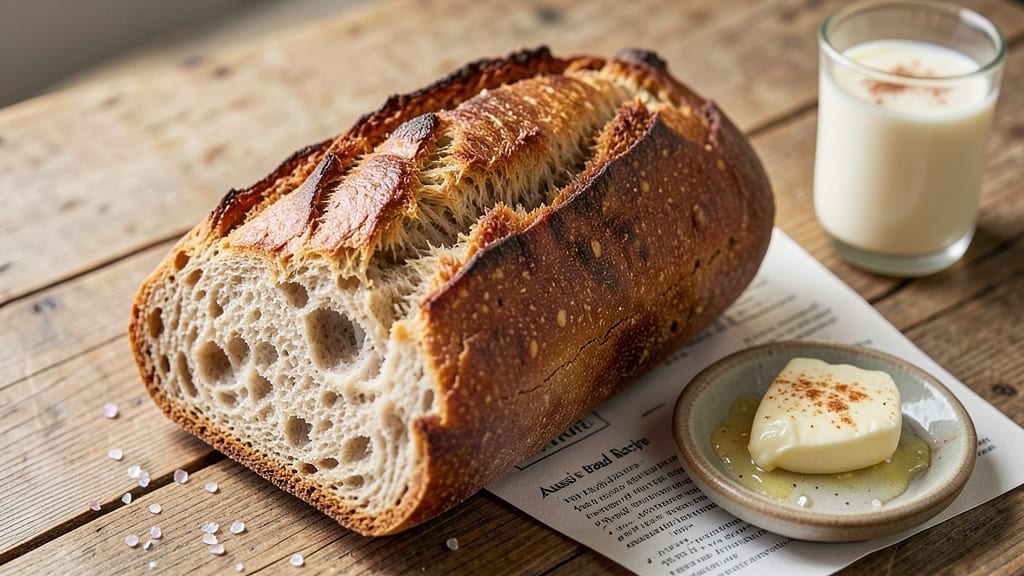
This Aussie bread recipe delivers the golden crust and buttery softness that makes traditional Australian damper so beloved. 🌟 The secret lies in a simple dough that transforms into a crusty exterior with a tender, crumbly interior—perfect for slathering with butter or pairing with jam.
Unlike store-bought loaves, this method captures the rustic charm of bush baking, where cooks would shape dough and bake it in campfire ashes.
The process is straightforward yet rewarding: mix flour, water, and a touch of salt, then knead until smooth. Let the dough rest before shaping into a round loaf, which bakes in a hot oven until the crust turns a deep golden brown.
The result? A loaf that’s crisp on the outside and soft enough to melt in your mouth—just like the bread you’d find at an Aussie bush picnic.
What makes this recipe special is its versatility. Serve it warm with butter, jam, or even as a side to hearty stews. The dough can also be customized with seeds or herbs for added flavor.
Whether you're recreating a classic Aussie tradition or simply craving a comforting loaf, this method ensures perfect results every time.
Ready in about 2 hours (including proofing), this Aussie bread is the ideal project for a weekend bake. The aroma alone will fill your kitchen with nostalgia, and the taste will remind you why this simple loaf has been a staple for generations. Let’s get baking!
Ingredients for aussie bread
Six simple ingredients transform into golden crust and buttery softness—just like Aussie bush baking tradition.
| Ingredient | Amount | Notes |
|---|---|---|
| All-Purpose Flour 🌾 | 4 cups | Sifted for light texture (plus extra for dusting) |
| Active Dry Yeast 🍞 | ¼ oz | Or 2 1/4 tsp (1 packet) |
| Granulated Sugar 🍚 | 1 tbsp | Feeds the yeast (white or brown) |
| Salt 🧂 | 1 tsp | Kosher or sea salt preferred |
| Unsalted Butter 🧈 | ½ cup | Cold, cubed (for rich flavor) |
| Warm Water 💧 | 1 ¼ cups | 110°F (43°C) for yeast activation |
| Milk 🥛 | ¼ cup | Warm, for softer crumb (whole preferred) |
| Large Egg 🥚 | 1 whole | Room temperature for binding |
| Cornmeal 🌽 | ¼ cup | For dusting baking sheet |
| Coarse Salt 🧂 | 1 tbsp | For sprinkling crust (flaky sea salt) |
| Sesame Seeds (optional) 🌱 | 1 tbsp | For rustic Aussie touch |
Flour is the backbone—King Arthur or Gold Medal work best for that tender crumb. Yeast matters too: Saf-Instant is foolproof, but regular active dry yeast needs that warm water (110°F). Butter? Land O'Lakes or Plugrá brands melt just right. For the milk, whole milk gives the best texture, but 2% works in a pinch. The egg? Room temp—cold eggs make dough tough. Pro tip: measure flour by scooping and leveling—don't pack it down.
No yeast? Baking soda plus vinegar creates a quick rise (1 tsp baking soda + 1 tbsp vinegar), but flavor won't be identical. Short on butter? Olive oil at half the amount works, though texture gets denser. Swapping milk? Greek yogurt or buttermilk adds tang. Sesame seeds optional, but they're what gives that classic Aussie damper look. No coarse salt? Diamond Crystal kosher salt works—just sprinkle generously. And if your kitchen's cold, proof the dough near a warm oven (not direct heat!).
Dough keeps 24 hours in the fridge, wrapped tight. For extra flavor, brush warm loaves with melted butter and sprinkle more coarse salt. Freezes beautifully—wrap tightly and thaw at room temp before toasting. The crust gets crunchier as it cools, so slice when still warm. Leftovers? Toast them—toasted Aussie bread is the best breakfast ever.
Why You'll Love This Recipe
- No-Knead Magic: I swear by this—just mix, wait, and bake. The yeast does all the work while I sip my coffee. Honestly, the dough comes together faster than my old kneading attempts (which always ended in frustration).
- Buttery Rich Crust: That golden, crackly crust? Pure reward. The butter melts into the flour, creating layers so tender they’ll make you forget store-bought ever existed. (Yes, even on a Tuesday night.)
- Weekend or Weeknight: Serve it warm with jam for breakfast or toast it up for dinner sandwiches. I’ve even frozen slices—just reheat and enjoy. Works for lazy mornings or when I’m feeding a crowd.
- Budget-Friendly Staples: Flour, yeast, sugar, butter—these are pantry basics. No fancy ingredients, no markup. Between us, this bread costs a fraction of what I’d pay at the bakery, and it’s way better.
Step-by-step instructions for Aussie bread with golden crust
Here's how to make bread that's crispy outside and pillowy soft inside—just like Aussie bakeries do.
👨🍳 Step 1: Activate the Yeast and Mix the Dough
In a large bowl, combine the 1.25 cups warm water (about 110°F) with the 1 tbsp granulated sugar and 0.25 oz active dry yeast. Let it sit for 5-10 minutes until frothy—this means your yeast is alive and kicking. If it doesn't bubble, your yeast might be dead, and you'll need to start over.
In a separate bowl, whisk together the 4 cups all-purpose flour, 1 tsp salt, and the 0.5 cup cold cubed butter. Pour the yeast mixture into the flour and stir until a shaggy dough forms. Add the 0.25 cup warm milk and 1 whole egg, mixing until everything comes together. The dough should be soft but not sticky—if it's too wet, add a little more flour.
🍳 Step 2: Knead Until Silky Smooth
Turn the dough onto a lightly floured surface and knead for 8-10 minutes until it's smooth and elastic. You'll know it's ready when it springs back slowly when poked. I like to use my knuckles for this—press down gently, and if it bounces back, you're good to go.
Here's the thing—don't rush this step. Proper kneading develops gluten, which gives your bread that perfect chewy texture. If your dough feels too sticky, add just a bit more flour, but don't go overboard or your bread will turn out dense.
🥘 Step 3: Let the Dough Rise Twice for Maximum Flavor
Place the dough in a lightly greased bowl, cover it with a damp towel, and let it rise in a warm place for 1-2 hours or until it doubles in size. A warm oven with the light on works great for this—just turn it off and let it heat up for 5 minutes first.
Once it's puffy, punch it down to release the air and shape it into a round loaf. Place it back in the bowl, cover again, and let it rise for another 30-45 minutes. This second rise is what gives Aussie bread its airy texture—don't skip it!
🔥 Step 4: Shape and Score for That Perfect Crust
Preheat your oven to 400°F and line a baking sheet with parchment paper. Dust it with 0.25 cup cornmeal to prevent sticking. Shape the dough into a round loaf, place it on the prepared sheet, and brush the top with a little water.
Here's where it gets fun—sprinkle the 1 tbsp coarse salt and 1 tbsp sesame seeds (if using) on top. Use a sharp knife or razor to score the dough in a crosshatch pattern, about ¼ inch deep. This helps the bread expand and gives it that gorgeous golden crust.
⏰ Step 5: Bake to Golden Perfection
Bake for 25-30 minutes until the bread is deep golden brown and sounds hollow when tapped on the bottom. The crust should be crispy, and the inside should be soft and fluffy—like a cloud you can eat.
Let it cool on a wire rack for at least 10 minutes before slicing. This resting time is crucial—it lets the steam escape so your bread doesn't turn gummy. Serve warm with butter or jam, and you'll have the perfect Aussie bread experience.
Pro Tips For Making Aussie Bread
- SOFTEN THE BUTTER FIRST: Aussie bread relies on cold butter for flaky layers, but don’t pull it straight from the fridge—cut it into cubes and let it sit at room temp for 30-45 minutes until it’s pliable but still holds shape. I learned this the hard way when my butter melted into a greasy mess mid-rolling (yes, even with flour dusting). This ensures clean layers without fighting sticky dough.
- USE A THERMOMETER FOR DOUGH: The magic happens when your dough reaches 75°F (24°C) before shaping—any cooler and it’ll shrink; any warmer and it’ll overproof. I used to eyeball it and ended up with dense loaves. A cheap instant-read thermometer takes 10 seconds and guarantees perfect rise every time.
- DON’T OVER-KNEAD THE YEAST: Aussie bread dough is delicate—once the yeast is activated, knead just until smooth (about 2-3 minutes by hand). Overworking it kills the gluten structure and makes the bread tough. I now set a timer and stop when the dough clears the bowl sides, no matter how tempted I am to "get it right."
- SALT THE WATER FOR ROLLING: Before rolling out the dough, brush the surface with water and sprinkle a pinch of salt—it prevents sticking and adds a subtle crunch to the crust. I was skeptical until I tried it; now I double the salt on the work surface too. The extra effort makes a real difference in texture.
Dietary considerations for this recipe
Gluten-Free Adaptation
For a gluten-free version, replace the 4 cups all-purpose flour with a 1:1 gluten-free baking flour blend like King Arthur Measure for Measure or Bob's Red Mill 1-to-1. Add 1 extra tsp xanthan gum to mimic gluten's structure.
The dough will be stickier, so wet your hands when shaping. Bake at 375°F instead of 400°F for 30-35 minutes—gluten-free bread needs extra time to crisp. 🌾
Dairy-Free Options
Skip the 0.5 cup butter and use 0.5 cup coconut oil (solid) or 0.5 cup olive oil for richness. Substitute 0.25 cup warm milk with unsweetened almond milk or oat milk—both add moisture without altering flavor.
For the egg, use 1 flax egg (1 tbsp ground flaxseed + 3 tbsp water, mixed and rested for 5 minutes). The texture stays soft but slightly denser. 🥛
Low-Carb Version
Replace 3 cups all-purpose flour with 1 cup almond flour and 1 cup oat flour (blend rolled oats into fine powder). Add 1 tbsp psyllium husk powder for binding. Reduce the 1.25 cups warm water to 1 cup—this low-carb dough is drier.
Bake at 350°F for 35-40 minutes until the internal temp hits 190°F. Serve with sugar-free jam for a keto-friendly treat. 🍞
Allergen-Free Tips
To avoid common allergens, use certified gluten-free oats if substituting for flour. For nut-free kitchens, swap almond flour with sunflower seed flour. Ensure your active dry yeast is from a dedicated facility if you have egg allergies—some brands process yeast in egg facilities.
Always check labels on coarse salt and sesame seeds for cross-contamination warnings. 🌱
Sugar-Free Adjustments
Omit the 1 tbsp granulated sugar entirely—yeast will still activate with the warm water alone. For a slight sweetness, add 1 tbsp monk fruit sweetener or erythritol to the dough.
Brush the baked loaf with melted butter (or dairy-free alternative) and sprinkle with stevia-sweetened jam instead of regular. The crust stays golden, and the crumb remains tender. 🍯
Nutrition facts
Frequently asked questions
Why does Aussie bread have a crusty outside and soft inside?
The secret lies in the baking method! The dough's moisture and butter create steam during baking, which keeps the interior soft while the high 400°F oven temperature crisps the crust. Scoring the dough also helps direct steam escape evenly, preventing a gummy center.
Can I make this bread without yeast?
Yes, but it won't rise the same way. Mix 1 tsp baking soda with 1 tbsp vinegar and add it to your dough instead of yeast. The bread will be denser but still delicious—great for quick versions! For best results, use this method only if you're short on time.
How do I store leftover Aussie bread?
Wrap cooled slices in plastic wrap or store in an airtight container for up to 3 days at room temperature. For longer storage, freeze slices for up to 3 months. Toast frozen slices directly from the freezer for extra crispiness!
What's the best way to reheat Aussie bread?
Wrap slices in foil and warm in a 350°F oven for 5-7 minutes until toasty. For extra crunch, broil for 1-2 minutes at the end. A toaster also works, but oven reheating preserves that classic Aussie texture best.
Can I add other ingredients like seeds or herbs?
Try adding 1 tbsp poppy seeds, 1 tbsp dried rosemary, or even chopped garlic to the dough before shaping. For extra flavor, brush the baked loaf with garlic butter and sprinkle with flaky salt. The possibilities are endless for customizing your Aussie bread!