Side Dishes
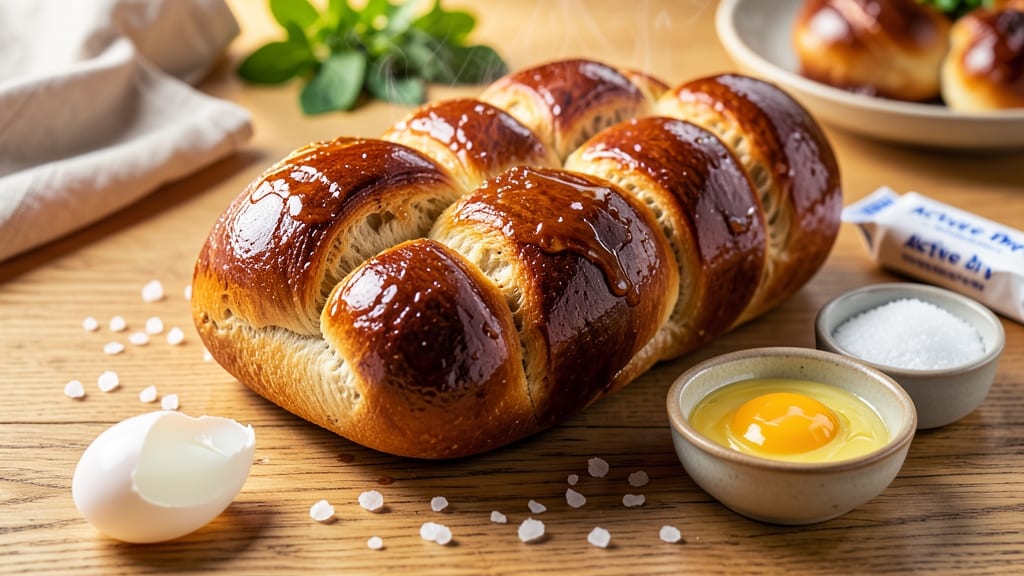
This authentic Jewish challah bread recipe brings Sabbath tradition to your kitchen with golden braids, tender crumb, and that signature egg-wash shine. ✨ The secret lies in precise dough technique—kneading until silky, letting it rest for maximum gluten development, and shaping those iconic three-strand braids.
Every element reflects centuries of Jewish culinary heritage, from the honey or egg wash to the steam-baked crust.
The recipe delivers restaurant-quality results at home with simple ingredients and a foolproof method. You'll master the art of creating a dough so elastic it stretches effortlessly into perfect braids, while the oven's steam creates that coveted crispy exterior.
This isn't just bread—it's a centerpiece for Shabbat, holiday celebrations, or any special occasion where tradition meets deliciousness.
What makes this version truly special is the balance of authentic technique and home kitchen accessibility. No special equipment needed—just patience for the kneading and resting stages, which transform simple flour and eggs into something extraordinary.
The aroma alone will fill your home with warmth as it bakes, creating memories that go far beyond the kitchen.
Once baked, the golden-brown challah with its signature sheen becomes the star of any table. Serve plain for a traditional approach or drizzle with honey for sweetness. The possibilities are endless, but the foundation remains the same—this is the challah your family will remember, generation after generation.
Ingredients for authentic jewish challah bread
Simple yet transformative ingredients create this iconic Sabbath centerpiece with golden braids and tender crumb.
| Ingredient | Amount | Notes |
|---|---|---|
| All-Purpose Flour 🌾 | 5 cups | High-protein preferred for elasticity |
| Granulated Sugar 🍚 | ¼ cup | Fine granulated for even distribution |
| Active Dry Yeast 🍞 | 2 ¼ tsp | Ensure yeast is fresh and active |
| Large Eggs 🥚 | 4 whole | Room temperature for even mixing |
| Unsalted Butter 🧈 | ½ cup | Cold, cubed for easier incorporation |
| Warm Water 💧 | 1 ¼ cups | 110°F for optimal yeast activation |
| Diamond Crystal Kosher Salt 🧂 | 1 ½ tsp | Adjusts to 1 tsp table salt |
| Honey 🍯 | 1 tbsp | For egg wash or crust finish |
| Egg Yolks 🥚 | 2 whole | Reserved for egg wash |
| Milk 🥛 | 1 tbsp | Optional for egg wash richness |
| Sesame Seeds 🌰 | 1 tbsp | For traditional topping |
The flour is non-negotiable—King Arthur or Bread Flour ensures the perfect gluten structure for those signature braids. Yeast quality matters too; Fresh Yeast or Bob's Red Mill Active Dry from the baking aisle will give you the most reliable rise. For the butter, Plugrá or Land O'Lakes are reliable choices, but any unsalted brand works if it's cold and cubed. The honey should be raw and unprocessed—Manuka or clover work beautifully for both flavor and the signature sheen. Pro tip: If your kitchen runs warm, dissolve the yeast in the warm water first to test its activity before mixing with other ingredients.
No honey? Light corn syrup or maple syrup works in a pinch, though honey's floral notes are traditional. Running short on sesame seeds? Poppy seeds or everything bagel seasoning add a similar crunch. For the egg wash, if you're avoiding dairy, plant-based milk like oat milk (thinned with water) mimics the shine. The butter can be substituted with cold coconut oil for a vegan version, though texture will differ slightly. For those with gluten sensitivities, King Arthur Gluten-Free Measure-for-Measure Flour can replace the all-purpose flour, though the braid structure may not be as defined.
Fresh yeast lasts 3 months in the fridge—test its potency by dropping a pinch in warm water with sugar, and if it foams within 10 minutes, it's good to use. The dough benefits from a 12-hour cold proof in the fridge before shaping, which enhances flavor and texture. Store baked challah in a paper bag at room temperature for 2 days or freeze wrapped for up to 3 months. For reheating, wrap in foil and warm in a 350°F oven for 10 minutes to restore freshness. The egg wash can be made ahead and refrigerated for 24 hours, though it's best used fresh for maximum shine.
Why You'll Love This Recipe
- No-Knead Magic: I swear by this—just mix, let it rise, and bake. The dough comes together in minutes, and honestly? The yeast does all the work while you sip coffee.
- Golden Crust Secret: That buttery, crackly top with a soft center? It’s the sugar and eggs working their charm. One bite, and you’ll forget about store-bought.
- Shabbat Ready: Braided, brushed with egg wash, and ready for the table. It’s my go-to for Friday nights—no stress, just tradition and warmth.
- Budget-Friendly Staple: A few eggs, a stick of butter, flour—basic pantry stuff. Makes three loaves, so you’ll have leftovers for days without breaking the bank.
Step-by-step instructions for authentic Jewish challah bread
Master the traditional technique that delivers tender crumb, golden egg-wash shine, and perfect braided structure.
👨🍳 Step 1: Activate the Yeast and Mix the Dough
In a small bowl, combine the 1.25 cups warm water (about 110°F) with 0.25 cup granulated sugar and 2.25 tsp active dry yeast. Let this sit for 5-10 minutes until frothy—this confirms your yeast is active. If it doesn't bubble, your yeast may be stale.
In a large stand mixer fitted with the dough hook, combine the 5 cups all-purpose flour and 1.5 tsp diamond crystal kosher salt. Add the 4 whole large eggs (room temperature) and the yeast mixture. Mix on low speed until combined, then gradually add the 0.5 cup cold unsalted butter, cubed. Increase speed to medium and knead for 8-10 minutes until the dough is smooth, elastic, and pulls away from the bowl. The dough should be slightly tacky but not sticky—add a few tablespoons of flour if needed.
🥘 Step 2: First Rise and Shaping
Lightly grease a large bowl with oil and place the dough inside. Cover with a damp kitchen towel and let rise in a warm place for 1-1.5 hours, or until doubled in size. The dough should feel springy when pressed gently with a finger.
Punch down the dough to release air, then divide it into 3 equal portions (about 12-14 ounces each). Roll each portion into a 24-inch rope, then braid the three ropes together. Shape the braid into a U-form, tucking the ends under to create a closed loop. Place on a parchment-lined baking sheet and cover loosely with plastic wrap. Let rise for 30-45 minutes until puffy and slightly domed.
🍳 Step 3: Egg Wash and Bake
Preheat your oven to 375°F. In a small bowl, whisk together the 2 whole egg yolks, 1 tbsp milk, and 1 tbsp honey for the egg wash. Brush this mixture generously over the risen challah, coating all surfaces evenly. Sprinkle the 1 tbsp sesame seeds evenly over the top—press them gently into the dough so they adhere.
Bake for 30-35 minutes until the challah is deep golden brown and sounds hollow when tapped on the bottom. If the top browns too quickly, tent loosely with foil. The internal temperature should reach 190°F at the center. Remove from the oven and let cool on a wire rack for 10 minutes before slicing.
⏰ Step 4: Rest and Serve
For the best texture, let the challah rest at room temperature for 1 hour before slicing. This allows the crumb to set properly and prevents a gummy texture. The bread should have a tender, slightly chewy crumb with a crisp, golden crust.
Serve warm with butter or jam, or freeze for up to 3 months for freshness anytime. The egg wash will give it that classic glossy finish, while the sesame seeds add a nutty contrast to the sweet, buttery dough.
Pro Tips For Making Authentic Jewish Challah Bread
- Use Room-Temp Ingredients: I learned this the hard way—cold butter and eggs slow yeast activation. Let them sit out for 30 minutes before mixing, especially if your kitchen is chilly. Yeast needs warmth to work, and cold ingredients make it sluggish, leading to dense, heavy challah.
- Dissolve Sugar in Warm Water: Skip the dry mixing—dissolve the granulated sugar in warm (not hot) water first, then add the yeast. This gives the yeast an instant sugar boost to activate faster, cutting fermentation time by 20-30 minutes. (Yes, even if you’re impatient like me.)
- Shape Under Lightly Floured Hands: Resist the urge to flour your hands heavily—just a light dusting prevents sticking while keeping the dough soft. Over-flouring dries the surface, making the braid look dull and the crust tough. Wet your hands slightly if needed, but don’t go overboard.
- Proof Until It’s Almost Too Much: Fill the bowl until the dough rises just past the rim—then stop. If you’re unsure, poke it: if the indentation stays, it’s ready. Underproofed challah collapses during braiding; overproofed dough tears. This is the thing that matters most for that perfect, airy crumb.
Wine and beer pairings for these flavors
Sweet White Wine
Challah's rich, buttery dough pairs beautifully with crisp, dry white wines that cut through the richness. I always reach for a Sauvignon Blanc from New Zealand—its bright citrus and herbal notes complement the bread's sweetness without overpowering it.
A Pinot Grigio from Italy also works wonderfully, especially if your challah has a honey glaze. For something lighter, try a German Riesling with its delicate floral and apple undertones. 🍷
Light Beer Options
If you prefer beer, opt for something light and refreshing to balance the bread's density. A Belgian Witbier like Hoegaarden adds a subtle coriander and orange peel note that pairs surprisingly well with the sesame seeds.
For a hoppier option, a Pilsner like Pilsner Urquell provides a clean, crisp contrast. Avoid heavy lagers or stouts—they'll clash with the bread's delicate sweetness.
Rosé for Versatility
Rosé is my go-to for challah because it bridges the gap between sweet and savory pairings. A Provençal rosé with its strawberry and citrus flavors enhances the honey glaze while keeping the palate fresh.
Look for one with 12-13% ABV—just enough body to stand up to the bread's richness. Serve slightly chilled (50-55°F) to highlight its refreshing qualities. 🍇
Fruity Sparkling Wine
For a festive touch, serve your challah with a Prosecco or Cava that has a touch of sweetness. The bubbles cleanse your palate between bites, making each slice feel like a special occasion.
I love a Moscato d'Asti for its peach and apricot notes—it mirrors the honey's sweetness while adding effervescence. Keep the temperature cool (45-50°F) to preserve the bubbles.
Coffee Pairing
While not a wine or beer, a strong dark roast coffee with 1-2% sweetness is a traditional pairing that enhances the bread's buttery richness. The bitterness of the coffee balances the sweetness, creating a harmonious contrast.
Try a Brazilian Santos or Sumatra Mandheling for a robust flavor profile. Serve the coffee black or with a splash of cream to complement the challah's texture. ☕
Nutrition facts
Frequently asked questions
Can I make this challah recipe without eggs?
Traditional Jewish challah relies on eggs for structure and shine, but you can adapt it! Replace the eggs with 4 tablespoons ground flaxseed mixed with 12 tablespoons water (let sit 5 minutes) and use 2 tablespoons aquafaba (chickpea brine) for the egg wash. The texture will be slightly denser, but still delicious. For a vegan honey substitute, use agave nectar in the wash.
How do I know when the dough is kneaded enough?
The dough is ready when it's smooth, elastic, and passes the windowpane test: stretch a small piece between your fingers—if it forms a thin, translucent membrane without tearing, it's perfect! Kneading by hand takes 15-20 minutes (until it pulls away cleanly from the bowl), while a stand mixer does it in 8-10 minutes. Over-kneading can make the dough tough.
Why did my braids fall apart when baking?
This usually happens when the dough isn't rested long enough between shaping and baking. Let the braided loaves rise for 30-45 minutes until they're puffy and springy to the touch. Also, ensure your oven isn't too hot—375°F is ideal. If the dough was too sticky, it may not hold its shape. Try chilling the shaped loaves for 15 minutes before baking next time.
What's the difference between Sabbath and holiday challah?
Sabbath challah is typically plain or lightly sweetened with just honey in the egg wash, while holiday versions (like Rosh Hashanah) often include raisins or cinnamon for extra sweetness. For a festive touch, add 1 cup raisins to the dough or sprinkle crushed cinnamon on top before baking. The braiding pattern can also vary—some families use 6 or 9 strands for special occasions!
How do I store leftover challah?
Wrap cooled challah in plastic wrap or foil and store at room temperature for 2-3 days in a paper bag to maintain freshness. For longer storage, freeze slices in a sealed bag for up to 3 months. To reheat, wrap in foil and warm in a 350°F oven for 10 minutes or microwave for 10-15 seconds. Avoid refrigerating—it makes the bread stale faster!