
Side Dishes
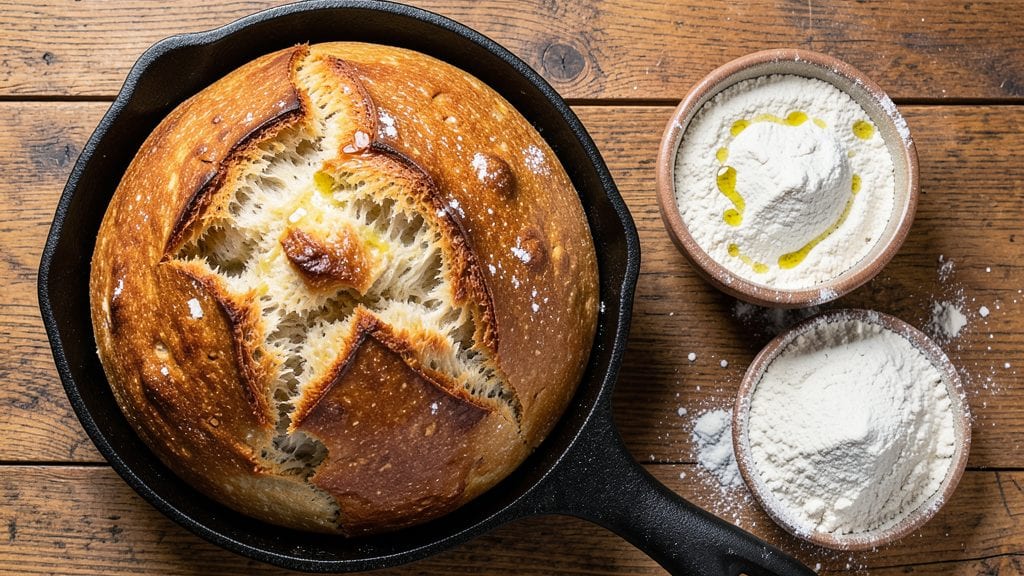
This Baladi bread recipe brings the soul of Egyptian street food to your kitchen with its signature crispy crust and pillowy center. The dough's simple ingredients—flour, yeast, water, and a touch of oil—create a bread that’s as culturally rich as it is satisfying.
I first discovered this recipe while exploring Cairo’s bustling markets, where vendors shaped dough with practiced hands and baked it in wood-fired ovens.
The secret to perfect Baladi bread lies in the kneading and resting times. A well-developed gluten structure ensures that crispy crust while maintaining a soft, airy interior.
This recipe delivers restaurant-quality results with just 30 minutes of active prep and 15 minutes of baking time, making it ideal for any meal. The bread pairs beautifully with grilled meats, stews, or even as a side for sandwiches.
What sets Baladi bread apart is its versatility—it’s a staple in Egyptian homes and street food stalls alike. The dough’s simplicity means you can customize it with herbs or spices, but the traditional version remains a crowd-pleaser.
Once you try this recipe, you’ll understand why it’s a beloved side dish across Egypt.
Let’s get started on mastering this crispy yet tender flatbread that’s sure to become a weekly favorite. The process is straightforward, but the results are anything but ordinary—just like the bread itself. Ready to bake?
Ingredients for baladi bread
Four simple ingredients transform into Egypt's iconic street bread with crispy crust and soft center.
| Ingredient | Amount | Notes |
|---|---|---|
| All-Purpose Flour 🌾 | 4 cups | High-protein preferred for chewiness |
| Active Dry Yeast 🍞 | ¼ oz | Or 1 packet (2.25g) |
| Warm Water 💧 | 1 ½ cups | 110°F for optimal yeast activation |
| Granulated Sugar 🍬 | 1 tbsp | Feeds yeast for faster rise |
| Extra-Virgin Olive Oil 🫒 | 2 tbsp | For dough elasticity |
| Diamond Crystal Kosher Salt 🧂 | 1 ½ tsp | Fine grain preferred |
| Semolina Flour 🌾 | ½ cup | For dusting and crispy crust |
| Cornmeal 🌽 | ¼ cup | Alternative to semolina |
The flour is everything here—King Arthur or Gold Medal give the best gluten development for that signature chew. If you're in Cairo, vendors use 100% bread flour, but all-purpose works perfectly at home. The yeast needs to be fresh—check the expiration date on the package. Warm water is critical: too hot kills the yeast, too cold makes it sluggish. I always use a thermometer to hit 110°F, but if you're eyeballing it, it should feel like bathwater. The olive oil should be extra-virgin—cheap oil won't give that tender crumb. And for the love of all things crispy, semolina is non-negotiable for that perfect crust.
No semolina? Cornmeal works in a pinch, but the texture won't be quite the same. Running low on olive oil? Melted butter at half the amount keeps the dough tender, though it'll add richness. The sugar can be swapped for honey at half the amount, but it might slightly darken the crust. If you're baking at high altitude, add 1 tsp extra flour to prevent over-rising. And here's a pro tip: if your yeast is old or your kitchen's cold, let the dough rise in a warm oven with the light on—it's like a yeast spa treatment. The salt can be omitted if you're sensitive to sodium, but it's what balances the sweetness in the crust.
This dough keeps beautifully—3 days refrigerated or 3 months frozen wrapped tightly in plastic. For freezing, shape the dough balls first, then freeze. Thaw overnight in the fridge before baking. The bread reheats best in a 350°F oven for 5-10 minutes—wrap it in foil to keep it soft. I always make a double batch: one for the week and one to freeze. The crust stays crispy for 2 days at room temperature if stored in a bread bag, but it's best eaten fresh from the oven. That golden, blistered crust? Worth every minute of waiting.
Why You'll Love This Recipe
- Five-Ingredient Magic: I swear, that’s it—just flour, yeast, water, a pinch of sugar, and olive oil. No fancy starters, no waiting for dough to chill overnight. Honestly, the dough comes together faster than I can boil water for tea.
- Crispy-Chewy Bliss: That golden crust with a soft, pillowy center? It’s all in the quick knead and the olive oil’s gentle richness. The sugar just gives it a whisper of sweetness that makes every bite feel like a little reward.
- Weeknight Workhorse: Wrap it around falafel, tear it into soups, or just eat it plain with olive oil and salt. Between us, I’ve used it for everything from breakfast toast to a makeshift pizza crust—it’s the bread equivalent of a Swiss Army knife.
- No-Waste Pantry Hero: A single batch lasts me days, and the leftovers? Perfect for croutons, breadcrumbs, or even a quick toast for lazy mornings. Plus, using pantry staples means my grocery bill stays mercifully low.
Step-by-step instructions for Baladi bread
Here's how to craft authentic Egyptian street bread with that signature crispy crust and pillowy interior.
Activate the Yeast and Mix the Dough
In a large bowl, combine the 1.5 cups warm water (110°F) with the 1 tablespoon granulated sugar and 0.25 oz active dry yeast. Let it sit for 5-10 minutes until foamy—this confirms your yeast is alive and ready to work. If it doesn't bubble, your yeast might be dead, and you'll need to start over.
In a separate bowl, whisk together the 4 cups all-purpose flour and 1.5 teaspoons diamond crystal kosher salt. Create a well in the center and pour in the yeast mixture along with the 2 tablespoons extra-virgin olive oil. Using a wooden spoon or your hands, gradually incorporate the flour from the edges until a shaggy dough forms.
Knead Until Smooth and Elastic
Turn the dough onto a lightly floured surface and knead for 8-10 minutes until it becomes smooth and elastic. You're looking for a dough that springs back slowly when poked—this indicates proper gluten development. If it feels too sticky, add small amounts of flour, but don't overdo it or your bread will be dense.
Here's the thing—Baladi dough needs to be firm but not rock-hard. Think of it like playdough that holds its shape when rolled. Once you achieve that texture, shape the dough into a round ball, lightly oil it with a bit of olive oil, and place it in a clean bowl. Cover with a damp towel and let it rise in a warm place for 1 hour or until doubled in size.
Shape and Proof the Loaves
Punch down the risen dough to release air, then divide it into 6 equal pieces (about 6 ounces each). Roll each piece into a smooth ball, then flatten slightly to create a disc shape—this is key for that traditional Baladi shape. Dust your work surface with semolina flour or cornmeal to prevent sticking as you shape them.
Arrange the discs on a parchment-lined baking sheet, spacing them about 2 inches apart. Cover loosely with a damp towel and let them proof for another 30-45 minutes until they've puffed up noticeably. The edges should pull away slightly from the center when gently pressed—this is your cue that they're ready for the oven.
Bake for Maximum Crispiness
Preheat your oven to 425°F with a baking stone or inverted baking sheet on the middle rack—this creates steam for that signature crispy crust. Once hot, bake the bread for 12-15 minutes until the bottoms are deep golden brown and the tops have developed a crispy, slightly blistered surface.
Here's where it gets tricky: the moment you open the oven, you'll smell that fresh-baked aroma. But don't be tempted to pull them out early—they need that full baking time to develop that perfect contrast between crispy exterior and soft interior. If they brown too quickly, tent them loosely with foil to prevent over-browning while they finish baking.
Cool and Serve Warm
Transfer the bread to a wire rack and let them cool for 5-10 minutes before serving. This resting period allows the steam to escape, preventing soggy bottoms. The exterior should remain crispy while the interior stays soft and pillowy—this is what makes Baladi bread so irresistible.
Serve immediately while still warm, perhaps with olive oil drizzled on top or alongside your favorite dips. The contrast of temperatures—crispy outside, soft inside—is what makes this bread so special. Store any leftovers in a bread bag at room temperature for up to 2 days, but honestly, they're best enjoyed fresh from the oven.
Pro Tips For Making Baladi Bread
- Test Yeast First: Skip the guesswork—mix 1/4 teaspoon of yeast with 1/4 cup warm water and 1 teaspoon sugar. If it bubbles within 10 minutes, your yeast is alive and ready to go. I’ve wasted dough waiting for dead yeast to wake up, and you won’t make that mistake.
- Knead Like a Pro: Use the "windowpane test" after 8-10 minutes of kneading—stretch a small piece of dough thin enough to see light through it. If it tears, keep going. Over-kneading is easy, but under-kneading gives you dense, chewy bread. (Yes, even with all-purpose flour.)
- Oil the Bowl Properly: Coat the mixing bowl with at least 1 tablespoon of extra-virgin olive oil—enough to prevent sticking when you flip the dough later. I used to skimp, and the dough would tear when turning, ruining the shape. Trust me, a little oil saves a lot of frustration.
- Shape Tightly, Rest Longer: Roll the dough into a tight, smooth ball—no loose edges—and let it rest under a damp towel for at least 30 minutes before baking. This relaxes the gluten, so the bread bakes evenly instead of cracking open like a sad deflated balloon. (I’ve seen both.)
Dietary considerations for these flavors
Gluten-Free Adaptation
For a gluten-free version, replace the 4 cups all-purpose flour with a 1:1 gluten-free flour blend like Bob’s Red Mill or King Arthur. Add 1 teaspoon xanthan gum to mimic gluten’s elasticity.
The dough will be stickier, so work quickly and use extra semolina for shaping. Bake at 400°F for 14-16 minutes—gluten-free bread needs slightly more time to crisp. 🌾
Vegan Substitutions
Skip the yeast entirely and use 2 tablespoons nutritional yeast for a vegan version. Replace olive oil with 2 tablespoons melted coconut oil to keep the dough tender. The flavor stays neutral, but the texture becomes slightly denser.
Proof time may extend to 90 minutes since vegan dough rises slower. Store in an airtight container to maintain freshness.
Low-Sodium Options
Reduce the salt to ½ teaspoon or omit entirely for a low-sodium version. Balance the flavor by adding 1 teaspoon garlic powder or ½ teaspoon onion powder to the dough.
The crust will still crisp beautifully, but the interior will taste subtly sweeter. Pair with herbed olive oil for extra flavor without added salt. 🧂
Allergen-Free Notes
This recipe is naturally free of dairy, eggs, and nuts. For a nut-free kitchen, ensure your semolina and cornmeal are processed in dedicated facilities. If cross-contamination is a concern, use a separate rolling pin and work surface.
The bread’s simplicity makes it one of the safest gluten-free options for shared meals.
Dietary Flexibility
Baladi bread adapts well to dietary needs while keeping its signature texture. For a lower-carb version, replace 1 cup flour with almond flour—though the crust will be less crisp.
The original recipe’s minimal ingredients make it naturally keto-friendly if you skip the sugar (though it’s optional). Always check labels on gluten-free blends for hidden additives.
Storage for Dietary Diets
Gluten-free and vegan versions stay fresh for only 1 day at room temperature—freeze extras immediately. Reheat wrapped in foil at 300°F for 5 minutes to restore crispiness.
For low-sodium bread, store in the freezer to prevent flavor loss. The dough itself keeps 2 days refrigerated for all adaptations, but proofing times may vary. 💡
Nutrition facts
Frequently asked questions
Why does Baladi bread need two rising times?
The first rise activates the yeast and develops flavor, while the second proof shapes the bread's airy interior. Skipping either step can result in dense bread with a weak structure. The second rise is especially critical for that signature pillowy center—it allows the dough to relax and develop proper gluten strands for the perfect texture.
Can I make Baladi bread without a baking stone?
Yes! Place a metal baking sheet on the lower rack 10 minutes before preheating to create steam. Alternatively, bake on a preheated inverted baking sheet on the middle rack. For extra crispiness, spray the sheet with water before adding the dough. The steam mimics a wood-fired oven's effect, essential for that authentic crust.
What's the best way to reheat stale Baladi bread?
Wrap the bread in foil and reheat at 350°F for 5-7 minutes to restore crispiness. For a quick fix, toast slices in a dry skillet over medium heat for 1-2 minutes per side until golden. Never microwave—it turns the bread gummy. The key is moisture control: foil traps steam while the skillet creates a fresh crust.
Why did my Baladi bread turn out flat and dense?
This usually happens from underproofing, over-kneading, or insufficient yeast. Check your yeast freshness first—old yeast won't activate properly. Also ensure your dough doubled in size during the first rise (should take 1 hour in a warm 75°F environment). If your kitchen is cold, try placing the bowl near a warm oven with the light on.
How can I make Baladi bread without olive oil?
Replace the 2 tablespoons olive oil with 1 tablespoon melted butter or 1 tablespoon neutral oil like vegetable oil. For a dairy-free version, use 1 tablespoon coconut oil (solid at room temperature). Note that oil-free dough may be slightly less tender, but the flavor remains authentic. The fat is crucial for that signature crispy-yet-soft texture.