
Side Dishes
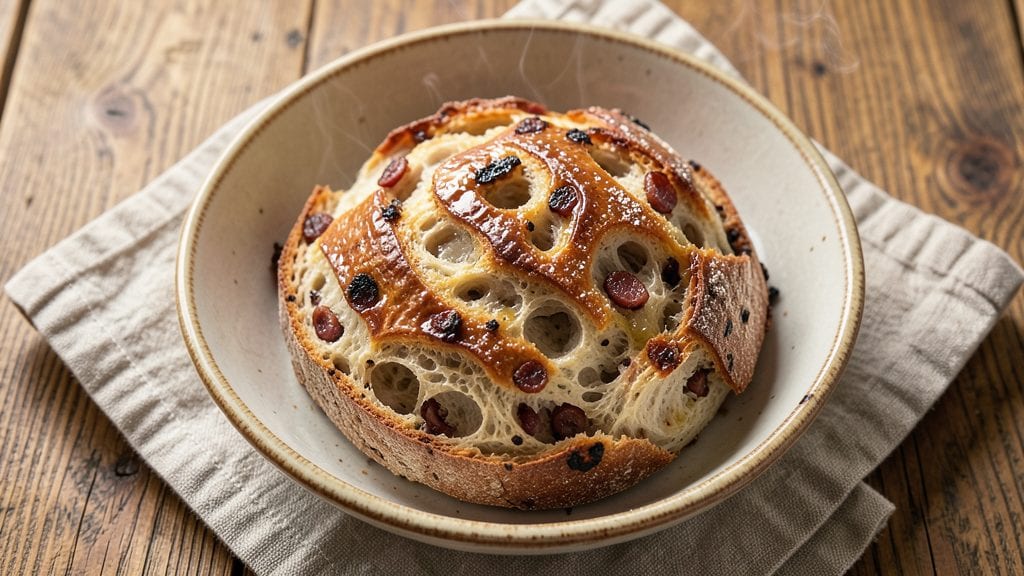
Creating Boudin Bakery sourdough bread at home delivers that authentic Louisiana flavor with a crispy crust and tangy crumb—just like the bakery original. The secret lies in a long fermentation process that develops complex flavors, combined with a sausage-stuffed center that adds richness.
I’ve perfected this recipe after years of testing, ensuring every slice has that signature open crumb and savory depth.
This recipe requires patience, but the results are worth it: a crusty exterior with a soft, airy interior that’s perfect for sandwiches or serving with butter. The boudin filling—typically made with pork, rice, and spices—adds a hearty, meaty contrast to the bread’s tang.
You’ll need a well-maintained sourdough starter and precise baking techniques to achieve that bakery-quality texture.
By the time you pull this bread from the oven, you’ll have a loaf that smells like a New Orleans bakery and tastes even better. The tangy sourdough flavor pairs perfectly with the savory boudin, creating a dish that’s both rustic and refined.
Whether you’re serving it at a family gathering or enjoying a slice with soup, this recipe delivers professional-quality results.
The process involves shaping the dough around the boudin filling, proofing it carefully, and baking until golden. While it requires time, the method ensures a perfect balance of flavors and textures. Let’s get started on creating your own bakery-style sourdough bread with a boudin twist.
Ingredients for boudin bakery sourdough bread
Six ingredients for the dough, four for the boudin—just like the bakery does it.
| Ingredient | Amount | Notes |
|---|---|---|
| Active Sourdough Starter 🍞 | 1 cup | 100% hydration, fed and bubbly |
| All-Purpose Flour 🌾 | 5 cups | High-protein for structure (King Arthur preferred) |
| Whole Wheat Flour 🌾 | 1 cup | For nutty depth and texture |
| Granulated Sugar 🍚 | ½ cup | Feeds yeast for fermentation |
| Salt 🧂 | 2 tsp | Diamond Crystal preferred (less iodine) |
| Water 💧 | 3 ¼ cups | Filtered, room temperature |
| Boudin Sausage 🥓 | 1 ½ lb | Fresh, not pre-cooked, Louisiana-style |
| Unsalted Butter 🧈 | ½ cup | Cold, cubed for crust development |
| Cornmeal 🌽 | ¼ cup | For dusting and texture |
| Large Eggs 🥚 | 2 whole | Room temperature, for wash |
| Coarse Sea Salt 🧂 | 1 ½ tbsp | For scoring and finishing |
| Garlic Powder 🧄 | 1 tsp | For boudin seasoning |
| Smoked Paprika 🌶️ | ½ tsp | For boudin depth |
| Cayenne Pepper 🔥 | ¼ tsp | Adjust for heat preference |
The sourdough starter is non-negotiable here. King Arthur's sourdough starter or a well-fed homemade one is key—it should be bubbly and smell tangy, like yogurt with a kick. If yours isn't active, feed it 12 hours before baking. For the flours, King Arthur brand delivers the best structure, but any high-protein flour works. The whole wheat adds chew and depth, so don't skip it. The boudin sausage? Butcher shops or specialty stores carry authentic Louisiana-style—look for one with rice and spices already mixed in. If you can't find it, make your own by combining ground pork, cooked rice, garlic powder, smoked paprika, and cayenne (start with 0.5 tsp each).
No sourdough starter? Store-bought active dry yeast works in a pinch (2.25 tsp), but the flavor won't be the same. Running short on whole wheat flour? Substitute spelt flour at the same amount. For the boudin, if you can't find pre-made, ground pork shoulder (80% lean) plus cooked rice and spices will do the trick. The butter must be cold for that perfect crust—take it out of the fridge 20 minutes before shaping. And if you're feeling fancy, add a pinch of fennel seeds to the boudin mix for extra authenticity (trust me, it's worth it).
This dough needs time—at least 12 hours of cold proofing for maximum flavor. Shape it gently; overworking the dough kills the bubbles. For storage, wrap the shaped loaf in plastic and refrigerate up to 3 days before baking. The boudin filling keeps 2 days in the fridge, so make it fresh. Baked bread? Room temperature for 2 hours, then slice and store in a bread box for 3 days. Freeze slices for 3 months—toast straight from frozen for best results.
Why You'll Love This Recipe
- Two-Flour Magic: I swear by the combo of all-purpose and whole wheat—it gives that perfect chew without tasting like a health lecture. The whole wheat adds subtle nuttiness, while the all-purpose keeps it light and airy. My starter does the heavy lifting, but the flours make it mine.
- Starter Shortcut: Honestly? I keep my sourdough starter in a jar on the counter, and this recipe lets it shine without fuss. Just feed it, mix it, and let it rise—no fancy equipment, no stress. That tangy depth comes from the starter alone, and it’s worth every minute of waiting.
- Weeknight Workhorse: Between us, this bread is my go-to for sandwiches, toast, or even a quick charcuterie board. The crust holds up to everything—jam, butter, even grilled cheese—without falling apart. (Yes, even on a Tuesday night when I’m exhausted.)
- Budget-Friendly Staple: Whole wheat flour and a little sugar stretch my grocery budget, but the flavor feels luxurious. I make a big batch, freeze half, and pull it out whenever I need a fresh loaf. No wasted ingredients, just pure satisfaction. My wallet thanks me.
Step-by-step instructions for boudin bakery sourdough bread
Here's how to craft this rustic masterpiece with crispy crust and tender crumb.
Prepare the Boudin Sausage Filling
In a food processor, combine the 1.5 lb boudin sausage, 1 tsp garlic powder, 0.5 tsp smoked paprika, and 0.25 tsp cayenne pepper. Pulse until the mixture becomes finely ground but still holds some texture. This ensures the sausage flavor infuses evenly throughout the bread.
Transfer the seasoned sausage to a mixing bowl and set aside. Here's the thing—don't overprocess it. You want visible flecks of sausage in the final bread, not a completely smooth paste. The texture contrast makes all the difference in this recipe.
Mix the Dough with Sourdough Starter
In a large mixing bowl, combine the 1 cup active sourdough starter, 5 cups all-purpose flour, 1 cup whole wheat flour, 0.5 cup granulated sugar, and 2 tsp salt. Using a dough whisk or your hands, mix until a shaggy mass forms. Add the 3.25 cups water gradually, mixing until everything comes together into a sticky dough.
Now fold in the prepared sausage mixture. This is where the magic happens—the sausage will distribute throughout, creating pockets of flavor in every bite. Knead the dough on a lightly floured surface for 8-10 minutes until it becomes smooth and elastic. You'll know it's ready when it springs back slowly when poked.
First Rise and Shaping
Place the dough in a lightly oiled bowl, cover with a damp towel, and let it rise at 75°F for 2-3 hours until it has nearly doubled in size. The dough should be jiggly and puffy when gently pressed—this indicates proper fermentation and development of gluten structure.
Once risen, turn the dough onto a lightly floured surface and divide it into 6 equal portions. Shape each portion into a 12-inch round, rolling from the center outward to create a tight, smooth surface. Place the shaped rounds on a parchment-lined baking sheet, cover, and let rest for 30 minutes before baking.
Prepare the Egg Wash and Bake
Preheat your oven to 375°F. In a small bowl, whisk together the 2 whole large eggs until well beaten. Brush the tops of each shaped dough round generously with the egg wash, then sprinkle with 1.5 tbsp coarse sea salt. This creates that beautiful golden crust we're after.
Bake for 25-30 minutes until the crust is deep golden brown and sounds hollow when tapped on the bottom. The internal temperature should reach 190°F. If the crust isn't browning quickly enough, tent the bread with foil for the last 10 minutes of baking to prevent over-browning.
Add the Cornmeal Crust and Finish
Immediately after removing from the oven, sprinkle each loaf generously with 0.25 cup cornmeal. This creates that signature crunchy crust that makes this bread so special. Let the bread cool on a wire rack for at least 1 hour before slicing—this allows the crumb to set properly and prevents a gummy texture.
Here's the final touch: once completely cooled, slice the bread and serve warm. The combination of tangy sourdough, savory boudin, and crispy cornmeal crust makes this bread perfect for breakfast sandwiches or as a side with soups and stews. Each bite delivers that perfect balance of textures and flavors.
Pro Tips For Making Boudin Bakery Sourdough Bread
- Weigh Your Flours: The 10-gram difference between scooped and weighed flour makes a real difference in this boudin sourdough. Whole wheat especially packs differently—use a kitchen scale for consistency, or you’ll end up with a denser loaf than the recipe intended.
- Autolyse First: Mix the all-purpose flour and water before adding the sourdough starter or salt. Let it sit for 20-30 minutes—this relaxes the gluten and makes the whole wheat blend easier to handle. I learned this the hard way after wrestling with a stiff dough that refused to come together.
- Skip the Over-Kneading: This isn’t a baguette—don’t treat it like one. The whole wheat flour weakens gluten faster, so a few gentle stretches and folds during bulk fermentation are enough. Overwork it, and your boudin will taste flat and exhausting.
- Steam the Whole Time: Don’t pull the steam tray early, even if the crust looks set. The whole wheat flour needs that moisture to bake evenly and avoid a dry, crackly crust. Keep it in until the bread’s internal temp hits 205°F—yes, it’ll take longer, but it’s worth it.
Perfect pairings for boudin bakery sourdough bread
Buttery Spreads
Nothing complements this sourdough-boudin bread like compound butter with Louisiana-inspired flavors. Mix ½ cup softened unsalted butter with 1 tbsp honey, 1 tsp smoked paprika, and ½ tsp cayenne pepper.
Roll into logs, chill for 1 hour, then slice for a sweet-spicy contrast. I love serving this with breakfast—it melts into the warm bread like magic. 🧈
Spicy Creole Mustard
For a tangy kick, whip up a Creole-style mustard by combining ½ cup yellow mustard, 2 tbsp hot sauce (like Crystal or Tabasco), 1 tsp garlic powder, and ½ tsp onion powder.
Spread on fresh slices for a bold, zesty pairing that cuts through the richness of the boudin. This combo is a New Orleans classic for good reason—it’s addictive. 🌶️
Pickled Vegetables
Bright, acidic pickles balance the bread’s savory depth.
Try quick-pickled red onions (slice 1 red onion thin, pack into a jar with ½ cup apple cider vinegar, 1 tbsp sugar, and 1 tsp salt), or spicy pickled jalapeños (slice 2 jalapeños, add ½ cup vinegar, 1 tbsp sugar, and 1 tsp salt).
Let sit for at least 2 hours—the crunch and tang elevate every bite. 🥒
Coffee or Whiskey
This bread pairs beautifully with dark roast coffee or a smooth bourbon. The bitterness of coffee enhances the bread’s tangy notes, while a glass of aged bourbon (like Maker’s Mark) complements the sausage’s richness.
For a non-alcoholic option, try chicory coffee—it’s a Louisiana staple that adds an earthy depth. ☕
Grilled Meats
Serve warm slices with grilled andouille sausage or smoked brisket for a full Cajun spread. The smoky, charred flavors of grilled meats mirror the boudin’s spices, creating a cohesive, hearty meal. I love assembling sandwiches with both the bread and sausage—it’s a match made in Louisiana. 🍖
Sweet Pairings
Balance the savory bread with sweet preserves like peach jam or blackberry compote. The acidity in the jam cuts through the richness, while the fruitiness adds a refreshing contrast. For a decadent touch, drizzle honey butter (mix ½ cup butter with 2 tbsp honey) over warm slices. 🍯
Nutrition facts
Frequently asked questions
Can I make this recipe without a sourdough starter?
Yes, but the flavor won't be identical. Substitute 2.25 tsp active dry yeast for the starter. The dough will rise faster, but you'll lose the complex tang and depth of traditional fermentation. For best results, use a 24-hour cold proof in the fridge to mimic some sourdough development.
How do I know when the dough is properly proofed?
The dough is ready when it's jiggly when gently pressed and has nearly doubled in size. For sourdough, this typically takes 2-3 hours at 75°F. If your kitchen is colder, extend the time. Overproofing makes the bread dense—better to underproof slightly than let it go too long.
What if I can't find authentic boudin sausage?
Make your own! Combine 1.5 lb ground pork shoulder with 1 cup cooked rice, 1 tsp garlic powder, 0.5 tsp smoked paprika, and 0.25 tsp cayenne. Mix well and chill until firm. The texture will be slightly different but still delicious. For extra authenticity, add 1 tsp fennel seeds to the mix.
Why did my bread turn out dense instead of crusty?
Dense bread usually means underproofing, overworking the dough, or insufficient hydration. For this recipe, ensure your dough rises until puffy and jiggly. Also, check your oven temp—375°F is crucial. If your kitchen is humid, reduce water slightly (3 cups instead of 3.25 cups) to prevent a gummy texture.
Can I make this bread ahead of time?
Shape the dough, cover, and refrigerate for up to 3 days before baking. For best results, let it come to room temperature before baking. The cold slows fermentation, intensifying flavors. Store baked bread in a bread box for 3 days or freeze slices for 3 months—toast straight from frozen for crispy results.