
Side Dishes
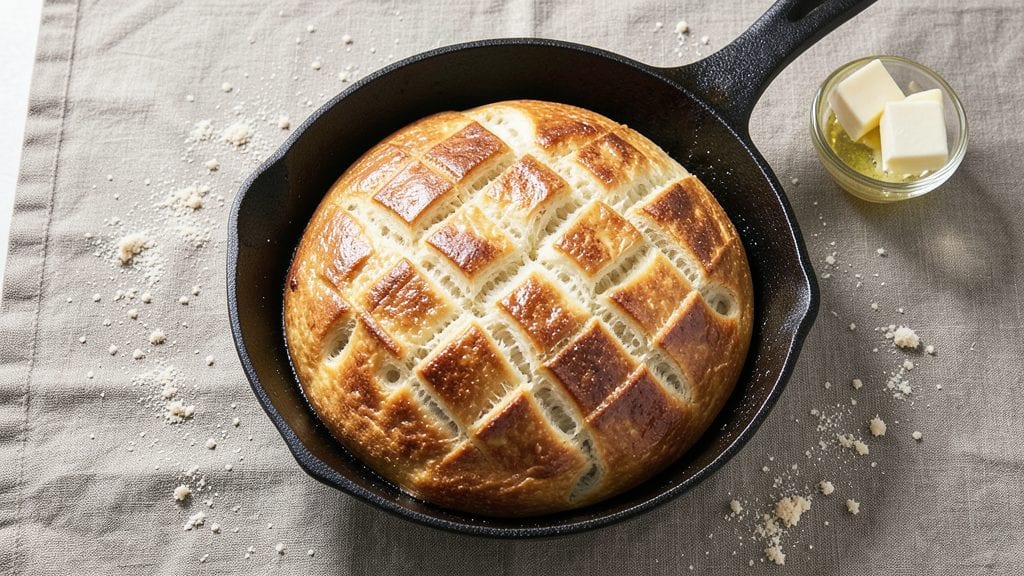
Making cast iron skillet bread transforms a simple dough into golden, pull-apart perfection with a buttery crust that rivals artisanal bakery results. The secret lies in the skillet’s even heat distribution and the way butter melts into the crust during baking, creating that signature crispy-tender texture.
I’ve perfected this recipe after years of testing—no fancy equipment or yeast tricks required, just patience and a well-seasoned pan.
This recipe delivers restaurant-quality bread with just five core ingredients and 45 minutes of active time, plus rising. The dough comes together in minutes, and the skillet does the rest, creating a loaf with a crackly crust and a soft, airy interior that’s impossible to resist.
Whether you’re serving it alongside soups, using it for sandwiches, or simply enjoying it warm with butter, this bread becomes the star of any meal.
The key to success is letting the dough rise properly and preheating the skillet until it’s smoking hot before adding the bread. This ensures the crust forms instantly while keeping the inside tender.
The butter brushed on top during the final minutes of baking melts into the crust, adding richness that turns every bite into a flavor experience. Once you try this method, you’ll never bake bread in a conventional loaf pan again.
Pair this skillet bread with hearty stews, grilled meats, or even as a base for breakfast strata. The versatility makes it a staple for any home cook looking to elevate their side dishes with minimal effort.
Let’s get started on creating bread that tastes like it came from a bakery—but made entirely in your kitchen.
Ingredients for cast iron skillet bread
Five simple ingredients transform your cast iron skillet into bakery-quality bread.
| Ingredient | Amount | Notes |
|---|---|---|
| All-Purpose Flour 🌾 | 3 cups | Spooned and leveled for accuracy |
| Instant Yeast 🍞 | 1 tbsp | Active dry works too (use 2 tsp) |
| Granulated Sugar 🍯 | 1 tbsp | Or honey at half the amount |
| Salt 🧂 | 1 tsp | Fine sea salt preferred |
| Unsalted Butter 🧈 | ½ cup | Cold, cubed for dough |
| Warm Water 💧 | 1 cup | 110°F for optimal yeast activation |
| Melted Butter 🧈 | ¼ cup | For brushing crust (plus extra) |
| Coarse Sea Salt 🧂 | 1 tbsp | For sprinkling top (optional) |
The flour is non-negotiable—King Arthur or Gold Medal work best for this recipe due to their protein content. Bulk bins at Whole Foods offer the freshest options, but any all-purpose will do in a pinch. The yeast should be stored in the fridge to maintain potency; if it's past its expiration date, grab a fresh packet. For the butter, Land O'Lakes or Plugrá brands melt beautifully without separating, which is critical for that signature buttery crust. Keep your cast iron well-seasoned—this isn't the time to experiment with a new pan.
No instant yeast? Active dry yeast requires 10 minutes of proofing in warm water first. Running short on sugar? Honey or maple syrup at half the amount adds subtle depth. For a lower-fat option, reduce butter to 0.25 cup and add 1 tbsp olive oil, though the crust won't be quite as rich. The warm water should feel like bathwater—not hot enough to kill the yeast, but warm enough to activate it. If your kitchen runs cold, microwave the water for 40 seconds before dissolving the sugar and yeast. For the melted butter, European-style butter like President has a higher fat content, making it perfect for brushing.
This dough keeps in the fridge for up to 48 hours if wrapped tightly in plastic. For longer storage, freeze the shaped dough ball for 3 months—thaw overnight in the fridge before baking. The cast iron skillet should be preheated until smoking hot before adding the bread to ensure that perfect crust. Any leftover bread reheats beautifully in a 350°F oven for 5-10 minutes, wrapped in foil to retain moisture. Store cooled bread in a paper bag at room temperature for up to 3 days to prevent sogginess.
Why You'll Love This Recipe
- Skillet Magic in Minutes: I swear, this bread comes together faster than my morning coffee. Just mix, let it rise while you prep dinner, then slide it into that hot cast iron—no fancy tools, no stress.
- Buttery Crust, Soft Core: That crispy, golden crust? Pure butter magic. The sugar caramelizes just enough to give it a subtle sweetness, while the inside stays pillowy—like a hug from a bakery, but made by you.
- Weeknight Hero: I make this when I forget to plan. It’s perfect with soup, slathered in jam for breakfast, or even as a side for tacos. Honestly, it’s my “I have no idea what to cook” lifesaver.
- Budget-Friendly Staples: Flour, yeast, butter—ingredients you already own. And leftovers? They toast up just as good the next day. Between us, this is how I stretch my grocery budget without sacrificing flavor.
Step-by-step instructions for cast iron skillet bread
This method delivers a rustic, golden crust with tender, pull-apart crumb every time.
Mix the Dough and Let It Rise
In a large mixing bowl, combine the 3 cups all-purpose flour, 1 tablespoon instant yeast, 1 tablespoon granulated sugar, and 1 teaspoon salt. Stir gently to distribute the dry ingredients evenly. Create a well in the center and add the ½ cup cold cubed unsalted butter. Using your fingers or a pastry cutter, work the butter into the flour until the mixture resembles coarse crumbs with pea-sized butter pieces remaining.
Pour in the 1 cup warm water (around 110°F) and mix with a wooden spoon until a shaggy dough forms. Knead the dough on a lightly floured surface for 5-7 minutes until smooth and elastic. The dough should be slightly tacky but not sticky—if it sticks too much, add 1 tablespoon more flour at a time until it comes together cleanly. Shape the dough into a ball, place it back in the bowl, cover with a damp towel, and let it rise in a warm place for 1-2 hours or until doubled in size. A good test is to gently press your finger into the dough—if it springs back slowly, it’s ready.
Shape and Proof the Dough in the Skillet
Preheat your cast iron skillet over medium heat for 2-3 minutes to warm it up. While the skillet heats, punch down the risen dough to release any air bubbles. On a lightly floured surface, shape the dough into a 12-inch round (about ½-inch thick). Gently transfer the dough to the warm skillet, seam-side up, and let it proof for 20-30 minutes in a warm place until it puffs up noticeably. The edges should pull away slightly from the skillet, indicating it’s ready for baking.
Here’s the thing—if the dough doesn’t puff much, don’t worry. Simply cover the skillet loosely with a towel and let it proof a little longer. The key is to ensure the dough has expanded enough to fill the skillet but hasn’t overproofed, which would make it dense.
Bake for a Golden, Crispy Crust
Preheat your oven to 425°F. Once the dough has proofed, brush the top of the bread with the ¼ cup melted butter, reserving a little for later. Sprinkle the 1 tablespoon coarse sea salt evenly over the top. Place the skillet in the preheated oven and bake for 20-25 minutes until the bread is deep golden brown and sounds hollow when tapped on the bottom. If the top browns too quickly, tent the skillet loosely with aluminum foil to prevent over-browning while the center finishes baking.
During the last 2 minutes of baking, brush the top of the bread with the reserved melted butter for extra shine and flavor. This step ensures a crispy, buttery crust that’s irresistible. Remove the skillet from the oven and let the bread cool in the skillet for 5 minutes before transferring it to a wire rack to cool completely.
Pro Tips For Making Cast Iron Skillet Bread
- Preheat That Skillet: DESCRIPTION: Cast iron needs to scream hot—think 450°F, not lukewarm. I learned this the hard way when my first batch stuck like glue. Let it sit for 10 minutes before adding the dough, and don’t skip the oil afterward. That nonstick layer is your best friend.
- Cut Cold Butter: DESCRIPTION: Use chilled butter straight from the fridge, cut into ¼-inch cubes. Warm butter melts too fast and makes the bread greasy instead of flaky. I was skeptical until I tried it—now it’s non-negotiable.
- Skip the Overproofing: DESCRIPTION: This dough doubles fast. Watch it closely—it should puff up to about 50% more than the bowl’s height, not fill the whole kitchen. Overproofing means a dense, flat loaf, and no one wants that.
- Press Hard, Smooth Flat: DESCRIPTION: Press the dough into the skillet with the heel of your hand until it’s even and thin—no thick spots. I used to slap it in there half-heartedly, and the bread turned out lumpy. A smooth surface = even baking.
Storing and reheating your leftovers
Skillet Storage Essentials
After baking, let your skillet bread cool completely in the pan before storing. The residual heat helps set the crust, preventing sogginess. Transfer the bread to a paper bag or bread box at room temperature—this keeps it fresh for 3 days.
The cast iron retains heat longer, so avoid storing it directly in the skillet overnight, as condensation can develop. 🌾
Refrigerator Revival
For leftovers, wrap cooled slices in plastic wrap or store them in an airtight container with a paper towel underneath to absorb moisture.
Reheat individual slices in a 350°F oven for 5-7 minutes or use the skillet method: place slices in the cold skillet over medium heat for 2-3 minutes per side until golden and crispy again. This method restores that bakery-fresh texture perfectly.
Freezer-Friendly Prep
Shape and proof the dough as directed, then wrap it tightly in plastic wrap followed by a foil layer to prevent freezer burn. Store for up to 3 months. When ready to bake, thaw the dough overnight in the fridge, then proceed with the skillet method.
The dough may take slightly longer to proof after thawing—keep an eye on it and let it rise until it nearly doubles in size. 🧊
Oven Reheating Tricks
For a quick reheat, place bread slices on a baking sheet and warm in a 375°F oven for 4-5 minutes. For extra crispiness, brush with melted butter before reheating.
Alternatively, wrap the entire loaf in aluminum foil and reheat at 325°F for 10 minutes to warm through without drying. This gentle method preserves moisture while reactivating the crust’s crispness.
Skillet Crisp Refresh
Revive stale bread directly in the skillet: heat it over medium heat for 1-2 minutes, then add 1 tablespoon butter and cover with a lid for 30 seconds.
The steam and butter work together to restore that golden, buttery crust. This method works best for whole loaves or large slices—perfect for breakfast sandwiches or soup dipping. 🔥
Nutrition facts
Frequently asked questions
Can I make this bread without a cast iron skillet?
A heavy oven-safe skillet (like stainless steel) works in a pinch, but cast iron's heat retention creates that signature crispy crust. For best results, use a well-seasoned 10-inch skillet—it should be hot enough to sizzle when the dough touches it. If you don't have cast iron, try a baking stone or Dutch oven for similar texture.
Why did my bread turn out dense instead of fluffy?
Dense bread usually means the dough didn't rise enough. Check your yeast—it should be fresh (test by dissolving in warm water with sugar; if it bubbles within 5 minutes, it's active). Also ensure your kitchen is warm (75°F+) for rising, and don't skip the 20-30 minute proofing in the skillet. Over-kneading can also compact the dough—stop when it's smooth but still slightly tacky.
How do I know when the skillet is hot enough?
The skillet should be preheated until it's smoking hot—a few drops of water should sizzle and evaporate instantly. For visual confirmation, hold your hand about 6 inches above it: if you can't keep it there for 3 seconds, it's ready. This extreme heat creates that perfect crust. If unsure, preheat the oven to 425°F and place the skillet inside for 5 minutes before adding dough.
Can I add herbs or cheese to this recipe?
For herbs, try 1 tablespoon dried rosemary or thyme mixed into the dry ingredients. For cheese, fold in ½ cup shredded parmesan with the butter during kneading. Keep additions to ½ cup total to maintain the bread's texture. Pro tip: Sprinkle garlic powder on top before baking for extra flavor. The skillet method works beautifully with these variations.
How do I clean my cast iron skillet after baking bread?
Let the skillet cool completely, then scrub with a stiff brush and hot water while it's still warm. Avoid soap—it strips seasoning. For stuck-on bits, sprinkle coarse salt and scrub with a paper towel. Dry thoroughly over medium heat, then rub with a thin layer of oil. Store in a dry place. Never soak your cast iron! This keeps your skillet ready for the next perfect loaf.