
Side Dishes
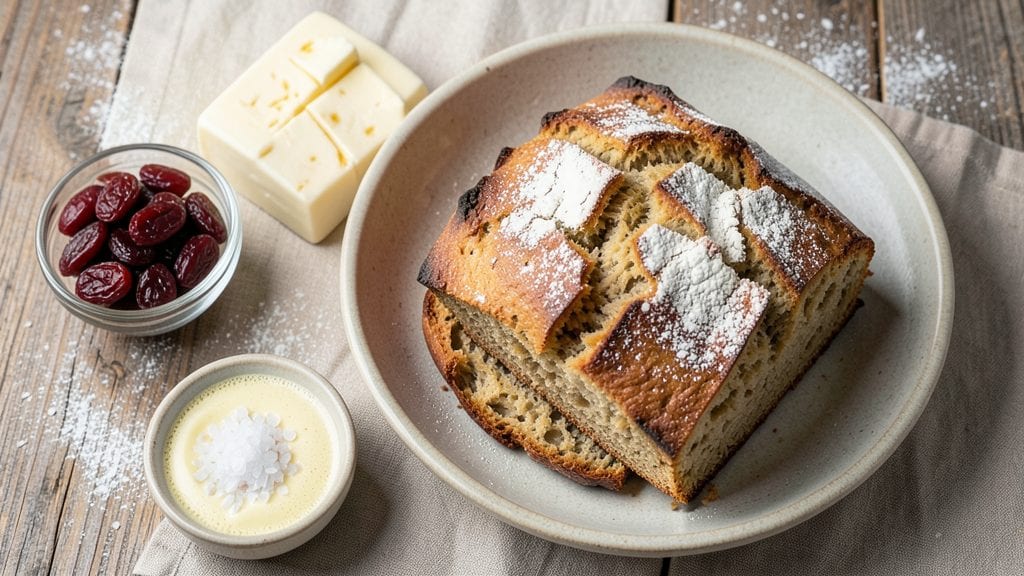
This classic Irish soda bread recipe delivers the rustic, hearty loaf that defines Irish tradition—no yeast, no kneading, just simple ingredients and a timeless method. The signature cross on top isn’t just decoration; it ensures even baking while honoring centuries-old practice.
I’ve perfected this version with buttermilk and raisins for subtle sweetness, though the dough remains versatile enough for seeds or currants if you prefer.
The beauty of soda bread lies in its simplicity: just flour, baking soda, salt, butter, and buttermilk come together in minutes. The dough’s airy texture comes from the chemical reaction between baking soda and buttermilk, creating a tender crumb without yeast’s need for rising time.
For an extra touch of tradition, I recommend baking it in a cast-iron skillet—it adds a crispy crust that’s impossible to resist.
What you’ll end up with is a loaf with a golden crust, a tender crumb studded with plump raisins, and that unmistakable soda bread aroma. It’s perfect for breakfast with butter, paired with soups, or served alongside hearty stews.
The recipe yields a loaf that stays fresh for days, making it ideal for meal prep or gifting.
For those avoiding dairy, simply substitute the butter with vegan margarine and use plant-based buttermilk. The method remains the same, proving this classic can be both traditional and adaptable. Let’s get baking!
Ingredients for classic irish soda bread
Nine simple ingredients for the iconic Irish loaf—no yeast, no fuss, just tradition.
| Ingredient | Amount | Notes |
|---|---|---|
| All-Purpose Flour 🌾 | 4 cups | Unbleached preferred for traditional texture |
| Baking Soda 🧂 | 1 tbsp | Pure, high-quality for proper rise |
| Salt 🧂 | 1 tsp | Fine sea salt for balanced flavor |
| Unsalted Butter 🧈 | ½ cup | Cold, cubed for proper mixing |
| Buttermilk 🥛 | 1 ¼ cups | Room temperature for best results |
| Raisins 🍇 | ¾ cup | Plump, seedless preferred |
| Granulated Sugar 🍚 | ¼ cup | For subtle sweetness balance |
| Fresh Milk 🥛 | ¼ cup | Optional, for extra tenderness |
| Flaky Sea Salt 🧂 | 1 tsp | For topping before baking |
The flour is the foundation here. King Arthur or Bob's Red Mill all-purpose flour yields the best texture—both brands are widely available and consistently reliable. For an extra rustic touch, you can substitute up to 1 cup with whole wheat flour, though the crumb will be denser. The baking soda must be fresh; if it's older than 6 months, the loaf won't rise properly. Arm & Hammer or Bob's Red Mill brands are my go-to for guaranteed potency. Raisins should be plump and seedless—Sun-Maid or Thompson brand raisins work perfectly, but any good-quality dried fruit will do.
No buttermilk on hand? Mix 1 tablespoon lemon juice or vinegar with 1 cup milk and let sit for 5 minutes. For a dairy-free version, use unsweetened almond milk with 1 tablespoon vinegar. The sugar can be swapped for honey or maple syrup at a 1:1 ratio, though the loaf will be slightly moister. If you prefer seeds over raisins, try 1/2 cup pumpkin seeds or sunflower seeds—toast them first for extra flavor. The fresh milk is optional but recommended for that signature tender crumb; if omitted, simply add an extra 1/4 cup of buttermilk instead.
This loaf keeps beautifully at room temperature for 2-3 days wrapped in a clean kitchen towel. For longer storage, freeze the whole loaf (unwrapped) for up to 3 months. To revive, warm in a 350°F oven for 10-15 minutes until crispy again. Slice with a serrated knife for clean cuts—this bread is dense enough that a regular knife will gum up. Leftovers make excellent toast or French toast; the raisins caramelize beautifully when buttered.
Why You'll Love This Recipe
- No Mixer Needed: I swear by this recipe because it’s the only bread I make without turning on my KitchenAid. Just flour, buttermilk, and a pinch of baking soda—no kneading, no fuss. The dough comes together in minutes, and honestly? That’s half the battle won right there.
- Buttermilk Magic: That tangy buttermilk soaking into the flour gives it a texture I can’t get enough of—soft, slightly dense, with just the right chew. And when you add a pat of cold butter before baking? The crumb turns into pure, buttery satisfaction. It’s the kind of bread that makes you pause mid-bite.
- Stays Fresh for Days: I make a loaf on Sundays, and it’s still perfect by Thursday—no sad, stale crumbs in sight. The baking soda keeps it moist, and if I’m feeling fancy, I’ll wrap it in foil and reheat slices in the toaster. My kids think I’m a genius, and honestly? So do I.
- Budget-Friendly Staple: Five ingredients, none of them fancy. This bread costs me pennies to make but feels like a treat. I use it for breakfast toast, sandwiches, or even crumbled over soups—it’s my secret weapon for stretching meals without breaking the bank. Plus, the leftovers? Always disappear fast.
Step-by-step instructions for classic Irish soda bread
This method delivers a rustic loaf with a crisp crust and tender crumb—just like Ireland's finest.
Prepare the Raisins and Mix Dry Ingredients
In a small bowl, combine the 0.75 cup raisins with the 0.25 cup granulated sugar. Let them sit for 5 minutes—this allows the raisins to plump slightly and absorb some of the sugar's sweetness. This step prevents them from staying dry in the finished bread.
In a large mixing bowl, whisk together the 4 cups all-purpose flour, 1 tbsp baking soda, and 1 tsp salt. Sift the ingredients lightly to aerate the flour, which helps create a lighter texture. I like to press down any large flour lumps with my fingers to ensure even distribution of the leavening agent.
Cut in the Cold Butter
Add the 0.5 cup unsalted butter, cut into small cubes, to the dry ingredients. Using a pastry cutter or your fingers, work the butter into the flour mixture until it resembles coarse crumbs with pea-sized butter pieces remaining. This texture is crucial—overworking will develop gluten and make the bread dense.
The butter should be cold when you start, but it will soften slightly as you work it in. If it melts completely, chill the mixture for 10 minutes before proceeding. The butter creates pockets of steam during baking, which gives soda bread its signature tender crumb.
Combine Wet Ingredients and Form the Dough
Make a well in the center of the dry mixture and pour in the 1.25 cups buttermilk and 0.25 cup fresh milk. Stir gently with a wooden spoon until just combined—you'll notice the dough will come together quickly due to the baking soda's chemical reaction. Add the sugar-soaked raisins and mix until evenly distributed throughout.
Turn the dough onto a lightly floured surface and knead gently for 1 minute, just until it holds together. Irish soda bread doesn't need extensive kneading—overworking develops gluten, which would make the bread tough. Shape the dough into a round loaf about 2 inches thick and 6 inches in diameter.
Shape and Score the Loaf
Place the shaped dough on a parchment-lined baking sheet. Using a sharp knife or razor, make a deep cross on top of the loaf—this traditional scoring allows the bread to expand properly and prevents excessive cracking. Press down firmly on the dough to create a slight indentation in the cross.
Sprinkle the top evenly with 1 tsp flaky sea salt. This step enhances the bread's flavor and adds a beautiful contrast to the golden crust. Let the loaf rest at room temperature for 20 minutes while you preheat your oven to 375°F. This resting period allows the gluten to relax slightly, resulting in a more tender crumb.
Bake to Golden Perfection
Place the loaf in the preheated oven and bake for 45-50 minutes until the crust is deep golden brown and sounds hollow when tapped on the bottom. The internal temperature should reach 190°F when measured with an instant-read thermometer. Don't overbake—Irish soda bread continues cooking slightly as it cools.
Remove the bread from the oven and let it cool on a wire rack for 15 minutes before slicing. The bread will be warm and fragrant, with a crisp exterior and soft, slightly crumbly interior. Serve warm with butter or jam for the authentic Irish experience.
Pro Tips For Making Classic Irish Soda Bread
- Mix Just Until Combined: DESCRIPTION: Stop stirring the moment the dry ingredients disappear—overmixing makes soda bread dense and tough. I used to knead it like pizza dough, and the result was more brick than bread.
- Use Cold Butter: DESCRIPTION: Cut that butter into small cubes and let them stay cold while mixing—this keeps the crumb tender and prevents a greasy mess. Warm butter melts too fast, and suddenly you’re dealing with a sticky disaster.
- Skip the Overproofing: DESCRIPTION: This isn’t yeast bread—let the dough rest for 10 minutes max after mixing. I once left mine 30 minutes, and it turned out flat and sad. The baking soda works fast; don’t let it fizz away.
- Preheat That Dutch Oven: DESCRIPTION: Get it screaming hot before adding the bread—this guarantees a crisp crust and even rise. I learned this after my first batch emerged with a sad, pale top. (Yes, even if you’re impatient like me.)
Make-ahead tips for leftovers
Prep Ahead for Freshness
This bread is perfect for meal prep—I often make a double batch and store it in an airtight container at room temperature for 3-4 days. Wrap it in a clean kitchen towel to maintain moisture and prevent drying.
The raisins stay plump and the crust remains crispy when stored this way. For longer storage, freeze the loaf (unwrapped) for up to 3 months—just thaw at room temperature for 1-2 hours before serving. 💫
Freezing Dough for Convenience
Shape the dough as directed, then wrap it tightly in plastic wrap followed by a foil layer. Freeze for up to 1 month. When ready to bake, thaw overnight in the fridge, then proceed with scoring and baking.
The texture remains light and tender, though the crust may need 2-3 extra minutes at 375°F to crisp up. I love this method for busy mornings—just pull it from the freezer and bake straight from frozen, adding 5-10 minutes to the baking time.
Reviving Stale Bread
If your soda bread loses its crispness, revive it by wrapping the loaf in aluminum foil and heating at 350°F for 10-15 minutes. The steam rehydrates the crumb while the foil traps heat to restore the crust.
For a quick fix, toast slices in a toaster oven at 375°F for 3-4 minutes—the raisins caramelize beautifully this way. This trick works especially well for breakfast toast or French toast. 🔥
Make-Ahead Jam Filling
For a special touch, prepare a quick jam filling by simmering 1 cup raisins, ½ cup honey, and 1 tsp lemon juice for 10 minutes until thickened. Cool completely, then slice the baked loaf horizontally and spread the filling between layers before serving.
This adds a sweet contrast to the buttery bread—perfect for holiday gatherings. Store the filled loaf in the fridge for up to 2 days.
Batch Baking for Gifting
Double the recipe and bake two loaves for easy gifting. Wrap each in parchment paper, tie with twine, and add a sprig of fresh rosemary for a rustic touch. These keep at room temperature for 5 days or freeze for 3 months.
The raisins stay moist, and the crust remains crisp when properly wrapped. I’ve given these as housewarming gifts—they’re always a hit! ✨
Day-Old Bread Upgrades
Use day-old slices to make soda bread croutons by tossing with 1 tbsp olive oil, 1 tsp dried thyme, and ½ tsp garlic powder. Toast at 375°F for 8-10 minutes until golden.
These add crunch to soups or salads. Alternatively, blend stale bread with butter and garlic for garlic breadcrumbs—perfect for meatloaf or casserole toppings. Waste not, want not! 💡
Nutrition facts
Frequently asked questions
Why does traditional Irish soda bread have a cross on top?
The cross isn't just decoration—it serves two practical purposes. First, it prevents the bread from cracking as it expands during baking. Second, it's a nod to ancient Irish tradition where the cross symbolized protection and blessing. The cuts also help distribute heat evenly for consistent baking.
Can I make this soda bread without buttermilk?
Mix 1 tablespoon lemon juice or vinegar with 1 cup milk and let it sit for 5 minutes to create a buttermilk substitute. For a dairy-free version, use unsweetened almond milk with 1 tablespoon vinegar. The acidity is what activates the baking soda for proper rise.
What if my dough is too sticky to handle?
Add 1-2 tablespoons more flour only if absolutely necessary, but don't overdo it—too much flour makes the bread dense. The dough should be soft and slightly tacky, not wet. If your kitchen is humid, chill the dough for 10 minutes before shaping to firm it up slightly.
How do I know when it's fully baked?
Your bread is done when the crust is deep golden brown and sounds hollow when tapped on the bottom. The internal temperature should reach 190°F on an instant-read thermometer. Let it cool for 15 minutes before slicing—this prevents the crumb from falling apart.
Can I add other mix-ins besides raisins?
Try sunflower seeds, pumpkin seeds, or currants for extra texture. For savory versions, omit the sugar and add 1 teaspoon dried herbs like rosemary or thyme. Just remember to soak any dried fruit in warm water for 5 minutes first to prevent dry spots.