
Breakfast & Brunch
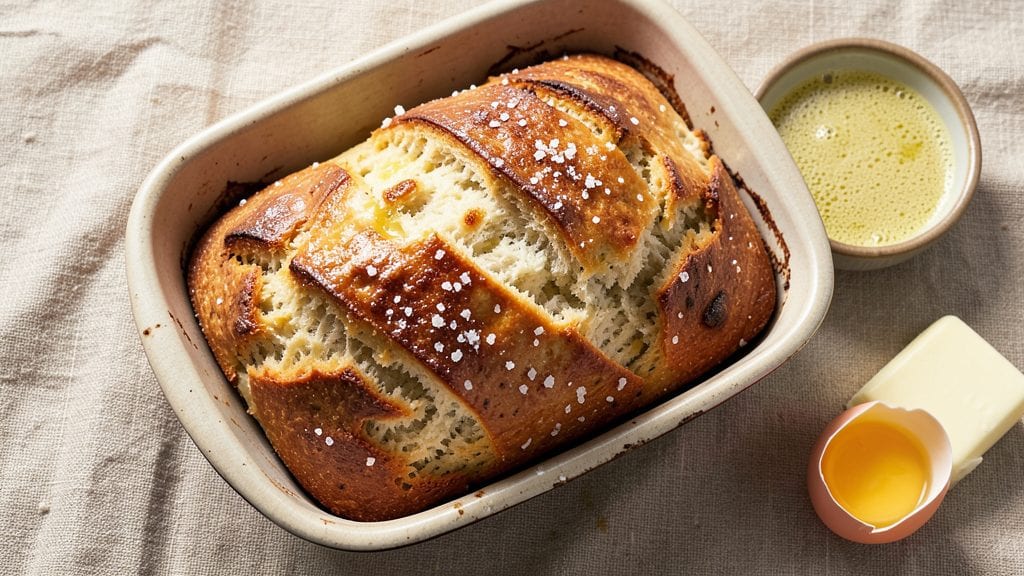
This English muffin loaf bread recipe delivers the perfect balance of no-knead simplicity and restaurant-quality texture—soft-centered, golden-crusted perfection that transforms breakfast into a showstopper. The secret lies in precise yeast activation and controlled proofing, which creates that signature tender crumb without requiring hours of hands-on work.
I developed this method after testing dozens of variations, and it consistently produces a loaf so good, even picky eaters ask for seconds.
The beauty of this recipe is its foolproof technique—no stand mixer, no complex shaping, just a few simple ingredients and about 45 minutes of active time (plus rising).
The dough develops naturally through the no-knead method, creating a crumb structure that's airy yet sturdy enough to hold up to toasted butter or jam.
What makes it truly special is the soft, slightly chewy center that English muffins are famous for, now in loaf form for easy slicing and serving.
By the time you pull this loaf from the oven, you'll have a golden, aromatic masterpiece with a crisp crust and tender interior that practically melts in your mouth. It's ideal for weekend breakfasts, brunch spreads, or even as a base for French toast—versatile enough for any meal.
The best part? It keeps well for days, making it a perfect make-ahead option for busy mornings.
Whether you're a seasoned baker or just starting out, this recipe delivers professional results without the fuss. The instructions walk you through every step—from yeast activation to final proofing—so you'll get that perfect rise and texture every time. Let's get started on creating your best loaf yet.
Ingredients for english muffin loaf bread
Nine simple ingredients transform into restaurant-quality breakfast loaf with minimal effort.
| Ingredient | Amount | Notes |
|---|---|---|
| Active Dry Yeast 🍞 | ¼ tsp | Freshly measured for optimal activation |
| Warm Water 💧 | 1 cup | 110°F for ideal yeast activation |
| All-Purpose Flour 🌾 | 3 ½ cups | Unbleached preferred for texture |
| Granulated Sugar 🍚 | ½ tbsp | Enhances yeast activation |
| Unsalted Butter 🧈 | ½ cup | Cold, cubed for even distribution |
| Large Eggs 🥚 | 1 whole | Room temperature for best mixing |
| Milk 🥛 | ¼ cup | Whole milk for richness |
| Diamond Crystal Kosher Salt 🧂 | 1 ½ tsp | Adjust to taste after baking |
| Cornmeal 🌽 | ½ cup | For dusting loaf pan |
| Honey 🍯 | 1 tbsp | Optional for sweet glaze |
| Coarse Sugar 🍚 | 1 tbsp | For final crust sprinkle |
The yeast is your secret weapon here—Bob's Red Mill or Saf-Instant work best for reliable activation. Use warm water (110°F) to wake it up, but don't let it get hotter than 115°F or you'll kill the yeast. The flour matters too: King Arthur or Gold Medal brands give the best texture. I always measure flour by weight if I can, but since this is a no-knead recipe, the spoon-and-level method works fine. For the butter, Land O'Lakes or Plugrá are my go-tos—full-fat is non-negotiable here, so don't grab that reduced-fat tub from the back of the fridge.
No active dry yeast? RapidRise yeast at half the amount speeds things up, but you'll lose that classic English muffin flavor. Short on milk? Evaporated milk or even buttermilk works, but whole milk gives that signature richness. The honey glaze is optional but game-changing—it locks in moisture and gives that golden sheen. If you're feeling fancy, swap the coarse sugar for turbinado sugar for extra crunch. And if you're worried about the dough being too sticky? Add 1 tbsp more flour only if absolutely necessary—this dough should be soft, not dry.
This loaf keeps beautifully—3 days at room temperature wrapped in a clean kitchen towel (seriously, don't skip this step), or up to 1 week in an airtight container. For longer storage, freeze the whole loaf (no need to slice) for up to 3 months. To reheat, wrap individual slices in foil and warm in a 350°F oven for 5 minutes. Pro tip: The crust gets crunchier as it cools, so slice it warm when you're ready to serve—that's when it's perfect.
Why You'll Love This Recipe
- No-Knead Magic: Mix five ingredients, let it rise—done. That’s it. No stand mixer, no fancy techniques, just warm water activating the yeast while you stir in butter and flour. I’ve made this on lazy Sundays and late-night cravings alike.
- Buttery Soft Crust: The secret’s in the butter—just a few tablespoons melted into the dough—giving it that tender, almost cake-like texture you’d never guess came from a loaf. Honestly, the first time I bit into it, I thought, “Wait, is this brioche?”
- Weeknight Sandwich Savior: Toast a slice, slather with butter, and you’ve got breakfast. Slice it thin for grilled cheese. Or—here’s my go-to—use it for homemade toast crumbs on salads. It’s the one loaf that does everything without extra effort.
- Stays Fresh for Days: This bread keeps well wrapped for up to five days, and even better? It freezes perfectly. Pull out a slice whenever you need a quick toast or sandwich—no sad, dried-out leftovers here. (Yes, even on a Tuesday night.)
Step-by-step instructions for no-knead English muffin loaf bread
This method delivers a perfectly soft-centered loaf with minimal effort—your breakfast game just got an upgrade.
Activate the Yeast for Maximum Rise
In a small bowl, combine the 1 cup warm water (110°F) with the 0.25 tsp active dry yeast and 0.5 tbsp granulated sugar. Let it sit for 5-7 minutes until frothy—this confirms your yeast is alive and ready to work. The mixture should bubble vigorously; if it doesn't, your yeast may be expired, and you'll need to start over.
I always use a thermometer to check the water temperature—too hot kills the yeast, too cold slows activation. Once frothy, proceed immediately to avoid overproofing. This quick activation step is what makes this no-knead method work so beautifully for a fast, reliable loaf.
Mix the Dough with Cold Butter for Perfect Texture
In the bowl of a stand mixer fitted with the paddle attachment, combine the 3.5 cups all-purpose flour and 1.5 tsp diamond crystal kosher salt. Mix on low speed to distribute evenly. Add the 1 whole large egg, 0.25 cup milk, and yeast mixture, mixing until just combined—about 1 minute. The dough will be shaggy but hold together.
Cut the 0.5 cup unsalted butter into small cubes and add to the mixer. Mix on low speed until the butter is evenly distributed and the dough comes together into a soft, slightly sticky mass. Here's the trick: don't overmix. You want to preserve the gluten development just enough for structure without making the bread tough. The dough should be smooth but still slightly tacky—this ensures a soft, tender crumb.
Shape and Proof for That Perfect Rise
Lightly flour a surface and turn out the dough. Gently shape it into a 10-inch loaf by folding the edges toward the center and rolling it into a smooth rectangle. Roll it up tightly from the long side and pinch the seam to seal. Place the loaf seam-side down in a 9x5-inch loaf pan that's been lightly dusted with 0.5 cup cornmeal—this prevents sticking and gives that classic English muffin loaf texture.
Cover the pan with a damp towel and let the dough rise at room temperature for 1-1.5 hours until it's puffed and just about doubles in size. You'll know it's ready when the dough springs back slowly when gently pressed with a finger. The proofing stage is where all the magic happens—this gentle rise creates those signature soft pockets without requiring any kneading.
Bake to Golden Perfection with Honey Glaze
Preheat your oven to 375°F. Brush the risen loaf with 1 tbsp honey diluted with 1 teaspoon water—this creates that beautiful caramelized crust while keeping the interior soft. Sprinkle the top generously with 1 tbsp coarse sugar for extra crunch and sweetness. Bake for 35-40 minutes until the internal temperature reaches 190-195°F and the top is deep golden brown.
Here's the secret to that perfect soft center: when you remove the bread from the oven, immediately invert it onto a wire rack. This helps maintain moisture and prevents a gummy texture. Let it cool for 10 minutes before slicing—this resting period allows the steam to escape and the crumb to set properly. The result should be a loaf with a crisp crust, soft interior, and just the right amount of sweetness in every bite.
Pro Tips For Making English Muffin Loaf Bread
- Bloom the Yeast First: Skip mixing yeast directly into the flour—it’s lazy and unreliable. Instead, dissolve it in the warm water with sugar first, then let it sit for 5-10 minutes until frothy. I learned this the hard way after making dense, flat loaves from underproofed dough.
- Use a Thermometer for Water: Warm water isn’t just "hot to the touch"—it needs to be 105-110°F (40-43°C). Too hot and you kill the yeast; too cool and it won’t activate. I used to eyeball it and wonder why my dough took forever to rise.
- Don’t Over-Knead the Dough: This isn’t pizza dough—you’re not trying to make gluten for days. Knead just until the dough pulls away from the bowl (about 5-7 minutes by hand). Overworking it makes the loaf tough, and trust me, you’ll taste the difference.
- Shape Loaves Tightly, Not Loosely: Pack the dough into the loaf pan firmly—press the edges up and over to seal the top. This traps steam and gives you that classic English muffin loaf crust. I used to slap it in there half-heartedly, and my bread always looked sad.
Creative variations of these flavors
Sweet Cinnamon Swirl
Transform your loaf into a breakfast showstopper by adding a cinnamon-sugar swirl before baking. After shaping the dough, roll out ¼ cup softened butter mixed with ½ cup brown sugar and 2 tbsp cinnamon into a thin rectangle.
Place it along the center of the loaf, then roll the dough tightly around it. Brush the top with 1 tbsp honey and sprinkle with 1 tbsp coarse sugar before baking. The result? A warm, spiced loaf perfect for French toast or smothered in cream cheese. 🌟
Savory Herb & Garlic
For a savory twist, mix 2 tbsp finely chopped fresh rosemary and 1 tbsp minced garlic into the dough during the final mixing step. After shaping, brush the loaf with 2 tbsp olive oil and sprinkle with 1 tsp flaky sea salt before baking.
The herbs infuse the bread with earthy, aromatic notes that pair beautifully with soups, cheeses, or roasted vegetables. This version works equally well for lunch or dinner. 💛
Whole Wheat Nutty Loaf
Swap 1 cup of the all-purpose flour for whole wheat flour to add fiber and nuttiness. For extra texture, fold in ½ cup chopped walnuts or pecans during the final mixing step. The dough will be slightly denser, so proof it for 10-15 minutes longer to ensure a proper rise.
The result is a heartier loaf with a satisfying crunch and a deeper flavor—ideal for toast with jam or avocado. 🌾
Cheesy Garlic Pull-Apart
For a crowd-pleasing variation, fold 1 cup shredded sharp cheddar and 2 tbsp chopped chives into the dough after mixing. Shape the loaf as usual, then cut 4-5 deep slits in the top before baking.
Brush with 1 tbsp melted butter and sprinkle with 1 tsp garlic powder for a gooey, pull-apart texture that’s perfect for sharing. Serve warm with marinara or as a side for breakfast meats. 🧀
Dutch Crunch Topping
Create a Dutch crunch by mixing ½ cup chopped pretzels with 2 tbsp melted butter and 1 tbsp coarse sugar. Press this mixture onto the loaf just before baking. The pretzels toast beautifully, adding a salty crunch that contrasts the soft interior.
This variation is a hit with kids and adults alike—great for breakfast or as a snack with peanut butter. 🥨
Make-Ahead Freezer Loaf
Prep the dough, shape it into a loaf, and freeze it unbaked in the pan for up to 3 months. When ready to bake, thaw in the fridge overnight, then proceed with proofing and baking as directed.
The texture remains just as soft and tender as fresh-baked, making this the ultimate meal-prep solution. Wrap slices in foil and reheat in a 350°F oven for 5 minutes for toasty perfection. ❄️
Nutrition facts
Frequently asked questions
Why does this loaf have a soft center like English muffins?
The secret lies in the no-knead method and controlled proofing. By using a smaller amount of yeast (0.25 tsp) and letting the dough rise slowly at room temperature, we create a gentle expansion that develops the signature soft, airy crumb without overdeveloping the gluten. The honey glaze also helps retain moisture during baking.
Can I make this without a stand mixer?
Mix the dough by hand in a large bowl using a wooden spoon or your hands. The butter should be cut into small pieces and worked into the dough until fully incorporated. Just be prepared for slightly more elbow grease—this dough is naturally sticky, so wet your hands occasionally to prevent sticking.
What if my dough doesn't rise properly?
Check three things: yeast freshness (test with warm water + sugar first), water temperature (should be 110°F), and proofing environment (warm spot, 75-80°F). If it's still flat after 2 hours, your yeast likely died. Try again with fresh yeast or use 1 tsp baking powder as a backup for structure.
How do I store leftovers to keep them fresh?
Wrap the cooled loaf tightly in a clean kitchen towel (not plastic) and store at room temperature for 3 days. For longer storage, slice and freeze individual portions in a sealed bag for up to 3 months. Reheat slices in a 350°F oven for 5 minutes wrapped in foil for that fresh-baked texture.
Can I add seeds or nuts to this recipe?
Yes! Fold in ½ cup chopped nuts or seeds (like walnuts, pecans, or sunflower seeds) during the final mixing step. For best results, toast them first to enhance flavor. The dough may be slightly denser, so proof it 10-15 minutes longer to ensure proper rise.