
Side Dishes
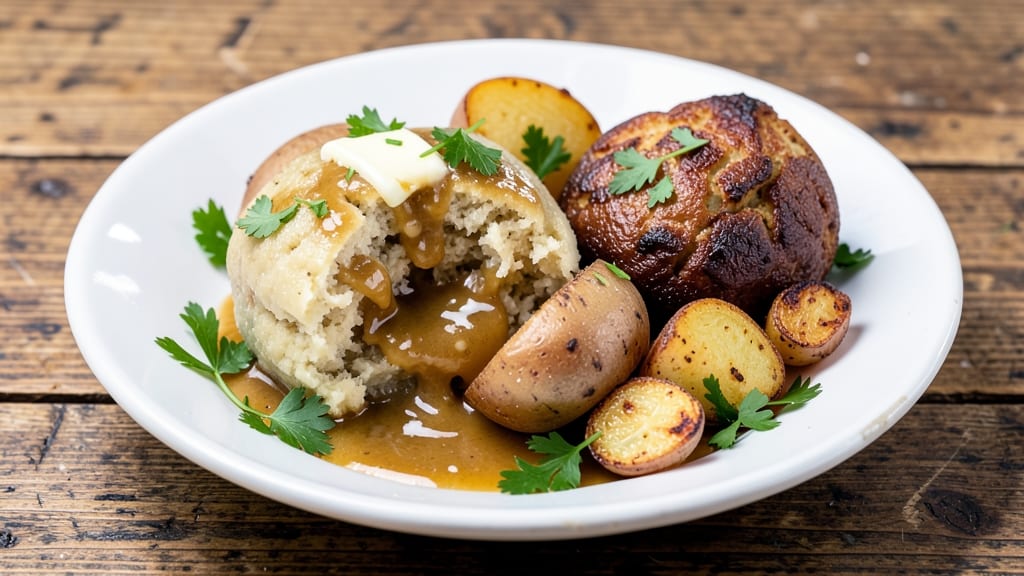
This German bread dumpling recipe transforms simple bread and potatoes into a hearty, comforting side that steals every meal.
The secret lies in soaking stale bread cubes until they absorb enough milk to form a tender, pillowy base—then stuffing them with mashed potatoes and fresh herbs for a flavor that feels like home.
I perfected this technique after years of testing, ensuring each dumpling boils just long enough to set without falling apart, then pan-fries to a golden, crispy exterior.
The dough itself is surprisingly simple: just bread cubes, milk, eggs, and butter, mixed until the texture becomes smooth and elastic. What makes these dumplings special is the stuffing—a creamy potato mixture blended with parsley, chives, and a touch of nutmeg for warmth.
The combination of textures is what makes them unforgettable: the soft, fluffy bread encasing the velvety potato filling, all finished with a crispy crust from the pan.
When served alongside roasted pork, gravy, or even a simple green salad, these dumplings elevate any dish into a satisfying meal. The aroma of fresh herbs and buttery bread fills the kitchen as they cook, promising a side that’s both rustic and refined.
Whether you're preparing a traditional German feast or just craving comfort food, this recipe delivers restaurant-quality results with minimal effort.
Once you try these, you’ll never go back to store-bought versions—they’re too good to skip. The key is patience during the soaking and boiling stages, but the reward is worth it. Let’s get started on creating these savory masterpieces that bring warmth and tradition to your table.
Ingredients for german bread dumpling
Stale bread, creamy potatoes, and fresh herbs—this German classic turns simple ingredients into magic.
| Ingredient | Amount | Notes |
|---|---|---|
| Stale White Bread 🍞 | 4 cups | Cubed, crusts removed |
| Whole Milk 🥛 | 1 ½ cups | Full-fat preferred |
| Large Eggs 🥚 | 2 whole | Room temperature |
| Unsalted Butter 🧈 | ½ cup | Cold, cubed |
| Russet Potatoes 🥔 | 2 lbs | Peeled, boiled |
| Fresh Parsley 🌿 | ¼ cup | Chopped finely |
| Fresh Chives 🌱 | ¼ cup | Chopped finely |
| Ground Nutmeg 🌶️ | ½ tsp | Freshly grated |
| Salt 🧂 | 1 ½ tsp | Kosher or sea salt |
| Black Pepper 🌶️ | ½ tsp | Freshly ground |
| Extra-Virgin Olive Oil 🫒 | 2 tbsp | For pan-frying |
| All-Purpose Flour 🌾 | ¼ cup | For dusting |
The bread is the foundation, so don't skimp on quality. Stale bread works best—day-old loaves from the bakery section or even leftover dinner rolls. If you're using fresh bread, toast it first to dry it out. For the potatoes, Russet potatoes are ideal—they mash up fluffier than waxy types. I always buy mine from Whole Foods or local farmers' markets where they're fresh. The herbs? Fresh parsley and chives make all the difference—dried just won't cut it here. If you're short on time, frozen chopped herbs work in a pinch, but they lack that bright flavor.
No stale bread? Toasted bread cubes work perfectly—just spread slices on a baking sheet and toast at 350°F for 10 minutes. Short on parsley? Fresh cilantro or dill can substitute, though the flavor will shift slightly. The nutmeg is key for that authentic German warmth—if you don't have it, a pinch of cinnamon gives a similar cozy vibe. For the potatoes, if you're using instant potatoes, add an extra tablespoon of butter to compensate for the lack of creaminess. And trust me on the olive oil for pan-frying—anything but vegetable oil—you want that fruity flavor to shine through.
These dumplings reheat beautifully—just pop them in a 350°F oven for 10-15 minutes until crispy again. They keep well in the fridge for 3-4 days, covered tightly. For longer storage, freeze them before frying—just thaw in the fridge overnight. I always make a double batch because they disappear fast. The leftovers? Toss them into soups or pan-fry with gravy for a quick weeknight dinner. The secret to perfect dumplings is patience—don't rush the soaking or boiling stages, and they'll reward you with that perfect pillowy texture.
Why You'll Love This Recipe
- No Waste Magic: I swear by this recipe for turning yesterday’s bread into something golden and irresistible. One slice of stale loaf, a splash of milk, and a few minutes of kneading—no fancy skills required.
- Creamy-Potato Dream: That buttery, fluffy center with tender potatoes? It’s like hugging a warm bowl of comfort. The milk and butter make it rich, but the bread keeps it light—no heavy, greasy feeling here.
- Leftovers? Never: This dumpling reheats like a champ, so I always make extra. Pop it in the oven or microwave, and it’s back to its best—perfect for lazy mornings or unexpected guests.
- Budget-Friendly Feast: Potatoes, bread, and eggs? This is the kind of meal that stretches my grocery dollars without sacrificing flavor. Plus, it’s hearty enough to fill up a hungry family for pennies.
Step-by-step instructions for German bread dumplings
Here's how to transform simple pantry staples into hearty, golden dumplings with a creamy potato-herb center.
Prepare the Potato Filling
Start by boiling the 2 lbs russet potatoes until they're fork-tender, about 15-20 minutes. Drain them well and let them cool slightly before mashing with the 0.5 cup unsalted butter until smooth. You'll want a texture that's creamy but not pasty.
In a separate bowl, whisk together the 1.5 cups whole milk, 0.5 tsp ground nutmeg, 1.5 tsp salt, and 0.5 tsp black pepper. Fold this warm milk mixture into the mashed potatoes along with the 0.25 cup chopped fresh parsley and 0.25 cup chopped fresh chives. The herbs should be evenly distributed throughout the filling.
Make the Bread Dumpling Dough
Tear the 4 cups stale white bread into small pieces and place them in a large mixing bowl. Pour the 2 whole room temperature eggs over the bread and let them soak in for 5 minutes. This helps create a cohesive dough that won't fall apart when you handle it.
In a small bowl, mix together the 0.25 cup all-purpose flour and 1.5 tsp salt. Sprinkle this mixture evenly over the bread and egg combination. Using your hands, gently knead everything together until you have a soft, pliable dough that holds its shape when pressed. If it feels too dry, add a splash of milk to help bind it.
Assemble the Dumplings
Divide the potato filling into 4 equal portions and shape each into a log about 3 inches long. Roll out each portion of the bread dough into a rectangle large enough to wrap around one of the potato logs. Place a potato log in the center of each dough rectangle and fold the sides inward, then roll up tightly from the bottom to completely encase the filling.
Seal each dumpling by pinching the seam with your fingers. You want them to be completely sealed so the filling doesn't escape during cooking. If you notice any gaps, use a bit of water to help the dough stick together. Set the assembled dumplings aside while you prepare the pan.
Cook to Golden Perfection
Heat the 2 tbsp extra-virgin olive oil in a large skillet over medium heat until shimmering. Carefully place the dumplings in the pan, seam-side down, and cook for 4-5 minutes on each side until they develop a beautiful golden brown crust. The oil should be hot enough to sizzle gently when the dumplings touch it.
Once golden on all sides, transfer the dumplings to a plate and let them rest for 5 minutes before serving. This resting period allows the filling to set slightly and makes them easier to slice. Serve warm with your favorite gravy or sauce for dipping.
Pro Tips For Making German Bread Dumpling
- Soak Bread Longer: Don’t just toss stale bread in milk—let it sit at least 30 minutes (or up to an hour if you’re patient). The bread needs time to fully absorb the milk and soften; rushing this makes the dumplings dense and gummy. I once cut it to 15 minutes and ended up with a sad, rubbery texture. Trust the process.
- Mash Potatoes First: Boil your Russet potatoes until fork-tender, then drain and mash them while still warm—this removes excess starch and prevents the dumplings from turning gluey. I used to skip this step and wondered why my dumplings stuck together like glue. A quick pass through a ricer or fork does the trick.
- Whisk Eggs Like You Mean It: The eggs are what hold everything together, so whisk them vigorously until the yolks and whites are fully emulsified. This isn’t the time to go easy—your dumplings will be smoother and less likely to fall apart. I’ve seen people stir lazily, then complain about crumbly results. Don’t be that person.
- Pan-Fry in Butter Batches: Cook the dumplings in small batches over medium heat in a generous swirl of butter—crowding the pan turns them into sad, flat pancakes instead of golden, pillowy dumplings. I learned this the hard way after burning two batches from overcrowding. Use a nonstick pan, and let them sizzle without touching them for the first 2 minutes.
Serving suggestions for leftovers
Classic German Pairings
These dumplings shine alongside traditional German dishes like roasted pork shoulder or sauerkraut with sausages. The crispy exterior and creamy filling complement the rich, savory flavors perfectly.
I always serve them with dark beer gravy—simmer 2 tbsp butter, 2 tbsp flour, and 1 cup dark beer (like Paulaner) until thickened. 🍖
For a lighter option, pair them with braised red cabbage and apple slices—the acidity cuts through the richness. A simple cucumber salad with dill and vinegar also works beautifully. The key is balancing the hearty dumplings with something fresh and bright.
Gravy & Sauce Ideas
No German meal is complete without gravy! My favorite is mushroom gravy—sauté 1 cup sliced mushrooms in 2 tbsp butter, add 2 tbsp flour, then deglaze with 1 cup beef broth and ½ cup white wine.
Simmer until thickened and season with salt, pepper, and a pinch of thyme. 🍄
For a quicker option, try pan drippings gravy—after cooking your pork or sausages, scrape up the browned bits from the pan, whisk in 2 tbsp flour, then add 1 cup broth. Stir until smooth and serve immediately. The dumplings will soak up every delicious drop.
Modern Twists
Want to elevate these for a contemporary touch? Top them with crispy bacon bits and a sprinkle of fresh chives before serving. The smoky bacon adds a delicious contrast to the buttery dumplings.
For a vegetarian option, serve with roasted root vegetables and a drizzle of herb-infused olive oil. 🥓
Another fun idea: stuff the potato filling with caramelized onions or sautéed mushrooms for extra depth. The dumplings become a versatile side that works for both traditional and modern meals. Just be sure to seal them tightly so the filling stays contained!
Presentation Tips
For a restaurant-worthy look, arrange the dumplings on a platter with fresh parsley garnish and a drizzle of gravy. Slice them in half before serving to showcase the creamy potato filling. I like to place them on a wooden cutting board for a rustic touch that feels authentic. 🌿
If serving for a casual meal, keep it simple—just arrange them on a plate with a side of gravy and a sprinkle of black pepper. The golden crust and fluffy texture speak for themselves! For extra flair, add a small bowl of gravy on the side for dipping.
Nutrition facts
Frequently asked questions
Can I use fresh bread instead of stale bread for the dumplings?
Fresh bread won't work well because it's too moist and will make the dough too sticky. Instead, use day-old bread or toast fresh slices at 350°F for 10 minutes to dry them out completely. This ensures your dumplings hold their shape during cooking.
Why did my dumplings fall apart when boiling?
This usually happens when the dough isn't properly sealed or the bread wasn't soaked long enough. Make sure to pinch the seams tightly and let the bread soak in the egg mixture for at least 5 minutes before kneading. A well-sealed dumpling should stay intact even when submerged.
Can I make these dumplings ahead of time?
You can prepare the dough and filling up to 24 hours ahead and store them in the fridge. Shape the dumplings just before cooking to prevent them from drying out. For longer storage, freeze the shaped (but uncooked) dumplings for up to 1 month—thaw overnight in the fridge before pan-frying.
What's the best way to reheat leftover dumplings?
For best results, reheat in a 350°F oven for 10-15 minutes until crispy again. If you're short on time, you can also pan-fry them in a little butter for 3-4 minutes per side until golden. Avoid microwaving—they'll get soggy instead of crispy.
Can I substitute the potato filling with something else?
While potatoes are traditional, you could try a cheese filling (like Gruyère or sharp cheddar) or even a spinach and ricotta mixture for a lighter option. Just ensure your filling is cold before assembling—warm fillings can melt the butter in the dough and make the dumplings too soft.