
Side Dishes
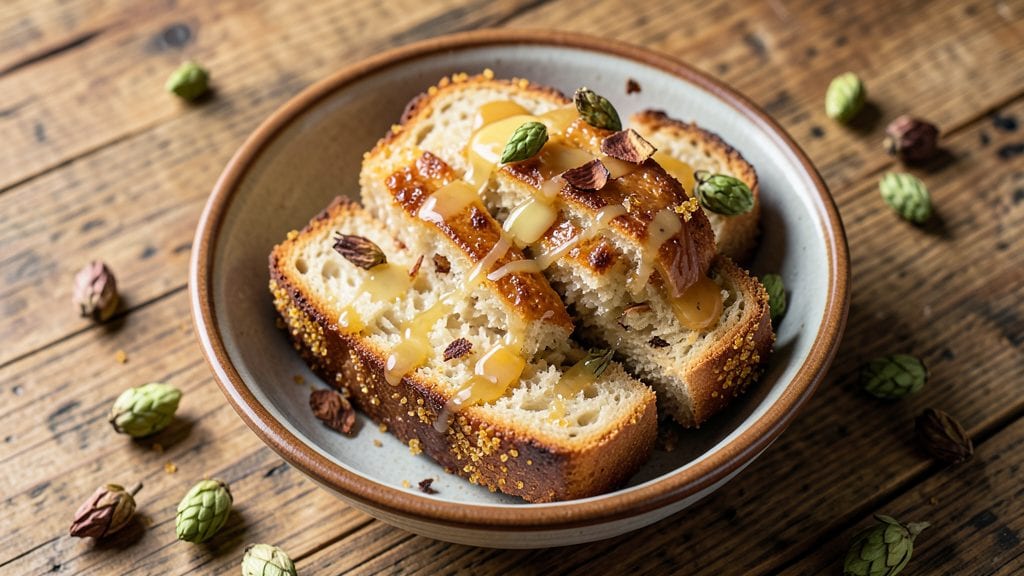
This hops bread recipe delivers a malty, crunchy loaf with beer-inspired depth that transforms any meal into a craft beer-inspired experience. The secret lies in balancing sweet and bitter notes using hops—whether through beer, hop extract, or fresh cones—while maintaining a crispy crust and tender crumb.
I developed this recipe after years of experimenting with traditional sourdough techniques and modern twists, ensuring every bite offers complex flavor without sacrificing texture.
The beauty of this recipe is its versatility—it works as a side dish, appetizer, or even a sandwich base, with a crunchy exterior that gives way to a slightly chewy interior. Traditional methods like natural fermentation create depth, while modern shortcuts (like commercial yeast) keep it accessible for home bakers.
The result is a loaf that tastes like a cross between a beer-battered snack and artisanal bread, with just the right amount of bitterness to complement rich dishes.
What sets this recipe apart is the hop-infused flavor that lingers like a well-aged stout, adding aromatic complexity without overpowering. Whether you use liquid beer, hop extract, or fresh cones, the technique ensures balanced flavor—malty sweetness with a crisp, refreshing finish.
Perfect for pairing with hearty stews, charcuterie boards, or simply enjoying with butter and honey, this bread is a game-changer for any table.
Ready in about 2 hours (including proofing), this recipe delivers professional-quality results with minimal effort. The dough is forgiving, and the baking process is straightforward, making it ideal for both beginners and seasoned bakers.
Once you taste the difference between store-bought bread and this homemade loaf, you’ll never go back to the standard sourdough again.
Ingredients for hops bread
This malty, beer-infused bread delivers craft-brewed depth with a perfect balance of crispy crust and tender crumb.
| Ingredient | Amount | Notes |
|---|---|---|
| Active Dry Yeast 🍞 | 2 ¼ tsp | High-quality for optimal fermentation |
| Warm Water 💧 | 1 cup | 110-115°F for yeast activation |
| All-Purpose Flour 🌾 | 4 cups | Bread flour preferred for texture |
| Dark Brown Sugar 🍚 | ½ cup | Enhances malty flavor profile |
| Unsalted Butter 🧈 | ½ cup | Cold, cubed for proper mixing |
| Whole Milk 🥛 | ½ cup | Full-fat for richness |
| Large Eggs 🥚 | 1 whole | Room temperature for even mixing |
| Diamond Crystal Kosher Salt 🧂 | 1 ½ tsp | Adjusts flavor balance perfectly |
| Hop Extract (Liquid) 🌿 | 1 tbsp | Pungent variety for authentic aroma |
| Craft Pale Ale 🍺 | ½ cup | Medium-bodied for balanced flavor |
| Cornmeal 🌽 | ¼ cup | For crisp crust development |
| Coarse Sea Salt 🧂 | 1 tbsp | Enhances crust texture |
| Fresh Hops (Optional) 🌿 | ½ oz | For authentic beer-like aroma |
The yeast quality is critical—Red Star or Lesaff are professional-grade choices that ensure reliable fermentation. For the beer, local craft breweries often provide free samples, and their medium-bodied pale ales work best. If using fresh hops, Whole Foods or specialty beer shops carry the cones, which should be vibrant green and aromatic. The hop extract from Brewers Supply Group is my go-to for consistent results. Store-bought beer works, but fresh hops elevate the flavor to a whole new level—worth the extra effort for serious beer lovers.
No hop extract? Substitute with 1 teaspoon of ground hops (if available) or increase the beer by 0.25 cup for more pronounced maltiness. Whole milk can be replaced with 2% milk or buttermilk, though full-fat yields the richest texture. For a gluten-free option, King Arthur Gluten-Free Flour Blend works well but may alter the crumb structure. The butter should be cold when mixed—this creates proper gluten development. If your dough feels too sticky, add 1 tablespoon flour at a time until it reaches a soft but manageable consistency.
This dough ferments best at 70-75°F—use an oven with the light on if your kitchen runs cold. Proofed dough keeps in the fridge for up to 24 hours for enhanced flavor development. The baked loaf maintains freshness for 3-4 days at room temperature or 1 week wrapped in plastic. For longer storage, freeze slices between parchment paper for up to 3 months. Reheat toasted slices for maximum crunch—this bread is best enjoyed fresh from the oven or lightly warmed.
Why You'll Love This Recipe
- No-Knead Magic: I swear by this—just mix, wait, and bake. The yeast does all the heavy lifting while I sip coffee, and that dark brown sugar caramelizes into a sticky, buttery crust that’s chef’s kiss without a single roll.
- Buttery Brew Perfection: That brown sugar and butter combo? It’s like a warm hug for your taste buds. The bread has this deep maltiness from the hops (yes, like beer!) but balances it with a soft, pillowy crumb that’s dangerously easy to polish off.
- Breakfast to Dessert: Honestly, this bread is my secret weapon. Toast it with jam for breakfast, tear it over soup for lunch, or slather it with honey for a dessert-like treat. It’s the one loaf that just works all day long.
- Budget-Friendly Staple: Flour, yeast, butter—these are pantry basics that won’t break the bank. A single batch stretches into sandwiches, toast, or French toast for days, and the leftovers actually improve overnight (yes, really).
Step-by-step instructions for hops bread recipe
Here's the method for crafting a malty, beer-infused loaf with a crisp exterior and tender crumb.
Activate the Yeast and Prepare the Dough Base
In a large mixing bowl, combine the 1 cup warm water (between 110-115°F) with 2.25 tsp active dry yeast. Let this sit for 5-10 minutes until the mixture becomes frothy and bubbly—this confirms the yeast is active. If it doesn't bubble, your water may be too hot or the yeast inactive; start over with fresh yeast and properly warmed water.
Once bubbly, whisk in the 0.5 cup dark brown sugar and 1 tbsp hop extract (liquid) until fully dissolved. The mixture should have a rich, aromatic depth from the hops. Add 4 cups all-purpose flour and 1.5 tsp diamond crystal kosher salt, stirring until a shaggy dough forms. This initial mixture captures the malty essence before incorporating wet ingredients.
Incorporate Wet Ingredients and Develop the Dough
Cut the 0.5 cup unsalted butter into small cubes and add them to the dough along with 0.5 cup whole milk and 1 whole large egg at room temperature. Using a dough hook attachment on a stand mixer, knead on medium speed for 5-7 minutes until the dough becomes smooth and elastic. The butter should be fully incorporated, and the dough should pull away cleanly from the sides of the bowl.
If the dough feels too sticky, add 1-2 tablespoons of the 4 cups all-purpose flour reserved earlier. The dough should be soft but manageable—this balance ensures proper fermentation and texture. Here's where the beer comes in: add 0.5 cup craft pale ale gradually while kneading, allowing its flavor to integrate fully. The alcohol content helps develop gluten while adding subtle maltiness.
First Rise and Prepare for Shaping
Transfer the dough to a lightly oiled bowl, cover with a damp kitchen towel, and let it rise in a warm place for 1-2 hours or until it has doubled in size. The dough should feel light and springy when pressed gently with a finger. If it rises too quickly (within 30 minutes), your kitchen may be too warm—adjust by moving to a cooler spot or extending the time slightly.
While the dough rises, prepare a baking sheet by lining it with parchment paper. Sprinkle 0.25 cup cornmeal evenly over the parchment—this creates a crisp, golden crust. If using 0.5 oz fresh hops, lightly crush them and mix with 1 tbsp coarse sea salt to create a topping for later. The cornmeal layer is critical for that beer bread texture you're after.
Shape, Proof, and Score the Loaf
Once the dough has risen, turn it out onto a lightly floured surface and gently shape it into a 9x5-inch loaf pan or free-form oval. Press the dough firmly into the corners of the pan to ensure even baking. If shaping free-form, create a smooth, slightly rounded top—this helps with even browning. Sprinkle the mixed cornmeal and coarse sea salt generously over the top, pressing lightly so it adheres.
Cover the dough again and let it proof for an additional 30-45 minutes until it rises 1-2 inches above the pan. Preheat your oven to 375°F during this time. When ready to bake, use a sharp knife or razor to score the top of the loaf in a simple crosshatch pattern. This not only enhances visual appeal but also directs steam escape, preventing excessive cracking during baking.
Bake to Crisp Perfection
Bake the hops bread in the preheated 375°F oven for 35-40 minutes until the crust is deep golden brown and sounds hollow when tapped on the bottom. The internal temperature should reach 190-200°F when measured with an instant-read thermometer. If the top browns too quickly, tent the loaf with aluminum foil to prevent over-browning while allowing the center to cook through.
Remove the bread from the oven and let it cool on a wire rack for at least 20 minutes before slicing. This resting period allows the crumb to set and prevents a gummy texture. The finished loaf should have a crisp, crackly crust with a tender, slightly chewy interior infused with malty beer notes. Serve warm with butter or as a side to hearty stews—its rich depth pairs beautifully with savory dishes.
Pro Tips For Making Hops Bread
- Dissolve the Sugar First: DESCRIPTION:
- Cool That Butter: DESCRIPTION:
- Stretch the Dough Gently: DESCRIPTION:
- Bake with Steam: DESCRIPTION:
Troubleshooting perfect results
Dough Too Sticky
If your hops-infused dough feels too sticky during mixing, don’t panic—this is common with beer and hop extracts. Gradually add 1-2 tablespoons of all-purpose flour while kneading until the dough pulls away cleanly from your fingers.
I’ve found that 1 extra tablespoon usually does the trick without making the dough dry. For extra insurance, chill the dough for 15-20 minutes before shaping—this firms it up beautifully. 💫
Yeast Not Activating
If your yeast mixture fails to bubble within 10 minutes, your water might be too hot or the yeast inactive. Immediately discard the mixture and start fresh with 1 cup warm water (110-115°F) and 2.25 tsp fresh yeast.
I keep a small jar of Red Star Platinum Yeast in my fridge—it’s my go-to for reliable activation. If using hopped beer instead of water, reduce the beer by 0.25 cup to maintain proper yeast hydration.
Uneven Crust Texture
A patchy or pale crust often means the dough didn’t rise enough or the oven wasn’t hot enough. First, ensure your dough doubles in size during the first rise—if it’s sluggish, try a warmer spot (like an oven with the light on).
Before baking, brush the loaf with 1 tbsp melted butter and sprinkle with extra coarse sea salt for extra crispiness. I also recommend baking on the middle rack for even heat distribution. 🔥
Hop Flavor Too Overpowering
If your bread tastes bitter or overly hoppy, you’ve likely used too much hop extract or fresh cones. For future batches, reduce the hop extract to ½ tbsp or omit fresh hops entirely—rely on the 0.5 cup pale ale for maltiness instead.
Balance the flavor by adding 1 extra teaspoon of brown sugar to sweeten the profile. The beer’s natural sweetness will help mellow the bitterness beautifully.
Dense or Gummy Interior
A dense crumb usually means the dough wasn’t kneaded enough or proofed too long. Ensure you knead for full 5-7 minutes until the dough is smooth and elastic. If using a stand mixer, switch to the dough hook attachment—this develops gluten more effectively.
Also, don’t overproof: the dough should rise until it’s just above the pan’s rim, not collapsing afterward. A quick check is pressing your finger into the dough—it should spring back slowly, not rapidly. ⚡
Loaf Collapsed During Baking
Collapse happens when the dough overproofs or the oven isn’t hot enough. First, preheat your oven for at least 20 minutes to ensure it reaches 375°F. If your kitchen is cold, place a baking stone on the middle rack for 15 minutes before baking.
For extra support, shape the dough into a loaf pan instead of free-form—this provides structure. If collapse still occurs, the yeast may be too active; reduce it to 2 tsp next time.
Nutrition facts
Frequently asked questions
What type of beer works best for this hops bread?
A medium-bodied pale ale or amber ale delivers the perfect balance of malt sweetness and subtle hop bitterness. Avoid heavy stouts or IPAs—they can overpower the bread's delicate texture. For best results, use a local craft beer with 4-5% ABV and a smooth finish.
Can I make this recipe without hop extract?
Use 0.5 oz fresh hops (lightly crushed) or increase the beer to 0.75 cup for more pronounced maltiness. For a milder flavor, substitute with 1 teaspoon ground hops if available. The beer's natural hop content will still create that signature aromatic depth.
How do I store leftover hops bread?
Wrap cooled slices in plastic wrap and store at room temperature for 3-4 days or freeze for up to 3 months. For maximum freshness, toast slices before serving—this restores the crispy crust. The bread's malty flavors actually improve slightly after 24 hours of refrigeration.
Why does my bread taste flat or bland?
Flat flavor usually means underproofed dough or insufficient hops. Ensure your dough rises until it's just above the pan's rim (about 1-2 hours at 70-75°F). For more depth, increase hop extract to 1.5 tbsp or add 1 extra teaspoon of brown sugar to enhance maltiness. A warm oven with the light on helps speed up proofing in cool kitchens.
Can I make this gluten-free?
Yes, but expect a denser texture. Use a 1:1 gluten-free flour blend (like King Arthur) and add 1 extra tablespoon of xanthan gum per cup of flour. Reduce the beer by 0.25 cup to prevent stickiness, and proof the dough for 30-45 minutes longer since gluten-free bread rises more slowly. The flavor will still shine through!