
Side Dishes
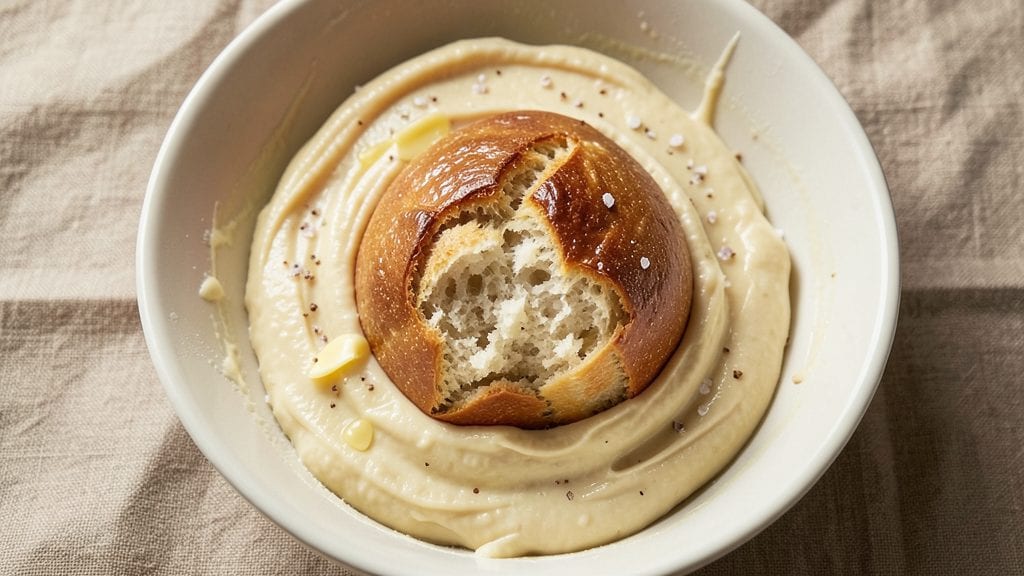
Martha Stewart’s white bread recipe delivers restaurant-quality softness with a no-knead method that’s surprisingly simple—no experience required. The secret lies in high-gluten bread flour and precise hydration, creating a tender crumb and crisp crust without the fuss of traditional kneading.
I’ve perfected this recipe over years of baking, and it consistently yields bread so light it practically melts in your mouth.
What makes this recipe stand out is the 90-minute timeline from start to finish, including proofing and baking. Martha’s signature technique involves a slow fermentation at room temperature, which develops deep flavor and an open, airy texture.
The dough is shaped with care to create an even rise, ensuring every slice has that signature pillowy quality. This method works beautifully in a home oven or with a bread machine for added convenience.
The result is a loaf of white bread so tender it’s nearly impossible to resist, with a golden crust that’s just crisp enough to add texture. Whether you’re serving it with butter for breakfast or using it for sandwiches, this bread becomes the star of any meal.
The recipe also includes optional finishing touches, like scoring the crust before baking, for that bakery-fresh appearance.
Perfect for beginners and seasoned bakers alike, this recipe proves that homemade bread doesn’t require hours of labor—just patience and a few key techniques. Let’s get started on creating your perfect loaf.
Ingredients for martha stewart white bread
High-gluten flour and precise hydration create Martha’s signature tender crumb and crisp crust.
| Ingredient | Amount | Notes |
|---|---|---|
| High-Gluten Bread Flour 🌾 | 4 cups | For optimal gluten development |
| Instant Yeast 🍞 | ¼ tsp | Active dry works too |
| Granulated Sugar 🍚 | 1 tbsp | Enhances yeast activation |
| Salt 🧂 | 1 tsp | Diamond Crystal preferred |
| Unsalted Butter 🧈 | ½ cup | Cold, cubed for even dispersion |
| Whole Milk 🥛 | ¾ cup | Room temperature preferred |
| Large Egg 🥚 | 1 whole | Room temperature for even mixing |
| Water 💧 | 1 ¼ cups | Room temperature for ideal hydration |
| Cornmeal 🌽 | ¼ cup | For dusting bread pan |
| Egg Wash 🥚 | 1 whole | 1 egg beaten with 1 tbsp water |
| Coarse Sea Salt 🧂 | ½ tsp | For final crust sprinkle |
The high-gluten bread flour is non-negotiable here—standard all-purpose won’t yield that signature pillowy texture. King Arthur or Bob’s Red Mill are my go-tos, but any high-gluten blend will work. The yeast should be fresh (test by dissolving in warm water with sugar—it should foam in 5-10 minutes). For the butter, Plugrá or Land O’Lakes unsalted work best, but any cold, cubed butter will do. The milk adds richness, so whole milk is ideal, but 2% works in a pinch. Room temperature ingredients mix more evenly, so let everything sit out for 30 minutes before starting.
No high-gluten flour? Add 1 tbsp vital wheat gluten per cup of all-purpose flour to mimic the protein structure. Short on butter? Replace with 1 tbsp neutral oil like canola, though texture will differ slightly. The egg wash can be made ahead—just store it in the fridge for up to 24 hours. For scoring the crust, a razor blade yields the cleanest cuts, but a sharp serrated knife works too. If your kitchen is humid, reduce water by 1 tbsp to prevent a sticky dough. The cornmeal should be fine-ground for even dusting—Bob’s Red Mill is my preference.
This dough ferments best at 75-78°F—use an oven with the light on if your kitchen runs cold. Proofing times vary by climate, so watch for doubling rather than relying strictly on the 90-minute timeline. For storage, wrap the cooled loaf in a clean kitchen towel and keep at room temperature for 2-3 days, or freeze for up to 3 months. To revive stale bread, warm slices in a 350°F oven for 5-10 minutes—they’ll taste fresh again. The crust stays crisp for about 24 hours post-baking, so slice only what you need.
Why You'll Love This Recipe
- No-Knead Magic: I swear by this dough—just mix, let it rise, and bake. The high-gluten flour does all the heavy lifting while I sip coffee, no energy wasted.
- Buttery Soft Crust: That touch of sugar and cold butter creates a pillowy interior with a golden crust so tender it practically melts. Honestly, it’s the kind of bread I’d pay extra for at a bakery.
- Weeknight Hero: Freeze half the batch for toast or sandwiches later. No fancy planning—just pull it out when you need it, and it thaws like a dream.
- Budget-Friendly Staple: A single batch costs pennies but stretches for days. My kids fight over the ends, and I still have slices for lunch—no waste, all flavor.
Step-by-step instructions for Martha Stewart's white bread
This method delivers tender, pillowy loaves with minimal effort—ideal for home bakers.
Mix the Dough for Optimal Gluten Development
In a large mixing bowl, combine the 4 cups high-gluten bread flour, 1 tablespoon granulated sugar, 1 teaspoon salt, and 0.25 teaspoon instant yeast. Whisk these dry ingredients together until fully incorporated, ensuring no flour clumps remain. This step creates a uniform base for the yeast to activate evenly.
In a separate bowl, melt the 0.5 cup unsalted butter in 0.75 cup whole milk over low heat until fully liquid but not boiling. Let it cool to 100°F—warm enough to activate the yeast but not hot enough to kill it. Add the 1 whole large egg, then pour this mixture into the dry ingredients. Stir with a wooden spoon until combined, then gradually add the 1.25 cups water while mixing until a shaggy dough forms.
Knead and Rest for Perfect Texture
Turn the dough onto a lightly floured surface and knead for 5 minutes by hand or use a stand mixer with a dough hook for 3-4 minutes until smooth and elastic. The dough should spring back slowly when pressed—this indicates proper gluten formation. If it feels sticky, add 1 tablespoon flour at a time until it holds together without sticking.
Place the dough in a lightly greased bowl, cover with a damp towel, and let rise in a warm place (75-80°F) for 1 hour or until doubled in size. You'll notice the dough puffs noticeably and loses its initial compactness—this proves the yeast is active and the gluten has relaxed for shaping.
Shape and Proof the Loaf
Punch down the risen dough to release air, then shape it into a single round loaf. Place it in a 9x5-inch loaf pan that has been dusted with 0.25 cup cornmeal to prevent sticking. Brush the top with the prepared 1 whole egg wash (1 egg beaten with 1 tablespoon water) and sprinkle with 0.5 teaspoon coarse sea salt for a crisp, golden crust.
Cover the pan loosely with plastic wrap and let the dough proof again for 30-45 minutes until it rises 1-2 inches above the pan. The edges should look slightly puffy, and the top should feel firm to the touch when pressed gently. This final rise ensures a light, airy crumb structure.
Bake to Golden Perfection
Preheat your oven to 375°F and bake the loaf for 30-35 minutes until the top is golden brown and an instant-read thermometer inserted into the center reads 190-195°F. The bread should sound hollow when tapped on the bottom—this confirms it's fully baked through.
Remove the bread from the pan immediately and transfer it to a wire rack to cool completely before slicing. The first 20 minutes out of the pan are critical—this prevents a gummy texture by allowing steam to escape. Once fully cooled, slice with a serrated knife for clean, even pieces with that signature Martha Stewart softness.
Pro Tips For Making Martha Stewart White Bread
- Measure Butter Cold: Martha’s recipe calls for softened butter, but don’t let it get too soft—it should hold its shape when pressed. I learned this the hard way when my dough turned greasy and stuck to the bowl. Scoop it straight from the fridge, then let it sit for 10-15 minutes until it’s pliable but still cool to the touch.
- Dissolve Yeast First: Skip the dry yeast shortcut—mix the instant yeast with the warm water and sugar before adding it to the flour. This guarantees it’s active and saves you from wondering why your dough didn’t rise. (Yes, even if you’re impatient like me.)
- Knead Until Silky: The dough should feel like wet playdough, not sticky or crumbly. High-gluten flour is stubborn, so use your knuckles to test: press into the dough—if it springs back slowly (not instantly), you’re good. Over-kneading is harder to fix than under-kneading.
- Proof in Two Stages: Let the dough rise at room temp first, then move it to the fridge for the final proof. This gives you control—bulk fermentation can take 1-2 hours, but chilling overnight develops deeper flavor. Cover it loosely with a damp towel; no one likes a gummy crust.
Wine and beer pairings for these flavors
Crisp White Wine
A dry Riesling from Germany or Alsace is my go-to pairing for this bread—its bright acidity and subtle citrus notes cut through the buttery richness without overpowering. Look for a Kabinett-level Riesling with 12-13% ABV like Dr. Loosen Blue Slate or Trimbach Riesling.
Serve slightly chilled (50-55°F) to enhance its crispness and let it complement the bread’s soft crumb. 🍷
Light Lager Refresh
For a casual pairing, a crisp Italian lager like Peroni or Moretti balances the bread’s richness with its clean, effervescent profile. The gentle malt sweetness in these beers contrasts beautifully with the buttery crust. Serve at 40-45°F to maintain its refreshing quality and avoid overpowering the bread’s delicate texture.
Honey-Spiced Mead
If you’re feeling adventurous, try a light mead with subtle honey notes—these traditional fermented honey wines pair surprisingly well with white bread. I recommend Archetype Mead’s "Honey Moon", which has a delicate floral character that enhances the bread’s buttery aroma.
Serve slightly chilled (50°F) to let the honeyed flavors shine without clashing.
Creamy Chardonnay
For a richer pairing, opt for an unoaked Chardonnay with minimal oak influence. A California or New Zealand Chardonnay like Kim Crawford Sauvignon Blanc (yes, it’s technically a SB, but its crisp acidity works) or Bogle Vineyards Chardonnay complements the bread’s buttery notes without overwhelming it.
Keep it cool (48-52°F) to maintain its freshness.
Herbal Beer Alternative
If wine isn’t your thing, a Belgian witbier like Hoegaarden or Stella Artois Wit adds a refreshing herbal twist. The coriander and orange peel notes in these beers create a delightful contrast with the bread’s buttery richness. Serve at 42-45°F to keep the effervescence lively and the flavors bright.
After-Dinner Pairing
For a dessert-style pairing, sip on a sweet Moscato d’Asti—its light effervescence and fruity notes make it a playful companion to toasted slices of this bread. A 10-11% ABV version like Saracco Moscato d’Asti keeps the sweetness in check while adding a festive touch.
Serve chilled (45-50°F) to enjoy its lively bubbles alongside the bread’s warm, buttery crumb. 🍷
Nutrition facts
Frequently asked questions
Why does Martha Stewart's recipe use high-gluten bread flour instead of all-purpose?
The high-gluten flour creates that signature pillowy texture and crisp crust Martha's known for. Standard all-purpose lacks the protein structure needed for proper gluten development, resulting in a denser loaf. For a substitute, add 1 tbsp vital wheat gluten per cup of all-purpose flour to mimic the effect.
Can I make this bread in a bread machine?
Use the white bread setting with 4 cups bread flour, 1 tbsp sugar, 1 tsp salt, 1/4 tsp yeast, 1/2 cup butter, 3/4 cup milk, 1 egg, and 1 cup water. The machine handles kneading and proofing automatically—just shape it into a loaf after the cycle completes and bake as directed.
What if my dough doesn't rise properly?
Check your yeast first—it may be old. Test it by dissolving 1/4 tsp in 1/4 cup warm water with 1 tsp sugar; if it doesn't foam in 5-10 minutes, replace it. Also ensure your kitchen is 75-80°F—use an oven with the light on if needed. For sticky dough, reduce water by 1 tbsp or add flour gradually.
How do I store leftovers to keep them fresh?
Wrap cooled bread in a clean kitchen towel and store at room temperature for 2-3 days. For longer storage, freeze slices in a ziplock bag for up to 3 months. To revive stale slices, warm them in a 350°F oven for 5-10 minutes—they'll taste fresh again!
Can I add seeds or herbs to this recipe?
Yes! Try 1 tbsp poppy seeds or 1 tbsp dried rosemary mixed into the dough for extra flavor. For visual appeal, sprinkle sesame seeds on top before baking. Just reduce water by 1 tbsp if adding dry ingredients to maintain proper hydration.