
Sauces & Condiments
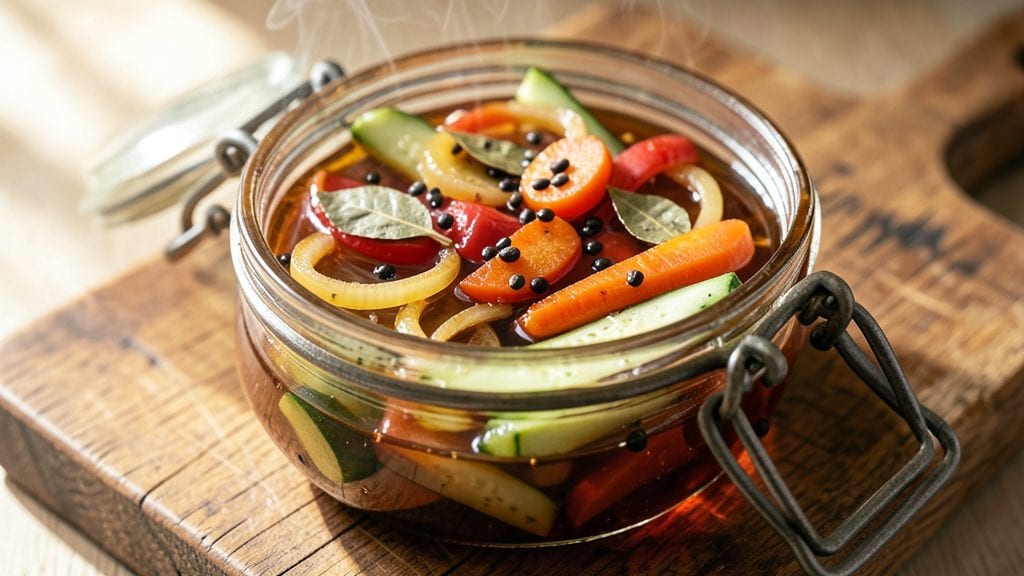
This old-fashioned bread and butter pickle recipe delivers the perfect balance of sweet, tangy, and crunchy that makes it a Southern staple.
My grandmother’s version—with its signature vinegar braise and no-cook prep—has been passed down for generations, and I’ve perfected it to stay true to tradition while making it accessible for modern kitchens. The key lies in the slow infusion of spices and vinegar, which transforms ordinary vegetables into something irresistibly flavorful.
The beauty of this recipe is its simplicity: just a few pantry staples—vinegar, sugar, mustard seeds, and turmeric—transform sliced cucumbers, onions, and carrots into a condiment that’s crisp, tangy, and just sweet enough.
Unlike quick pickles, this method allows the flavors to meld over time, creating a depth that store-bought versions can’t match. And the best part? No canning equipment is needed—just jars and a little patience.
What you’ll end up with is a jar of golden, vinegar-braised pickles that add crunch and brightness to sandwiches, burgers, or even as a standalone snack. The texture is just right—crisp edges with a tender bite—and the flavor is perfectly balanced, thanks to the careful ratio of sweetness and tang.
This is the kind of condiment that turns simple meals into something special.
Once you try it, you’ll never go back to store-bought. The recipe scales easily, so you can make a big batch to share or keep a few jars on hand for whenever the craving hits. Let’s get started—your taste buds (and leftovers) will thank you.
Ingredients for old fashion bread and butter pickle
Just 10 simple pantry staples transform into golden, tangy pickles with no cooking required.
| Ingredient | Amount | Notes |
|---|---|---|
| White Vinegar 💧 | 2 cups | Distilled white preferred |
| Granulated Sugar 🍚 | 1 ½ cups | Light brown sugar works too |
| Yellow Onion 🧅 | 1 whole | Thinly sliced into rings |
| Carrots 🥕 | 2 medium | Julienned into matchsticks |
| Cucumber 🥒 | 1 large | Thinly sliced into rounds |
| Mustard Seeds 🌶️ | 1 tbsp | Whole seeds preferred |
| Turmeric Powder 🌿 | 1 tsp | Ground, vibrant color |
| Celery Seeds 🌿 | 1 tsp | Ground for best flavor |
| Ground Black Pepper 🌶️ | ½ tsp | Freshly ground preferred |
| Salt 🧂 | 1 ½ tsp | Kosher or sea salt |
The vinegar is the backbone here—distilled white gives the cleanest tang, but apple cider vinegar adds a nice fruity note if you prefer. Sugar matters too: light brown sugar adds subtle caramel depth, but white sugar keeps it classic. For the vegetables, freshness is key—look for crisp carrots and cucumbers with no soft spots. I always grab the organic section at Kroger for these, but regular produce works fine if it's firm. The onions should be sweet, not bitter—yellow or red varieties both work, just slice them thinly for even cooking.
No mustard seeds? Dijon mustard at half the amount works in a pinch, though it'll be less crunchy. Skip the turmeric? Paprika at double the amount gives a similar golden hue. The celery seeds are non-negotiable for that classic pickle flavor, but if you're out, extra black pepper adds a little depth. For the cucumbers, peeling or not peeling is up to you—I leave the skin on for extra crunch, but peel if you prefer a softer texture. The recipe scales perfectly, so double the ingredients for a big batch to share.
This keeps beautifully in the fridge for up to 3 months—the flavors actually improve over time. I always make a big jar and keep it in the fridge for quick sandwich toppers. For serving, grab a spoon and scoop right from the jar. The pickles stay crisp for about 2 weeks if you store them submerged in the liquid. If you notice the veggies getting soft, just add a splash of fresh vinegar to revive them.
Why You'll Love This Recipe
- Five-Ingredient Magic: I swear by this combo—just vinegar, sugar, onions, carrots, and cucumbers. That’s it. No fancy prep, no weird spices to hunt down. Honestly, I keep a jar of this in my fridge because it’s the kind of thing you can throw together while chatting with someone.
- Sweet-Tangy Balance: The sugar and vinegar play off each other like a well-worn dance floor—sharp, bright, and just sweet enough. That crisp carrot crunch? It’s the secret weapon. I’ll be real: my husband steals these straight from the jar, no sandwich needed.
- Picnic Party Star: Between us, this is my go-to for potlucks, BBQs, or even a lazy Sunday spread. It’s the kind of thing that disappears fast—no one leaves a jar untouched. Plus, it’s the only pickle that actually pairs with everything from burgers to fried chicken.
- Months of Leftovers: I make a big batch and it lasts. Like, months. The vinegar keeps it fresh, and the sugar prevents those sad, mushy pickles. It’s my budget-friendly secret—one jar feeds me for weeks, and I never regret it. (Yes, even on a Tuesday night.)
Step-by-step instructions for old-fashioned bread and butter pickles
Here's how to make these classic, tangy pickles with minimal effort and maximum flavor.
Prepare and Combine the Vinegar and Sugar Base
In a large, non-reactive pot, combine the 2 cups white vinegar and 1.5 cups granulated sugar. I like to use a stainless steel or glass pot for this step—it won't react with the acid like aluminum. Bring the mixture to a boil over medium-high heat, stirring occasionally until the sugar completely dissolves. You'll know it's ready when the liquid becomes clear and slightly syrupy, about 3-5 minutes.
Here's the thing—this vinegar-sugar mixture is the heart of your pickles. The sugar helps balance the vinegar's sharpness while the acidity preserves the vegetables. Once boiling, reduce the heat to medium-low and let it simmer gently for 5 minutes. This step prevents a sudden temperature shock when you add the vegetables later, which can make them watery.
Add Vegetables and Seasonings
While the vinegar mixture simmers, add the 1 whole yellow onion (thinly sliced into rings), 2 medium carrots (julienned into matchsticks), and 1 large cucumber (thinly sliced into rounds). Stir gently to submerge them in the liquid. Let the mixture return to a gentle simmer and cook for 10 minutes. You want the vegetables to soften slightly but still retain their shape and crunch.
Next, add the 1 tablespoon mustard seeds, 1 teaspoon turmeric powder, 1 teaspoon celery seeds, 0.5 teaspoon ground black pepper, and 1.5 teaspoon salt. Stir well to distribute the seasonings evenly. The turmeric gives these pickles that classic golden hue, while the celery and mustard seeds add depth of flavor. Let the mixture simmer for another 5 minutes, stirring occasionally to ensure everything is well-coated and the seasonings are fully incorporated.
Simmer Until Tender-Crisp
Continue simmering the pickles over low heat for 20-25 minutes. You're aiming for tender-crisp vegetables—soft enough to eat but still with a satisfying bite. The pickles should be bright in color and infused with the vinegar's tang. If the liquid reduces too much and the vegetables aren't fully submerged, add 1-2 tablespoons of water to keep them covered. This ensures even cooking and prevents the vegetables from drying out.
Real talk: Don't rush this step. The longer the vegetables simmer gently, the more flavor they absorb. You'll know they're done when a knife slides in easily but the pieces still hold their shape. The turmeric should have turned the liquid a vibrant yellow, and the mustard seeds will have softened slightly, releasing their warm, earthy flavor.
Cool and Store for Maximum Flavor
Once the pickles reach the perfect tender-crisp texture, remove the pot from heat and let the mixture cool to room temperature. This step is crucial—it allows the flavors to meld and the vegetables to absorb the tangy, sweet liquid fully. I like to transfer the pickles to a clean, airtight jar or container once they've cooled completely. This keeps them fresh and makes it easy to grab a spoonful whenever you want.
Store the pickles in the refrigerator for up to 2 weeks. The longer they sit, the more the flavors develop. I often find that the taste improves after a few days as the vegetables soak up even more of that delicious vinegar-sugar mixture. These pickles are perfect for sandwiches, burgers, or just eating straight from the jar with a spoon!
Pro Tips For Making Old Fashion Bread And Butter Pickle
- CHOP ONIONS THINLY: I learned this the hard way—thick slices of onion stay tough even after hours in the vinegar. Aim for paper-thin rings (almost translucent) so they soften evenly and absorb that sweet-tangy brine like a sponge. No food processor here; a sharp knife and steady hand work best.
- STERILIZE JARS FIRST: Skip this, and your pickles will turn into a science experiment. Run jars and lids through a 200°F oven for 10 minutes (or boil for 5) to kill bacteria. Trust me, the extra 5 minutes now saves you from moldy pickles later—yes, even if you’re impatient like me.
- USE WARM VINEGAR: Cold vinegar means cold pickles that take forever to soften. Heat the vinegar and sugar together until dissolved (just until sugar vanishes), then let it cool before pouring over veggies. Your carrots and cucumbers will thank you with faster, even pickling.
- PACK VEGETABLES TIGHTLY: Loose veggies in the jar = weak flavor and wasted space. Use a wooden spoon to press down firmly on onions, carrots, and cucumbers, especially around the edges. This also forces more brine into every nook, guaranteeing that tangy crunch in every bite.
Troubleshooting great old fashion bread and butter pickle
Pickles Too Soft
If your pickles turn out mushy instead of crisp, you likely overcooked them or didn’t balance the simmering time. I’ve found that 20-25 minutes on low heat is ideal—any longer and the veggies lose their crunch.
To fix this, reduce the simmering time by 5 minutes next time and check for doneness earlier. Also, make sure your vegetables are fully submerged in the vinegar mixture to prevent uneven cooking. 🥒
Liquid Too Thin
A watery pickle liquid usually means the sugar didn’t fully dissolve or the vegetables released too much moisture. To thicken the liquid, simmer the pickles uncovered for an extra 5-10 minutes to reduce it.
If it’s still too thin, stir in 1 tablespoon of cornstarch mixed with 1 tablespoon water and cook for another 2 minutes. For future batches, ensure the sugar is fully dissolved before adding the vegetables. 💧
Pickles Too Tangy
If the vinegar flavor overpowers the sweetness, you might have used too much vinegar or not enough sugar. The classic ratio is 2 cups vinegar to 1.5 cups sugar, but you can adjust to taste.
For a milder flavor, reduce the vinegar by ¼ cup or add an extra ¼ cup sugar to balance it. Taste as you go—this is one of those recipes where a little tweaking makes all the difference. 🍯
Vegetables Stay Crunchy
If your carrots or cucumbers remain too firm, they likely didn’t simmer long enough. The goal is tender-crisp, not rock-hard. Next time, extend the simmering time by 5-10 minutes and check for doneness by piercing a piece with a knife—it should slide in easily but still hold its shape.
For extra tenderness, add a pinch of baking soda (¼ teaspoon) to the vinegar mixture, which helps soften the vegetables faster. 🥕
Mold or Fermentation
If your pickles develop mold or an off smell, they’ve likely fermented too long or weren’t stored properly. Always store pickles in a clean, airtight container in the fridge, and use them within 2 weeks.
If you notice any funky smells or mold, discard the batch immediately—vinegar pickles shouldn’t ferment like sauerkraut. To prevent this, ensure your jars and utensils are spotless before handling the pickles. ❄️
Nutrition facts
Frequently asked questions
Can I use this recipe for quick pickles instead of the traditional method?
For quick pickles, skip the simmering step and combine thinly sliced veggies with the vinegar-sugar mixture in a jar. Let them sit at room temperature for at least 4 hours (or overnight in the fridge) to develop flavor. The texture will be slightly crunchier, but the tangy-sweet balance stays the same.
What’s the secret to getting that perfect golden color?
The turmeric is your golden ticket! Use 1 teaspoon ground turmeric for vibrant color, but don’t skip the celery seeds—they add depth. For extra shine, simmer the veggies uncovered for the last 5 minutes to let the liquid reduce slightly. The golden hue comes from the turmeric reacting with the vinegar’s acidity.
Can I make these pickles without mustard seeds?
Yes, but the flavor will be subtly different. Substitute 1 tablespoon Dijon mustard for the seeds, though it won’t add the same crunch. For a similar earthy note, add an extra ½ teaspoon celery seeds or a pinch of ground coriander. The mustard seeds are traditional but optional—don’t let it stop you!
How do I know when the pickles are done?
They’re ready when the veggies are tender-crisp: a knife should slide in easily, but the pieces should still hold their shape. The liquid should coat the vegetables fully, and the turmeric should have turned the mixture a bright yellow. Taste a piece—it should be tangy, sweet, and slightly spiced, not raw or mushy.
Can I add other vegetables to this recipe?
Try adding ½ cup bell peppers (julienned) or ¼ cup diced jalapeños for heat. Cauliflower florets or radish slices also work well. Just adjust the simmering time by 2-3 minutes for denser veggies like cauliflower. Keep the ratio balanced—don’t overcrowd the pot!