
Side Dishes
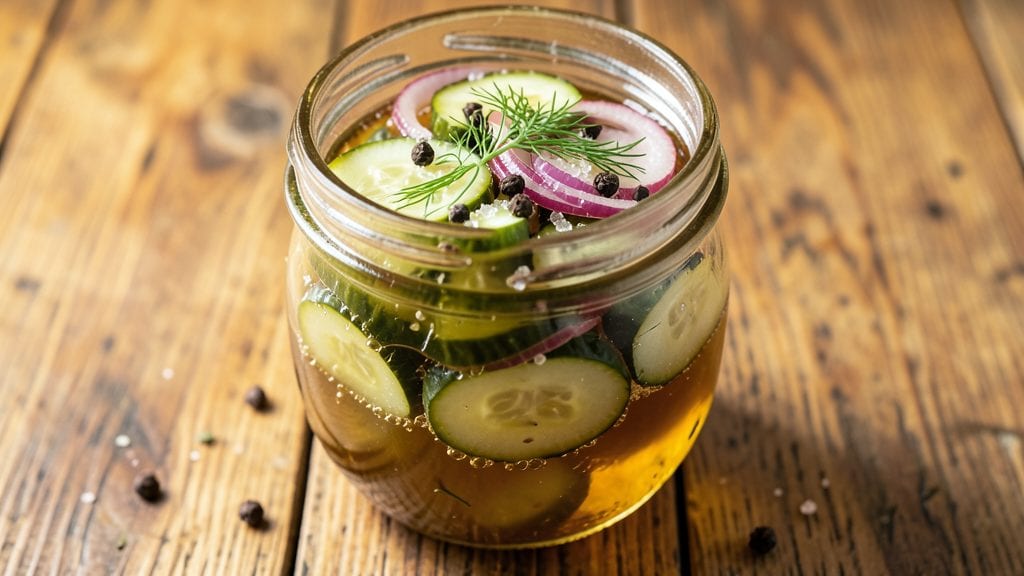
This old-fashioned bread and butter pickle recipe brings back the sweet-tangy crunch that makes every sandwich better. Standing on a stool in my Nonna's kitchen, I learned how a simple vinegar brine could transform cucumbers into something magical—crisp, flavorful, and impossible to resist.
The secret lies in balancing sugar and vinegar just right, creating that perfect harmony of sweetness and tang.
What makes these pickles truly special is their versatility and shelf-stability. Made with a traditional vinegar-brine method, they keep for months in the refrigerator, ready to brighten up sandwiches, charcuterie boards, or even burgers.
The process is straightforward—just slice the cucumbers, mix the brine, and let time work its magic—but the results are anything but ordinary.
By the time you're done, you'll have jars filled with crisp cucumbers, their bright green color preserved and their texture just right—crunchy enough to satisfy but tender enough to eat.
The sweet-tangy flavor comes from a precise blend of sugar, vinegar, and spices, all simmered together until the liquid becomes a golden, fragrant syrup. This is the kind of condiment that turns simple meals into something memorable.
Perfect for meal prep or gifting, these pickles are a staple in any kitchen. Whether you're serving them with a classic Reuben sandwich or adding them to a charcuterie spread, they bring a burst of flavor that elevates everything. Let's get started on making yours today!
Ingredients for old fashioned bread and butter pickle
Nine ingredients transform simple cucumbers into sweet-tangy magic for sandwiches and charcuterie boards.
| Ingredient | Amount | Notes |
|---|---|---|
| Fresh Kirby Cucumbers 🥒 | 4 lbs | Whole, unpeeled, firm and bright |
| White Vinegar 💧 | 2 cups | White or apple cider vinegar |
| White Granulated Sugar 🍚 | 2 cups | Fine grain preferred |
| Light Brown Sugar 🍚 | 1 cup | Packed lightly |
| Turbinado Sugar 🍚 | ½ cup | For crunchy texture |
| Pickling Salt 🧂 | 2 tbsp | Non-iodized preferred |
| Mustard Seeds 🌶️ | 1 tbsp | Yellow or brown seeds |
| Ground Allspice 🌿 | 1 tsp | Freshly ground preferred |
| Ground Cloves 🌿 | ½ tsp | Freshly ground for warmth |
| Unsalted Butter 🧈 | 4 tbsp | Cold, cubed for texture |
The cucumbers are everything here—Kirby cucumbers from a local farm are ideal (they're smaller and sweeter), but regular pickling cucumbers work too. Look for ones that are firm and bright green, not soft or yellowing. Trader Joe's and Whole Foods usually carry them, but check the produce section. If you can't find Kirby cucumbers, regular slicing cucumbers work in a pinch, but they'll be slightly larger. The butter is non-negotiable—it gives those classic little butter nuggets that make these pickles special. Grab unsalted butter from the dairy case, not margarine or salted versions.
No turbinado sugar? Brown sugar works in a pinch, but you'll lose that crunchy texture. Short on allspice or cloves? Cinnamon at half the amount adds warmth, but it's not the same. The vinegar can be swapped for apple cider vinegar for a milder tang. If you're making a big batch, double the spices and divide them between jars. For extra crunch, add 1/4 cup sliced almonds to each jar before sealing. The mustard seeds? Toast them in a dry pan for 30 seconds first—they'll add a deeper flavor.
This brine keeps for up to 6 months in the fridge, but the pickles get better with time. Once opened, they'll last 3-4 weeks if stored properly. I like to portion the butter into small containers and freeze extras—just add them straight from the freezer to the hot brine. For gifting, use mason jars with airtight lids. The pickles will stay crisp if you keep them submerged in the liquid. If they float, weigh them down with a small plate.
Why You'll Love This Recipe
- No Chopping Needed: I swear by this—just slice those Kirby cucumbers thick (no dicing, no fuss) and let the vinegar do the work. The turbinado sugar clings to the edges like magic, giving you that perfect crunch without extra effort.
- Sweet-Tart Magic: That balance of white and brown sugar with white vinegar? It’s the kind of flavor that makes you reach for seconds. The turbinado adds a subtle crunch, while the vinegar keeps it bright—like a hug in pickle form.
- Meal Prep MVP: Fill jars ahead of time, and you’ve got a snack ready for picnics, sandwiches, or just munching straight from the fridge. Honestly, I make a big batch every summer and forget it’s even there until someone raves about how good it tastes.
- Pantry Staple Power: You’re already using ingredients you’ve got—vinegar, sugar, cucumbers. No specialty items, no extra trips to the store. Between us, this is the kind of recipe that turns $5 worth of groceries into something everyone fights over.
Step-by-step instructions for old fashioned bread and butter pickles
Here's how to create that perfect sweet-tangy crunch—every jar will be restaurant-quality.
Prepare and Slice the Cucumbers
Start by washing the 4 lbs fresh Kirby cucumbers thoroughly under cool water, then pat them completely dry. This keeps them crisp during the pickling process. Using a sharp knife, trim off both ends to create flat surfaces, then cut each cucumber lengthwise into quarters. Next, slice each quarter into ¼-inch thick half-moons. For even slices, work with one cucumber at a time—this prevents uneven cutting.
Place the sliced cucumbers in a large bowl and sprinkle evenly with the 2 tbsp pickling salt. Toss gently with your hands to distribute the salt completely. Let them sit for 30 minutes while you prepare the rest of the ingredients. This salting step draws out excess moisture, which is crucial for achieving that signature crunchy texture in your finished pickles.
Mix the Sweet-Tangy Brine
In a large saucepan, combine the 2 cups white vinegar, 2 cups white granulated sugar, 1 cup light brown sugar, and 0.5 cup turbinado sugar. Stir over medium heat until the sugars dissolve completely—this usually takes about 5 minutes. Here's the thing: don't walk away. Sugar can burn quickly, and you want a smooth syrup, not a sticky mess.
Once dissolved, reduce heat to low and add the 4 tbsp cold cubed unsalted butter. Stir constantly until the butter melts completely and the mixture becomes glossy. Remove from heat and stir in the 1 tbsp mustard seeds, 1 tsp ground allspice, and 0.5 tsp ground cloves. Let the mixture cool slightly—it should still be warm but not hot to the touch before combining with the cucumbers.
Combine and Pack the Jars
After the 30-minute salting period, drain the cucumbers thoroughly using a colander. Shake off any excess liquid—you want them dry for maximum crunch. Divide the cucumbers evenly among 4 clean, sterilized pint-sized jars, packing them tightly but not mashing them. The goal is to leave about ½-inch headspace at the top of each jar for the brine to settle.
Pour the warm spiced syrup evenly over the cucumbers in each jar, filling them to within ½-inch of the rim. Use a wooden spoon to gently press down on the cucumbers, ensuring they're fully submerged in the liquid. Wipe the jar rims with a clean, damp cloth to remove any syrup residue—this helps create a proper seal.
Seal and Process for Preservation
Place the lids on the jars and tighten the rings until they're fingertip-tight. Don't overtighten—this can cause the jars to break during processing. Arrange the jars in a water bath canner, ensuring they're completely submerged in water. Bring the water to a rolling boil and process for 10 minutes at 212°F. This heat treatment kills bacteria and ensures your pickles stay safe to eat for months.
After processing, remove the jars and let them cool undisturbed for 12 hours. You'll hear the satisfying "ping" as the lids seal. Check each lid to ensure it's concave in the center—this confirms a proper vacuum seal. Store the jars in a cool, dark place. Your pickles will continue developing flavor over the next 24-48 hours, becoming more delicious with each passing day.
Pro Tips For Making Old Fashioned Bread And Butter Pickle
- Slice Cucumbers Thin: I used to eyeball it, but these pickles need precision—cut them ¼-inch thick (no thicker or they’ll stay crunchy). A sharp knife and a steady hand make all the difference, especially with Kirby cucumbers that can get mushy fast.
- Boil the Syrup Hard: Don’t skimp on the simmer time. Bring that sugar-vinegar mix to a rolling boil for 5 full minutes—this isn’t just about dissolving sugar, it’s about building flavor. I learned this after a batch tasted flat because I rushed it.
- Pack Cucumbers Tight: Stuff those jars firmly but gently—no gaps, no floating cucumbers. Use a wooden spoon to press them down, then add a few extra slices on top to keep them submerged. Loose packing = soggy pickles in a week.
- Skip the Turbinado Early: Save the turbinado sugar for the end—sprinkle it on top of the hot cucumbers right before sealing. It won’t dissolve, but it adds that signature crunch and caramelized look. (Yes, it’s messy, but it’s worth it.)
Dietary considerations for this old fashioned bread and butter pickle
Gluten-Free Adaptation
Traditional bread and butter pickles are naturally gluten-free since they rely on vinegar, sugar, and spices—but watch out for hidden sources! I always double-check my pickling salt label to ensure it's certified gluten-free, as some brands use anti-caking agents containing wheat.
For extra caution, use Morton Lite Salt, which is typically gluten-free. The butter and spices are safe, but if you're highly sensitive, opt for certified gluten-free brands like Organic Valley butter and Penzeys spices for peace of mind. 🥒
Low-Sugar Options
If you're watching your sugar intake, you can reduce the total sugar by 25% without sacrificing flavor. Swap 1 cup of the granulated sugar for an equal amount of erythritol or monk fruit sweetener—I like Lakanto for its 1:1 substitution ratio.
The turbinado sugar can be omitted entirely, as its crunch comes from texture, not sweetness. Just be aware the pickles will be slightly less sweet and may firm up faster. Taste as you go and adjust to your preference.
Vegan Substitutions
To make these pickles vegan, replace the 4 tbsp unsalted butter with 4 tbsp vegan butter (like Miyoko's) or 4 tbsp coconut oil for a dairy-free option. The coconut oil adds a subtle tropical note that pairs surprisingly well with the tangy brine.
For extra richness, I've also experimented with ¼ cup cashew cream (blended soaked cashews with water) in place of the butter—it adds a velvety texture without dairy. The rest of the recipe remains identical, and the pickles stay just as crisp. 🌱
Allergy-Friendly Notes
For those with mustard allergies, simply omit the 1 tbsp mustard seeds—the allspice and cloves still provide warm depth. If you're sensitive to spices like cloves or allspice, replace them with ½ tsp ground cinnamon for a milder warmth.
Always check labels on spices for cross-contamination warnings if you have severe allergies. The vinegar and sugar used in this recipe are typically allergen-free, but when in doubt, choose brands with clear labeling, like Bragg apple cider vinegar or Domino sugar.
Sodium Considerations
This recipe uses 2 tbsp pickling salt, which is less than the 1 tsp per serving recommended by the American Heart Association for a low-sodium diet.
However, if you're strictly monitoring sodium, reduce the salt to 1 tbsp total and compensate by adding 1 extra tbsp of mustard seeds for flavor. The butter and spices contribute minimal sodium, so the biggest adjustment comes from the salt in the brine.
For ultra-low-sodium versions, use no-salt-added vinegar (like Heinz brand) and skip the salt entirely, relying on the tang of the vinegar for flavor. 🧂
Nutrition facts
Frequently asked questions
Why do these pickles need to be processed in a water bath?
The 10-minute water bath processing at 212°F is essential for safety and shelf stability. This heat treatment kills bacteria and yeast that could spoil your pickles, allowing them to last for months in the refrigerator. Without processing, homemade pickles typically only last 1-2 weeks in the fridge. The butter and sugar in the brine also create an environment where mold can grow if not properly sealed.
Can I use regular table salt instead of pickling salt?
Yes, you can substitute 2 tbsp table salt for the pickling salt, but there's a catch: table salt contains anti-caking agents that can make your brine cloudy. For crystal-clear brine, stick with pickling salt or kosher salt. If you use table salt, reduce the amount to 1.5 tbsp since it's finer and contains added minerals. The flavor difference is negligible, but the texture of your pickles might be slightly softer.
How do I know if my pickles are properly sealed?
After cooling for 12 hours, check each lid: it should be concave in the center (sucked down). If it pops up or stays flat, the seal didn't hold. For unsealed jars, refrigerate immediately and eat within 1 week. If the lid is sealed but you see mold or off smells, discard the contents. Properly sealed jars will last 6 months unopened, with the pickles improving in flavor over time.
What can I do if my pickles turn out too soft?
Soft pickles usually mean excess moisture wasn't drained properly. Next time, pat the cucumbers completely dry after salting and shake off excess liquid before packing. For already-made pickles, drain them and pack them tightly in a clean jar with fresh brine (equal parts vinegar and water with 1 tbsp sugar per cup). Refrigerate for 24 hours to firm them up. The butter in the original recipe helps preserve texture, so adding a few extra cubes to the fresh brine can also help.
Can I make these pickles without butter?
Yes, but you'll lose that classic "bread and butter" texture. For a butter-free version, add ¼ cup sliced almonds or pecans to each jar before sealing for crunch. Alternatively, use 2 tbsp olive oil instead of butter—it won't give the same texture but adds a nice richness. The flavor will still be delicious, just with a different mouthfeel. For extra sweetness, add 1 extra tbsp brown sugar to compensate for the butter's richness.