
Soups & Stews
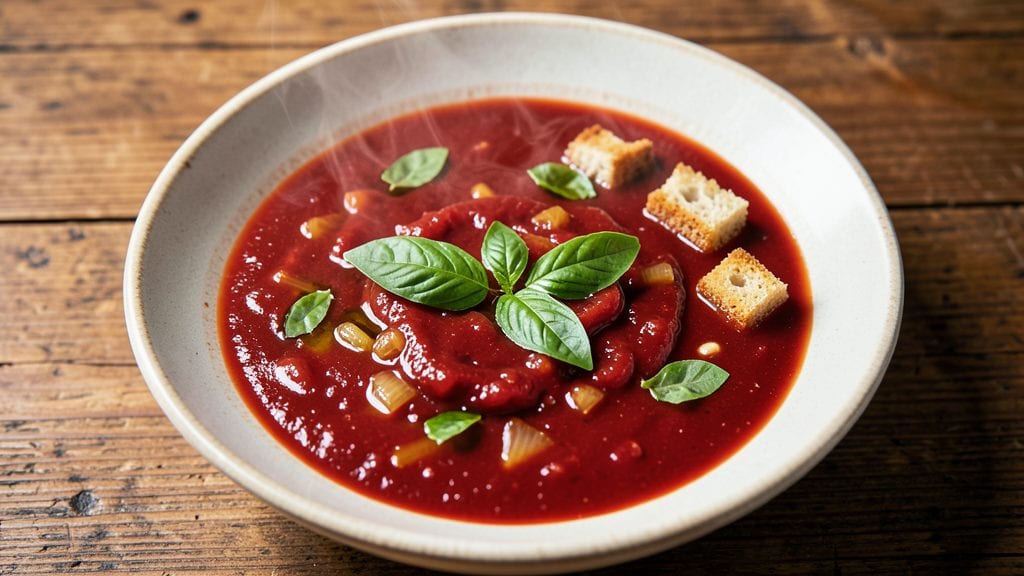
Recreating Panera Bread's tomato basil soup at home delivers the same velvety, herby freshness that makes it a comfort food staple. The secret lies in balancing acidity with sweetness while building layers of flavor through sautéed aromatics and fresh basil.
I've perfected this version to achieve that signature creamy texture without heavy cream—just a simple technique that transforms pantry staples into restaurant-quality soup.
What sets this recipe apart is the 20-minute preparation time, making it ideal for weeknights when you crave something warm and satisfying. The broth develops deep tomato flavor through careful simmering, while fresh basil adds bright, aromatic notes that elevate every spoonful.
Unlike many quick soups, this version delivers the same rich, velvety consistency that makes Panera's famous.
The result is a soup with perfectly balanced flavors—sweet tomatoes, tangy acidity, and fresh herbaceousness—all wrapped in a smooth, creamy texture. The optional grilled cheese or bread topping transforms it into a complete meal that feels indulgent yet simple to prepare.
This is the kind of soup that warms you from the inside out while keeping prep manageable.
Whether you're serving it as a light lunch or a cozy dinner, this recipe delivers restaurant-quality results with minimal effort. The best part? You'll have the freshest possible basil flavor, no shortcuts needed. Let's get started on creating your own version of this beloved classic.
Ingredients for panera bread tomato basil soup
Short list, big flavor—this soup captures Panera’s signature taste at home.
| Ingredient | Amount | Notes |
|---|---|---|
| Canned Crushed Tomatoes 🍅 | 3 cans | 28 oz cans, no salt added |
| Fresh Basil Leaves 🌿 | 2 cups | Packed, stems removed |
| Onion 🧅 | 1 whole | Yellow or white, diced |
| Garlic Cloves 🧄 | 4 cloves | Minced, aromatic |
| Vegetable Broth 💧 | 4 cups | Low-sodium preferred |
| Olive Oil 🫒 | ¼ cup | Extra-virgin, for richness |
| Tomato Paste 🍅 | ¼ cup | Unsweetened, for depth |
| Dry Pasta 🍝 | ½ lb | Small shape like ditalini |
| Salt 🧂 | 1 tsp | Kosher, to taste |
| Black Pepper 🌶️ | ½ tsp | Freshly ground, preferred |
| Butter 🧈 | 2 tbsp | Unsalted, for creaminess |
| Parmesan Cheese 🧀 | ¼ cup | Freshly grated, optional |
| Lemon Juice 🍋 | 1 tbsp | Fresh, for brightness |
The fresh basil is non-negotiable—grab a bunch from the farmers market or your local grocery's produce section if the store-brand basil looks sad. Look for leaves that are vibrant green and fragrant; avoid any with yellowing or wilting. For the tomatoes, San Marzano cans give the deepest flavor, but any good-quality crushed tomatoes will work. The onion and garlic are aromatics, so don’t rush the sautéing—cook them until golden for that rich base. I always keep a jar of low-sodium vegetable broth on hand because it lets me control the saltiness later.
No fresh basil? Dried basil at half the amount is a decent swap, but it won’t be as bright. Short on time? Baby spinach works in a pinch—add it with the pasta for greens. Want extra creaminess without heavy cream? Blend in a splash of coconut milk at the end. The tomato paste is key for depth—Trader Joe’s or store-brand unsweetened are both great. And if you’re avoiding dairy, skip the Parmesan and just add a pinch more salt to balance.
This soup tastes even better the next day as flavors meld. Store in an airtight container in the fridge for 5 days. For longer storage, freeze portions in 1-cup containers—they reheat perfectly. The pasta absorbs liquid, so if you’re freezing, add a splash of broth to the container to keep it moist. I always make a double batch and freeze half—lunches sorted for the week!
Why You'll Love This Recipe
- No-Chop Night: I swear by this one—just dice that onion while the broth heats, and you’re done. No peeling garlic cloves, no finicky basil stems to deal with. The canned tomatoes handle all the heavy lifting while you sip wine and pretend you’re not cooking.
- Garlic-Basil Magic: That moment when you toss in the raw garlic and fresh basil? Pure alchemy. The garlic softens into sweet, buttery layers while the basil brightens everything—like a sunbeam in a bowl. Honestly, I’ve tried fancy versions, but this? This is the one that sticks.
- Leftovers That Beg: This soup only gets better the next day. The flavors meld into something deeper, richer—like it’s been simmering for hours instead of 20 minutes. I make a double batch on Sundays just so I can reheat it all week. (Yes, even on a Tuesday night.)
- Pantry Staple Power: Five ingredients, zero guesswork. You’re not hunting for obscure herbs or specialty broths—just what’s already in your cupboard. And at under $3 a bowl? It’s my go-to when I’m broke but still want to eat like I’m not. Budget-friendly doesn’t get much better than this.
Step-by-step instructions for Panera bread tomato basil soup
Here's how to recreate that iconic restaurant flavor at home—quick, comforting, and packed with herby freshness.
Sauté the Aromatics Until Fragrant
Heat the 0.25 cup olive oil in a large pot over medium heat. Add the 1 whole onion, diced into small pieces, and cook for 5 minutes until soft and translucent. Here's the thing—you'll see the onion turn from pale to slightly golden, and that's your cue it's ready.
Add the 4 cloves garlic cloves, minced, and cook for another 30 seconds until fragrant. The garlic should smell pungent and inviting, not burnt. If it starts to brown too quickly, reduce the heat slightly—garlic burns faster than you think. This aromatic base is the flavor foundation of your soup.
Build the Tomato Base
Stir in the 0.25 cup tomato paste and cook for 1 minute until it darkens slightly and loses its raw taste. This step deepens the tomato flavor and removes any bitterness. Then, pour in the 3 cans canned crushed tomatoes and the 4 cups vegetable broth. Bring everything to a gentle boil, then reduce the heat to medium-low and let it simmer for 10 minutes to meld the flavors.
Add the 1 tsp salt and 0.5 tsp black pepper now. I like to taste as I go—this is the moment that matters. The soup should be seasoned but not overwhelming. If you're using low-sodium broth, you might need to adjust later, but start with the full amount of salt now. Stir occasionally to prevent sticking, but don't worry about a skin forming—it'll disappear when we add the pasta.
Cook the Pasta Until Al Dente
Add the 0.5 lb dry pasta to the simmering soup. Stir gently to distribute it evenly. Cook for 8-10 minutes, stirring occasionally, until the pasta is al dente—firm to the bite but fully cooked through. You'll know it's ready when you can pierce a piece with a fork and it holds its shape but isn't hard in the center.
Don't overcook the pasta—it'll finish cooking in the residual heat as the soup sits. If you're unsure, taste a piece early. The pasta should be tender but still have a slight bite. This is crucial because overcooked pasta turns mushy in soup and ruins the texture.
Finish with Fresh Basil and Butter
Remove the pot from heat and stir in the 2 tbsp butter and 2 cups fresh basil leaves. The butter adds richness while the basil brings that bright, herby freshness we all love. Let the soup sit off heat for 5 minutes to allow the flavors to meld. This resting period is where the magic happens—it lets the basil soften slightly and the butter melt completely into the soup.
Give it a taste and adjust seasoning if needed. If it needs more acidity, stir in the 1 tbsp lemon juice. This brightens the whole dish and cuts through the richness of the butter. The lemon juice should be fresh—bottled won't give you the same zing. If you're using the 0.25 cup parmesan cheese, sprinkle it on now or serve it on the side for those who prefer it.
Serve Warm and Enjoy
Ladle the soup into bowls and serve immediately. The aroma alone will have everyone gathering around the table. I like to garnish each serving with a few extra basil leaves and a sprinkle of parmesan cheese right before serving—it adds that restaurant-quality presentation.
Real talk: This soup tastes even better the next day, but it's hard to wait. If you have leftovers, store them in an airtight container in the refrigerator for up to 3 days. Reheat gently on the stove, stirring occasionally, until warmed through. The flavors only deepen as it sits, so don't rush this part. Enjoy your homemade version of Panera's classic—it's smoother, fresher, and just as comforting as the original.
Pro Tips For Making Panera Bread Tomato Basil Soup
- Sauté Onions Low and Slow: The onions should turn golden, not brown—pushy, I know, but trust me. If you crank the heat, they’ll burn before the garlic even gets a chance to sing. Keep it at a medium-low simmer and stir every 30 seconds until they’re soft and translucent, not crispy.
- Chop Basil Last: Fresh basil wilts fast in heat, so don’t add it until the very end. Tear the leaves by hand instead of chopping—it keeps the flavor bright and the texture lively. If you’re worried about it floating, stir it in right before serving.
- Deglaze with Broth: That browned onion and garlic stuck to the pot? Don’t just add water—use a splash of vegetable broth. It adds depth right from the start, and you’ll save a step later when you’re mixing in the broth anyway.
- Blend in Batches: If your soup’s too thick after blending, resist the urge to dump everything in at once. Split it into two batches—your blender will thank you, and you’ll avoid a motor burnout. Smooth texture matters, especially for that Panera-style creaminess.
Essential equipment for panera bread tomato basil soup
Large Pot Essentials
You’ll need a large, heavy-bottomed pot—I recommend an 8-quart Dutch oven like the Le Creuset Stoneware or a stainless steel stockpot from All-Clad. These pots distribute heat evenly and prevent scorching during the long simmer.
If you’re short on space, a 5-6 quart pot works, but leave room for the pasta to move freely—crowding causes uneven cooking. 🔥
Immersion Blender
For that signature Panera-style smooth, velvety texture, an immersion blender is your best friend. I use the Ninja BN601—it’s affordable, powerful, and easy to clean. If you don’t have one, a regular blender works, but you’ll need to transfer the soup in batches (careful—hot liquids splash!).
Pulse for 10-15 seconds until just smooth—over-blending turns it mushy. 💫
Wooden Spoon
A long-handled wooden spoon is non-negotiable for stirring this soup. Wood won’t scratch your pot like metal, and the length lets you reach every corner without splashing.
I swear by the Oxo Good Grips—it’s heat-resistant and stays sturdy even with thick soups. Avoid plastic; it warps and melts over time. ✨
Fine-Mesh Strainer
If you’re using whole basil leaves (instead of tearing them), a fine-mesh strainer helps remove stems before adding the leaves to the soup. I keep a stainless steel mesh strainer from OXO in my kitchen—it’s durable and easy to clean.
Skip this if you’re chopping the basil finely; it’ll blend right in during the final stir.
Kitchen Timer
Timing is everything in this recipe, especially when cooking the pasta al dente. A kitchen timer ensures you don’t overcook the pasta—set it for 8 minutes and check at 7 minutes to avoid mushy results.
I use the Westmark Stainless Steel Timer because it’s simple, reliable, and hangs easily on my oven handle. Pro tip: Set two timers—one for the pasta and one for the simmering broth to avoid multitasking disasters. ⏰
Optional: Grilled Cheese Maker
For that classic Panera grilled cheese topping, a grilled cheese press like the Breville Smart Oven Air or even a cast-iron skillet works perfectly. If you’re short on time, a non-stick pan with butter and medium heat gives great results.
Just press the sandwich until golden brown—about 3-4 minutes per side—and serve it right on top of the soup for a complete meal. 🧀
Nutrition facts
Frequently asked questions
Can I make this soup without fresh basil?
Yes, but the flavor won't be as bright. Use 1/2 teaspoon dried basil instead, but add it during the final 5 minutes of cooking. For extra freshness, try 1/4 cup baby spinach—add it with the pasta for a subtle green note. The key is balancing the herbs to avoid bitterness.
Why does my soup taste too acidic?
This happens when the tomatoes or lemon juice overpower the dish. Balance it by adding 1 teaspoon sugar or 1/2 teaspoon honey to sweeten the acidity. Stir in the butter at the end—it coats the palate and mellows sharp flavors. Taste as you go!
Can I make this soup dairy-free?
Skip the butter and use 2 tablespoons olive oil instead for richness. For creaminess, blend in 1/4 cup unsweetened coconut milk at the end. The pasta will still absorb flavor, and the soup will stay luscious. Just add a pinch more salt to compensate for the omitted butter.
How do I prevent the pasta from getting mushy?
Cook the pasta 1-2 minutes less than package instructions suggest, then finish cooking in the hot soup. Stir occasionally to prevent sticking. For extra insurance, use ditalini or small pasta shapes—they hold up better in soups. Always taste-test a piece early!
Can I use canned tomato sauce instead of crushed tomatoes?
Yes, but you'll need to adjust the texture. Use 2 cans tomato sauce and add 1/4 cup water to thin it out. The sauce lacks the chunky texture of crushed tomatoes, so blend it briefly with an immersion blender for a smoother consistency. The flavor will still be delicious!