
Side Dishes
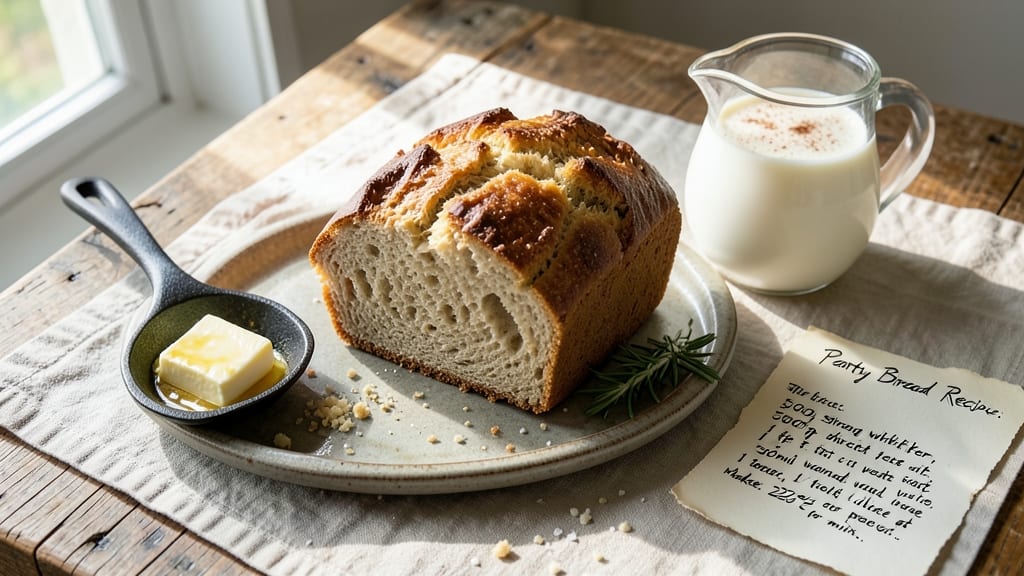
Transform any gathering into a celebration with this party bread recipe—a buttery, swirled loaf that’s as impressive to serve as it is delicious to eat. ✨ The secret lies in rich brioche dough, kneaded just right and baked to golden perfection, creating a texture that’s tender inside with a crisp, golden crust outside.
I’ve perfected this recipe over countless holiday tables, and it never fails to impress guests.
What makes this bread special is its versatility and crowd appeal. The swirls of melted butter create pockets of flavor that melt into every bite, while the dough’s elasticity ensures it holds its shape beautifully.
Unlike plain dinner rolls, this bread is designed to be a showstopper—ideal for buffet tables, holiday dinners, or even brunch spreads. It’s the kind of dish that makes your gathering feel special without requiring hours of labor.
By the time it’s done, you’ll have a loaf that’s golden brown, fragrant, and irresistibly inviting. The buttery swirls add visual appeal, while the crunchy crust gives way to a soft, pillowy interior that’s perfect for slicing and serving.
This bread doesn’t just complement a meal—it elevates it, turning simple gatherings into memorable events.
Whether you’re hosting a holiday dinner, a casual get-together, or a festive brunch, this party bread is the perfect addition. It pairs well with soups, salads, or even as a standalone treat with butter and jam.
The best part? Once you master this recipe, you’ll never go back to plain dinner rolls again.
Ingredients for party bread
Twelve ingredients transform into a showstopping loaf perfect for any celebration—rich, swirled, and guaranteed to impress.
| Ingredient | Amount | Notes |
|---|---|---|
| All-Purpose Flour 🌾 | 4 cups | Sifted for light texture |
| Granulated Sugar 🍚 | ¼ cup | White or light brown |
| Unsalted Butter 🧈 | 1 cup | Cold, cubed (8 tbsp total) |
| Large Eggs 🥚 | 3 whole | Room temperature |
| Warm Milk 🥛 | 1 cup | Whole milk preferred |
| Instant Yeast 🍞 | 2 ¼ tsp | Single-use packet works |
| Salt 🧂 | 1 tsp | Fine sea salt |
| Melted Butter 🧈 | ½ cup | For swirling (room temp) |
| Granulated Sugar 🍚 | ¼ cup | For swirls (plus extra) |
| Vanilla Extract 🌸 | 1 tsp | Pure vanilla preferred |
| Butterflake Pastry Topping 🧈 | ½ cup | Or sub powdered sugar |
The butter is non-negotiable here—use European-style unsalted if you can find it (Plugrá or Kerrygold melt beautifully). For the dough, King Arthur or Bob’s Red Mill flour work best—they’ve got that perfect protein balance. I always grab my yeast from Trader Joe’s since it’s fresh and reliable. Pro tip: if your kitchen’s cold, warm the milk and butter slightly (just until they’re cozy to the touch)—this helps the yeast wake up faster. The vanilla? Pure Madagascar bourbon vanilla adds depth, but imitation works in a pinch.
No butterflake topping? Powdered sugar plus a pinch of cinnamon mimics that buttery sparkle. Short on vanilla? Almond extract at half the amount gives a similar warmth. If you’re prepping ahead, you can make the dough the night before—just let it rise overnight in the fridge (it’ll be ready to go in the morning). For the swirls, don’t overthink it—just dollop the butter-sugar mix in a zigzag down the center before folding. The key is keeping everything cold until the final rise so the butter stays firm enough to create those gorgeous swirls.
This bread is best served fresh, but slices reheat beautifully—5 minutes at 350°F makes them warm and pillowy again. Store wrapped at room temp for 2 days, or freeze the whole loaf for up to 3 months. I always slice it before freezing—just thaw overnight on the counter. For parties, slice it into thick rounds and stack them on a platter with a dusting of powdered sugar. Trust me, guests will think you slaved over this all day.
Why You'll Love This Recipe
- Here’s what sold me: this bread actually improves the next day. The crust gets even crunchier, and the inside stays moist—perfect for quick toast or sandwiches. Plus, I can bake a whole loaf for under $3, and it feeds my whole family without breaking the bank.
- Five-Ingredient Magic: I swear by this list—flour, sugar, butter, eggs, and milk. That’s it. No fancy pantry trips, no last-minute store runs. The dough comes together faster than I can wipe butter off my fingers, and honestly? It’s the kind of recipe that makes me feel like a baking genius without the stress.
- Buttery Sweet Payoff: The moment it pulls away from the edges of the pan? Chef’s kiss. That caramelized sugar crust with warm, buttery layers inside—it’s the kind of flavor that makes people pause mid-sentence to ask for seconds. (Yes, even on a Tuesday night.)
- Breakfast to Dessert: Between us, I’ve served this for brunch with jam, as a snack with peanut butter, and even as a dessert with a sprinkle of cinnamon sugar. The dough’s neutral base soaks up whatever you toss on top—it’s my go-to for when I can’t decide what to make.
Step-by-step instructions for crowd-pleasing party bread
Here's how to create a showstopping loaf with golden swirls that'll disappear at your gathering.
👨🍳 Step 1: Mix the Dough Base
In a large bowl, whisk together the 1 cup unsalted butter (cold, cubed) and 0.25 cup granulated sugar until crumbly. Add the 3 whole large eggs and mix until combined. In a separate bowl, combine 4 cups all-purpose flour, 2.25 teaspoons instant yeast, and 1 teaspoon salt, then sift into the butter mixture.
Gradually add the 1 cup warm milk while mixing with a wooden spoon until a shaggy dough forms. Here's the thing—don't overmix. You want to preserve those air pockets for that light, airy texture everyone loves. The dough should be soft but not sticky when you press it together.
🍳 Step 2: Form and Swirl the Dough
Turn the dough onto a lightly floured surface and knead gently for about 2 minutes until smooth. Roll it into a 12x16-inch rectangle about ½-inch thick. Spread the 0.5 cup melted butter evenly over the surface, leaving a ½-inch border uncovered.
Sprinkle the 0.25 cup granulated sugar and 1 teaspoon vanilla extract over the melted butter, then roll the dough tightly into a log starting from the long side. Seal the seam by pinching it firmly. This is where the magic happens—those buttery swirls create the crowd-pleasing visual and flavor you're after.
🔥 Step 3: Bake to Golden Perfection
Preheat your oven to 375°F. Place the dough seam-side down in a greased 9x5-inch loaf pan. Bake for 45-50 minutes until the top is deep golden brown and a toothpick inserted comes out clean. The bread should have a beautiful dome shape with those enticing swirls peeking through.
Real talk: Your oven might run hot, so start checking at the 40-minute mark. If the top browns too quickly, tent it loosely with foil. The internal temperature should read 190-195°F when done. This baking time ensures a perfectly set crumb with those buttery swirls still gooey in the center.
⏰ Step 4: Cool and Top
Remove the bread from the oven and let it cool in the pan for 10 minutes before transferring to a wire rack. While still warm, sprinkle the 0.5 cup butterflake pastry topping evenly over the top. This step adds that irresistible crunch that makes this bread a party favorite.
Let the bread cool completely before slicing. The butterflakes will melt slightly into the warm bread, creating that perfect balance of crunch and creaminess. Each slice should reveal those beautiful golden swirls—proof that you've created something truly special for your gathering.
Pro Tips For Making Party Bread
- Melt Butter Slowly: If you dump cold butter straight into warm milk, you’ll end up with greasy clumps instead of a smooth, creamy base. Instead, cut the butter into small cubes, then add them to the milk one piece at a time while stirring gently—let each one melt completely before adding the next. I learned this the hard way after scrapping a batch where the dough turned out greasy and uneven.
- Weigh Your Flour: Scooping flour from the bag packs in too much air, which makes your bread dense instead of light and fluffy. Use a kitchen scale for precision—aim for 350 grams of all-purpose flour (spooned and leveled, not packed). I was skeptical until I tried it, and now I can’t go back.
- Let Dough Rise Twice: Skipping the second rise is where most party breads go wrong—they end up flat and heavy. After the initial rise, punch down the dough, shape it, then let it rise again for another 30-45 minutes until it’s puffy and nearly doubled. This isn’t the prettiest method, but it’s the thing that matters most for that classic soft, airy texture.
- Brush with Milk: For a golden, glossy finish, don’t just rely on egg wash—brush the risen dough with warm milk before baking. The sugar in the milk caramelizes beautifully, giving you that perfect party-ready shine. It’s a tiny extra step, but it actually changes the outcome.
Common mistakes when making perfect results
Over-Kneading the Dough
I’ve seen this happen more times than I can count—especially with beginners. Over-kneading develops too much gluten, which makes the bread dense and chewy instead of light and tender.
The dough should be soft but not sticky, and it only needs about 2 minutes of gentle kneading on a floured surface. Stop as soon as it comes together smoothly. Overworking it turns your party bread into a brick—no one wants that at their gathering! 🧀
Skipping the Cold Butter
The butter in this recipe is the star, and cold butter is non-negotiable. If you use room-temperature butter, those beautiful swirls won’t form properly—they’ll just melt into the dough, leaving you with a bland, uniform loaf.
I always cube my 1 cup unsalted butter and keep it cold until the final rise. Trust me, the effort pays off with those golden, buttery swirls that make your bread look (and taste) like it came from a bakery.
Ignoring Proofing Times
Rushing the proofing is a surefire way to end up with a flat, dense loaf. This dough needs 1-2 hours to rise at room temperature (or 4-6 hours in the fridge if you’re prepping ahead).
The bubbles in the dough are what give it that light, airy texture—don’t skip this step! I always double-check by pressing a finger into the dough; if it springs back slowly, it’s ready. If it springs back quickly, give it more time. Patience here makes all the difference.
Using the Wrong Pan
A 9x5-inch loaf pan is essential for this recipe—it gives the bread its classic shape and helps it rise properly. I’ve seen people try baking it in a smaller pan or even a cake pan, and the results are always disappointing.
The dough won’t have room to expand, leading to a squat, uneven loaf. Grease the pan well, and place the dough seam-side down to ensure even baking and a beautiful dome shape.
Overloading the Swirls
When it comes to the buttery swirls, less is more. Overloading the melted butter and sugar mixture can make the dough too greasy, causing it to tear when you roll it up.
Stick to the 0.5 cup melted butter and 0.25 cup sugar called for in the recipe, and spread it evenly, leaving that ½-inch border uncovered. This ensures the swirls are visible and delicious without making the dough too heavy. The goal is balance—visual appeal and flavor in every bite.
Baking at the Wrong Temperature
Your oven’s temperature gauge isn’t always accurate, so don’t rely on it blindly. Preheat to 375°F and use an oven thermometer to confirm. Baking too hot can cause the top to brown too quickly before the inside is done, while baking too cool results in a gummy, underbaked loaf.
I always start checking at the 40-minute mark—if the top is browning too fast, tent it loosely with foil. The internal temperature should hit 190-195°F for that perfect crumb.
Nutrition facts
Frequently asked questions
Can I make this bread without a loaf pan?
A 9x5-inch loaf pan gives the classic shape, but you can shape the dough into a free-form loaf on a baking sheet. Line the sheet with parchment paper and bake at 375°F for 35-40 minutes, checking for golden brown color. The swirls will still peek through beautifully, though the shape will be more rustic. For best results, use a baking stone or steel for even heat distribution.
How far ahead can I prepare this bread for a party?
You can make the dough up to 24 hours ahead and refrigerate it. Let it rise at room temperature for 1-2 hours before baking. For the finished loaf, wrap it tightly in plastic wrap and store at room temperature for 2 days. For longer storage, freeze the whole loaf (unsliced) for up to 3 months. Thaw overnight on the counter for the best texture.
What's the best way to reheat sliced party bread?
Slice the bread and reheat in a 350°F oven for 5-7 minutes on a wire rack to restore that warm, pillowy texture. For a quick fix, wrap slices in a damp paper towel and microwave for 10-15 seconds—just watch closely to avoid drying. The butterflake topping stays crispy when reheated this way, adding that perfect crunch to every bite.
Can I substitute butter with oil in this recipe?
Not recommended! The butter creates those signature swirls and adds rich flavor. If you must substitute, use ½ cup melted butter plus ¼ cup neutral oil (like vegetable or canola), but the texture and taste won't be the same. The butter's fat content is key for that tender crumb and golden crust. For a lighter version, you could try 1 cup whipped butter, but it won't hold the swirls as well.
How do I make this bread more festive for holidays?
Add colorful sprinkles to the butter-sugar swirl before rolling, or fold in 1 teaspoon cinnamon and ½ cup chopped nuts for a holiday twist. For a showstopper, brush the baked loaf with a simple glaze made from ½ cup powdered sugar + 1 tablespoon milk. You can also shape the dough into individual braids or mini loaves for a festive touch that's perfect for holiday gatherings.