
Side Dishes
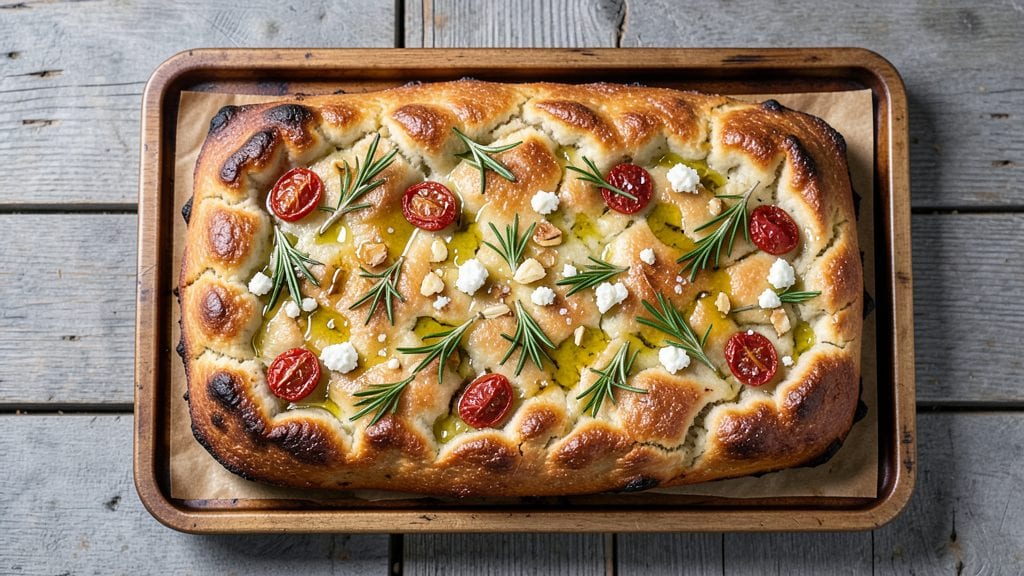
Paul Hollywood's focaccia bread recipe delivers that signature crispy crust and airy interior we all crave, with a golden olive oil sheen and herby aroma that makes every bite feel like a celebration.
The secret lies in his precise technique—dimpling the dough just right and finishing with a lavish drizzle of olive oil and flaky salt. I've baked this version countless times for dinner parties, and it never fails to impress.
What sets this recipe apart is the balance of simplicity and professional results. You'll need just five core ingredients—flour, yeast, olive oil, water, and salt—but the technique transforms them into something restaurant-quality.
The dough rests overnight, developing deep flavor, while the high-heat baking creates that coveted crispy crust with a tender crumb. No special equipment required beyond a baking sheet and your hands.
By the time it emerges from the oven, your focaccia will have that signature golden crust with visible dimples, glistening with olive oil and sprinkled with flaky salt. The interior stays light and airy, perfect for soaking up soups or pairing with charcuterie.
The aroma alone will have everyone gathering around the table before the first slice is even cut.
This recipe scales beautifully for gatherings, and the leftovers toast up perfectly for breakfast the next day. Whether you're serving it warm with dinner or saving slices for toast, you'll understand why Paul Hollywood's version has become a kitchen staple.
Let's get baking—your kitchen will smell like heaven in no time.
Ingredients for paul hollywood focaccia bread
Five simple ingredients transform into Paul Hollywood's signature focaccia with crispy crust and herby aroma.
| Ingredient | Amount | Notes |
|---|---|---|
| All-Purpose Flour 🌾 | 4 cups | Spooned and leveled, not scooped |
| Active Dry Yeast 🍞 | ¼ oz | Or 1 packet (2.25 tsp) |
| Extra-Virgin Olive Oil 🫒 | 1 ½ cups | High-quality, fruity variety |
| Warm Water 💧 | 1 ½ cups | 110°F (43°C) ideal |
| Fine Sea Salt 🧂 | 1 ½ tsp | Diamond Crystal preferred |
| Fresh Rosemary 🌿 | ¼ cup | Finely chopped leaves |
| Fresh Thyme 🌿 | ¼ cup | Leaves only, finely chopped |
| Flaky Sea Salt 🧂 | ½ cup | For finishing (Maldon preferred) |
The flour is your foundation—King Arthur or Gold Medal work best for this dough. If you're near a bakery, ask for bread flour—it gives that extra chew. The yeast? Fresh yeast from the refrigerated section (like Fleischmann's) works better than active dry if you're in a hurry—just halve the amount. For the olive oil, Trader Joe's or Whole Foods carry excellent fruity varieties that won't taste bitter. Rosemary and thyme? Fresh is non-negotiable here—dried won't give that same bright aroma. Grab them from the grocery store's produce section, or grow your own if you're feeling fancy.
No fresh herbs? Dried rosemary and thyme at half the amount will work, but it won't be the same. Short on olive oil? Avocado oil works in a pinch, but it lacks that signature flavor. The salt is where you can splurge—Maldon flaky salt is worth every penny for that professional finish. If you can't find it, coarse kosher salt is your next best bet. The water temperature matters—too hot and you'll kill the yeast, too cold and it won't activate. 110°F is perfect, but if you don't have a thermometer, just use warm water from your tap and let it sit for 5 minutes.
This dough is best made a day ahead—the overnight rest develops incredible flavor. Store it in the fridge in a sealed container, covered with a damp towel. The next day, let it sit at room temperature for 1 hour before shaping. For leftovers, wrap tightly in foil and freeze—it keeps for 3 months. Toast slices straight from the freezer for breakfast. The focaccia reheats beautifully too—5 minutes at 350°F brings back that crispy crust.
Why You'll Love This Recipe
- No-Knead Magic: I swear by this—just mix the flour, yeast, olive oil, and warm water, then let it rise while I make dinner. That golden crust? Zero effort, all reward.
- Olive Oil Bliss: The moment it bakes, the aroma of extra-virgin olive oil and sea salt hits like a hug. Crispy outside, pillowy inside—it’s the kind of bread that makes you pause mid-bite.
- Weeknight Hero: Toss in rosemary or cherry tomatoes if you’re feeling fancy, but even plain? It’s my go-to for sandwiches, toast, or soaking up soup. Never a dull moment.
- Budget Stretch: Five ingredients, one bowl, and enough leftovers to feed the family for days. Freeze slices for quick toast later—this recipe saves me money and time every week.
Step-by-step instructions for Paul Hollywood's focaccia bread
Here's the foolproof method for that signature golden crust and fragrant herby interior.
Activate the Yeast in Warm Water
In a large mixing bowl, combine the 1.5 cups warm water and 0.25 oz active dry yeast. Let it sit for 5-10 minutes until the mixture becomes frothy and bubbly—this confirms your yeast is active. If it doesn't bubble, your yeast might be dead, and you'll need to start over.
Here's the thing—water temperature matters. Too hot and you'll kill the yeast; too cold and it won't activate. The 110°F mark is your sweet spot. If you don't have a thermometer, test the water by dipping your finger in—it should feel warm but not hot like freshly brewed tea.
Mix the Dough with Olive Oil and Salt
Add the 4 cups all-purpose flour and 1.5 tsp fine sea salt to the yeast mixture. Stir with a wooden spoon until a shaggy dough forms. Then pour in the 1.5 cups extra-virgin olive oil and mix vigorously with your hands until the dough comes together into a sticky, elastic mass.
This is where the magic happens—the olive oil makes focaccia rich and tender. Don't be tempted to add more flour yet; the dough should be soft and slightly tacky. If it's too dry, add 1 tablespoon warm water at a time until it reaches the right consistency. You'll know it's right when it leaves a light film on your fingers.
Incorporate Herbs and First Rise
Gently fold in the 0.25 cup fresh rosemary and 0.25 cup fresh thyme using a silicone spatula. Be careful not to overwork the dough—just distribute the herbs evenly. Transfer the dough to a lightly oiled 9x13-inch baking pan and spread it out to fit the pan completely, using your fingers to create dimples all over the surface.
Cover the pan with a clean kitchen towel and let the dough rise in a warm place for 1-2 hours, or until it's puffed about 1 inch above the pan's rim. The kitchen should feel slightly warm—if it's cold, place the pan near a warm oven or on top of your fridge. Patience here is key; rushing this step results in dense focaccia.
Second Rise and Final Preparation
Preheat your oven to 425°F. After the first rise, generously drizzle the dough with an additional 2 tablespoons extra-virgin olive oil, spreading it evenly across the surface. Sprinkle with 0.5 cup flaky sea salt and press it lightly into the dough. Let it rise uncovered for another 30-45 minutes until it's puffed and the salt crystals begin to melt slightly.
This final rise is crucial for that signature airy texture. The salt should look slightly dissolved but still visible. If your kitchen is cool, you might need the extra time. The dough should feel springy when pressed gently—if it springs back slowly, it's not ready yet.
Bake to Golden Perfection
Bake the focaccia for 20-25 minutes until the edges are deep golden brown and the top is crispy. Rotate the pan halfway through for even browning. You'll know it's done when it sounds hollow when tapped on the bottom and the internal temperature reaches 190°F.
Let it cool in the pan for 10 minutes before slicing—this prevents the bread from falling apart. The crust should be crisp and shatterable, while the interior remains soft and fragrant with herbs. Serve warm with olive oil for dipping or alongside your favorite meals.
Pro Tips For Making Paul Hollywood Focaccia Bread
- Weigh Your Flour: Paul’s recipe calls for precise measurements—skip the scooping. A kitchen scale guarantees consistency, especially when the dough’s hydration depends on it. I learned this the hard way when my first batch turned out gummy because I eyeballed the flour.
- Proof at Room Temp: Let that yeasty dough rise in a warm spot, not the fridge. Room temperature (around 75°F) speeds up fermentation, cutting proofing time from 1.5 hours to 45-60 minutes. My grandmother swore by this, and she was right: impatient dough rises faster when it’s happy.
- Oil the Pan First: Don’t wait until the dough’s in the pan—grease it before shaping. A thin layer of olive oil keeps the focaccia from sticking, and it’s easier to spread when the pan is dry. I skip this sometimes, and the dough always fights me.
- Dimple with Your Fingers: No special tools needed—just wet your fingers and press dimples into the dough. The oil from your fingers helps them stay open, and it’s way faster than a fork. Sounds weird, but it works: the focaccia turns out airy and crispy every time.
Common mistakes when making this dish
Over-Kneading the Dough
Focaccia dough is delicate—overworking it develops gluten too much, resulting in a tough, chewy texture instead of that signature tender crumb. I’ve ruined batches by kneading for more than 2-3 minutes total. The dough should be soft and slightly sticky, not firm.
Once you’ve mixed in the flour, oil, and salt, stop when it just comes together—no need to punch or fold aggressively like pizza dough. 💫
Skipping the Dimples
Those iconic dimples aren’t just for looks—they create surface area for maximum crispiness and oil absorption. Press them in with your fingertips after the first rise, using about ½ inch spacing.
If you skip this step, your focaccia will bake flat and lack that restaurant-quality texture. Think of it like creating little pockets for the olive oil to pool in during baking.
Using Low-Quality Olive Oil
Cheap olive oil will make your focaccia taste bitter and lack that rich, fruity depth. I’ve learned this the hard way—once I used store-brand vegetable oil, and the result was disappointing. Invest in a high-quality extra-virgin olive oil like California Olive Ranch or Colavita.
The cost difference is worth it for that signature flavor and aroma. Even 1 tablespoon of inferior oil can ruin the entire batch.
Baking at the Wrong Temperature
Too low (375°F), and your focaccia will bake unevenly with a pale crust. Too high (450°F+), and it’ll burn before the interior cooks through. The sweet spot is 425°F, where you get that perfect golden crust and airy interior.
I recommend using an oven thermometer to verify accuracy—many home ovens run 25°F hotter or colder than set.
Not Letting It Rest Enough
Rushing the 1-2 hour first rise or 30-45 minute second rise leads to dense, gummy focaccia. The dough needs time to develop gluten structure and trap gases for that light texture. I’ve seen home bakers skip the second rise completely—don’t make that mistake!
Place your dough in a warm spot (like a turned-off oven with the light on) to speed up rising if needed.
Overloading with Toppings
While herbs and salt are essential, adding too many toppings (like cheese or nuts) can weigh down the dough and prevent proper expansion. Stick to the rosemary, thyme, and flaky salt in the recipe.
If you want to experiment, add toppings only after the second rise—just before baking—and use them sparingly. A little goes a long way with focaccia. 🔥
Nutrition facts
Frequently asked questions about Paul Hollywood's focaccia bread
Why does Paul Hollywood's focaccia need an overnight rest?
The overnight rest develops deep, complex flavors in the dough through fermentation. This slow process breaks down gluten and sugars, creating that signature aromatic richness. Think of it like letting a fine wine age—patience transforms simple ingredients into something extraordinary.
Can I make this focaccia without a 9x13-inch pan?
Yes! Use a 9x12-inch pan instead, but reduce the olive oil by 1 tablespoon since the surface area is smaller. For a more rustic look, try a cast-iron skillet or pizza stone—just monitor baking time closely as they conduct heat differently. The dough should still be about ½-inch thick when shaped.
How do I store leftovers to keep them fresh?
Wrap cooled focaccia tightly in plastic wrap or foil, then place in an airtight container. It stays fresh at room temperature for 2 days or up to 1 week in the fridge. For longer storage, freeze slices wrapped individually—they toast perfectly straight from frozen.
What's the secret to getting that crispy crust like Paul Hollywood's?
The crispy crust comes from three things: high heat (425°F), dimpling the dough for oil pockets, and baking until deep golden brown. Don't rush it—wait until the edges are shatterable and the internal temp hits 190°F. A baking stone or steel in the oven helps too by creating steam for even browning.
Can I substitute dried herbs for fresh?
Use half the amount of dried herbs (like 1.5 tsp dried rosemary instead of ¼ cup fresh), but the flavor won't be as vibrant. Fresh herbs release their oils during baking, creating that signature aroma. If you must use dried, crush them lightly between your fingers first to release more flavor.