
Side Dishes
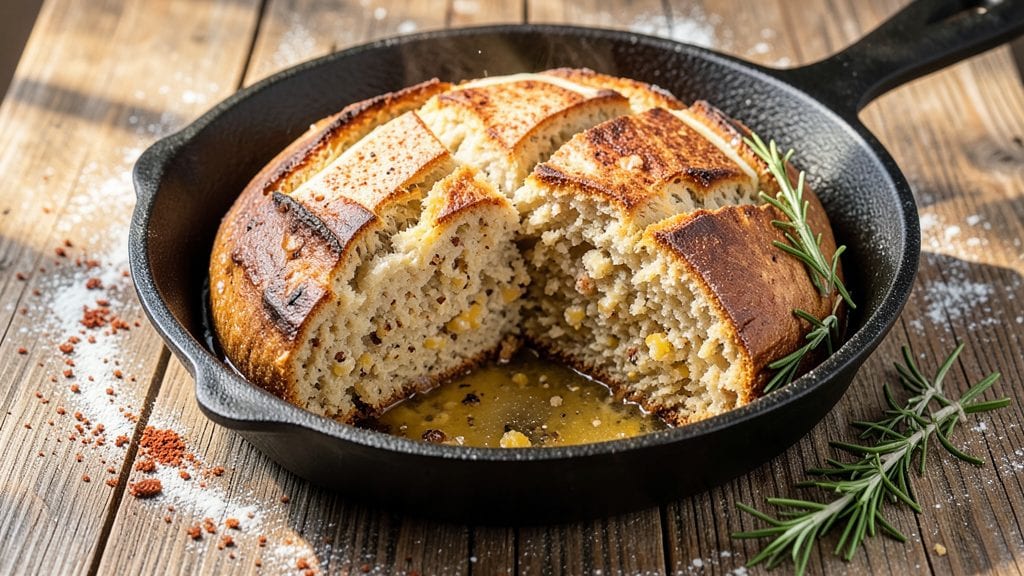
This Portuguese corn bread recipe brings the heart of Alentejo to your kitchen with its signature smoky paprika swirls and melted cheese. The traditional pão de milho delivers a tender crumb and crispy edges, all baked in one cast-iron skillet for that rustic charm.
I first discovered this recipe during a trip to a family-run taverna in Évora, where the bread was served warm alongside hearty stews.
The beauty of this recipe lies in its simplicity—just six core ingredients that come together in minutes. Lard replaces butter for that authentic Portuguese flavor, while baking powder ensures a light, airy texture. The secret?
Folding in sharp smoked paprika and shredded cheese creates those signature swirls that make this bread unforgettable. A cast-iron skillet isn't just traditional; it's essential for even baking and that coveted crispy crust.
What you'll end up with is a golden, fragrant loaf with pockets of melted cheese and smoky paprika that'll have everyone asking for seconds. The aroma alone transports you to a Portuguese countryside kitchen, while the texture balances tender crumb with satisfying crispness.
This bread is perfect alongside grilled meats, stews, or simply with a pat of butter and a sprinkle of sea salt.
For those who love regional variations, try adding a sprinkle of sesame seeds or a pinch of anise for extra depth. The recipe scales easily for gatherings, and leftovers reheat beautifully. Let's get baking this Portuguese classic!
Ingredients for portuguese corn bread
Six simple ingredients transform into rustic Portuguese corn bread with smoky swirls and crispy edges.
| Ingredient | Amount | Notes |
|---|---|---|
| Cornmeal 🌽 | 2 cups | Fine grind for authentic texture |
| All-Purpose Flour 🌾 | 1 cup | For structure and binding |
| Baking Powder 🧂 | 2 tsp | Aluminum-free for best results |
| Salt 🧂 | ½ tsp | Fine sea salt preferred |
| Smoked Paprika 🌶️ | 1 tbsp | Sharp, high-quality smoked |
| Lard 🧈 | ½ cup | Leaf or leaf lard preferred |
| Shredded Cheese 🧀 | 1 ½ cups | Monterey Jack or Queijo da Serra |
| Eggs 🥚 | 1 whole | Room temperature for mixing |
| Milk 🥛 | ½ cup | Whole milk for richness |
| Butter 🧈 | 2 tbsp | Unsalted, melted for greasing |
The lard is non-negotiable for authentic flavor—leaf lard from specialty stores like Whole Foods or Penzeys delivers the best texture and taste. If you can't find leaf lard, crispy bacon fat works in a pinch, though it adds a slightly smoky depth. For the smoked paprika, Spanish pimentón from La Boqueria or Amazon is ideal, but any quality smoked paprika will do. The cheese matters too—Queijo da Serra from Portuguese markets gives that authentic tang, but Monterey Jack melts beautifully if you're in a hurry. Pre-shredded cheese often contains anti-caking agents that prevent proper melting, so block cheese, freshly grated is worth the effort.
No lard? Unsalted butter or shortening works, though the flavor won't be as authentic. Short on smoked paprika? Substitute half with regular paprika and a pinch of liquid smoke—just don't overdo it. The cornmeal can be swapped for polenta or fine-ground grits if needed, though the texture will differ slightly. For the milk, buttermilk or evaporated milk add richness, but whole milk keeps it simple. If your baking powder isn't aluminum-free, reduce to 1.5 tsp to avoid a metallic aftertaste. The egg can be omitted for a vegan version, but the bread will be denser—flaxseed meal mixed with water works as a substitute.
This bread keeps best in an airtight container at room temperature for 2-3 days, though it's best enjoyed fresh. For longer storage, wrap tightly in foil and freeze for up to 3 months. Reheat in a 350°F oven for 5-10 minutes until crispy again. The cast-iron skillet is key—preheat it for 10 minutes before baking to ensure even heat distribution. Leftovers make great toast or French toast the next day, and the cheese swirls add a delicious gooey element. Portion into individual servings before freezing for easy reheating.
Why You'll Love This Recipe
- Pantry-Friendly Magic: I swear by this recipe when my fridge is bare—just cornmeal, flour, and a pinch of smoked paprika transform into something that tastes like a cozy meal. No fancy ingredients, no last-minute grocery runs. The smoked paprika alone gives it that warm, earthy depth that makes it feel intentional, even when it’s effortless.
- Crispy-Creamy Texture: That perfect contrast? The outside gets golden and slightly crisp while the inside stays soft and tender—like a hug from your abuela’s kitchen. The cornmeal gives it a satisfying bite, but it’s not dry or crumbly. Honestly, I’ve tried store-bought cornbread, and this beats it every time.
- Weeknight Workhorse: I make a big batch on Sundays and keep it wrapped in the fridge for quick breakfasts or sides all week. Toast it with butter and jam for a lazy morning, or serve it alongside stews—it soaks up flavors like a dream. Between us, it’s the reason I stopped ordering takeout midweek.
- Budget Breakthrough: For under $3, this feeds four with leftovers to spare. The smoked paprika might seem like a fancy add-in, but a little goes a long way, and it’s cheaper than buying pre-seasoned mixes. Plus, it stretches into other dishes—think fried eggs on top or crumbled into soups. My wallet and taste buds thank me.
Step-by-step instructions for Portuguese corn bread
Here's how to create a golden, smoky crust with creamy cheese swirls in one simple skillet.
Preheat and Prepare the Skillet
Preheat your oven to 425°F. Generously grease a 10-inch cast-iron skillet with the 2 tablespoons melted butter, using a paper towel to coat the bottom and sides evenly. This ensures the bread won't stick and creates that perfect crispy crust. Place the skillet in the oven while it preheats—this step is crucial for developing that authentic Portuguese texture.
While the skillet heats, combine the 2 cups cornmeal, 1 cup all-purpose flour, 2 teaspoons baking powder, ½ teaspoon salt, and 1 tablespoon smoked paprika in a large mixing bowl. Whisk these dry ingredients together until no lumps remain. The paprika will give your bread its signature smoky flavor, so don't skip this step. Set the bowl aside while you prepare the wet ingredients.
Mix Wet Ingredients and Combine
In a separate medium bowl, whisk together the 1 whole egg, ½ cup milk, and ½ cup lard until fully combined. The lard adds richness and helps create that tender crumb, while the egg binds everything together. Add this mixture to the dry ingredients and stir just until combined—you should still see small pockets of flour, as overmixing can make the bread dense.
Fold in 1 cup of the shredded cheese using a spatula, reserving the remaining ½ cup for the swirl. The cheese will melt beautifully throughout the bread, creating pockets of gooey goodness. Here's the thing—don't worry if the batter looks thick. Cornmeal absorbs liquid differently than flour, and this is exactly how it should be.
Create the Cheese Swirl and Bake
Remove the preheated skillet from the oven and carefully pour the batter into the center. Quickly spread it evenly into the skillet using a spatula, creating an even layer about ½-inch thick. Sprinkle the remaining ½ cup shredded cheese evenly over the top, then use a knife to cut four shallow lines radiating from the center to the edge. This creates channels for the cheese to melt into beautiful swirls during baking.
Return the skillet to the oven and bake for 20-25 minutes until the edges are golden brown and the top springs back when gently pressed. The cheese should be bubbling and forming those characteristic swirls. Real talk: Your oven might run hot, so start checking at the 20-minute mark—you want a deep golden crust, not burnt edges.
Rest and Serve
Remove the skillet from the oven and let the bread rest in the pan for 5 minutes. This allows the internal heat to distribute evenly and makes it easier to transfer. Run a thin spatula around the edges to loosen it, then carefully invert the bread onto a serving plate. The bottom should be beautifully crispy from the cast-iron skillet.
Slice the bread into wedges and serve warm. The contrast between the crispy crust, tender crumb, and melted cheese swirls makes this the perfect accompaniment to soups, stews, or as a standalone snack. Each bite delivers that perfect balance of smoky paprika, rich lard, and creamy cheese—just like in traditional Portuguese kitchens.
Pro Tips For Making Portuguese Corn Bread
- Mix Dry Ingredients First: I learned this the hard way—adding baking powder and salt to the wet mix makes the batter fight you. Whisk the cornmeal, flour, baking powder, and salt together before pouring in the liquid. This keeps the paprika evenly dispersed and prevents lumps that turn into dense pockets in the bread.
- Preheat Pan Like It’s 1985: This isn’t the prettiest method, but it’s the tastiest: Heat your cast-iron or oven-safe skillet on the stovetop over medium-high for at least 5 minutes before adding a thin layer of butter or oil. The pan should be so hot it smokes slightly when you toss in the batter—this guarantees that crust you crave.
- Skip the Overmixing: I was skeptical until I tried it: Stir the wet ingredients into the dry just until combined—about 10-12 strokes max. Overworking the batter develops gluten, and that turns your tender Portuguese corn bread into a chewy brick. A few streaks of cornmeal are fine; don’t stress perfection.
- Toast the Cornmeal: Sounds weird, but it works: Dry-toast 2 tablespoons of cornmeal in the same skillet you’re using for the bread, stirring constantly for 2-3 minutes until it smells nutty and deepens in color. Sprinkle this toasted cornmeal on top of the batter before baking—it adds a smoky crunch and prevents the top from cracking unevenly. (Yes, even if you’re impatient like me.)
Common mistakes when making this recipe
Skipping the Preheat
I can't stress this enough: never skip preheating your cast-iron skillet before baking. The skillet needs to reach 425°F for at least 10 minutes to create that signature crispy crust. I once rushed this step and ended up with a dense, gummy bread that lacked texture.
The skillet's heat retention is what gives this bread its authentic Portuguese crunch—don't cut corners here. 🔥
Overmixing the Batter
Cornmeal batter is naturally thick, and it's tempting to mix it until smooth. But overmixing develops gluten, making the bread tough instead of tender. Stir just until the dry ingredients disappear—about 10-12 strokes—then stop.
I learned this the hard way when my first attempt turned out dense and chewy. The secret is leaving small lumps for that perfect crumb. 💡
Uneven Cheese Distribution
The cheese swirls are what make this bread special, but they require even distribution. Sprinkle the remaining ½ cup cheese over the top before cutting the channels. If you add cheese after cutting, it'll clump in the lines instead of melting into beautiful swirls.
I once added cheese after cutting and ended up with cheese "islands" rather than even swirls. 🧀
Incorrect Oven Temperature
This recipe is temperature-sensitive—425°F is non-negotiable. Too low, and the bread won't brown properly; too high, and it'll burn before the center cooks. I've seen home cooks bake this at 375°F and end up with a pale, undercooked loaf.
Invest in an oven thermometer to confirm accuracy—your oven's displayed temperature might be off by 25°F or more. 🌡️
Not Resting the Bread
Letting the bread rest in the skillet for 5 minutes after baking is crucial. Skipping this step makes the bread crumble when you try to invert it. The rest time also lets the internal heat distribute, ensuring even texture.
I once impatiently flipped the bread too soon and ended up with a collapsed, messy loaf. Patience pays off here—trust the process! ⏳
Using the Wrong Cheese
Pre-shredded cheese contains anti-caking agents that prevent proper melting, leading to dry, grainy pockets. Always use block cheese, freshly grated. Monterey Jack melts beautifully, but for authenticity, Queijo da Serra (Portuguese sheep's milk cheese) is ideal.
I once used pre-shredded and ended up with a bread that tasted more like cheese dust than melted goodness. 🧀
Nutrition facts
Frequently asked questions
What makes this Portuguese corn bread different from American cornbread?
This recipe uses lard instead of butter for authentic richness and a deeper flavor. The batter is thicker due to cornmeal's properties, and the baking powder creates a lighter texture than traditional American cornbread. Plus, the smoked paprika and cheese swirls give it that signature Portuguese twist that sets it apart.
Can I make this bread without lard?
Yes! Use unsalted butter or shortening as a substitute, though the flavor won't be as authentic. For a closer match, try crispy bacon fat—it adds a subtle smokiness. Just reduce the butter by 1 tablespoon if substituting for lard to maintain the right consistency.
How do I store or reheat leftovers?
Keep bread in an airtight container at room temperature for 2-3 days, or freeze for up to 3 months. To reheat, wrap slices in foil and warm in a 350°F oven for 5-10 minutes until crispy again. For extra crunch, toast in a dry skillet over medium heat.
What's the best way to serve this bread?
This bread pairs perfectly with Portuguese stews, grilled meats, or seafood dishes. Serve warm with a pat of butter and a sprinkle of flaky sea salt, or use it to soak up soups. For a sweet twist, try it with Portuguese custard tarts (pastéis de nata). The smoky cheese swirls make it a star on its own!
Why did my bread turn out dense?
Overmixing the batter develops gluten, making the bread tough. Stir just until combined—about 10-12 strokes. Also, ensure your oven reaches 425°F (use an oven thermometer) and preheat the skillet for 10 minutes. Skipping these steps can lead to a gummy texture.