
Breakfast & Brunch
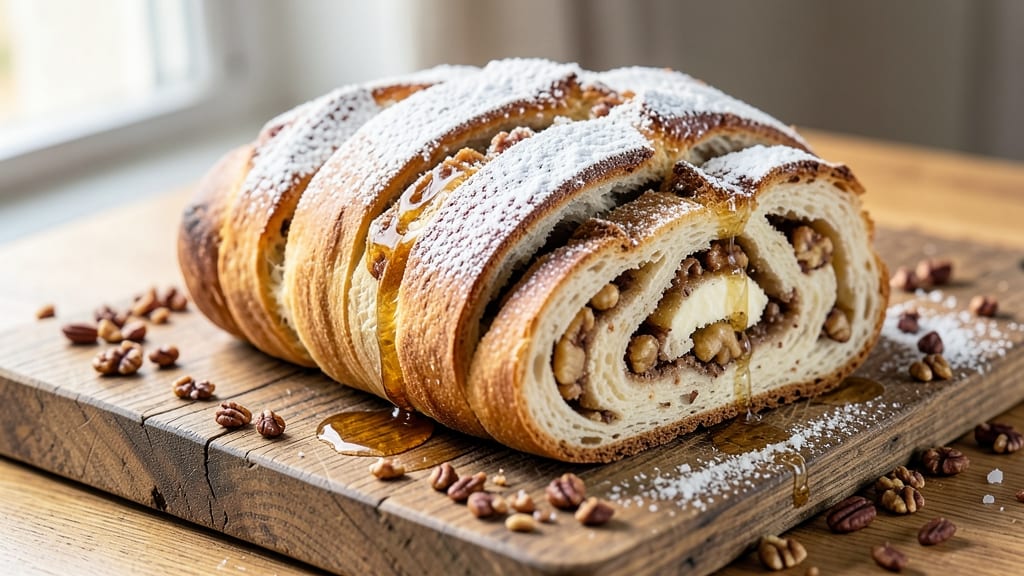
This Serbian potica bread recipe brings the rich traditions of Balkan baking to your kitchen with its signature swirls of sweet poppy seed filling encased in a buttery, flaky crust. 💛 What makes potica truly special is its layered technique—each fold creates delicate, ribbon-like patterns that reveal the creamy filling with every bite.
I first encountered this recipe during a visit to Belgrade, where grandmothers baked it for holidays and family gatherings, and I’ve since perfected my version at home.
The process begins with a simple yet sturdy dough that must be rolled and folded precisely to achieve those iconic swirls. The filling—a blend of ground poppy seeds, sugar, and sometimes walnuts—is the heart of this dessert, offering a nutty, slightly sweet contrast to the buttery crust.
While traditional potica uses poppy seeds, variations with walnut paste or even savory fillings (like cheese and herbs) exist, proving its versatility beyond the classic.
By the time it emerges from the oven, you’ll have a golden, fragrant loaf with crisp edges and tender layers, each bite revealing that perfect balance of flaky dough and creamy filling.
The aroma alone will transport you to a Serbian bakery, but the taste—rich, buttery, and subtly sweet—is what truly makes this recipe unforgettable. Whether served for breakfast, dessert, or a special occasion, potica is a showstopper that impresses every time.
Ready to master this cultural classic? The key lies in patience—rolling the dough thinly and folding it carefully ensures those signature swirls. Once baked, let it cool slightly before slicing to reveal the intricate patterns. This recipe delivers both tradition and satisfaction in every bite.
Ingredients for potica bread
Eight simple ingredients transform into a showstopping Serbian potica with delicate swirls and buttery layers.
| Ingredient | Amount | Notes |
|---|---|---|
| All-Purpose Flour 🌾 | 4 cups | Sifted for light texture |
| Unsalted Butter 🧈 | 1 cup | Cold, cubed (European-style preferred) |
| Granulated Sugar 🍚 | ¼ cup | Plus 1 tbsp for dough |
| Large Eggs 🥚 | 1 whole | Room temperature |
| Instant Yeast 🍞 | ¼ tsp | Or active dry (use 0.125 tsp) |
| Salt 🧂 | ½ tsp | Fine sea salt |
| Ground Poppy Seeds 🌱 | 1 ½ cups | Freshly ground for best flavor |
| Light Brown Sugar 🍚 | ½ cup | Packed for filling |
| Chopped Walnuts 🌰 | ½ cup | Optional, for texture |
| Vanilla Extract 🌸 | 1 tsp | Pure vanilla preferred |
| Heavy Cream 🥛 | ¼ cup | Cold, for brushing |
| Powdered Sugar 🍚 | ¼ cup | For dusting after baking |
The butter is non-negotiable here—European-style (like Plugrá or Kerrygold) has higher fat content, which gives that signature flaky texture. Grab it from the international aisle at Whole Foods or Trader Joe's if your regular store doesn't carry it. For the poppy seeds, buy whole seeds and grind them fresh with a mortar and pestle or coffee grinder—pre-ground loses its punch fast. The walnuts? Toast them first—toss with a pinch of salt in a dry pan until fragrant. That extra step makes all the difference.
No European butter? Use regular unsalted butter—just chill it extra long before cutting into cubes. Running short on poppy seeds? Substitute walnut paste (like Nutella without the cocoa) or even sunflower seeds, though the flavor will shift. The vanilla extract is where you can splurge—Madagascar bourbon vanilla adds depth, but imitation works in a pinch. For the dough, if you're short on time, use a stand mixer with a dough hook—it's foolproof. But if you're feeling traditional, knead it by hand for 10 minutes—it builds gluten for that perfect flaky crust.
The dough keeps for 2 days wrapped in plastic in the fridge, but poppy seed filling? Make it fresh day-of—it gets grainy when stored. Once baked, let the potica cool 30 minutes before slicing—those swirls need time to set. Leftovers? Wrap tightly in foil and store at room temp for 3 days. Reheat slices in a 200°F oven for 5 minutes—they taste even better the second time around. And save those crust scraps—they're perfect for French toast.
Why You'll Love This Recipe
- No-Knead Magic: I swear by this dough—just mix, let it rise, and bake. The butter and sugar melt into something so tender, it practically falls apart at the table. Honestly, I’ve made it while scrolling through my phone during the second rise.
- Sweet Butter Bliss: That rich, caramelized butter flavor? It’s what makes this bread unforgettable. The sugar doesn’t just sweeten—it creates this golden crust that cracks open like a perfect pastry. (Yes, even on a Tuesday night.)
- Breakfast to Dessert: Slice it warm for toast with jam, or let it cool for a sweet, buttery treat. My kids grab it straight from the pan, and my husband saves the leftovers for his coffee the next morning. It’s that versatile.
- Pantry Staple Power: You’re using flour, butter, sugar, and eggs—things you already have. No fancy ingredients, no last-minute grocery runs. And because it keeps well, I bake a batch on Sunday and forget about it for days. Budget-friendly? Absolutely.
Step-by-step instructions for Serbian potica bread
Here's how to create this iconic layered bread with perfect buttery crust and rich poppy filling.
👨🍳 Step 1: Make the Dough and Filling
In a large bowl, whisk together the 4 cups all-purpose flour, 0.25 tsp instant yeast, 0.5 tsp salt, and the 0.25 cup granulated sugar. Cut in the 1 cup cold unsalted butter using a pastry cutter or your fingers until the mixture resembles coarse crumbs with pea-sized butter pieces. Add the 1 whole large egg and 1 tsp vanilla extract, mixing just until combined.
For the filling, in a separate bowl, combine the 1.5 cups ground poppy seeds, 0.5 cup packed light brown sugar, 0.5 cup chopped walnuts, and the 0.25 cup heavy cream. Mix until well combined and set aside. This filling should be thick but spreadable - if too dry, add a splash more cream.
🍳 Step 2: Shape and Layer the Dough
Turn the dough onto a lightly floured surface and knead gently for 3-4 minutes until just combined (don't overwork). Divide into 3 equal portions and roll each into a 12x8-inch rectangle about ¼-inch thick. Spread one rectangle with about ⅓ of the poppy filling, then top with another dough rectangle. Repeat, finishing with filling on top.
Roll the entire bundle into a 20-inch log, sealing the seams well. Here's the thing - don't worry about perfection. Just keep the filling contained and roll tightly. The final loaf should be about 3 inches in diameter. Place on a parchment-lined baking sheet.
🔥 Step 3: Proof and Bake to Golden Perfection
Cover the loaf with plastic wrap and let it proof at room temperature for 1 hour, or until doubled in size. Preheat your oven to 375°F while the dough proofs. Brush the loaf generously with 0.25 cup heavy cream mixed with 1 tbsp granulated sugar - this creates that signature golden crust.
Bake for 40-45 minutes until the crust is deep golden brown and the internal temperature reaches 190°F. You'll know it's done when the top springs back slightly when pressed and smells heavenly. For extra shine, brush with more cream while still warm.
⏰ Step 4: Cool and Finish
Transfer the potica to a wire rack and let it cool completely for at least 2 hours before slicing. The filling needs time to set properly. While cooling, mix the 0.25 cup powdered sugar with 1 tbsp heavy cream and drizzle over the cooled loaf for that classic finish.
Slice into ½-inch thick pieces and serve warm or at room temperature. The contrast of crispy crust and creamy poppy filling makes every bite worth it. Store leftovers wrapped tightly at room temperature for up to 3 days or refrigerated for 5 days.
Pro Tips For Making Potica Bread
- Cream Butter Slowly: Mix the butter into the flour with your fingers or a pastry cutter until it resembles coarse crumbs—no need for a food processor. I learned this the hard way: forcing it through a mixer turns potica into a dense, greasy brick instead of that perfect flaky, layered texture.
- Chill the Dough Twice: Let the dough rest for 30 minutes after mixing, then shape it and refrigerate for at least 2 hours. Sounds like overkill, but this prevents the butter from melting and keeps the layers distinct when baking—no sad, flat potica here.
- Skip the Overproofing: Test for doneness by gently pressing the dough—if it springs back slowly (not instantly), it’s ready. Overproofing makes potica gummy and dense, and I’ve ruined enough batches to know you want that slight resistance when shaping.
- Brush with Egg Wash: Whisk 1 egg with 1 tablespoon water, then brush the shaped potica generously before baking. The egg creates a golden crust and keeps the layers from sticking—my grandmother’s trick, and it actually changes the outcome.
Serving suggestions for this recipe
Classic Serving Style
Serve potica warm for the best experience—its buttery layers melt slightly, releasing that creamy poppy filling. I like to slice it into ½-inch thick pieces and arrange them on a wooden board with fresh mint leaves for a pop of color.
The contrast between the golden crust and the soft filling makes every bite visually appealing. 💛
Coffee Pairing
Potica pairs beautifully with strong, aromatic coffee. A dark roast Serbian coffee (like Kafa brand) or even a Turkish-style brew complements the nutty sweetness perfectly. The bitterness of the coffee cuts through the richness of the poppy filling, balancing the flavors.
For a modern twist, try an espresso martini with a dusting of powdered sugar.
Dessert Presentation
For a showstopping dessert table, arrange potica slices on a tiered stand alongside other Balkan treats like krempita (cream-filled pastries) and baklava. Dust the potica with extra powdered sugar and garnish with edible gold leaf for a luxurious touch.
Serve with a side of whipped cream for dipping—it’s a crowd-pleaser at holiday gatherings.
Breakfast Twist
Who says potica is just for dessert? Slice it thin and toast it lightly for a decadent breakfast. Top with mascarpone cheese and a drizzle of honey>, or serve with a side of scrambled eggs and crispy bacon.
The sweet-savory combo is unexpected but delicious—perfect for brunch with friends. 🍳
Gift-Worthy Packaging
Potica makes an incredible gift—wrap slices in parchment paper and tie them with a ribbon>. Place them in a decorative box with a sprig of rosemary for a rustic touch.
For a more elegant presentation, use a gift box with a lid and include a small card with the recipe. It’s a thoughtful way to share this Balkan tradition with loved ones.
Seasonal Adaptations
In summer, serve potica chilled with a scoop of vanilla ice cream or a dollop of whipped cream.> For winter, warm it slightly and pair with mulled wine> or a spiced chai tea>.
The contrast of warm and cold makes it even more special during seasonal celebrations.
Nutrition facts
Frequently asked questions about Serbian potica
Can I make potica without poppy seeds?
While traditional potica uses poppy seeds, you can substitute with walnut paste, sunflower seed butter, or even chopped dates mixed with nuts. For a savory twist, try a filling of feta cheese and herbs. The key is keeping the filling thick and flavorful to hold up in the layers.
Why is my potica dough tearing when I roll it?
Overworking the dough or using too much flour can make it dry and brittle. Keep your work surface lightly floured and handle the dough gently—only knead until just combined. If it feels too stiff, let it rest for 10-15 minutes before rolling. Chill the dough for 30 minutes before shaping if it's too sticky.
How do I store leftover potica?
Wrap tightly in plastic wrap or foil to keep it fresh for 3 days at room temperature. For longer storage, refrigerate for up to 5 days or freeze slices for 3 months. To reheat, warm in a 200°F oven for 5-7 minutes—the crust gets crispy again, and the filling stays creamy.
What’s the best way to slice potica for presentation?
Use a serrated knife and cut into ½-inch thick slices at a slight angle for elegant swirls. For a rustic look, slice diagonally. Always let the loaf cool completely first—the filling sets properly when cold, making clean cuts easier. Dust with powdered sugar right before serving for extra flair.
Can I make potica ahead of time?
Yes! The dough can be made 2 days in advance and stored in the fridge. The filling should be prepared fresh on baking day. Assemble the loaf and proof it at room temperature for 1 hour before baking. For gifts, bake the potica a day ahead, slice, and wrap individually in parchment paper for a professional touch.