
Desserts
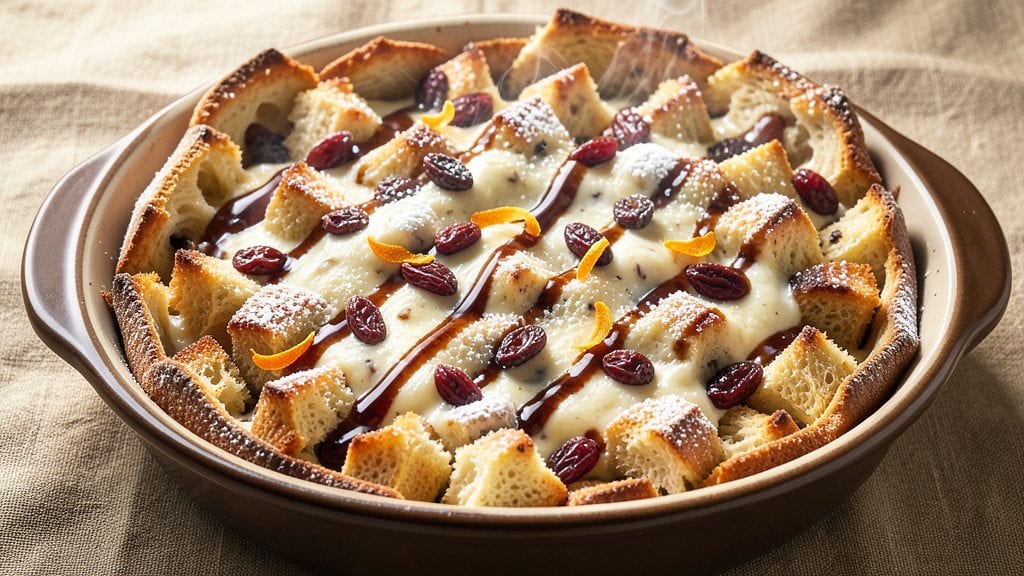
This rum bread pudding recipe delivers the perfect balance of spiced custard, tender bread, and a caramelized top that makes every bite irresistible. The rum infusion adds depth without overpowering, creating a dessert that feels both nostalgic and refined.
I developed this version after years of testing—each element, from the soaking process to the spice blend, ensures rich, velvety texture and warm, aromatic flavors.
The secret lies in the custard mixture, where rum and spices like cinnamon and nutmeg meld with vanilla and eggs to create a fragrant base. Day-old bread—preferably a slightly sweet loaf—absorbs the custard perfectly, while baking transforms it into a golden, caramelized masterpiece.
The rum doesn’t just flavor the pudding; it elevates it, turning a classic dessert into something truly special.
By the time it emerges from the oven, you’ll have a dessert with a tender, custardy interior and a crisp, caramelized crust that’s impossible to resist. Serve it warm with a scoop of vanilla ice cream or a dollop of whipped cream to balance the boozy richness.
This recipe is ideal for holiday gatherings, cozy family dinners, or whenever you crave a dessert that feels like a hug.
For an extra touch, consider topping it with rum-soaked fruit—think raisins or cherries—to add a burst of sweet-tart contrast. The versatility of this dish makes it perfect for any occasion, whether you're hosting a dinner party or simply treating yourself to a decadent dessert. Let’s get baking!
Ingredients for rum bread pudding
Six ingredients transform simple bread into boozy, spiced perfection—nothing fancy, just pure comfort.
| Ingredient | Amount | Notes |
|---|---|---|
| Day-Old Bread 🍞 | 6 cups | Slightly sweet loaf, cubed |
| Large Eggs 🥚 | 6 whole | Room temperature preferred |
| Heavy Cream 🥛 | 2 cups | Full-fat for creaminess |
| Whole Milk 🥛 | 1 cup | Warmed slightly |
| Dark Rum 🍹 | ½ cup | Good quality, aged |
| Granulated Sugar 🍚 | 1 cup | Light brown preferred |
| Vanilla Extract 🌸 | 2 tsp | Pure, high-quality |
| Ground Cinnamon 🌿 | 1 tsp | Freshly ground preferred |
| Ground Nutmeg 🌿 | ½ tsp | Freshly grated nutmeg |
| Salt 🧂 | ½ tsp | Fine sea salt |
| Unsalted Butter 🧈 | ½ cup | Melted for topping |
| Brown Sugar 🍚 | ¼ cup | Packed, for caramel |
| Raisins or Cherries 🍇 | ½ cup | Optional, soaked in rum |
The bread is everything here. Day-old brioche or challah works best—it’s soft enough to soak up custard but sturdy enough to hold shape. Trader Joe’s has great options, or grab a slightly stale loaf from your local bakery. If you’re using a plain white bread, toast it first to prevent sogginess. The rum? Kneppels or Gosling’s are my go-tos, but any aged dark rum will do. Skip the cheap stuff—you’ll taste the difference in every bite. For extra depth, soak the raisins or cherries in rum for 15 minutes before adding them to the pudding.
No dark rum? Spiced rum or even bourbon in a pinch, though the flavor will shift slightly. Fresh nutmeg is non-negotiable—pre-ground loses its punch fast. If you can’t find it, grate your own from a whole nutmeg (worth the minute!). The custard mixture is forgiving, but don’t skimp on the eggs. They’re the backbone of the texture. For a lighter version, swap half the heavy cream for half-and-half. And if you’re feeling adventurous, add a splash of orange liqueur to the rum soak for a citrusy twist.
This tastes even better the next day—trust me, it’s worth making ahead. Store leftovers in an airtight container for up to 4 days in the fridge. To reheat, cover with foil and warm at 350°F for 10-15 minutes. For serving, a sprinkle of powdered sugar or a dollop of whipped cream balances the boozy richness. Freeze any extras (without the caramel topping) for up to 3 months). Portion into ramekins before baking for easy individual servings.
Why You'll Love This Recipe
- I swear by this trick: tear that stale bread into chunks—no measuring, no fuss. Just dump it in a bowl with the eggs, milk, and cream, then fold in the rum. The dough comes together faster than I can finish my morning coffee.
- No-Fuss Assembly: I swear by this trick: tear that stale bread into chunks—no measuring, no fuss. Just dump it in a bowl with the eggs, milk, and cream, then fold in the rum. The dough comes together faster than I can finish my morning coffee.
- Warm Spice Hug: That dark rum soaks into the bread like a cozy blanket, while the heavy cream and eggs turn it into a custardy dream. Honestly, the first bite feels like a hug—especially when it’s still warm and the edges are golden. (Yes, even on a Tuesday night.)
- Crowd-Pleaser Magic: This feeds six with ease, yet I’ve made it for two and still had leftovers. It’s my go-to for dinner parties (no one suspects how simple it is) or when I’ve got a house full of people who’ll fight over the last slice.
Step-by-step instructions for rum bread pudding
Here's how to transform stale bread into a decadent, rum-infused dessert with a caramelized top.
Prepare the Bread and Soak the Mixture
Tear the 6 cups of day-old bread into 1-inch cubes and spread them evenly in a 9x13-inch baking dish. In a large bowl, whisk together the 6 whole large eggs, 2 cups of heavy cream, 1 cup of whole milk, 0.5 cup of dark rum, 1 cup of granulated sugar, 2 teaspoons of vanilla extract, 1 teaspoon of ground cinnamon, 0.5 teaspoon of ground nutmeg, and 0.5 teaspoon of salt until completely smooth.
If using raisins or cherries, drain them from the rum soak and fold them into the mixture now. Pour the custard evenly over the bread cubes, pressing down gently to ensure they absorb the liquid. Let the mixture sit for 30 minutes at room temperature—this step guarantees the bread soaks up all the boozy custard for maximum flavor.
Bake Until Set and Golden
Preheat your oven to 350°F. Bake the bread pudding uncovered for 45-50 minutes, until the edges are golden brown and the center is just set (it should still have a slight wobble when gently shaken). I like to check for doneness by inserting a toothpick—it should come out with a few moist crumbs, not wet batter.
Real talk: Don't overbake. The pudding will continue cooking as it rests, and you want that custardy center. If the top browns too quickly, tent loosely with foil after 30 minutes to prevent over-browning while the center finishes cooking.
Create the Caramelized Topping
While the pudding bakes, melt the 0.5 cup of unsalted butter in a small saucepan over medium heat. Stir in the 0.25 cup of packed brown sugar and cook for 2-3 minutes until the mixture turns a deep amber color and smells like caramel heaven. Remove from heat and let it cool slightly—it should thicken as it cools.
Here's the moment that matters: Just before the pudding finishes baking, carefully spoon the caramel mixture evenly over the top. The residual heat will help it set into a glossy, crackly crust. Return to the oven for the final 5-10 minutes if needed to set the caramel completely.
Rest and Serve Warm
Remove the bread pudding from the oven and let it rest for 10 minutes before serving. This resting period allows the custard to fully set and the flavors to meld together—you'll notice the pudding becomes even more luscious as it sits. I know it's tempting to dig in immediately, but trust me on this step.
Serve warm with a dollop of whipped cream or a scoop of vanilla ice cream. The contrast of the warm, spiced pudding with the cool cream creates the perfect balance. Each bite should deliver that perfect harmony of rum warmth, spiced custard, and caramelized crunch on top.
Pro Tips For Making Rum Bread Pudding
- SOAK THE BREAD JUST RIGHT: Drown the bread cubes in the custard mix for at least 20 minutes—no, longer isn’t better. After 30 minutes, they’ll turn to mush, and your pudding will taste like soggy cardboard. I learned this the hard way when I rushed and ended up with a sad, watery mess.
- USE ROOM-TEMP EGGS: Whisking cold eggs into the custard creates pockets of uneven texture. Let those eggs sit out for 30 minutes first—just enough to warm up but not cook. Trust me, your pudding will be silky instead of lumpy, and that’s a game-changer.
- STOP WHEN THE CENTER JIGGLES: Overbaking is the enemy here. The pudding’s done when the edges are set but the middle still wobbles like jelly. I used to pull it out too early, only to watch it collapse later. A toothpick test works, but your eyes are better—look for that golden crust with a soft core.
- TOAST THE BREAD FIRST: Lightly toast your day-old bread cubes before soaking them. It adds a subtle crunch and prevents the pudding from turning into a gluey block. Skip this, and you’ll regret it when every bite feels like chewing on wet paper. (Yes, I’ve done it.)
Essential equipment for this recipe
Baking Dish Essentials
Start with a 9x13-inch glass or ceramic baking dish—glass distributes heat evenly, while ceramic retains moisture for a softer texture. I prefer Pyrex because it’s durable and easy to clean, but any oven-safe dish works.
Avoid metal pans—they can cause uneven browning. For extra crispiness, line the dish with parchment paper, but leave the edges uncovered to let the pudding caramelize beautifully. 🔥
Precision Tools for Success
A digital kitchen scale ensures your 6 cups of cubed bread are consistent—no guesswork! I use my OXO Good Grips scale for accuracy. For whisking the custard, a balloon whisk helps incorporate air for a lighter texture.
And don’t skip a toothpick for checking doneness—it’s the only way to gauge the perfect balance of set and moist.
Caramel Mastery
Caramelizing the topping requires a small saucepan with a heavy bottom—Le Creuset or Stainless steel works best. Use a thermometer to monitor the sugar and butter mixture, aiming for 320°F for that perfect amber hue.
A spatula with a heat-resistant handle lets you stir safely while preventing scorching. 💫
Temperature Control
An oven thermometer is non-negotiable—ovens vary wildly, and 350°F might actually be 330°F without one. I keep my Thermoworks Oven Thermometer nearby to ensure accuracy. For the caramel topping, a quick 5-10 minute broil at the end can deepen the color if needed, but watch closely—it burns fast!
Serving Upgrades
Elevate your presentation with a pastry brush for drizzling extra caramel or a small sieve to dust with powdered sugar. I also keep a small whisk handy for quickly mixing whipped cream or vanilla ice cream toppings. These tools turn a simple dessert into a restaurant-worthy dish. ✨
Nutrition facts
Frequently asked questions
Can I make this without rum?
The rum adds depth to the flavor, but you can substitute with 1 teaspoon vanilla extract + 1 teaspoon almond extract for a similar aromatic profile. For a non-alcoholic version, use 0.5 cup apple cider or orange juice instead. The texture and richness will still be there, just with a different character.
Why does my bread pudding come out dry?
Overbaking is the most common culprit—remove it when the center still has a slight wobble (45-50 minutes at 350°F). Another trick: Soak the bread cubes in warm custard for 30 minutes before baking to ensure even moisture distribution. If it’s still dry, try adding 2 tablespoons milk to the custard next time.
What’s the best bread for rum bread pudding?
Day-old brioche, challah, or sourdough work best—they’re sturdy enough to hold shape but soft enough to soak up custard. Avoid very dense breads like whole wheat, as they can make the pudding gummy. For extra richness, try a cinnamon swirl loaf or challah with its built-in sweetness.
How do I store leftovers?
Store in an airtight container in the fridge for up to 4 days. Reheat covered with foil at 350°F for 10-15 minutes until warm. For longer storage, freeze portions (without the caramel topping) for up to 3 months. Thaw overnight in the fridge before reheating.
Can I make this in ramekins?
Use 6-8 individual ramekins (6-8 oz size) for single servings. Reduce baking time to 35-40 minutes—ramekins cook faster than a large dish. Brush the edges with extra caramel mixture before baking for a decorative touch. Perfect for holiday gatherings or meal prep!